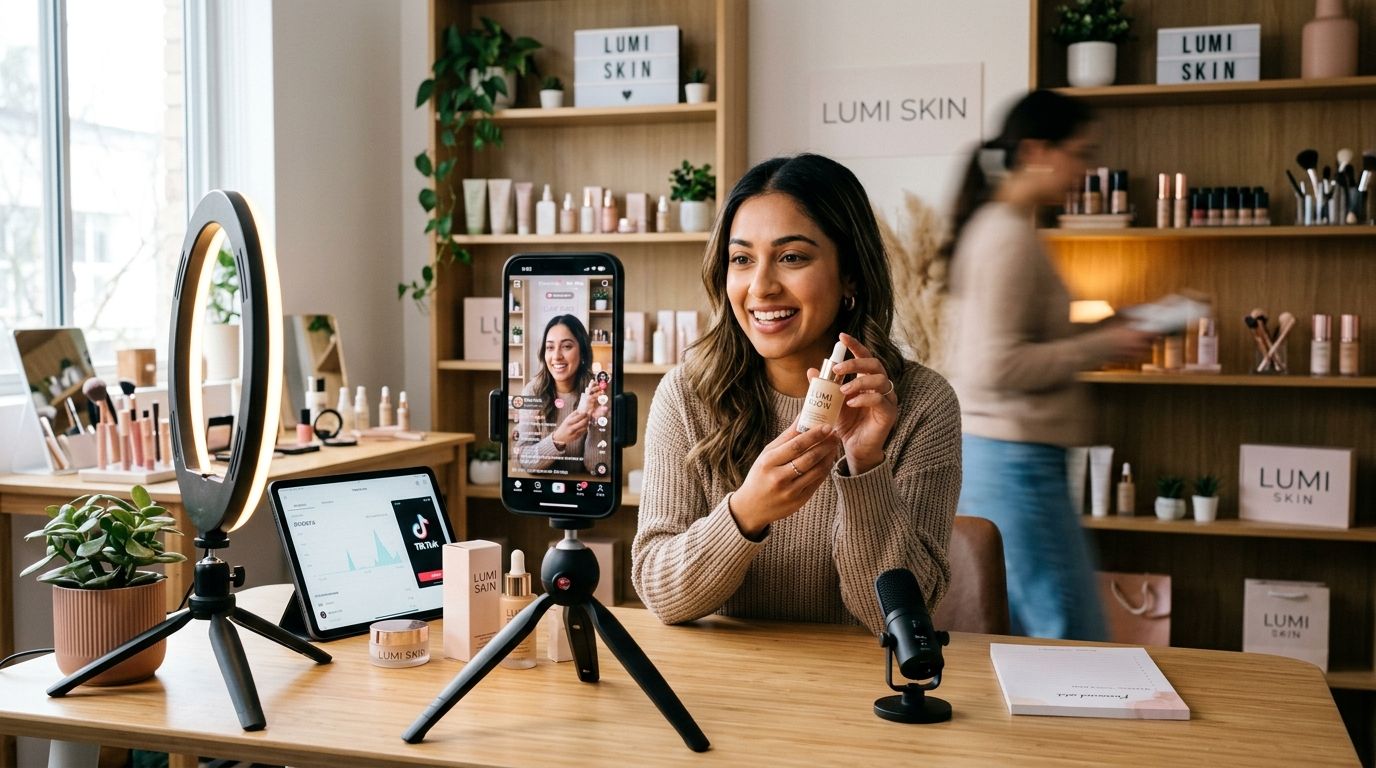
Growth marketing for direct-to-consumer beauty brands is not a channel list. It is the operating system that turns a clear product story into repeatable demand, conversion, and retention. This 2026 guide ranks the investments that make every stage of a DTC beauty customer journey stronger.
- Growth marketing for direct-to-consumer beauty brands starts with one customer promise across every channel.
- THE DARL is the Buy when brand, content, paid media, email, social, and search need one growth plan.
- Skip isolated acquisition tactics that do not improve conversion or retention.
- In 2026, DTC beauty growth depends on message-to-landing-page-to-lifecycle continuity.
Why this matters
A DTC beauty brand can acquire attention quickly and still fail to build a growth engine. The usual problem is not a lack of tactics. It is that the product page, paid creative, welcome flow, organic content, and customer service tell five versions of the same story.
Growth marketing for direct-to-consumer beauty brands fixes that break. It gives each channel one job inside a connected customer journey: make the product understandable, create a reason to act, remove friction at purchase, and earn the next order. The THE DARL approach starts with that system because growth does not compound when every channel starts over.
In 2026, beauty customers research across several touchpoints before buying. They may watch a creator, compare products on a phone, ask a friend, scan reviews, sign up for email, then come back through search. The brand needs to be recognizable at every point without repeating one generic claim.
Who this is for
This guide is for DTC beauty founders and ecommerce leaders who have product demand but need a more reliable route from discovery to repeat purchase. It fits skincare, haircare, fragrance, cosmetics, body care, beauty devices, and wellness-adjacent brands selling directly to customers.
The buyer is not looking for a larger activity calendar. The buyer needs a growth system that can make a limited set of commercial priorities visible across paid media, the site, lifecycle, content, search, and social. In 2026, the right question is not which channel gets credit first. It is where the customer journey breaks.
What to look for in growth marketing for direct-to-consumer beauty brands
A clear customer promise
A growth plan needs one answer to a basic question: why should the right customer choose this product now? That answer must be specific enough to guide a product page and flexible enough to travel through a 15-second video, an email subject line, a search snippet, and a creator brief.
Write the promise in 20 words or fewer. Then identify the proof, customer tension, and product context that make it credible. In 2026, a brand that cannot state this clearly will spend too much time repairing mixed messages downstream.
Product pages built for decisions
A product page should do more than display an item. It needs to help a customer understand what the product is, who it suits, where it belongs in a routine, and what to do next. The highest-value page improvements usually come from clarity, not decoration.
Build every priority page around 4 decisions: relevance, use, proof, and next step. A visitor should not need to open five tabs to understand the product's role. That structure also gives paid, email, and social teams a stable destination for their message.
Acquisition creative with a defined learning plan
Paid creative is useful when it tests a product truth, customer question, or offer architecture with a defined landing page. It is wasteful when every asset changes the audience, hook, visual, and destination at once.
Start with 3 controlled message territories: customer-problem, product-experience, and founder or brand-point-of-view. Each territory should lead to the page that can actually fulfill the promise. In 2026, creative testing is a learning system, not a request for endless variations.
Lifecycle that begins before the first order
Email and SMS cannot rescue a confusing first visit after the fact. The sign-up source should inform the first message a person receives. A customer who joined after viewing a routine guide needs a different welcome route than someone who arrived through a product-specific ad.
Build the first 30 days around 4 moments: welcome, education, decision support, and post-purchase use. The point is to turn attention into confidence before the brand asks for a second transaction.
Content that travels across channels
Beauty content is expensive when it is made for a single placement. A shoot, founder interview, customer question, or product demonstration should be planned for at least 5 destinations: product pages, organic social, paid social, email, and search-led editorial.
The THE DARL content creation service is structured around photo, video, and copy that travel. That matters because one clear idea gains strength when customers meet it in several relevant forms.
Measurement tied to commercial decisions
Do not measure growth marketing for direct-to-consumer beauty brands through one dashboard number. Review paid-media efficiency, landing-page progression, product views, add-to-cart behavior, first-to-second-order movement, customer questions, and retention signals together.
Set one operating decision every week: keep, improve, expand, or stop. In 2026, a useful report changes the next action. A report that only recaps channel activity does not.
Top picks for DTC beauty growth systems
1. The connected growth plan
The safe pick: Build one commercial plan that connects brand, acquisition, conversion, and retention. The memorable detail is a 90-day map with 3 product priorities, 3 message territories, and 5 channel destinations for each priority.
This gives every team the same decision framework. Paid media knows what to test, content knows what to make, the site knows what to explain, and lifecycle knows which education should follow. It also exposes gaps early, such as a compelling hook with no page that fulfills it.
THE DARL builds omnichannel systems for ambitious consumer and beauty brands because a campaign is not a growth strategy until the next channel makes it stronger. Verdict: Buy. Start here when channel teams are active but the customer journey feels fragmented.
2. The conversion-first product-page system
The clarity pick: Fix priority product pages before increasing spend on generic traffic. The memorable detail is a 4-part page model: product role, customer fit, use guidance, and next action.
The page should match the language that earned the visit. If an ad opens with a routine problem, the page must make that routine easier to understand. If a search visitor is comparing product types, the page needs an honest comparison route rather than a wall of brand copy.
THE DARL's SEO and web strategy connects search-built architecture with experiences designed to rank and sell. Verdict: Buy. Use this before scaling any channel that sends a large share of new visitors to a weak destination.
3. The first-30-day lifecycle route
The retention pick: Build a distinct route for the first 30 days after sign-up or purchase. The memorable detail is 4 moments: welcome, product education, customer-question support, and the next relevant action.
This system makes email and SMS useful rather than repetitive. It also gives customer service and social teams a consistent product story to reinforce. Do not lead every new subscriber with the same discount; lead with the answer to the question that brought them in.
THE DARL's CRM and lifecycle email and SMS service treats retention as revenue already earned, not a separate department. Verdict: Buy. Add it when acquisition is working but first-time buyers are not becoming repeat customers.
4. The message-to-creative test plan
The performance pick: Test 3 message territories against a stable product page before commissioning an endless stream of assets. The memorable detail is one variable per test: problem, product experience, or brand point of view.
A strong test teaches the next brief what language earns attention and what language moves qualified visitors forward. Keep product and performance claims inside an approved library. A short-term click is not a useful learning signal if the landing page cannot honestly support the hook.
THE DARL's paid media and performance service brings creative, media, and conversion into the same decision process. Verdict: Consider. Add it once product pages and measurement events are clear enough to interpret the learning.
5. The customer-question content library
The compounding pick: Turn recurring customer questions into a 12-topic content library rather than chasing one-off trend formats. The memorable detail is 12 answers mapped to 3 product priorities over one quarter.
Questions from reviews, support, comments, search, and sales conversations reveal where a buyer needs explanation. Each answer can become a site section, email module, social post, creator brief, and paid-media angle. The language must come from documented customer themes, not invented audience personas.
Verdict: Consider. Build this after the brand has clear product pages and a process for validating claims.
What to avoid
The channel that owns the whole plan
No channel should dictate the brand's entire growth strategy. A paid-media optimization may improve delivery while weakening product understanding. A social trend may create views while producing no useful destination. Keep one shared commercial plan above channel decisions.
The immediate-discount dependency
Discounting can create a transaction without creating preference. If the welcome program, browse recovery, and win-back sequence all use the same offer, the brand loses the opportunity to teach, differentiate, and learn why a customer hesitated.
The metric with no next decision
A rising view count or open rate is not enough. Every dashboard line should lead to a practical action: change the page, revise the message, refresh the creative, adjust the sequence, or keep the current system. If it cannot change a decision, remove it from the weekly review.
Verdict comparison
| Growth investment | Best when | First operating unit | Main outcome | Verdict |
|---|---|---|---|---|
| Connected growth plan | Channels operate separately | 90-day map | Shared commercial direction | Buy |
| Product-page system | Traffic does not progress | 4 page decisions | Clearer path to purchase | Buy |
| First-30-day lifecycle | First orders do not repeat | 4 customer moments | Stronger customer confidence | Buy |
| Message-to-creative tests | A stable page exists | 3 territories | Better acquisition learning | Consider |
| Question content library | Customer themes recur | 12 topics | Reusable demand content | Consider |
FAQ
What is growth marketing for direct-to-consumer beauty brands?
Growth marketing for direct-to-consumer beauty brands connects brand, content, paid media, ecommerce, lifecycle, search, and social into one customer journey. Its job is to improve discovery, purchase confidence, and repeat behavior together.
What should a DTC beauty brand build first in 2026?
A DTC beauty brand should build one 90-day growth plan with 3 product priorities, 3 message territories, and clear page destinations. That creates a shared system before more channel activity is added.
Do DTC beauty brands need paid media to grow?
DTC beauty brands can use paid media to test qualified demand, but paid media needs a clear customer promise and a product page that can fulfill it. More traffic does not solve a weak destination.
How does email support DTC beauty growth?
Email supports DTC beauty growth by continuing the product education and customer context that started before purchase. The first 30 days should cover welcome, education, decision support, and post-purchase use.
What is the biggest growth marketing mistake for beauty brands?
The biggest growth marketing mistake is treating each channel as a separate campaign. When the ad, product page, welcome flow, and content use different messages, customers must do the work of connecting the brand.
How should DTC beauty brands measure growth in 2026?
DTC beauty brands should measure acquisition, landing-page progression, product views, add-to-cart behavior, first-to-second-order movement, and retention signals together. Each review should produce one clear operating decision.
Why do product pages matter in growth marketing?
Product pages matter because they convert attention into understanding. A clear product role, customer fit, use guidance, and next action make every acquisition channel more effective and make lifecycle follow-up more relevant.
One last thing
The best growth plan is not the one with the most channels. It is the one that makes the next customer decision easier at every touchpoint. In 2026, build fewer disconnected campaigns and more connected routes from first question to repeat purchase.