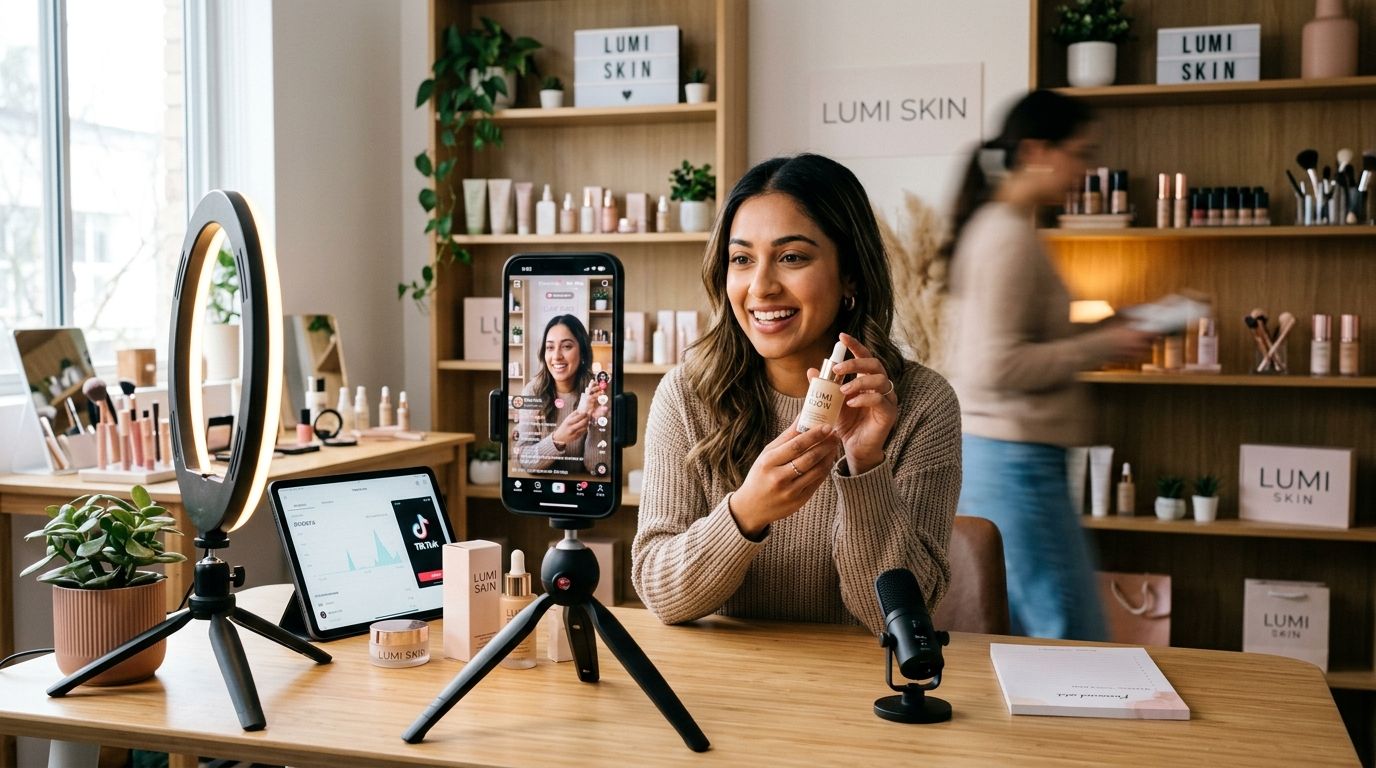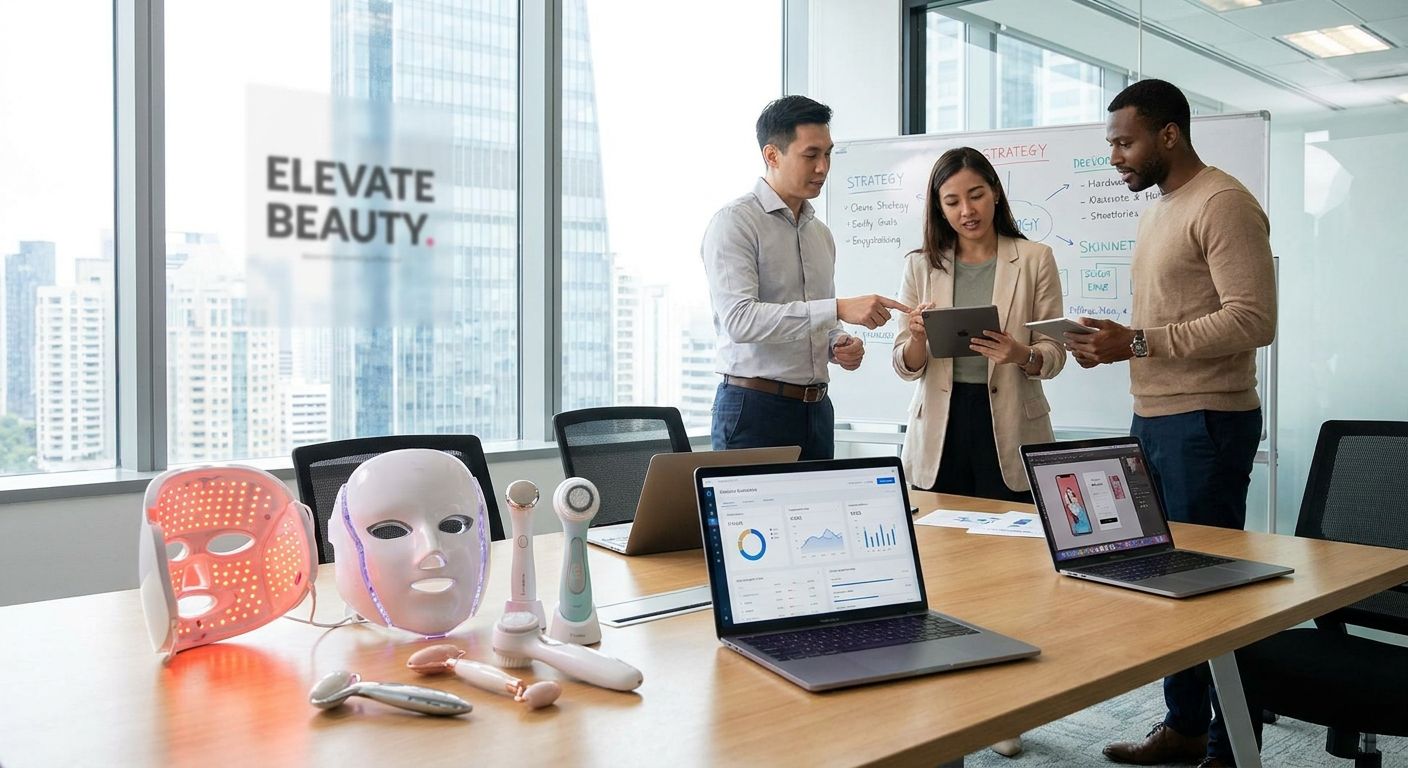
Marketing agency for beauty device brands means hiring a growth partner that runs paid media, content, email/SMS, and retail strategy specifically for companies selling LED masks, microcurrent tools, dermarollers, and at-home aesthetic devices — built around the longer consideration cycle and claims scrutiny this category carries that skincare and color cosmetics rarely face.
- A marketing agency for beauty device brands needs a claims-review workflow before any ad spends run in 2026 — most generalist beauty agencies skip this step.
- Device purchases run $150-$400+, so lifecycle email and SMS matter more than a single-touch paid ad for this segment.
- The Darl treats demo video as the core creative asset for beauty device brands, not an afterthought to static product shots.
- Amazon compliance and DTC checkout both need separate work — one PDP fix does not cover both channels.
Why beauty device brands need a different marketing playbook
A $28 serum gets an impulse buy. A $220 LED mask does not — the buyer researches, compares, watches a demo, and waits for a sale or a paycheck before checking out. That shifts the entire marketing mix toward proof and patience instead of urgency and impulse.
Beauty device brands also carry regulatory exposure that skincare brands don't. Claims about wrinkle reduction, collagen stimulation, or clinical efficacy fall under FTC health and beauty product guidance, and an ad account can get flagged or a listing pulled for language that a generalist beauty copywriter wouldn't think twice about. A marketing agency for beauty device brands has to run claims review as a standing workflow, not a one-time legal check before launch.
The channel mix looks different too. Device brands lean harder on YouTube reviews, long-form demo content, and Amazon Enhanced Brand Content than a lipstick brand does, because the buyer needs to see the device work on skin before they'll spend three figures on it.
Update your claims review process
Run every ad, PDP claim, and Amazon bullet point through a documented review pass before it ships.
- Cross-check ad copy against FTC Health Products Compliance Guidance language
- Require photo/video consent forms for every before-and-after asset
- Source and file any clinical study citations you plan to reference
- Confirm packaging claims match ad claims word for word
- Flag "dermatologist recommended" language unless you can produce the source
Build a demo-first content library
A beauty device brand's entire funnel runs on people believing the product does what it says, and static photography doesn't do that.
- Unboxing and first-use footage shot in real lighting, not a studio
- Four-week user diaries showing progression, not a single before/after
- Close-up device-on-skin footage for every use case the product supports
- Side-by-side comparison footage against the category leader
- A refill or attachment explainer if the device uses consumable parts
Run paid social with proof, not promises
Once claims are cleared and demo footage exists, paid social becomes the acquisition engine — but creative needs a testing cadence, not a single hero video running for months.
- Rotate new creative variants weekly to fight ad fatigue on a considered-purchase product
- Whitelist licensed estheticians or dermatologists for paid amplification where allowed
- Build separate retargeting sequences for "watched demo" versus "added to cart"
- Segment lookalikes off purchasers, not just page engagers
- Track CPM trends by placement; a beauty brand's approach to lowering Meta ad CPMs applies directly to device categories fighting rising auction costs in 2026
Build a lifecycle program for a considered purchase
Email and SMS carry more weight for a $150-$400 device than they do for a $25 lip gloss, because the buyer needs multiple touches before converting.
- Pre-purchase nurture flow that educates on how the device works and what results to expect
- Post-purchase onboarding SMS covering setup, charging, and first-use timing
- Replenishment reminders timed to attachment or pad lifespan
- Win-back flow for anyone who abandoned checkout after watching a demo video
- A repeat-buyer tier for customers who purchase attachments or a second device
Fix the PDP and checkout for a considered purchase
A product page built for skincare — hero shot, ingredient list, reviews — undersells a device that needs demonstration and reassurance.
- Video-first hero module above the fold, not a static image
- FAQ block addressing battery life, safety certifications, and skin-type suitability
- Trust badges and certification marks placed near the add-to-cart button
- Financing or payment-plan messaging visible before checkout, not buried in the cart
- Load-speed testing on mobile, where most device research happens before purchase
Getting this right is exactly where web design for beauty ecommerce brands becomes a conversion lever instead of a design exercise.
Get listed and reviewed on Amazon and marketplaces
Most beauty device brands can't ignore Amazon even if DTC is the primary channel — device buyers comparison-shop there before they buy anywhere.
- Enhanced Brand Content built around the same demo footage used in paid social
- Seeded Q&A addressing the objections buyers actually ask
- A review velocity plan that doesn't violate marketplace incentive rules
- Bullet points that pass the same claims-review process as your ad copy
Build a derm and aesthetician seeding program
A device that a licensed professional demonstrates carries more weight than an influencer holding it up to a ring light.
- Gifting programs targeted at licensed estheticians, not just beauty influencers
- UGC rights capture built into every seeding agreement upfront
- Long-form YouTube reviews prioritized over 15-second clips
- Podcast sponsorship placements where the host can speak to real use
Track device-specific LTV, not just first order
A device brand's real margin lives in attachments, replacement pads, and second-device purchases — not the first sale.
- Repeat-purchase rate on consumable attachments by cohort
- Return rate segmented by acquisition channel, since paid social and organic often convert differently
- 90-day and 180-day retention by first-purchase price point
Comparing your options for beauty device brand marketing
| Option | Best for | Key limitation |
|---|---|---|
| In-house hire | Brands under $1M revenue testing one channel | No bandwidth to run compliance review, paid, and content at once |
| Freelancer/contractor stack | Narrow single-channel needs, like email only | No unified strategy across channels; compliance gaps between them |
| Generalist beauty agency | Skincare/cosmetics brands without regulatory complexity | Rarely builds the claims-review workflow device brands need |
| Vertical specialist agency (The Darl) | Beauty device brands scaling past single-channel testing into omnichannel | Needs access to real device data — return rates, clinical studies — to move fast |
For a side-by-side look at agencies working specifically in this category, see best marketing agencies for beauty device brands. Verdict: a generalist beauty agency handles cosmetics fine but misses the compliance and demo-content requirements that beauty device brands can't skip in 2026.
Common mistakes beauty device brands make
- Leading ad creative with clinical claims that haven't cleared legal review — the fastest way to get an ad account flagged
- Running a subscription model on a durable good — a device isn't a consumable, and forcing a subscription structure onto it confuses buyers
- Skipping Amazon compliance checks because DTC is the primary channel — marketplace buyers still compare bullet points before purchasing anywhere
- Shipping a PDP with no demo video — static photography can't answer "does this actually work" for a $200+ purchase
- Ignoring attachment and refill revenue in LTV math — the real margin on a device brand often lives past the first sale
“A generalist beauty agency handles cosmetics fine but misses the compliance and demo-content requirements beauty device brands can't skip in 2026.”
Talk to The Darl about your device brand
Get a channel-by-channel growth plan built for beauty device brands.
FAQ
What does a marketing agency for beauty device brands actually do?
It runs paid media, content, email/SMS, and retail strategy calibrated to a considered-purchase product with regulatory claims exposure — building claims review, demo content, and lifecycle marketing into one system instead of treating the device like a standard cosmetics SKU.
How is marketing a beauty device different from marketing skincare?
Beauty devices carry a higher price point, a longer research cycle, and FTC-level claims scrutiny that skincare rarely triggers. The creative and lifecycle strategy has to prove the product works, not just make it desirable.
Is paid social enough to launch a beauty device brand in 2026?
No. Paid social drives awareness, but a $150-$400 device needs email and SMS nurture, demo video, and often Amazon presence working together before it converts at scale.
How much content does a beauty device brand need before launch?
At minimum, unboxing footage, a multi-week user diary, close-up device-on-skin footage, and a comparison video against the category leader. Static product photography alone underperforms for this category.
Should beauty device brands sell on Amazon or DTC only?
Most device buyers comparison-shop on Amazon even when they ultimately buy DTC, so ignoring marketplace presence leaves comparison-stage buyers with no answer to their questions.
What claims can a beauty device brand legally make in ads?
Only claims you can source — clinical studies, dermatologist input, or documented before-and-after consent. FTC Health Products Compliance Guidance governs efficacy language, and unsupported claims risk ad account flags or listing removal.
How long does it take to see ROI from a beauty device marketing agency?
Timelines depend on starting audience size and paid budget, but a considered-purchase device typically shows lifecycle and paid signal only after nurture flows and demo creative are both live — not from paid spend alone.
Does The Darl work with beauty device brands specifically?
The Darl builds omnichannel strategy — SEO, paid media, email, content, and social — for consumer and beauty/lifestyle brands, including device brands that need claims-aware creative and lifecycle marketing working together.
One last thing
The brands that win this category in 2026 aren't the ones with the flashiest device — they're the ones whose demo footage gets watched to the end. A three-figure purchase decision comes down to proof, and proof is a content problem before it's a media-buying problem.