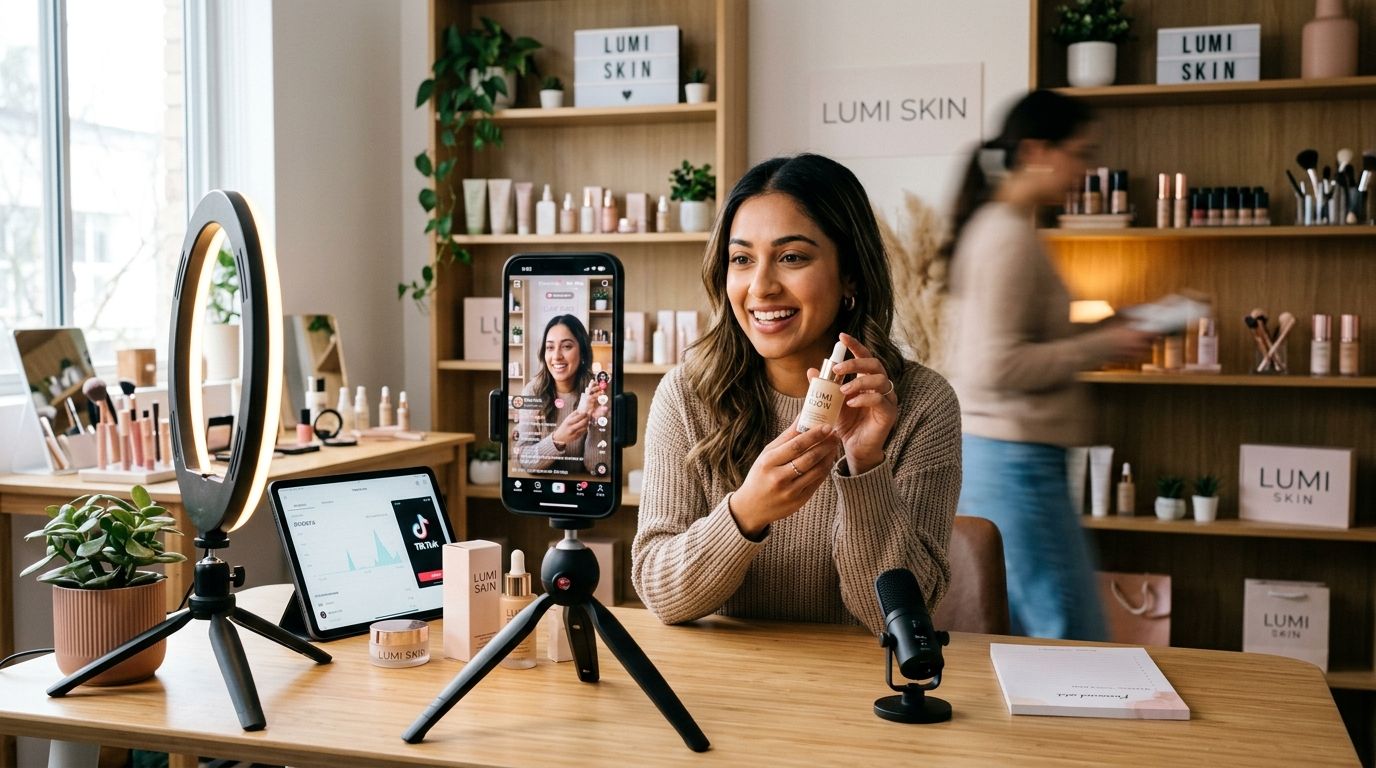
Footwear and accessories brand marketing is the coordinated use of SEO, paid media, email/SMS, content, and social built around one goal: turning seasonal drops and visual discovery into repeat customers, not one-off sales. The segment behaves differently than general apparel — fit friction drives returns, wholesale and DTC often compete for the same customer, and the buying decision leans heavily on Pinterest, Instagram, and TikTok before it ever reaches a product page.
- The Darl is a marketing agency for footwear brands that treats SEO, paid media, and email as one growth system, not four separate vendors.
- Footwear and accessories brands lose margin to size-driven returns — factor return rate into every paid media calculation before scaling spend.
- Drop-based footwear marketing needs email and SMS flows synced to launch calendars, not generic abandoned-cart sequences.
- Wholesale and DTC channel conflict is the most common mistake footwear and accessories brands make heading into 2026.
Why footwear and accessories marketing needs a different playbook
A generic omnichannel plan built for a t-shirt brand does not transfer cleanly to shoes, bags, or jewelry. Fit uncertainty means paid media has to account for a return rate baked into acquisition cost, not bolted on after the fact. Seasonal drop cycles — back-to-school, holiday gifting, resort collections — compress demand into short windows where email and paid media timing matters more than volume.
Accessories brands carry a second layer of complexity: many sell through both a DTC site and wholesale accounts (department stores, specialty boutiques, marketplaces), which means paid media and content have to support brand equity at retail without cannibalizing direct sales. A marketing agency for footwear brands that has run this exact channel mix builds the calendar around drops first, then layers acquisition and retention on top — not the other way around.
Audit your fit and return economics
Before any media dollar moves, know what returns actually cost the business. Footwear and accessories brands routinely underprice acquisition because the true cost of a sale — including a size-driven return — never makes it into the CAC model.
- Pull return rate by SKU and by size range, not as a blended average
- Separate "wrong size" returns from "changed mind" or quality returns
- Build a size-guide or fit-quiz touchpoint before checkout, not after
- Model true contribution margin per order including expected returns
- Flag styles with return rates high enough to pull from paid promotion entirely
Build your channel mix around visual discovery
Footwear and accessories are browsed, not searched, for most of the funnel. Pinterest, Instagram, and TikTok drive the discovery phase; search and email close it.
- Audit which platforms currently drive add-to-cart versus just impressions
- Build a content calendar around styling use-cases (work, travel, event, gifting)
- Test short-form video against static product shots for the same SKU
- Map which creators or affiliates already wear the category organically
- Set a minimum content cadence per platform tied to the drop calendar
Once the manual audit surfaces gaps, a specialized team can rebuild the full media mix faster than an in-house generalist testing platform by platform. This is where a paid media agency for fashion ecommerce brands earns its keep — running SEO, paid social, and content as one system instead of three disconnected budgets.
Structure email and SMS around drop cadence
Generic abandoned-cart and welcome flows leave revenue on the table for a segment that lives and dies by drop timing.
- Build a pre-drop waitlist flow that segments by past purchase category
- Send a size/fit reminder flow tied to previously browsed products
- Time restock alerts to actual inventory, not a static calendar
- Layer SMS for time-sensitive drops where email open rates lag
- Build a post-purchase flow that recommends complementary accessories
Set up retail and marketplace listings correctly
Wholesale accounts and marketplaces (Amazon, department store sites) need their own optimization separate from the DTC site.
- Audit listing content parity between DTC and marketplace pages
- Confirm pricing and promotion don't conflict across channels
- Optimize marketplace search terms independent from the site's SEO strategy
- Track marketplace reviews as a distinct signal from DTC site reviews
Measure lifetime value by acquisition channel
Not every channel produces the same customer. A brand acquiring through influencer gifting and one acquiring through paid search often show very different repeat-purchase behavior.
- Cohort customers by first-touch channel, not just first-order channel
- Track repeat purchase rate at 90 and 180 days per cohort
- Compare accessory attach rate by acquisition source
- Reallocate budget toward the channel producing the highest 180-day LTV
Build a content library that supports both acquisition and retail
Retail buyers and DTC customers both need visual proof, but they need it in different formats.
- Produce lifestyle and studio shots for every SKU going to wholesale
- Build UGC libraries specifically for paid social usage rights
- Create a styling guide asset for retail partner marketing decks
- Refresh seasonal hero content ahead of each major drop window
“If your paid media math doesn't include the return rate by size, the CAC number on your dashboard is fiction.”
Comparison: ways to run footwear and accessories marketing
| Option | Best for | Key limitation |
|---|---|---|
| In-house generalist marketer | Early-stage brands under $1M revenue | Rarely has bandwidth to run SEO, paid, and email as one system |
| Freelancer per channel | Brands testing one channel at a time | No cross-channel strategy; flows and ads built in isolation |
| General ecommerce agency | Brands needing broad execution support | Limited experience with fit-driven returns or wholesale channel conflict |
| The Darl (specialized omnichannel agency) | Footwear and accessories brands scaling past $1M with wholesale or DTC complexity | Requires a real budget commitment across channels, not single-channel spend |
The Darl is best for footwear and accessories brands past early-stage revenue that need SEO, paid media, email, and content run as one connected system rather than four separate vendors — that's the exact gap most in-house teams and single-channel freelancers can't close.
Get an omnichannel plan for 2026
Map SEO, paid, email, and content into one footwear growth system.
Common mistakes footwear and accessories brands make
- Treating footwear like generic apparel — ignoring the size-fit variable in both content and paid media targeting
- Running paid social without return-adjusted CAC — scaling spend on styles with return rates high enough to erase margin
- Under-investing in styling content — shoes and accessories sell on context (outfit, occasion), not specs alone
- Letting wholesale and DTC compete for the same paid search terms — driving up CPCs against your own retail partners
- Chasing TikTok trends without a measurement plan — posting for reach with no attribution back to email capture or purchase
An accessories brand entering both a DTC channel and jewelry-specific retail, for example, faces almost the exact same wholesale-versus-direct tension covered in the marketing agency for jewelry brands breakdown — the channel conflict shows up across categories, not just footwear.
FAQ
What does a marketing agency for footwear brands actually do?
A marketing agency for footwear brands runs SEO, paid media, email/SMS, and content as one connected system, built around drop cadence and fit-driven return economics rather than generic ecommerce playbooks. The Darl builds this specifically for consumer and lifestyle brands scaling past early-stage revenue.
Is paid social or SEO more important for footwear brands?
Paid social typically drives discovery for footwear given the visual, browse-first buying behavior, while SEO captures demand from shoppers already searching by style or use-case. Both channels need to work together — SEO without paid support misses the impulse-driven browsing that dominates footwear shopping.
How does return rate affect footwear marketing budgets?
Return rate directly changes true customer acquisition cost, since a size-driven return erases most or all of the margin on that sale. Budgets should be built on contribution margin after expected returns, not gross order value.
Should footwear brands run wholesale and DTC marketing separately?
Wholesale and DTC marketing need coordinated strategy but separate execution, since competing for the same paid search terms drives up costs for both channels. Listing content, pricing, and promotion timing should be reviewed together, not run in silos.
What email flows matter most for footwear and accessories brands?
Pre-drop waitlist flows, size/fit reminder flows, and restock alerts matter most because they're tied directly to inventory timing rather than generic cart abandonment. SMS should layer in for time-sensitive drop windows where email alone is too slow.
How is accessories marketing different from footwear marketing?
Accessories brands (jewelry, eyewear, bags) generally carry lower return-rate friction than footwear but face similar wholesale-versus-DTC channel conflict and seasonal gifting demand spikes. The channel mix and content strategy overlap heavily across both categories.
When should a footwear brand hire a specialized agency instead of a generalist?
Once a brand passes roughly $1M in revenue and manages more than one sales channel (DTC plus wholesale or marketplace), a specialized agency typically closes gaps a generalist misses in return economics and channel conflict. Earlier-stage brands can often manage with an in-house generalist or single-channel freelancer.
One last thing
The brands that win in this segment in 2026 aren't the ones with the biggest content budget — they're the ones that fixed their return-adjusted CAC math before scaling paid spend. Get that number wrong and every other channel decision compounds the mistake.