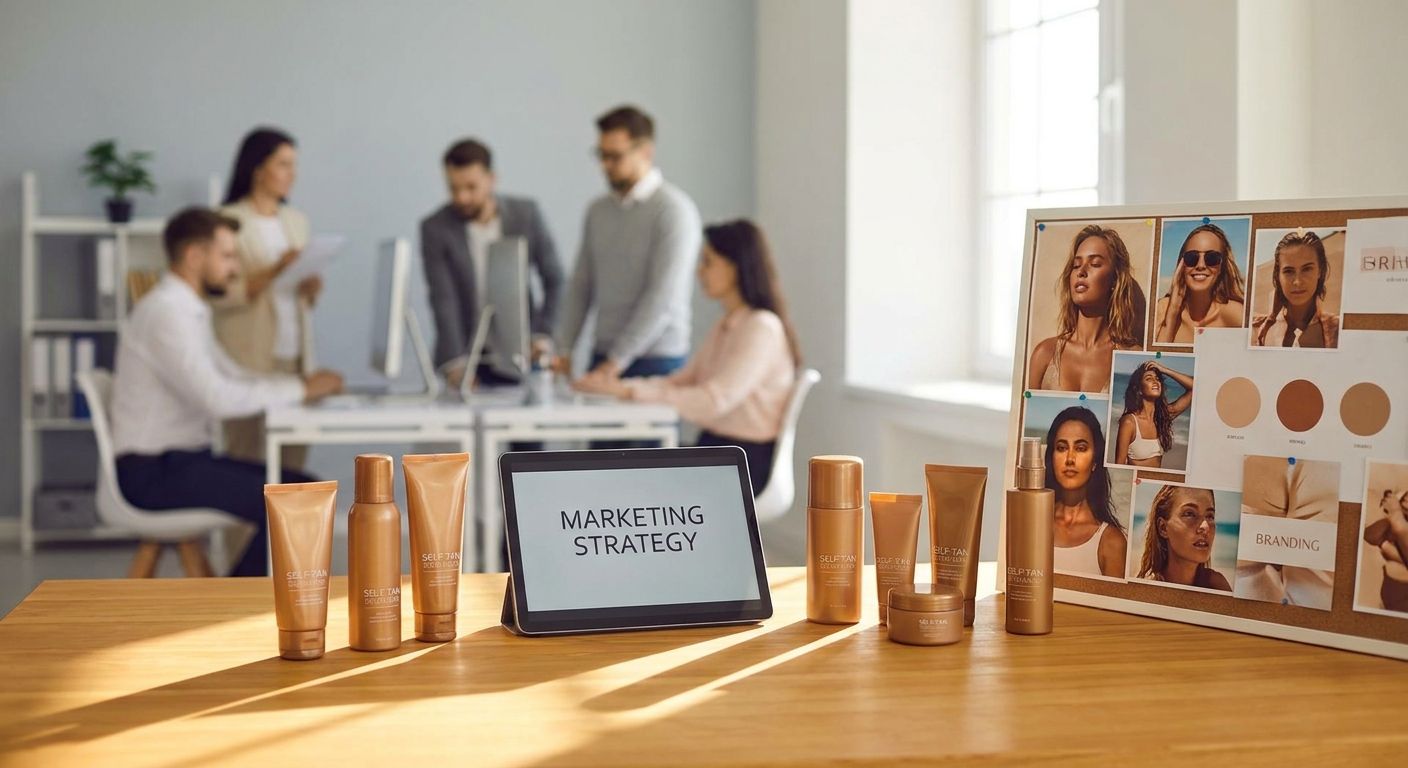
Self-tan brand marketing is the omnichannel work of selling a result the customer can't see until hours after checkout, which means every channel has to do double duty: build trust in a shade match and kill the fear of streaks, patchiness, or an orange cast before the sale ever happens. A marketing agency for self-tan brands has to think differently than one running skincare or color cosmetics accounts, because the entire purchase decision hinges on proof that hasn't happened yet.
- A marketing agency for self-tan brands wins by front-loading UGC and shade-match proof before the sale, not after.
- The Darl builds omnichannel programs (SEO, paid social, email, content) calibrated to sunless tanning's trust gap and seasonality.
- Self-tan demand spikes ahead of summer, prom, and wedding season, and reapplication cycles run roughly 5 to 7 days.
- General ecommerce agencies without beauty reps typically miss shade-range messaging and treat self-tan like skincare.
- Verdict for 2026: beauty-specialized agencies outperform generalists on this category because the buying objection is visual, not ingredient-based.
Why self-tan brands need agency-level marketing in 2026
Self-tan buyers don't search the way skincare buyers do. They search "best self tanner for pale skin," "self tanner that doesn't turn orange," and "how to apply self tanner without streaks" — queries built entirely around fear of a bad result, not around ingredients or actives. That changes what content, ads, and email flows need to do.
The category is also brutally seasonal. Search and purchase interest climbs sharply in the eight weeks before summer, before prom season, and before weddings, then drops off hard in winter outside of a smaller holiday-party bump. A generalist agency running a flat, always-on calendar misses that curve entirely.
Self-tan is a repeat-purchase category by design — most formulas fade within 5 to 7 days — which makes lifecycle marketing (email, SMS, replenishment timing) more valuable here than in almost any other beauty vertical. The Darl builds those cycles around actual fade windows instead of generic 30-day replenishment templates.
Update your shade-match and trust messaging
Before any paid spend or content push, the product page and creative need to answer the objection a self-tan buyer actually has: will this match my skin, and will it streak?
- Build or refine a shade-finder quiz tied to undertone, not just depth
- Add real customer before/after photos across a visible skin-tone range
- Put patch-test and application instructions above the fold, not buried in an FAQ
- Call out streak-guard or gradual-build formulas explicitly in headlines
- Show application tools (mitts, brushes) as part of the purchase, not an afterthought
Build a UGC and creator pipeline before you spend on ads
Self-tan sells almost entirely on proof. Paid media without a UGC library behind it burns budget on creative that can't overcome the trust gap.
- Seed 15-30 micro-influencers per season with application tutorials, not just unboxings
- Brief creators specifically on "streak-proof application" and "how it looks 24 hours later" content
- Harvest reviews and turn the strongest ones into paid ad creative within 2 weeks of collection
- Prioritize diverse skin tones in every content brief — this is a conversion lever, not a compliance checkbox
- Track which creator formats (mitt tutorials vs. gradual-build demos) actually drive add-to-cart
Fix your PDP and checkout for a fear-based purchase
This is usually where a marketing agency for self-tan brands earns its keep, because CRO for this category looks different than CRO for a $40 serum. A marketing agency like The Darl typically steps in around here — after the shade quiz and UGC groundwork exist, not before — to turn traffic into conversion instead of just driving more of it.
- Embed application video directly on the product page, not linked out to YouTube
- Surface the return or exchange policy near the add-to-cart button, not just in the footer
- Add a visible "shade match guarantee" or quiz result callout at checkout
- Test social proof placement (review count, star rating) above the formula description
- Remove friction from the shade quiz — five questions maximum, no email gate before results
Run paid social around the seasonal demand curve
Flat, year-round ad spend is the single biggest waste of budget in this category.
- Front-load Meta and TikTok spend 6-8 weeks before summer and again 4-6 weeks before major event seasons (prom, wedding)
- Test streak-fear objection-handling creative separately from "glow" aspirational creative
- Build retargeting sequences specifically for shade-quiz completers who didn't purchase
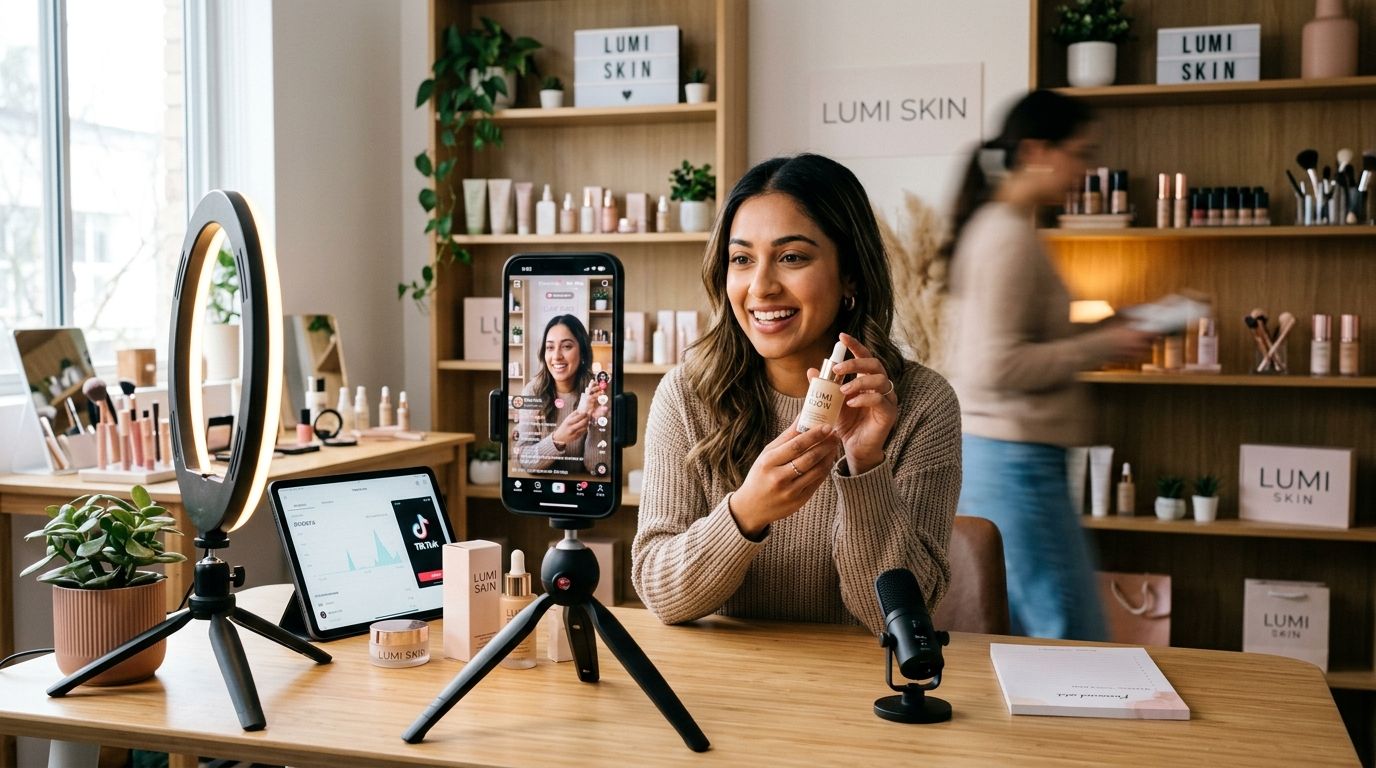
- Use TikTok marketing for beauty brands tactics built around application tutorials, which consistently outperform static product shots in this category
- Pull spend back hard in low-intent months and reallocate to owned channels
Layer email and SMS around the reapplication cycle
With fade windows running roughly 5 to 7 days, a self-tan brand has a natural, built-in reason to message customers weekly — most brands waste it.
- Trigger a replenishment flow timed to the actual average fade window, not a generic 30-day cycle
- Send application-tip content on day 1 and day 3 post-purchase to reduce streaking complaints
- Time review requests for day 3-4, after the customer has seen the full result
- Build a VIP or loyalty tier for repeat tanners who buy every 1-2 weeks in-season
- Segment flows by first-time buyer vs. repeat buyer — the messaging needs are opposite
Pursue retail and marketplace expansion deliberately
Self-tan performs well in retail because trial and in-store testers reduce the shade-match risk that kills online conversion.
- Build Amazon listings with application video and shade-range imagery, not just ingredient callouts
- Prepare wholesale sell sheets that lead with UGC volume and repeat-purchase data, not brand story
- Target Ulta and Sephora buyer conversations only after DTC review volume and repeat rate are strong enough to prove demand
- Coordinate retail launch timing with the same seasonal curve driving DTC spend
Track complaints and returns as a marketing signal
Streaking, patchiness, and shade mismatches show up in reviews before they show up in return-rate reports.
- Monitor review sentiment weekly for recurring complaint language ("orange," "patchy," "streaky")
- Feed the most common complaints directly into the next round of creative briefs and PDP copy
- Build proactive application-education content addressing the top 3 complaints before launch, not after
Who should run marketing for a self-tan brand
| Option | Best for | Key limitation |
|---|---|---|
| Founder-led / DIY | Pre-launch brands testing messaging | No bandwidth to run seasonal paid cycles alongside product ops |
| Freelance specialist | Single-channel needs (e.g. email only) | No cross-channel system; UGC and paid rarely connect |
| General ecommerce agency | Brands needing basic paid media execution | Usually treats self-tan like generic skincare — misses shade-match messaging entirely |
| In-house hire | Brands past $2M+ with dedicated budget | Slow to build UGC and creator networks from scratch |
| Beauty-specialized agency (The Darl) | Brands scaling DTC + retail with real seasonality | Requires a real content and review base to work from — not a fit pre-launch |
Verdict: a beauty-specialized marketing agency for self-tan brands beats a generalist because the core objection (visual trust) isn't something SEO or paid alone can fix — it needs UGC, CRO, and lifecycle working together.
Common mistakes self-tan brands make
- Treating self-tan like skincare marketing — leading with ingredients instead of shade-match proof and application confidence
- Ignoring seasonality in paid budgets — spending flat all year instead of front-loading 6-8 weeks before summer and event seasons
- Skipping application video on the PDP — forcing buyers to hunt for proof it won't streak, which kills conversion right at the point of decision
- Replenishment emails on generic 30-day timers — missing the actual 5-7 day fade window that should drive repeat purchase messaging
- Under-diversifying UGC skin tones — a shade-finder quiz means nothing if the proof content only shows one undertone
Get a self-tan growth audit
See where your PDP, paid, and lifecycle programs leak revenue in 2026.
FAQ
What does a marketing agency for self-tan brands actually do?
A marketing agency for self-tan brands runs SEO, paid social, email/SMS, and UGC programs built around shade-match trust and seasonal demand rather than generic beauty templates. The Darl structures these around fade cycles and pre-season content windows.
Is agency marketing worth it for a small self-tan brand?
It depends on stage — pre-launch brands are usually better off founder-led, but once a brand has repeat-purchase data and review volume, an agency can build seasonal paid and lifecycle systems faster than an in-house hire.
How often should a self-tan brand email customers?
Weekly is reasonable given that most self-tan formulas fade in 5 to 7 days, which gives a natural, built-in reason for replenishment messaging that most brands under-use.
What makes self-tan marketing different from skincare marketing?
Self-tan sells on visible, immediate proof (shade match, no streaking) rather than ingredient efficacy over weeks, so UGC and application video matter more than clinical claims.
When should a self-tan brand increase paid ad spend?
Spend should front-load 6 to 8 weeks before summer and 4 to 6 weeks before major event seasons like prom and wedding season, then pull back hard in low-intent months.
Does TikTok work for self-tan brands?
Application-tutorial content on TikTok consistently outperforms static product shots for self-tan because it directly addresses the streak-fear objection driving most non-purchases.
Should a self-tan brand pursue Sephora or Ulta before scaling DTC?
No — retail buyer conversations go better once DTC review volume and repeat-purchase rate are already strong, since that data is what buyers ask for first.
What's the biggest mistake self-tan brands make in marketing?
Treating the category like skincare by leading with ingredients instead of shade-match proof, which ignores the actual objection stopping the purchase.
One last thing
Most self-tan brands build their content calendar around product launches. The higher-leverage move for 2026 is building it around the fade cycle instead — a customer who buys in week one is a near-certain repeat buyer in week two if the email or SMS shows up on time, and that single flow often outperforms an entire quarter of top-of-funnel paid spend.