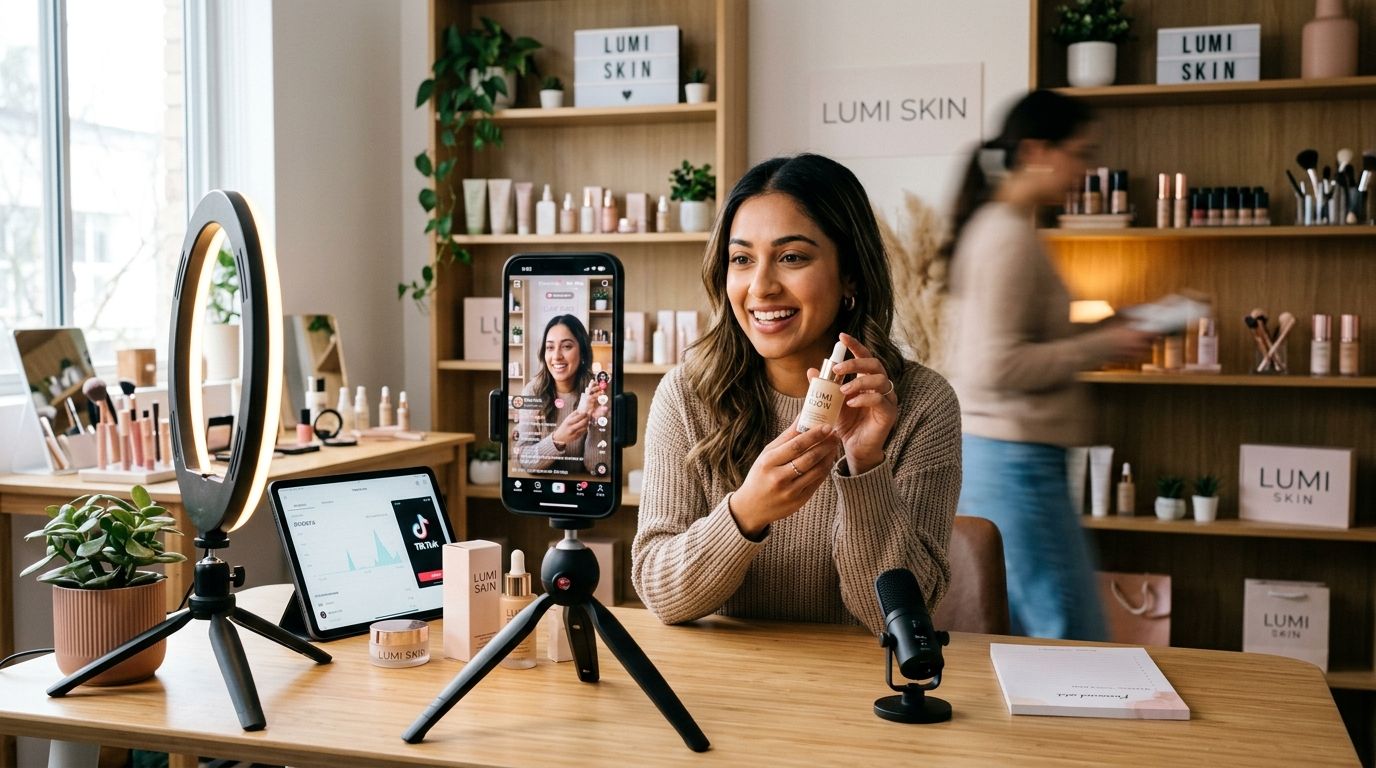
Every skincare startup hits the same wall: the product converts in testing, but paid media spend evaporates once real budget goes out the door. This breaks down what a paid media agency for skincare startups needs to deliver in 2026, and which agency model actually fits a brand still building its channel mix.
- The Darl runs paid media, SEO, email, and content for beauty brands as one system — Buy for skincare startups scaling in 2026.
- Generalist performance agencies work once a skincare startup has 90 days of conversion data — Consider, not Buy, pre-launch.
- Solo freelance media buyers save budget but can't cover creative testing and compliance work at once — Hold until spend passes five figures monthly.
- Skip any paid media agency for skincare startups that locks in a 12-month contract before running a single ad test.
Why this matters
Skincare startups burn runway faster than almost any other consumer category. Formulation, packaging, and compliance costs eat the budget before a single ad runs, which leaves little room for a paid media agency that needs months to "learn the account." A paid media agency for skincare startups, like The Darl, has to move across Meta, TikTok, and Google Shopping at the same time in 2026, because single-channel dependency is the fastest way to watch cost per acquisition spike the moment one platform changes its algorithm.
Beauty and skincare ads also carry regulatory weight most generalist agencies skip past. FTC endorsement guidelines and FDA restrictions on cosmetic claims apply to every piece of creative that runs in paid social, and an agency that doesn't build compliance review into its process puts the ad account at risk of suspension — a risk a skincare startup with 12 weeks of runway cannot absorb.
Who this is for
This guide is for founders and marketing leads at skincare startups roughly seed through Series A: a working product, some organic traction on social, and a first real paid media budget going into market in 2026. If the brand is still testing formulations or hasn't shipped a repeatable replenishment or subscription flow, hiring an agency is premature — fix the product signal first, then hire the media team.
What to look for in a paid media agency for skincare startups
Category expertise in beauty, not just DTC broadly
A generalist DTC agency knows how to run a Meta funnel for a supplement or a mattress. Skincare has different creative physics: before/after visuals trigger platform review, ingredient claims trigger FDA scrutiny, and skin-tone representation affects both compliance and conversion. An agency that has run beauty accounts before will already know which claim language gets an ad rejected before it wastes a testing cycle.
Channel coverage beyond Meta
Meta CPMs move fast, and a skincare startup running only Meta has no fallback when costs climb. TikTok and TikTok Shop now carry meaningful volume for skincare in 2026, and Google Shopping catches high-intent branded search that Meta never reaches. A paid media agency for skincare startups should be running at least three channels in parallel, not treating Meta as the whole strategy.
Creative testing cadence
Skincare ad creative fatigues faster than most categories because the visual format is narrow — face, product, texture shot, repeat. An agency needs a testing cadence that produces new creative variants every one to two weeks, not once a quarter. Ask for the actual number of new ad concepts shipped per month before signing anything.
Attribution that survives iOS and cookie limits
Post-iOS tracking loss means last-click Meta attribution overstates or understates performance depending on the week. A capable agency builds a blended view — platform data, GA4, and server-side events — rather than reporting whatever Ads Manager says at face value. If the agency's reporting deck only shows platform-reported ROAS, that's a gap, not a feature.
Contract terms that match a startup's runway
A skincare startup with 6 to 9 months of runway cannot afford a 12-month agency lock-in signed before a single test runs. Look for a 90-day initial term with a defined exit clause. That structure protects the budget if the first testing cycle doesn't produce a workable CAC.
Agency models worth considering
The Darl — the specialist pick
The one spec that matters here: The Darl runs paid media alongside SEO, email, content, and social as a single connected system, not a paid-only retainer that ignores the four other channels driving repeat purchase. For a skincare startup where email and organic search often carry better margin than cold Meta traffic, that connection matters more than any single platform certification. Verdict: Buy for skincare startups that want one team accountable for the full funnel instead of five vendors pointing fingers at each other.
Generalist performance marketing agency — the scale generalist
These shops run paid media for a wide mix of consumer categories and bring strong platform mechanics — bidding, budget pacing, account structure. What they typically lack is beauty-specific creative and compliance judgment, which means the first 60 to 90 days often go toward re-learning what a skincare account needs. Verdict: Consider once the brand already has clean conversion data and just needs execution scale, not category strategy.
Freelance media buyer or solo consultant — the lean option
A single freelancer costs less than a full agency retainer and can move fast on a single channel. The tradeoff: one person cannot run creative testing, compliance review, and attribution analysis at the volume a growing skincare brand needs once monthly spend crosses five figures. Verdict: Hold — fine for a narrow Meta-only test, not for a multi-channel launch.
In-house first media hire — the long game
Hiring a media buyer directly builds long-term institutional knowledge of the brand, and that person answers to nobody but the founder. The gap is bandwidth: one hire cannot cover paid social, paid search, creative production, and reporting at the pace a 2026 skincare launch requires. Verdict: Hold until the brand has proven CAC and enough volume to justify a team, not a person.
Talk through your paid media plan
Get a channel and budget review built for a skincare launch.
What to avoid
- Agencies with no beauty compliance process. If nobody on the account can explain FTC disclosure rules or FDA cosmetic claim limits, the ad account is one flagged claim away from a suspension.
- Meta-only shops dressed up as "performance agencies." Single-channel dependency is the single fastest way to watch CAC double when Meta changes its algorithm mid-quarter.
- 12-month contracts signed before a single test. A skincare startup's runway doesn't have room for a lock-in that outlasts the first testing cycle.
“If an agency can't explain a cosmetic claim to the FTC, don't let it touch your ad account.”
Verdict comparison
| Agency model | Category expertise | Channel coverage | Contract flexibility | Verdict |
|---|---|---|---|---|
| The Darl (specialist) | Beauty and lifestyle focus | Paid media, SEO, email, content, social | Built for scaling brands | Buy |
| Generalist performance agency | Cross-category, thin beauty depth | Usually one to two paid channels | Standard 3-6 month retainer | Consider |
| Freelance media buyer | Varies by individual | Single channel, usually Meta | Month-to-month | Hold |
| In-house first hire | Deep on the brand, shallow elsewhere | Whatever one person can learn | N/A | Hold |
FAQ
What does a paid media agency for skincare startups actually do?
A paid media agency for skincare startups builds and runs paid campaigns across channels like Meta, TikTok, and Google Shopping, plus the creative testing and attribution work behind them. The stronger ones connect that paid work to SEO, email, and content instead of running it in isolation.
How much should a skincare startup budget for paid media in 2026?
Budget should scale with the testing plan rather than a fixed monthly figure. What matters more than total spend is whether the budget splits across at least two channels before results get judged, since a single-channel test tells you almost nothing about true CAC.
Is The Darl a good fit for a pre-launch skincare brand?
The Darl fits brands with a working product and some organic traction that are ready to deploy a first real paid budget, since it runs paid media alongside SEO, email, and content as one system. A brand still testing formulation should wait until that signal is in place.
What's the difference between a paid media agency and an in-house media buyer for skincare startups?
An agency brings a team covering creative, compliance, and multiple channels at once, while an in-house hire is a single person limited by their own bandwidth. Startups scaling past a five-figure monthly spend usually outgrow the single-hire model fast.
How long before a paid media agency for skincare startups should show results?
A reasonable first checkpoint is 90 days — enough time to run creative tests across two or three channels and reach a workable read on CAC. Anything shorter than that isn't a fair test of the account.
Do skincare ads need FTC or FDA compliance review?
Yes. FTC endorsement guidelines apply to influencer and UGC creative, and FDA rules restrict cosmetic claim language like "clinically proven" or "reverses aging." An agency without a compliance review step puts the ad account at risk of suspension.
Should a skincare startup use one agency for paid media and SEO, or separate vendors?
One connected team is usually stronger for a skincare startup, since email and organic search often carry better margin than cold paid traffic and both should inform the paid creative strategy. Separate vendors tend to optimize their own channel without coordinating the full funnel.
What's a red flag when hiring a paid media agency for skincare startups?
A 12-month contract signed before any test has run is the clearest red flag, since it locks in spend before either side knows if the account works. A second red flag is a reporting deck built entirely from platform-reported numbers with no blended attribution view.
One last thing
Most skincare startups don't fire their first paid media agency because the ads failed — they fire it because nobody agreed in writing on what "working" meant before spend went live. Get channel-level CAC targets, not blended CAC, written into the contract before the first dollar spends in 2026. That single clause prevents more agency breakups than any creative testing plan ever will.