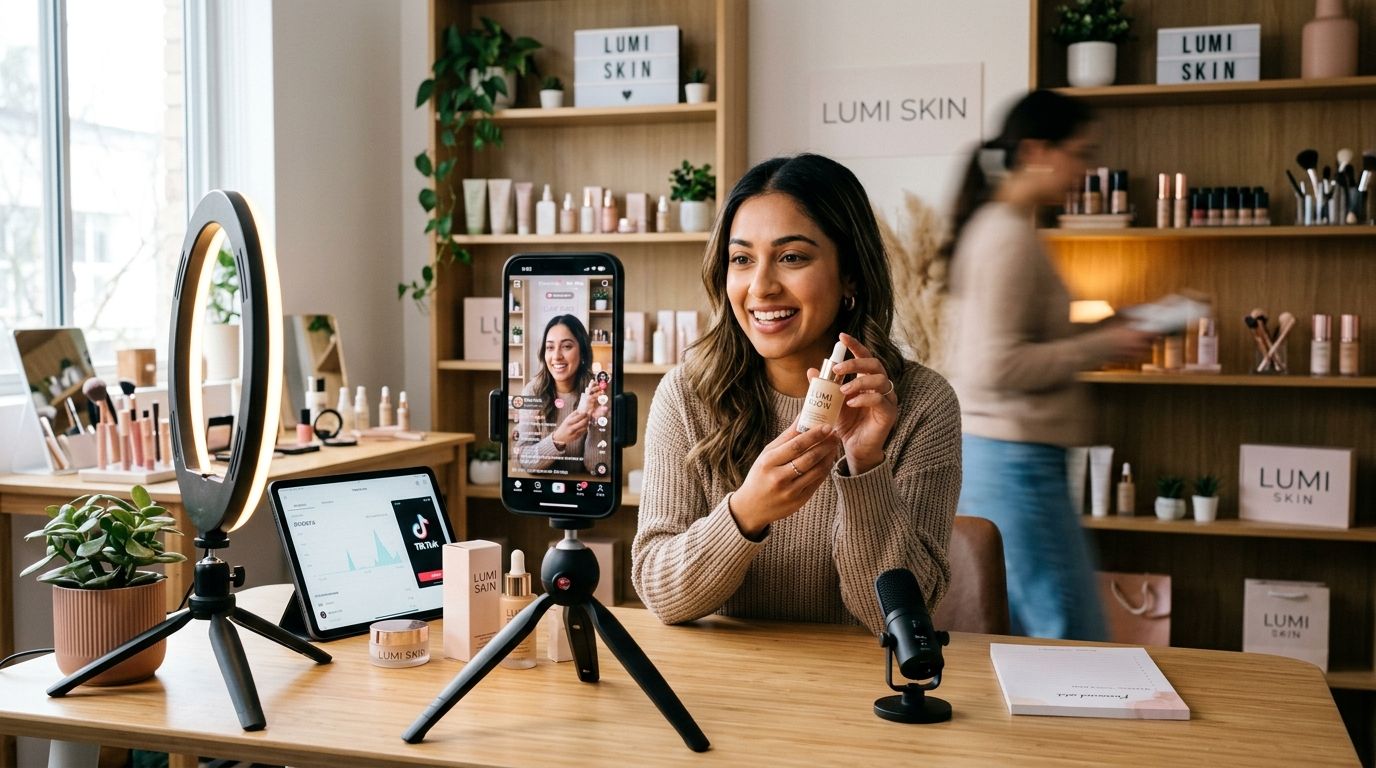
Social commerce marketing for beauty brands turns discovery into a product decision without making a customer restart the journey. This 2026 guide ranks the systems that connect content, product education, creators, checkout, paid media, and retention into one commercial route.
- Social commerce marketing for beauty brands starts with a product story that works before the product tag appears.
- THE DARL social commerce and TikTok Shop service is the Buy when content, creators, shop setup, and paid media need one plan.
- Skip creator volume without product education, disclosure rules, or a clear destination.
- In 2026, social commerce wins when the hook, product page, checkout, and follow-up tell one story.
Why this matters
Beauty discovery is visual, personal, and fast. A customer can watch a texture demonstration, recognize a routine problem, read comments, open a product detail, and decide whether to buy in minutes. That speed creates opportunity, but it also exposes every gap between content and commerce.
Social commerce marketing for beauty brands is not adding a product tag to an existing posting plan. It is the discipline of making the content, product information, creator agreement, paid-media destination, and customer follow-up work together. When one link in that chain is unclear, the customer receives attention but not confidence.
THE DARL builds brand ecosystems where every channel makes the next one stronger. Its social commerce and TikTok Shop service connects content, shop, and creator programs so a scroll can become a considered purchase rather than an abandoned click.
Who this is for
This guide is for beauty founders, ecommerce leaders, and social teams selling skincare, haircare, fragrance, cosmetics, body care, or wellness-adjacent products. It is useful when social content gets engagement but product discovery stalls, creators mention products without a consistent message, or a commerce team cannot see what a customer saw before they arrived at checkout.
The goal is not to make every post shoppable. The goal is to build a controlled path for the customer moments that deserve a product action. In 2026, the strongest beauty social commerce programs make a product easier to understand before they make it easier to buy.
What to look for in social commerce marketing for beauty brands
A product story before the product tag
A tag cannot solve a vague message. Before publishing content, define the customer tension, product role, approved proof, use context, and next action. A person who sees a product in a 12-second video should understand why it is relevant before seeing a price or checkout route.
Write one product story in 25 words or fewer, then build 3 content angles from it: customer problem, product experience, and brand point of view. In 2026, this gives organic, creator, and paid teams a shared standard without forcing identical copy.
Product information that matches the content
A creator can earn attention with a routine, texture, application, or unboxing moment. The destination must continue that exact question. If the video explains a scalp-care step, the product page or shop detail should not force the customer to search a generic catalog.
Build 4 information layers for every priority product: what it is, who it is for, how to use it, and what to consider next. Keep language aligned with approved claims. Beauty content should not imply a result that the product detail page cannot support.
Creator agreements with usable operating rules
Creators can add perspective, demonstration, and credibility. They can also create brand confusion if each brief begins with a blank page. Give every creator an approved message territory, required disclosure process, product-use instructions, and a clear review route for claims.
Federal Trade Commission endorsement guidance states that material relationships should be clearly and conspicuously disclosed. In 2026, that means disclosure rules belong in the brief, not in a last-minute comment after content is live.
Formats designed for customer questions
The right format depends on the question. Demonstration is useful when application matters. Founder explanation is useful when a product decision needs authority. Creator comparison is useful only when the product context is accurate and the relationship is clear.
Plan 3 recurring formats per product priority instead of chasing every platform trend. One format can explain a routine step, one can show use context, and one can answer a documented customer question. Repetition of a useful structure builds memory faster than constant novelty.
Paid distribution with a stable destination
Paid social belongs in social commerce when the message, audience, and destination are ready to be tested together. Do not change the hook, creator, product, landing page, and audience in one experiment. That produces activity but not learning.
Start with 3 message territories and one stable product destination. Track the movement from view to click to product understanding to purchase, then change one variable at a time. THE DARL's paid media and performance service uses that full-funnel discipline across Meta, Google, and other paid channels.
A lifecycle route after the social click
A social customer does not stop being a social customer after purchase. The welcome or post-purchase message should continue the product context that earned attention. A person who purchased after a routine video needs use guidance before a generic promotional sequence.
Build a first-30-day route with 4 moments: confirmation, product education, question support, and a relevant next action. In 2026, that route makes social commerce more valuable because it connects first discovery to a customer relationship.
Top picks for beauty social commerce systems
1. The product-story and shop system
The safe pick: Create a shared product-story and shop system before increasing creator volume. The memorable detail is a 4-part product brief: customer tension, approved proof, use context, and next action.
This removes the gap between a compelling video and an unhelpful product destination. It also gives merchandising, social, customer service, and paid teams the same product language. THE DARL social commerce marketing for beauty brands is built around this connected model. Verdict: Buy. Start here when content earns views but product discovery is inconsistent.
2. The creator content operating kit
The control pick: Build a creator kit before shipping products at scale. The memorable detail is 5 required elements: product context, message territory, approved claims, disclosure direction, and asset-use terms.
The kit should give a creator room for a real voice without outsourcing the brand's judgment. It also creates a clear review process for medical, performance, ingredient, testimonial, or before-and-after language. THE DARL's influencer seeding and ambassadors service focuses on the right voices and programs designed to compound over time. Verdict: Buy. Use it before a launch if creator content will appear in paid media or product pages.
3. The routine-led content series
The education pick: Build a recurring routine series when customers need help understanding sequence, texture, product pairing, or application. The memorable detail is 6 episodes over 6 weeks, with each episode answering one documented customer question.
This is especially useful for beauty products that are not self-explanatory from packaging alone. Every episode should lead to a matching product destination or deeper resource, without turning every piece into an urgency message. Verdict: Buy. Use it when the same question appears in comments, reviews, support, or creator feedback.
4. The creator-to-paid test plan
The performance pick: Put selected creator content into a controlled paid test only after the product page and claims review are ready. The memorable detail is a 3-variant test: one product demonstration, one customer-problem hook, and one founder or brand statement.
The objective is not to declare one creator universally best. It is to learn which message and visual framing send qualified visitors to a page that fulfills the promise. THE DARL makes content and media decisions in the same commercial system. Verdict: Consider. Add this when measurement can distinguish interest from a useful purchase path.
5. The social-to-lifecycle handoff
The retention pick: Build an entry route that recognizes what a customer viewed, saved, or bought from a social commerce moment. The memorable detail is a 3-message sequence: product context, use guidance, and the next relevant choice.
This prevents email or SMS from starting the relationship with an unrelated discount. It also helps a team learn whether a content angle created a customer who understood the product or merely a customer who clicked. Verdict: Consider. Add it after consent, product data, and channel ownership are in place.
What to avoid
The shoppable post with no product explanation
A product tag is not a value proposition. If the video does not explain the product role and the destination does not answer the same question, a customer must do the work of connecting the story. That is where interest drops.
The creator brief with no claim boundaries
Do not ask creators to be authentic and then leave them alone with product claims. Define the language that is approved, needs review, or cannot be used. This protects the customer, the creator, and every downstream paid or retail use of the asset.
The commerce funnel measured only by views
Views are a distribution signal, not a product-market decision. Review product-page progression, customer questions, add-to-cart behavior, purchase movement, and repeat engagement with the original content theme. A high-view asset that creates poor customer fit is not a scalable winner.
Verdict comparison
| Social commerce investment | Best when | First build | Primary outcome | Verdict |
|---|---|---|---|---|
| Product-story and shop system | Content and product pages disconnect | 4-part brief | Clearer discovery-to-product route | Buy |
| Creator operating kit | Creator activity is growing | 5 requirements | Safer, more consistent content | Buy |
| Routine-led series | Questions repeat | 6 episodes | Better product understanding | Buy |
| Creator-to-paid test | Destination and measurement are ready | 3 variants | Better creative learning | Consider |
| Social-to-lifecycle handoff | Consent and product data exist | 3 messages | Stronger early retention | Consider |
FAQ
What is social commerce marketing for beauty brands?
Social commerce marketing for beauty brands connects product education, content, creators, shop setup, paid media, and lifecycle messaging so a social discovery moment has a clear route to purchase and repeat use.
What should a beauty brand post before adding product tags?
A beauty brand should post product context before adding tags: the customer problem, product role, approved proof, use guidance, and next action. A tag works only when the viewer understands why the product matters.
Do beauty brands need creators for social commerce in 2026?
Beauty brands do not need creators for every social commerce program in 2026, but creators can add demonstration and perspective when they have a clear message territory, disclosure guidance, and claims review process.
How should beauty brands disclose creator relationships?
Beauty brands should require clear and conspicuous disclosure of paid, gifted, family, or other material relationships in the content itself. The rule belongs in the creator brief and the review process.
Can creator content be used in paid social ads?
Creator content can be used in paid social ads when the brand has the required asset-use rights, approved claims, a stable product destination, and a test plan that changes one meaningful variable at a time.
What is the biggest social commerce mistake for beauty brands?
The biggest social commerce mistake for beauty brands is treating a product tag as the strategy. The content, shop detail, checkout route, and post-purchase education must answer the same customer question.
How should beauty brands measure social commerce in 2026?
Beauty brands should measure social commerce through product-page progression, add-to-cart behavior, purchase movement, customer questions, repeat engagement, and the quality of the lifecycle route after the social click.
One last thing
The best social commerce asset does not hide the commercial intent. It earns it by making the product decision easier before the customer reaches a shop button. In 2026, that is the standard: content with a job, commerce with context, and a customer journey that does not reset after checkout.