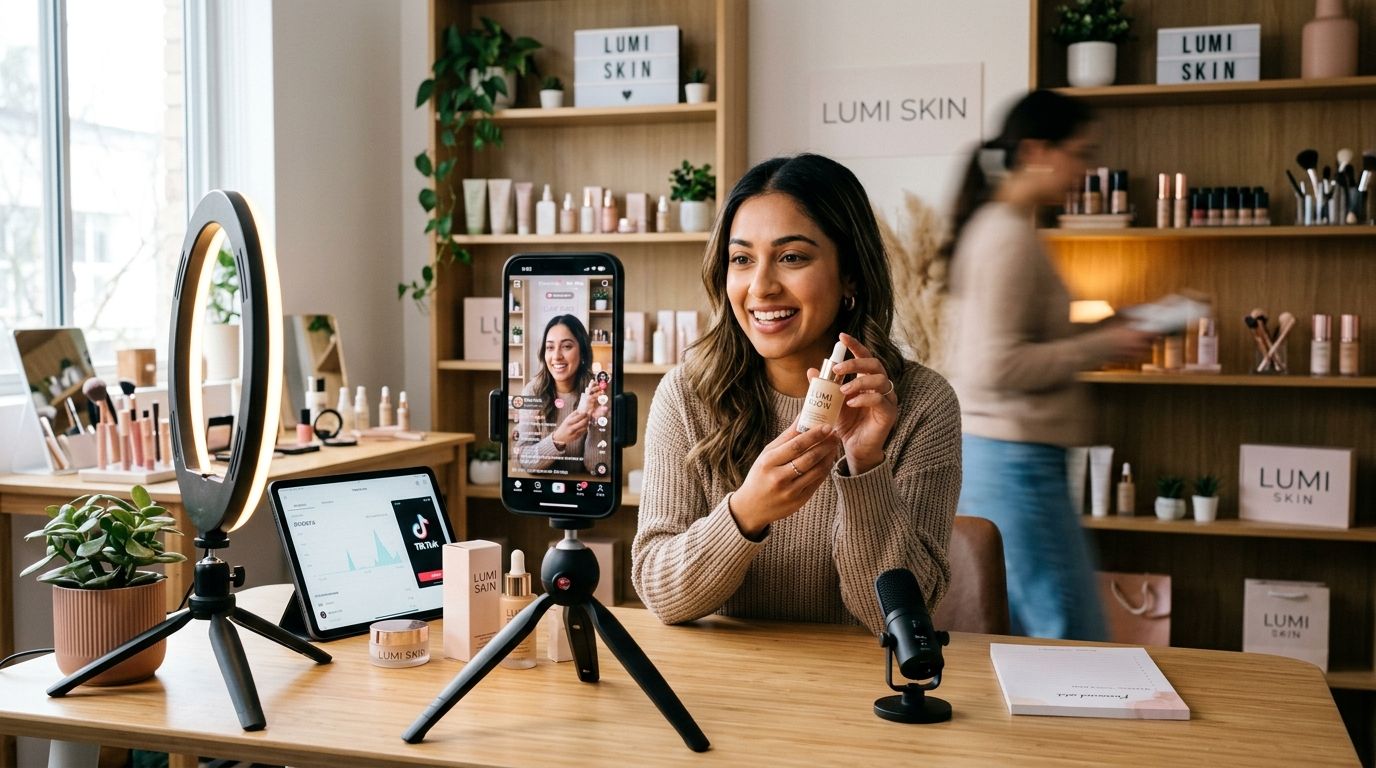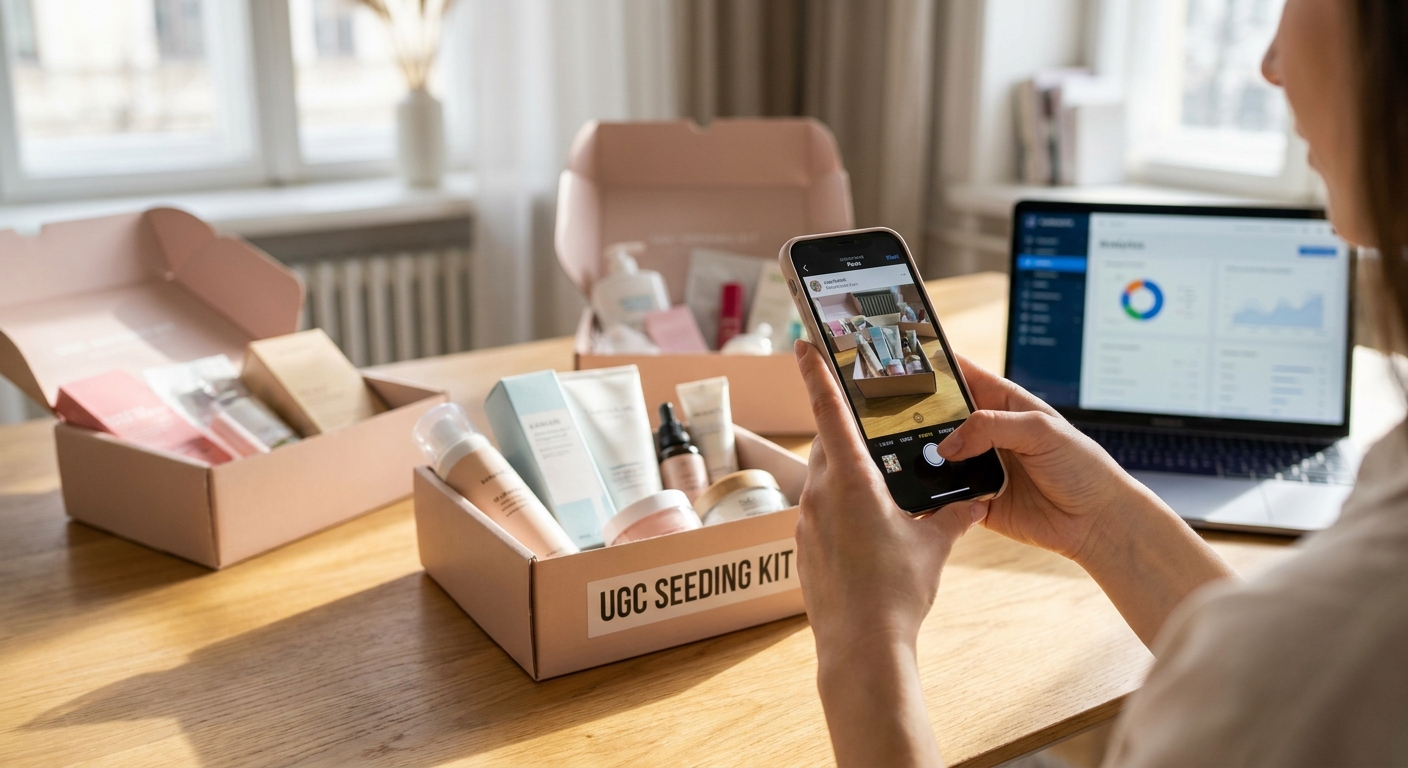
Beauty brands don't have a UGC problem in 2026 — they have a UGC system problem. Most send free product to a list of names and hope something usable comes back. This guide breaks down what actually separates a scalable seeding program from a one-off gifting spree, and which model fits your brand right now.
- Agency-managed seeding waves of 200+ units a month outscale founder-led outreach past the 10-SKU mark.
- Paid UGC contributor programs at $150-$300 per 3-asset set beat gifting-only for usable content rate.
- Micro-creator gifting (5k-50k followers) is the volume play for brands under 12 months old — Buy for library-building.
- Affiliate-linked seeding at 8-15% commission works as a layer, not a primary model — Consider, don't lead with it.
- UGC seeding for beauty brands scales through vetting and cadence, not through sending more free product.
Why this matters
Beauty brands compete on proof, not claims. A skincare ad with a founder's voiceover converts worse than the same product shown on a real face with a real texture problem it solved. That's the entire reason UGC seeding exists — and why it's turned into a line item most beauty and lifestyle brands now budget for separately from paid media.
The failure mode is predictable: a brand seeds 300 units to a spreadsheet of followers-count-only names, gets 4% of that content back usable for ads, and concludes UGC "doesn't work." It's not the tactic. It's the lack of a system behind it. THE DARL builds UGC seeding into full-funnel programs for consumer and beauty brands specifically because seeding without a paid-social and content pipeline attached wastes both product and time.
Who this is for
This guide is for beauty and lifestyle brand marketers — founders, growth leads, or in-house social managers — who are past the "send product to friends" stage and need a repeatable UGC seeding program that feeds paid social, organic content, and Amazon or retail listings at the same time. If you're shipping fewer than 20 units a month with no tracking on usable content rate, start here before you scale spend.
What to look for in UGC seeding for beauty brands
Usage rights clarity
If the creator agreement doesn't spell out whitelisting and paid-ad usage before the box ships, you'll be renegotiating rights after the content already performs. Lock usage terms — organic-only, paid whitelisting, or full buyout — before the seeding wave goes out, not after a piece goes viral.
Creator vetting for brand fit
Follower count tells you reach. It tells you nothing about whether a creator's skin tone, undertone, or aesthetic matches your product line. A vetting pass that filters for category relevance (skincare creators who post routines, not just lifestyle creators) is the single biggest lever on usable content rate.
Seeding cadence and batch size
One giant 500-unit send a quarter behaves nothing like four 125-unit waves spread across the same period. Smaller, consistent batches let you course-correct the brief and creator list between waves instead of finding out everything went wrong after the whole budget shipped.
Content usability rate tracking
If you're not tracking what percentage of seeded units returns usable content, you're seeding blind. Beauty brands running structured programs in 2026 typically track this by SKU and by creator tier — it's the number that tells you whether to keep or cut a segment.
Paid vs. organic seeding mix
Gifting-only seeding produces organic content and goodwill. Paid contributor seeding produces content built for ad performance from the start — hook-first, faster cuts, testable variants. Most scaled programs run both, deliberately, not by accident.
Integration with paid social
Seeded content that never makes it into a Spark ad or whitelisted post is a sunk cost. The programs that scale treat seeding as the top of the paid-social content pipeline, not a separate PR activity.
Top seeding models — and the verdict on each
1. Micro-creator gifting wave — the volume play. Target creators in the 5,000-50,000 follower range, send 80-100 units per wave, no fee attached. This is how early-stage beauty brands build a content library fast. Usable content rate runs lower than paid models, but the cost per asset is close to zero beyond product cost. Verdict: Buy for brands under 12 months old building their first library.
2. Paid UGC contributor program — the reliable pipeline. Pay creators a flat fee, typically $150-$300 for a set of three deliverables, in exchange for guaranteed usage rights and a brief. This model consistently outperforms gifting-only on usable content rate because creators are incentivized to hit the brief, not just post whatever they want. Verdict: Buy once you're spending on paid social and need ad-ready assets on a schedule.
3. Affiliate-linked seeding — the pay-for-performance model. Creators get product plus a commission, usually 8-15%, on sales they drive. It's cheap upfront but slow to produce volume, since creators without an existing audience pull don't move enough units to make the commission worth their time. Verdict: Consider as a layer stacked on top of another model, not as your primary seeding engine.
4. Agency-managed seeding program — the scale mechanism. Once a beauty brand is running seeding waves of 200+ units a month across multiple SKUs, managing vetting, briefs, contracts, and reporting in-house stops being a part-time job. THE DARL builds these programs as part of broader omnichannel work — connecting seeding output directly into paid media and content calendars instead of letting it sit in a shared drive. Verdict: Buy once you've crossed three SKUs or 200 monthly units and the spreadsheet is breaking.
5. DIY spreadsheet seeding — the founder-led starting point. Manual outreach, manual tracking, no vetting layer. It works at low volume. Past roughly 10 sends a week, usable content rate typically drops under 10% because nobody's filtering for fit before the box ships. Verdict: Skip once volume outpaces your ability to vet each creator personally — the model doesn't degrade gracefully, it just stops producing usable content.
Build a UGC seeding program that scales
THE DARL connects seeding, paid social, and content into one pipeline.
What to avoid
- Seeding to mega-influencers as a primary strategy. A 500k-follower creator generates reach, not usable ad content — the footage rarely matches the raw, testimonial style that converts in paid social.
- One-time gifting with no brief. Sending product with a generic "tag us!" caption produces content you can't legally or creatively use in ads. Every seeding wave needs a one-page brief, even an informal one.
- Seeding every follower-count tier the same way. A 5k-follower skincare creator and a 500k-follower lifestyle creator need different offers, different briefs, and different usage terms — treating them identically wastes budget on the wrong incentive structure.
Verdict comparison
| Model | Cost structure | Typical usable rate | Scale ceiling | Verdict |
|---|---|---|---|---|
| Micro-creator gifting | Product only | Moderate | ~100 units/wave manageable solo | Buy (early stage) |
| Paid UGC contributor | $150-$300 per set | High | Scales with budget | Buy (scaling paid social) |
| Affiliate-linked | 8-15% commission | Low-moderate | Slow to build volume | Consider (as a layer) |
| Agency-managed program | Retainer/managed fee | High | 200+ units/month | Buy (past 3 SKUs) |
| DIY spreadsheet | Time only | Drops under 10% at volume | Breaks past ~10 sends/week | Skip (once scaling) |
FAQ
What is UGC seeding for beauty brands?
UGC seeding is sending free or paid product to creators in exchange for authentic content a beauty brand can use organically or in paid ads. In 2026, most scaled programs combine gifting, paid contributor fees, and affiliate terms rather than relying on one model alone.
How many creators should a beauty brand seed to per month?
Early-stage brands typically start with 80-100 units per wave, while brands past three SKUs often run 200+ units a month across multiple creator tiers. The right number depends on your usable content rate, not just budget.
What's a good usable content rate for UGC seeding?
A vetted, briefed seeding program should return well above the 10% floor seen in unvetted DIY outreach. Programs with clear briefs and creator vetting consistently outperform blind spreadsheet sends.
Is UGC seeding better than paid influencer marketing?
They solve different problems: seeding produces raw, testimonial-style content for ads and organic posts, while paid influencer marketing buys reach on an existing audience. Most beauty brands scaling in 2026 run both, with seeding feeding the content pipeline that paid campaigns use.
How much does UGC seeding cost for beauty brands?
Gifting-only seeding costs roughly the product's landed cost per unit, while paid contributor programs typically run $150-$300 per creator for a set of three deliverables. Affiliate-linked seeding adds an 8-15% commission on sales instead of an upfront fee.
Should beauty brands pay creators for UGC or gift product only?
Gifting-only works for early content library building; paid contributor arrangements produce more reliably ad-ready content because creators are working against a brief. Most programs blend the two rather than choosing one exclusively.
Can UGC seeding replace paid ads?
No — seeding produces the creative that paid ads need, but it doesn't replace media spend or targeting. Seeded content that never gets whitelisted into paid social is a sunk cost, not a substitute for a media budget.
One last thing
The beauty brands winning at UGC seeding in 2026 aren't the ones sending the most product — they're the ones sending fewer, better-briefed units to creators who already buy in the category. Cut your list by half, add a one-page brief, and track usable content rate for one full wave before you decide the tactic isn't working.