Skincare launches live or die in the first six to eight weeks after they hit shelves — the strategies below rank what actually pushes a launch from social buzz into repeat purchase in 2026, not what looks good on a slide deck.
- Micro-influencer seeding waves beat single celebrity drops for skincare launches in 2026 — buy the strategy.
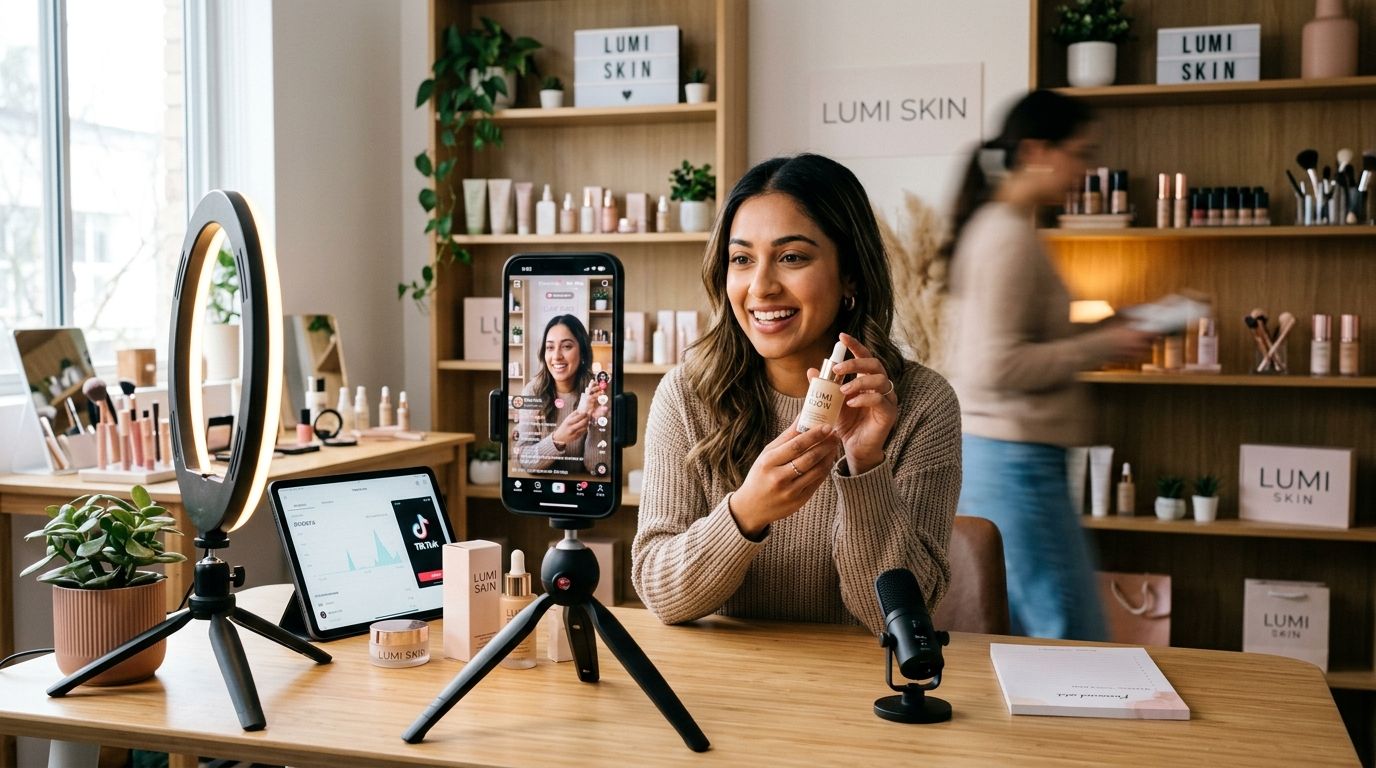
- Founder-led TikTok content drives the discovery layer paid media alone can't replace.
- UGC-first paid amplification is the highest-leverage move on this list once seeding proves the product works.
- Affiliate commission tiers reward repeat creators but only after week one seeding validates the claims.
- Skip single celebrity endorsements with zero audience overlap — the discount code turns into a vanity metric.
Why this matters
Most skincare launch budgets get spent backward: a big-name influencer post goes out on day one, before there's any proof the formula does what the label says. Beauty audiences in 2026 are more skeptical of paid endorsements than they were even two years ago — ingredient callouts and before/after skepticism show up in comment sections within hours of a post going live.
The strategies that work for a skincare launch specifically are the ones that build proof before they buy reach. That's a different sequencing than a fashion drop or a supplement launch, and it's why generic influencer marketing playbooks underperform when they get applied to skin. Influencer seeding for skincare launches works because it front-loads real usage before spend, not after.
How this list is ranked
Each strategy below is filtered against three things that matter for a skincare launch specifically, not for beauty broadly: proof of efficacy before scale, cost per authentic view versus cost per follow, and whether the tactic still works past launch week or dies the day the campaign budget stops. A strategy that only works while you're paying for it isn't a launch strategy — it's a media buy wearing a launch costume.
The ranked strategies
1. Micro-influencer seeding waves — the volume play
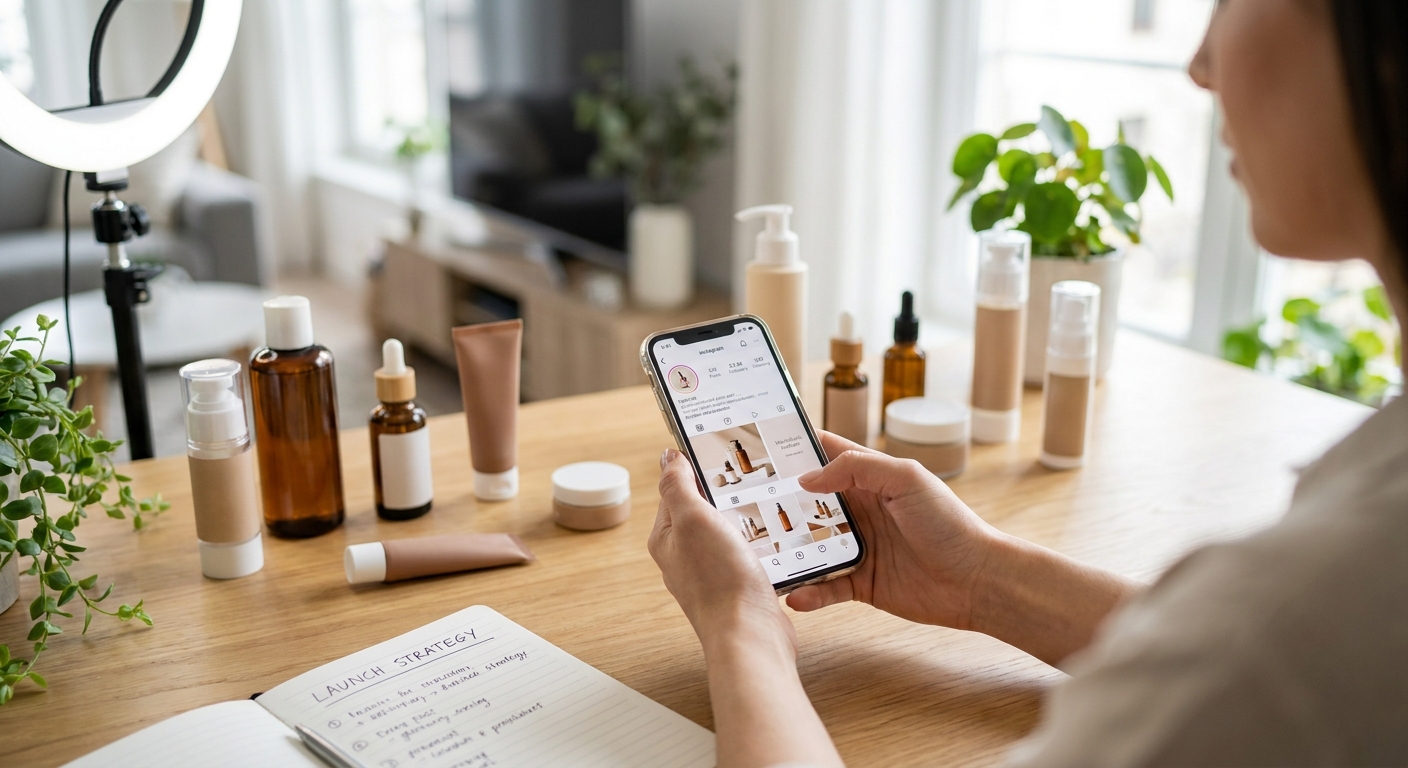
Send product to 20 to 50 micro-influencers (10,000 to 80,000 followers) in staggered waves over an 8 to 12 week pre-launch window instead of one mass mailer the week before launch. Staggering the waves means the second and third rounds of creators post organic reactions to a product that's already generating comments, which lifts completion and save rates on the platform side.
The skin concern match matters more than follower count here — a 15,000-follower creator with visible acne texture posting about a blemish serum outperforms a 200,000-follower general beauty account every time on comment quality. Verdict: Buy — this is the base layer every other strategy on this list depends on.
2. Founder-led TikTok content — the algorithm's favorite
Founder-facing video (ingredient breakdowns, formulation decisions, why a claim is on the label) consistently outperforms polished brand content on TikTok because the platform's recommendation system favors unedited, talking-to-camera formats. Three to four founder posts a week during a launch window keep the account active enough to get pushed into the For You feed rather than sitting flat at follower-only reach. TikTok marketing for beauty brands builds this cadence around a content calendar instead of leaving it to whenever the founder has time. Verdict: Buy.
3. UGC-first paid amplification — the multiplier
Once seeding produces organic content with real engagement, feeding the top 10-15% of that content into paid social spend costs less per view than brand-produced creative and converts better because the audience already recognizes it as a real person, not an ad. This only works after seeding — running paid on unproven creative before launch week is the single most common budget leak in skincare launches. UGC seeding for beauty brands covers how to scale the pipeline from seeded content to ad account. Verdict: Buy — this is the highest-leverage move on the list.
4. Affiliate and commission tiers for repeat creators — pay for performance
Once a launch has three or four weeks of seeding data, moving your best-performing creators onto commission-based affiliate terms turns a one-time gifting relationship into an ongoing acquisition channel. This works because it filters itself — creators who don't convert drop out, and the ones who do keep posting because there's a reason to. Running this before you have conversion data means paying commission on creators who were never going to move product anyway. Verdict: Buy, but only after week three.
5. Mid-tier credibility partners — the trust builder
A smaller number of 100,000-500,000 follower creators, brought in after micro-seeding has already generated organic proof, add a layer of perceived credibility that pure micro-influencer volume doesn't. The mistake is leading a launch with this tier instead of using it as a second wave — mid-tier creators posting about a product with zero prior social footprint reads as a paid placement, and audiences treat it that way in the comments. Verdict: Consider, sequenced second, not first.
6. Dermatologist and esthetician partnerships — the credibility shortcut
A licensed professional talking through the formulation or the skin type it's built for adds a claims-defense layer that a beauty creator can't replicate, which matters more for actives-heavy launches (retinoids, acids, prescription-adjacent ingredients) than for a basic moisturizer. This is a smaller-volume tactic — a handful of these partnerships does more for credibility than reach. Verdict: Consider for actives; Skip for low-concentration or fragrance-forward launches where the credibility gap doesn't exist.
7. Single celebrity or top-tier endorsement — the expensive wildcard
A single post from a top-tier creator with no prior connection to the brand and no audience overlap with the skin concern the product solves generates a reach spike and almost no downstream conversion, because the audience has no context for why this person is using this product. It looks impressive in a launch recap deck and does very little for repeat purchase. Verdict: Skip unless the creator has a documented, pre-existing connection to the category.
“If the influencer's audience doesn't overlap with the skin concern the product solves, the discount code is a vanity metric.”
Strategy comparison
| Strategy | Best for | Timeframe | Verdict |
|---|---|---|---|
| Micro-influencer seeding waves | Every skincare launch | 8-12 weeks pre-launch | Buy |
| Founder-led TikTok content | Discovery and algorithmic reach | Ongoing, 3-4x/week | Buy |
| UGC-first paid amplification | Scaling proven content | Post-seeding, weeks 4+ | Buy |
| Affiliate commission tiers | Repeat creators with conversion data | Week 3 onward | Buy (conditional) |
| Mid-tier credibility partners | Adding perceived trust | Second wave | Consider |
| Dermatologist partnerships | Actives-heavy formulas | Pre and post-launch | Consider |
| Single celebrity endorsement | Rarely, category-relevant only | One-off | Skip |
Build the seeding-to-paid pipeline
See how a launch sequence is structured before you spend the media budget.
How to source the right partners
- Vet the skin concern match before the follower count. A creator's own skin texture, tone, and stated concerns should line up with what the product treats — mismatch shows up in comments within hours.
- Ask for a content history, not a media kit. Past brand partnerships on the same platform tell you more about engagement quality than any rate card.
- Sequence tiers instead of stacking them. Micro-seeding first, mid-tier and affiliate second, top-tier last (if at all) — reversing the order is the most common reason a skincare launch overspends on reach and underperforms on conversion.
FAQ
What's the best influencer marketing strategy for a skincare launch in 2026?
Micro-influencer seeding waves of 20 to 50 creators over an 8 to 12 week pre-launch window are the strongest strategy for a 2026 skincare launch because they build organic proof before paid spend starts. Follower count matters less than skin concern match for this tactic.
Is TikTok or Instagram better for a skincare launch?
TikTok generally drives more discovery for a new skincare launch because its recommendation system favors unedited, founder-facing video over polished brand content. Instagram still matters for retention and UGC repurposing once the audience already knows the product.
How much should a skincare brand spend on influencer seeding before launch?
There's no fixed number — it depends on product cost and creator tier — but the structural rule holds regardless of budget: seed in waves over 8 to 12 weeks rather than a single mailer the week of launch. Staggering waves produces compounding organic engagement.
Should a skincare brand pay influencers or use gifting only?
Start with gifting during the seeding phase, then move top-performing creators to commission-based affiliate terms once there's conversion data, typically around week three of the launch. Paying commission before there's proof wastes budget on creators who were never going to convert.
Do celebrity endorsements work for skincare launches?
Rarely, and only when the celebrity has a real pre-existing connection to the skin concern the product solves. A single high-follower post with no category relevance generates a reach spike and very little repeat purchase.
How is UGC different from influencer seeding for a skincare launch?
Influencer seeding is the process of getting product into creators' hands to generate organic content; UGC-first paid amplification is what you do with that content afterward, feeding the best-performing pieces into paid social. Seeding has to happen first.
When should dermatologist partnerships be used in a skincare launch?
Dermatologist and esthetician partnerships matter most for actives-heavy formulas — retinoids, acids, prescription-adjacent ingredients — where a claims-defense layer adds real credibility. For low-concentration or fragrance-forward launches, the credibility gap they close doesn't exist, so it's a lower priority.
What's the biggest mistake brands make with influencer marketing for skincare launches?
Leading with a top-tier or celebrity post before any micro-seeding has happened. Without organic proof already circulating, the audience reads the placement as paid and conversion drops even when reach is high.
One last thing
The launches that hold their sales past week four aren't the ones with the biggest single influencer post — they're the ones where the seeding wave from week one is still generating organic mentions in week eight, because the product actually did what the creator said it did. Sequence proof before reach, every time.