Picking a cro agency for beauty ecommerce brands is a revenue decision, not a marketing one — the wrong partner tests hero images while your PDP, email flow, and paid funnel keep leaking checkout traffic in 2026.
- The right cro agency for beauty ecommerce ties PDP tests to email, paid, and affiliate flows instead of isolated hero swaps.
- THE DARL treats web design, paid media, and AI-powered testing as one funnel, not three separate vendors.
- Skip agencies without a beauty-specific pattern library for shade matching, ingredient claims, and quiz personalization.
- Cart abandonment sits near 70% industry-wide (Baymard Institute) — a beauty CRO partner should attack that number by channel.
- Budget for a testing cadence, not a redesign: one-off PDP facelifts rarely move revenue on their own in 2026.
Why this matters
Beauty ecommerce runs on visual density: swatches, ingredient callouts, before-and-after proof, shade finders, and subscription upsells all compete for the same above-the-fold space. Cart abandonment across ecommerce sits near 70% (Baymard Institute, ongoing research), and beauty brands carry extra friction on top of that baseline — shade risk, return anxiety, ingredient skepticism — that a generic CRO playbook never touches.
A cro agency for beauty ecommerce brands has to test the PDP, the checkout, the post-purchase flow, and the paid landing page as one system. A conversion lift on one page that breaks the next page cancels itself out. Use that as the filter for every agency conversation you run in 2026.
Who this is for
This guide is written for DTC beauty, skincare, haircare, and fragrance brands running paid and organic traffic with a conversion rate that hasn't moved in two or three quarters despite steady spend. You've got a live Shopify or headless storefront, a real SKU count, and probably a subscription or replenishment model dragging down urgency at checkout. THE DARL builds this kind of testing into an omnichannel growth model instead of treating CRO as a bolt-on, and that distinction is the whole point of this guide.
What to look for in a CRO agency for beauty ecommerce
A beauty-specific testing pattern library
Ask what they've tested on shade finders, skin quizzes, and ingredient callouts — not generic subject-line and button-color experiments. Beauty PDPs carry a purchase-risk problem general apparel and electronics don't have: shade mismatch and skin reaction. An agency without a pattern library for that risk is guessing on your storefront.
Testing velocity, not a single redesign
A cro agency for beauty ecommerce brands should be running experiments weekly, not delivering one big redesign and calling it done. One PDP relaunch might buy a temporary lift; a testing cadence compounds it through 2026 and into 2027.
Funnel-wide thinking across channels
PDP tests that ignore the email flow or the paid landing page feeding them are optimizing in a vacuum. The agency needs to connect PDP, post-purchase, and paid funnel work — the same discipline that pairs a paid landing page with the funnel sitting behind it.
Mobile-first execution
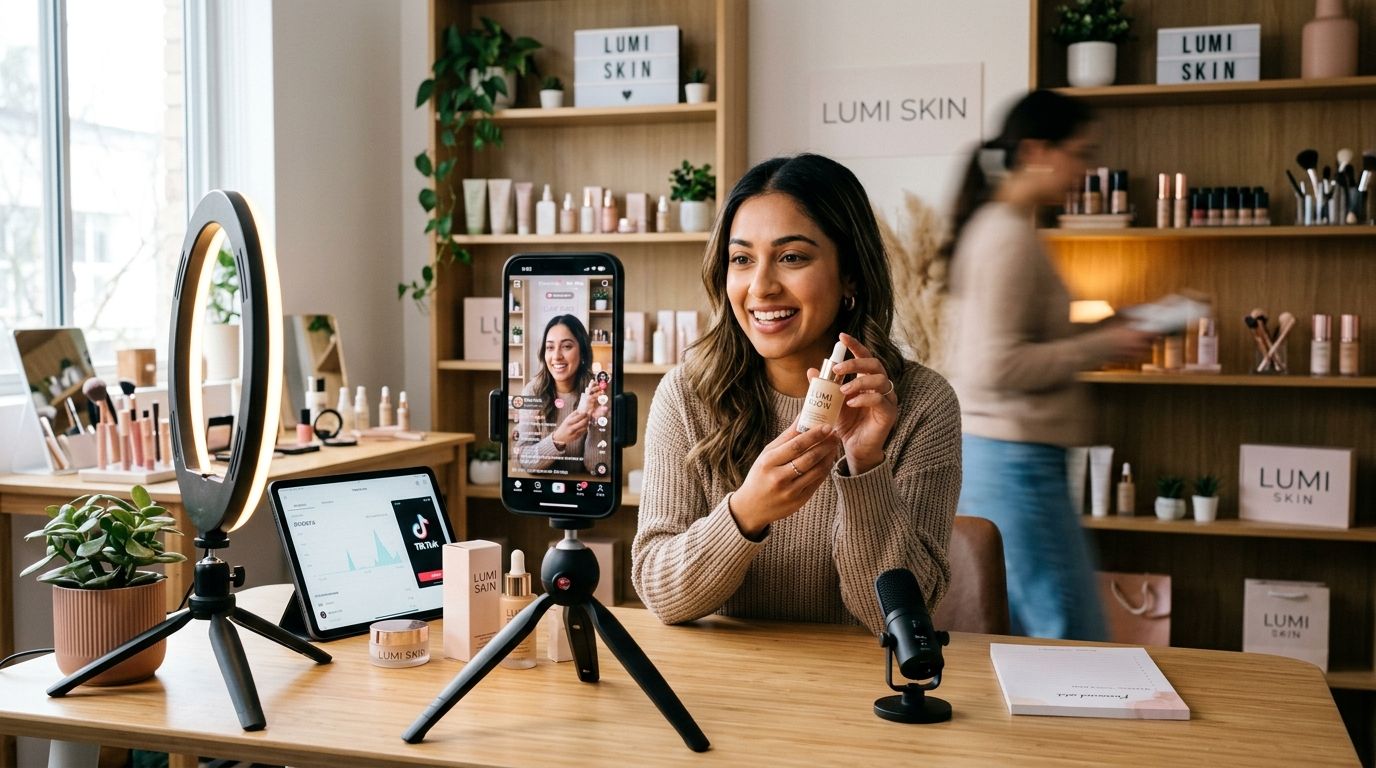
Most beauty ecommerce PDP traffic arrives on a phone, especially anything driven by TikTok or Instagram. An agency that designs desktop-first and adapts down loses the tests that matter most in 2026.
Revenue-tied reporting
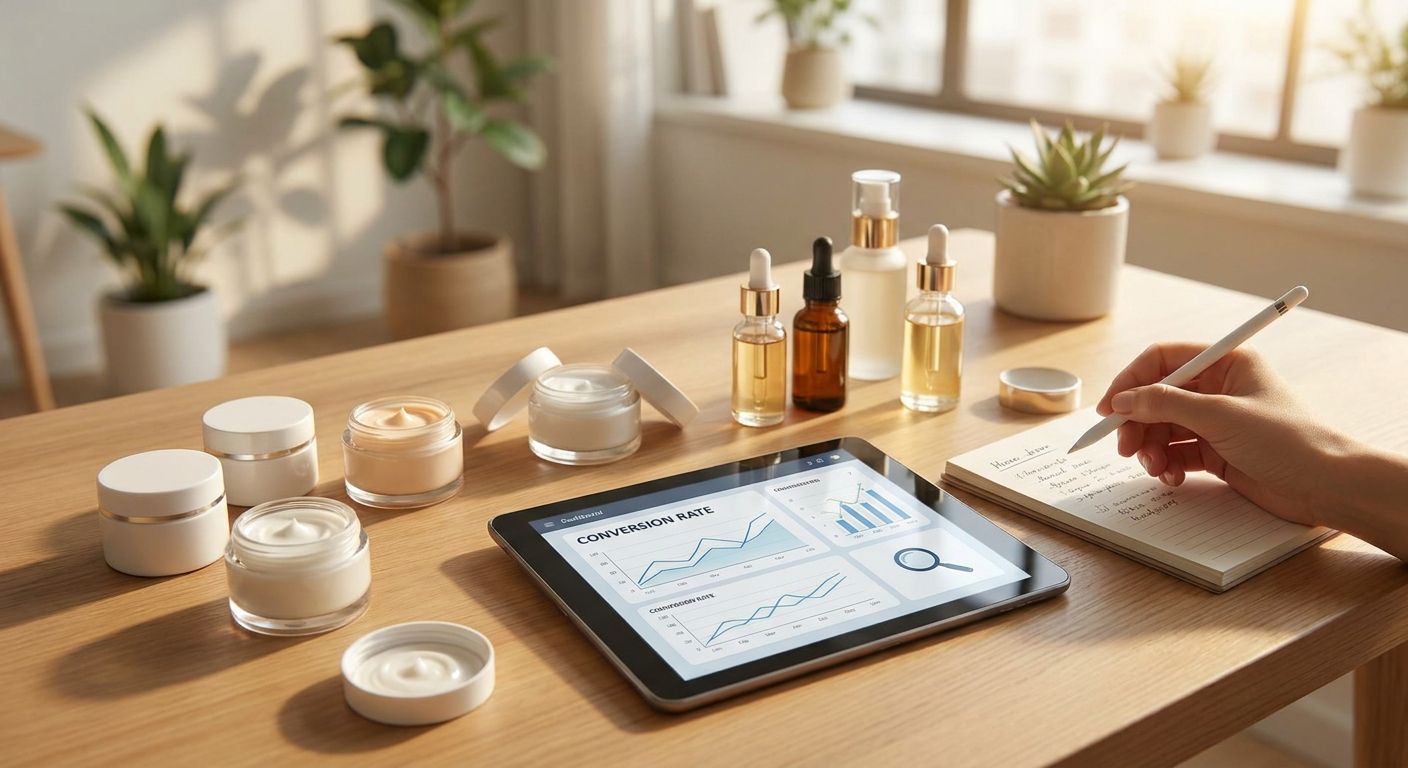
A conversion rate lift means nothing if average order value drops or return rate climbs. Ask for AOV, LTV, and repeat-purchase rate alongside any conversion number — a real cro agency for beauty ecommerce reports revenue, not vanity percentages.
“If your CRO agency can't point to a shade-matching or return-rate test they've run, they haven't worked a beauty ecommerce funnel.”
The four CRO levers worth paying for
The foundation fix: PDP and landing page redesign
The safe pick. Web design for beauty ecommerce brands rebuilds the PDP and landing pages around speed and clarity first. Google's Core Web Vitals set the bar for a "good" Largest Contentful Paint at 2.5 seconds, and a beauty PDP loaded with high-res swatch imagery blows past that constantly. Fix load speed before you fix copy. Verdict: Buy.
The overlooked lever: post-purchase and lifecycle testing
The overlooked pick. Everyone tests the add-to-cart button; almost nobody tests the post-purchase sequence that turns a first order into a second one. For subscription and replenishment beauty brands, that sequence carries more lifetime revenue than the PDP itself. Verdict: Consider if your repeat-purchase rate lags the rest of your category in 2026.
The wildcard: AI-powered personalization and testing
The wildcard. AI-powered marketing for beauty ecommerce brands covers dynamic shade recommendations, personalized quiz results, and testing that adjusts to traffic source in real time. It needs enough traffic volume to reach statistical confidence fast, so a brand under meaningful monthly sessions won't see payoff quickly. Verdict: Consider once mobile traffic volume clears a meaningful threshold.
The most misunderstood: paid media funnel alignment
The most misunderstood pick. Beauty brands run paid social and Amazon traffic into landing pages that were never tested against that specific audience segment, then blame the ad creative when conversion drops. Align the landing page test plan with the paid funnel behind it before touching the ad account. Verdict: Buy — this is the fastest fix most brands skip in 2026.
Build a funnel that compounds, not one-off tests
See how THE DARL ties web design, paid media, and lifecycle into one CRO system.
What to avoid
- A single PDP redesign pitched as "CRO." A one-time facelift, not a testing cadence, stalls out within a quarter.
- Generic CRO shops with no beauty compliance awareness. Ingredient and efficacy claims carry legal risk a general ecommerce tester won't flag.
- Reports that show conversion lift with no AOV or return-rate context. A lift that raises returns isn't a win — it's a mirage.
How the four levers stack up
| Lever | Best for | Signal to track | Verdict |
|---|---|---|---|
| PDP and landing page redesign | Brands with slow load times or high bounce | Largest Contentful Paint under 2.5 seconds | Buy |
| Post-purchase and lifecycle testing | Subscription and replenishment brands | Repeat-purchase rate | Consider |
| AI-powered personalization | Brands with meaningful mobile traffic volume | Quiz-to-purchase rate | Consider |
| Paid funnel alignment | Brands spending on paid social or Amazon | Landing-page conversion rate by traffic source | Buy |
FAQ
What does a CRO agency for beauty ecommerce brands actually do?
A CRO agency for beauty ecommerce brands runs structured tests on your PDP, checkout, and post-purchase flow to raise conversion rate, average order value, and repeat purchase rate. The best ones tie those tests to your paid and email funnels instead of optimizing pages in isolation.
Is CRO different for beauty brands than general ecommerce?
Yes — beauty ecommerce carries shade-match risk, ingredient skepticism, and return anxiety that general retail testing doesn't account for. A generic CRO agency without a beauty-specific pattern library will test the wrong variables first.
How long before a beauty ecommerce CRO program shows results?
Expect the first meaningful signal within 60 to 90 days of a testing cadence starting, not from a single redesign. Beauty brands with lower traffic need longer testing windows to reach statistical confidence.
Should a beauty brand run CRO in-house or hire an agency?
Most beauty brands without a dedicated CRO hire benefit from an agency because it arrives with a tested pattern library across other beauty clients. In-house makes sense once you're running weekly experiments with a full-time analyst watching them.
What's the difference between a CRO agency and a full marketing agency?
A CRO agency focuses narrowly on conversion testing; a full omnichannel agency ties CRO to paid media, email, SEO, and content so the funnel improves everywhere at once. Beauty brands scaling past a single channel usually need the second model in 2026.
Does CRO work for a beauty brand with low traffic?
CRO still works at low traffic, but tests need to run longer to reach statistical confidence and should focus on high-impact pages like the PDP and checkout rather than small tweaks. Prioritize fewer, bigger tests over a high volume of small ones.
What tools does a CRO agency use for beauty ecommerce testing?
Most agencies run heatmaps, session recordings, and A/B or multivariate testing platforms alongside analytics tied to revenue metrics like AOV and LTV. The specific stack matters less than whether the agency ties results back to revenue, not just conversion rate.
Is a PDP redesign the same thing as CRO?
No — a PDP redesign is one input into CRO, not the whole program. Cart abandonment sits near 70% industry-wide, and a redesign alone rarely moves that number without ongoing testing behind it.
One last thing
The highest-leverage test most beauty ecommerce brands skip in 2026 isn't a headline or a button color — it's replacing studio-only product photography with UGC-style imagery above the fold on the PDP. Shoppers trust a stranger's hands more than a lightbox shot, and closing that trust gap is exactly what a cro agency for beauty ecommerce brands should be testing first, not last.