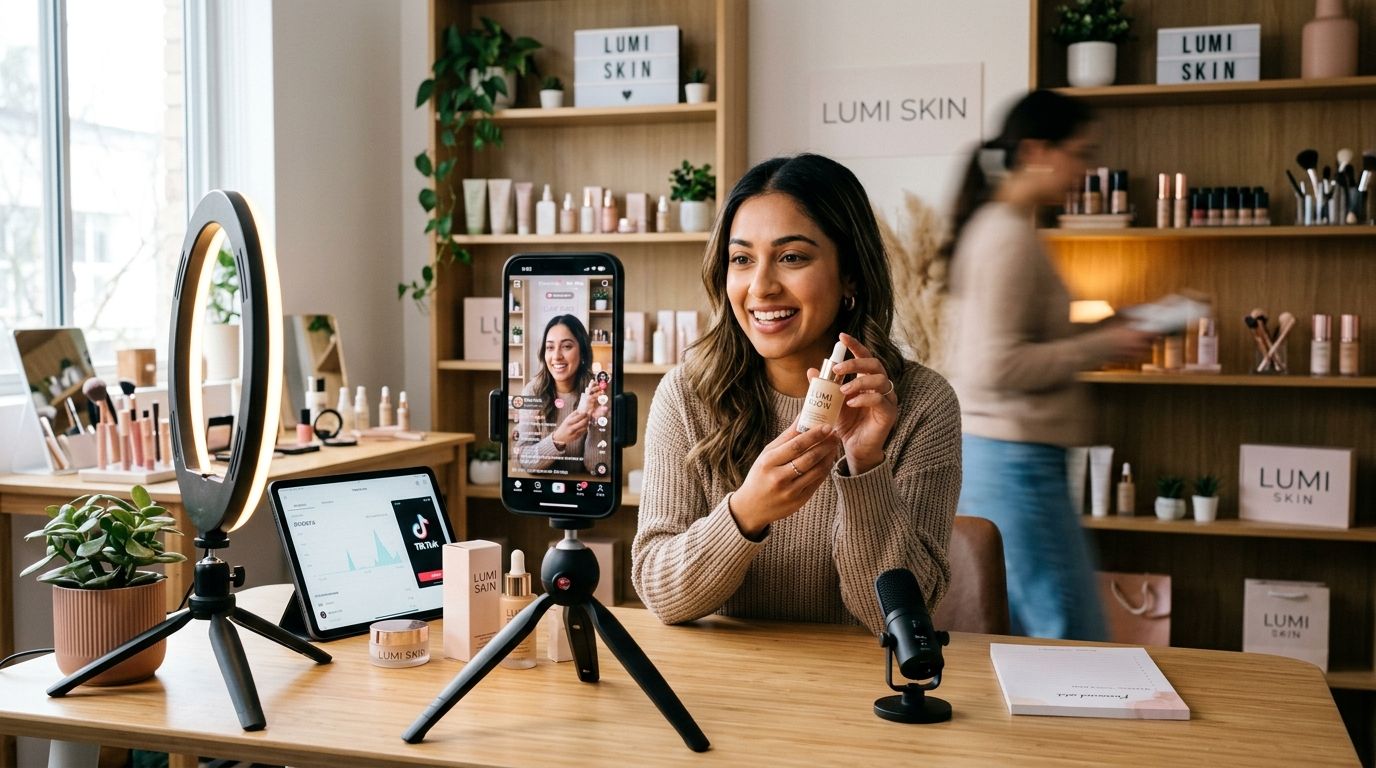
Building a paid media funnel for a beauty brand means engineering three connected stages — cold traffic, warm consideration, and repeat purchase — so each channel feeds the next instead of competing with it.
- A working paid media funnel for a beauty brand needs 3 stages: cold reach, warm retargeting, and post-purchase retention — skipping any one caps ROAS.
- Beauty brands see the sharpest CAC drops when creative refreshes every 2-3 weeks in 2026, not monthly.
- UGC-style video outperforms polished studio ads for cold traffic on Meta and TikTok in most beauty accounts in 2026.
- Retargeting budgets under 15% of total spend leave revenue on the table for brands doing over $50k/month.
Why this matters
Most beauty brands overspend on the top of the funnel and starve the middle. You get impressions and add-to-carts, but checkout completion stalls because nobody built a retargeting sequence that actually answers the objections a beauty buyer has — ingredient safety, shade match, shelf life.
A funnel fixes that by design. Cold ads earn attention. Mid-funnel ads earn trust. Bottom-funnel ads close the sale. Skip a stage and you're paying full price for every single conversion instead of letting cheaper retargeting inventory do the work.
Beauty is also one of the most competitive verticals on Meta and TikTok going into 2026 — CPMs in the category run higher than most consumer verticals, which makes funnel discipline the difference between a 2x ROAS and a 4x ROAS on the same budget.
What you'll need
- A Meta Business Manager and TikTok Ads Manager account with pixel and conversions API set up
- At least 10-15 pieces of creative in rotation before launch — a mix of UGC, founder-led, and product demo
- A retention email/SMS flow already built, or in progress alongside email marketing for DTC beauty brands
- 60-90 days of runway budget — funnels need data before they optimize
- A clear read on your best-performing paid media channels for skincare brands if skincare is your category, since channel mix varies by beauty subcategory
The steps
1. Map the three funnel stages to specific campaign objectives
Don't run one campaign type and call it a funnel. Set up a Meta or TikTok campaign on Awareness/Reach for cold audiences, a separate campaign on Conversions for warm retargeting, and a third on Catalog Sales or dynamic retargeting for cart abandoners.
This structure matters because platforms optimize toward whatever objective you pick — mixing cold and warm audiences in one campaign confuses the algorithm and inflates your cost per acquisition. Expect the cold campaign to carry 50-60% of budget, warm 25-30%, bottom-funnel 15-20%.
Common mistake: running one conversions campaign against a broad, unfiltered audience and wondering why CAC won't drop below $45-60 for a $28 skincare SKU.
2. Build cold-traffic creative around a hook, not the product
Beauty buyers scroll past product shots. The first three seconds need a hook — a before/after, a controversial ingredient claim, a founder saying something direct on camera. AI-powered targeting tools now let you test 8-10 hook variations against the same offer without rebuilding the whole ad, which matters because hook fatigue in beauty creative sets in within 10-14 days on Meta in 2026.
Expected outcome: a 1.5-2.5% thumb-stop rate on video and a click-through rate above 1.2% signals the hook is working before you scale spend.
3. Layer TikTok into cold traffic for reach Meta can't match at the same CPM
TikTok in 2026 still delivers lower cost-per-thousand-impressions than Meta for most beauty categories, and its native, unpolished ad format matches what beauty buyers already expect in-feed. Build a TikTok marketing for beauty brands plan that treats Spark Ads as your cold-traffic backbone rather than studio-produced Video Views ads.
Common mistake: repurposing a Meta static ad for TikTok. It reads as an ad immediately and tanks engagement rate.
4. Build a retargeting sequence with three distinct messages, not one repeated ad
Warm audiences — site visitors, video viewers, engaged followers — need a different message at each touch. Message one addresses a specific objection like ingredient safety or cruelty-free status. Message two shows social proof: a review count or a UGC testimonial. Message three adds urgency without discount language you haven't confirmed you can back — a launch countdown or limited restock framing works if it's true.
Why it matters: a single repeated retargeting ad burns through frequency fast in beauty, where audiences are already ad-fatigued from a saturated category, and CTR drops sharply after the third impression.
5. Set up dynamic catalog retargeting for cart abandoners within 24 hours
Cart abandonment in beauty ecommerce runs higher than most categories because buyers frequently comparison-shop shade or scent before committing. Dynamic ads pulling the exact SKU a visitor viewed, shown within a 24-hour window, recover meaningfully more revenue than static retargeting.
Expected outcome: a properly configured dynamic retargeting campaign should show a ROAS 2-3x higher than your cold campaign, since you're remarketing to buyers who already showed intent.
Common mistake: letting the retargeting window run 14-30 days with no frequency cap — this burns budget on audiences who've already decided not to buy.
6. Connect the bottom of the funnel to retention, not just checkout
The funnel doesn't end at purchase. First-purchase customers need an email/SMS sequence that reinforces the same message the ad promised, plus a paid retargeting audience built from past purchasers for cross-sell campaigns. Brands running retention flows alongside paid retargeting typically see repeat purchase rate climb faster than either channel run alone.
7. Refresh creative every 2-3 weeks, not monthly
Beauty ad fatigue moves faster than most categories because the audience pool for a given aesthetic or niche is smaller than mass-market verticals. Track frequency per ad set — once it crosses 3.0-3.5, CTR and conversion rate both start declining even if the offer hasn't changed.
Common mistake: waiting for a monthly creative refresh cycle inherited from a different vertical. Beauty needs a tighter loop.
Get your funnel structured right
A paid media plan built for skincare and beauty growth stages.
Troubleshooting
- CAC won't drop below breakeven — check whether cold and warm audiences are mixed in one campaign; separate them and let each optimize independently for 7-10 days before judging results.
- High click-through, low conversion — the landing page or product page likely doesn't match the ad's claim; audit for shade/scent accuracy and mobile load speed first.
- Retargeting ROAS looks great but overall revenue is flat — you're likely under-spending on cold traffic and recycling the same small warm pool; increase top-of-funnel budget.
- Creative fatigues within a week — audience size is too narrow; broaden targeting or add a lookalike layer before refreshing creative again.
- TikTok spend underperforms Meta — Spark Ads on genuinely organic-style content typically outperform Video Views campaigns; check which ad type is running.
- Email flows aren't lifting repeat purchase — confirm the post-purchase sequence references the same product benefit the ad used; disconnected messaging between paid and email kills retention lift.
Tools and resources
- Meta Ads Manager and TikTok Ads Manager for campaign build and reporting
- A conversions API integration on both platforms to protect signal quality against iOS tracking limits
- AI-powered marketing for beauty ecommerce brands tooling for creative testing at scale
- A retention stack covering email and SMS post-purchase flows
- UGC creator relationships for a steady creative pipeline — organic-style ads consistently outperform polished studio content in cold campaigns
What to do next
Once the funnel is live and stable, the next move is tightening channel mix — pulling budget from whichever platform underperforms and reinvesting in paid media channels for skincare brands that show the strongest incremental ROAS after 30-45 days of data.
FAQ
What's the best paid media funnel structure for a beauty brand in 2026?
The best structure separates cold, warm, and retention campaigns into distinct objectives rather than one blended campaign. Cold should carry 50-60% of budget, warm retargeting 25-30%, and bottom-funnel dynamic ads 15-20%.
Is TikTok better than Meta for a beauty paid media funnel?
TikTok generally delivers lower CPMs for cold-traffic reach in 2026, while Meta's retargeting and catalog tools remain stronger for mid- and bottom-funnel conversion. Most beauty brands run both rather than choosing one.
How much should a beauty brand spend on paid media to build a real funnel?
Funnels need enough volume to gather 50-plus conversions per campaign stage before the algorithm can optimize, which typically means a minimum of $3,000-5,000 monthly test budget before scaling. Below that, data is too thin to trust.
How often should beauty ad creative be refreshed?
Every 2-3 weeks, tracked against ad frequency crossing 3.0-3.5 rather than a fixed calendar. Beauty audiences fatigue faster than mass-market verticals because niche aesthetic audiences are smaller.
Does retargeting really matter if cold traffic is already converting?
Yes. Retargeting campaigns typically show 2-3x the ROAS of cold campaigns because they reach buyers who already showed intent. Skipping retargeting means paying full acquisition cost on every single sale.
What's the biggest paid media mistake beauty brands make?
Running one blended campaign across cold and warm audiences instead of separating funnel stages. This confuses platform optimization and keeps CAC artificially high.
How long before a beauty paid media funnel shows results?
Expect 30-45 days before campaigns stabilize enough to judge ROAS accurately, since each funnel stage needs its own conversion volume to exit the learning phase.
Should a beauty brand use UGC or studio content for paid ads?
UGC-style video consistently outperforms polished studio ads for cold traffic in 2026 because it matches native platform content. Studio content still works better for retargeting stages where trust is already partly established.
One last thing
The funnel stage most beauty brands skip entirely is the 24-hour dynamic cart-abandonment window — and it's usually the single highest-ROAS campaign in the whole account once it's set up correctly.