A media kit for a beauty brand PR pitch is the one document that decides whether an editor writes about you or moves on to the next email. Get it right and it does the pitching for you; get it wrong and even a great product sits in an inbox unread.
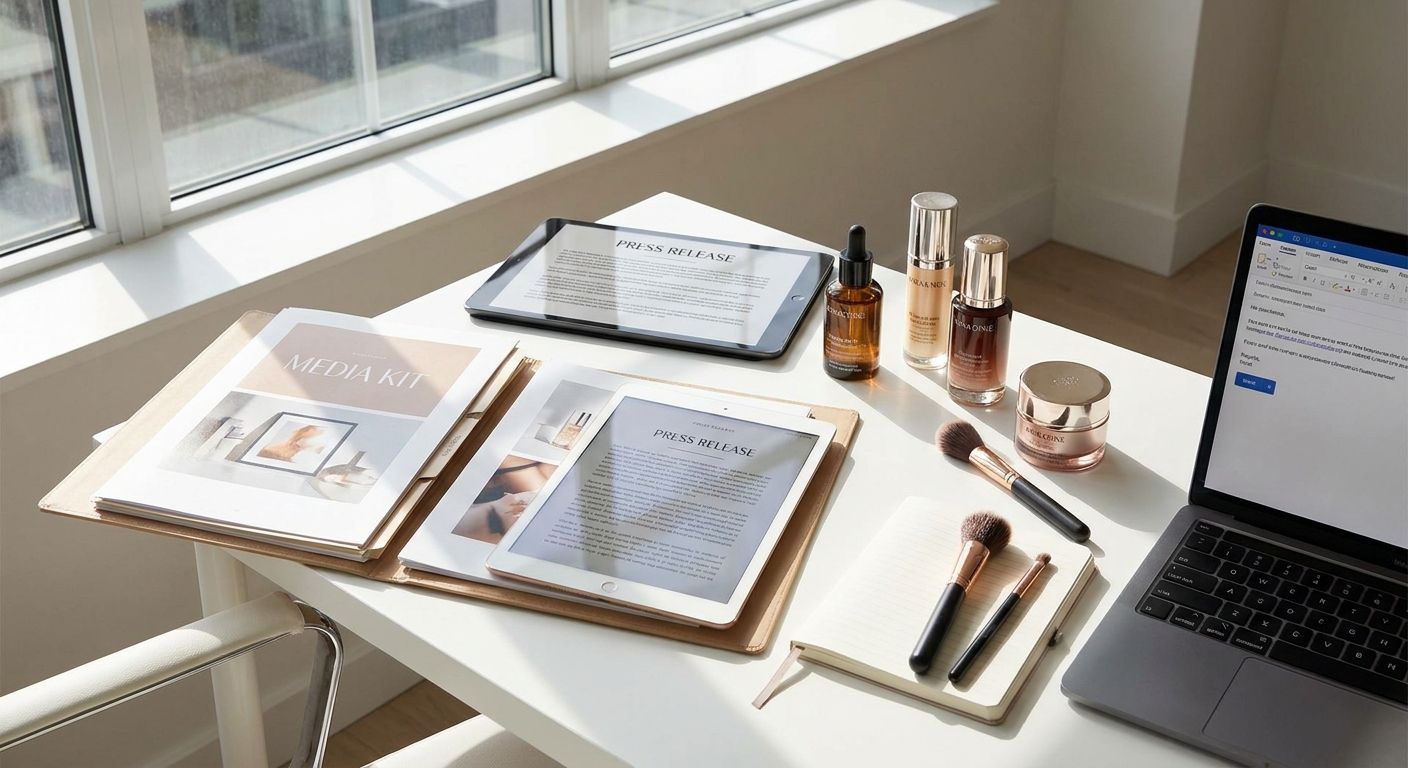
- A media kit for a beauty brand PR pitch works best as a one-page PDF under 25MB with 3-5 hero images editors can drop straight into a story.
- Skip the 12-page brand deck in 2026 — editors skim, they don't read, and a bloated kit gets archived unopened.
- Build the kit before you pitch, not after an editor asks for it — reactive kits cost you the news cycle.
- A founder quote, a boilerplate, and a fact sheet matter more than design polish for most beauty press coverage.
Why this matters
Beauty editors and freelance writers cover dozens of brands a week and open pitches on their phones between meetings. A media kit that takes more than a glance to parse gets deleted, no matter how good the product is.
The Darl builds PR alongside paid, content, and influencer work for beauty and lifestyle brands, and the pattern is consistent: brands that treat the media kit as a living asset tied to launch calendars and event marketing for beauty brand launches get covered faster than brands that scramble to build one after a journalist asks. In 2026, a media kit is not a static file sitting in a Google Drive folder — it's a pitch tool that gets updated every time a product, claim, or price changes.
The fix isn't more pages. It's fewer, sharper ones that answer an editor's actual questions: what is this, why now, and can I use these photos.
What you'll need
- A one-page brand fact sheet (name, launch date, price point, key ingredients or differentiators)
- 3-5 high-resolution product images (min 300 DPI for print, web-ready JPEGs for digital)
- 1-2 lifestyle or founder photos
- A 400-600 word boilerplate and a shorter one-line description
- A founder or brand quote, written and approved in advance
- A PDF layout tool (Canva, Adobe InDesign, or a template from your design team)
- A file-hosting link (Dropbox, Google Drive, or Notion) as backup to the PDF attachment
- A press contact list segmented by beat (beauty, wellness, lifestyle, business)
The steps
1. Write the one-line positioning first
Everything else in the kit gets built around this sentence. It accomplishes one thing: it tells an editor in under 10 seconds what the brand is and why it's different from the 40 other beauty pitches in their inbox that week.
Write it as a single sentence with a category and a differentiator — not a mission statement. "A clean, fragrance-free retinol serum for sensitive skin" works; "redefining the future of skincare" does not. Common mistake: writing this line after the fact sheet is done, when it should be written first and used to edit everything else.
2. Build the one-page fact sheet
The fact sheet accomplishes the job description of the whole kit: it gives an editor everything they need to write a caption without emailing you back. Include launch date, price, size, key ingredients or specs, where it's sold, and founder name with a one-line background.
Keep it to one page, formatted as short blocks, not paragraphs. Editors lift facts directly from this page into their copy, so anything buried in a paragraph gets missed. Pair this with the messaging work in content creation for beauty founders so the fact sheet matches the language used everywhere else the brand shows up.
3. Curate 3-5 images, not 30
A folder of 40 product shots slows an editor down and most never get opened. Pick 3-5 hero images that cover the product alone, the product in use, and one founder or lifestyle shot — that's the range that covers most editorial needs without asking anyone to dig.
Name files clearly (BrandName_ProductName_01.jpg, not IMG_4821.jpg) and keep the full PDF under 25MB so it clears standard email attachment limits without bouncing. Anything larger goes in a shared drive link instead of an attachment.
4. Write the boilerplate and the quote
The boilerplate is the paragraph an editor pastes at the bottom of a story without editing it, so it has to be accurate and dated. Keep it to 400-600 words, written in third person, covering what the brand does, who it's for, and one credibility marker (founding story, retail footprint, or category focus).
Pair it with one quote from the founder that sounds like something a person actually said, not a press release. A flat, quotable line gets used; a vague one gets cut.
5. Package it as a single PDF
Combine the positioning line, fact sheet, boilerplate, quote, and image thumbnails into one PDF, then link out to a hosted folder for full-resolution downloads. This accomplishes the single biggest usability win in the whole process: an editor should never have to ask "can you send this as one file."
Expected outcome: a kit an editor can forward internally without stripping out attachments or hunting for a missing piece.
6. Build a targeted media list before you pitch
A media kit sent to the wrong list is wasted effort regardless of how good it is. Segment contacts by beat — beauty desk, wellness, lifestyle, trade press — and note which outlets have covered similar brands in the last 12 months.
This is also where seeding overlaps with earned media: a kit built for editors works almost as-is for the creator outreach covered in influencer seeding for skincare launches, since both audiences want the same fast facts and clean images.
7. Write a pitch email an editor opens
The subject line decides whether the kit ever gets seen. Lead with the news, not the brand name: a new SPF launch with a March 2026 shelf date beats a generic "Introducing the brand" line every time.
Keep the email body to 3-4 sentences above the attachment, restate the one-line positioning, and never make the editor open the PDF to find out what the news is.
8. Follow up once, then stop
One follow-up at the 5-7 business day mark is standard practice; a second unprompted follow-up reads as pressure. If there's no response, move the contact to a different pitch angle next cycle instead of repeating the same email.
Common mistake: following up with "just checking in" and nothing new — always attach a fresh hook (a new stockist, a press mention, an award) to the follow-up.
Troubleshooting
- Editor asks for a lower-res or higher-res image — keep both a 300 DPI print version and a compressed web version in the hosted folder, labeled clearly, so you're not re-exporting under deadline.
- The PDF bounces or won't attach — file size over roughly 25MB is the usual cause; switch to a hosted link for the full kit and keep only a 2-3MB summary PDF in the email.
- No response after the pitch — the subject line or timing is the likely issue before the kit itself; test a news-led subject line against a brand-led one on the next round.
- Kit looks right but gets no coverage — the pitch may be going to the wrong beat; a skincare launch pitched to a general lifestyle editor competes with everything else in their inbox, not just other beauty news.
- Images don't match brand aesthetic once printed or laid out — send both flat lifestyle shots and clean white-background product shots; publications use different formats depending on the piece.
- Fact sheet gets facts wrong in coverage — the fact sheet wasn't formatted in scannable blocks; editors copy from what's easiest to lift, so bury nothing important in a paragraph.
Tools and resources
- Canva or Adobe InDesign for kit layout
- Dropbox or Google Drive for full-resolution image hosting
- A press contact spreadsheet segmented by beat and outlet
- Content creation for beauty founders for building the visual and written assets the kit pulls from
- Event marketing for beauty brand launches for tying the kit to a launch moment editors can peg a story to
Need PR built into a full growth plan?
The Darl pairs media kits with content, paid, and influencer strategy for beauty brands.
What to do next
A media kit only works as hard as the strategy behind it. If the PR push is one piece of a bigger 2026 growth plan, the next step is matching the kit to the right partner — see how to choose a marketing agency for your beauty brand for what to check before signing anyone.
FAQ
What should a media kit for a beauty brand PR pitch include?
A media kit for a beauty brand PR pitch needs a one-page fact sheet, 3-5 high-resolution images, a boilerplate, and a founder quote. Editors use these pieces directly in coverage, so each one needs to be accurate and ready to lift without edits.
How long should a beauty brand press kit be?
One page for the core fact sheet is standard in 2026, with images and boilerplate attached separately. Longer kits get skimmed, not read, and the extra pages rarely change whether a story runs.
What file format should a media kit be sent in?
A single PDF under 25MB works best for email, with a hosted Dropbox or Google Drive link for full-resolution images. Splitting the kit into loose attachments makes it harder for an editor to forward internally.
Should a media kit include pricing?
Yes — price point is one of the first facts an editor needs to categorize a product for their audience. Leaving it out usually triggers a follow-up email that slows the pitch down.
How many images should be in a beauty press kit?
3-5 hero images covers most editorial needs: one clean product shot, one in-use shot, and one lifestyle or founder photo. More than that gets ignored rather than appreciated.
Is a media kit different from a press release?
Yes. A press release announces one piece of news with a date; a media kit is the reusable background file an editor references for any story about the brand, launch-related or not.
When should a beauty brand build its media kit?
Before the first pitch goes out, not after an editor requests one. A kit built reactively under deadline usually skips the polish that gets it picked up.
How often should a media kit be updated?
Update it any time pricing, ingredients, stockists, or leadership changes, and review it at minimum every launch cycle. An outdated fact sheet gets facts wrong in coverage, which is harder to fix after publication.
One last thing
The single biggest reason beauty media kits fail isn't the design — it's that they're built once and never touched again, so an editor in 2026 gets handed a PDF with 2023 pricing and a stockist list that's three retailers out of date. Set a recurring calendar reminder to check the kit every time a launch, price change, or new retail partner happens, and it will outperform almost every glossier kit that never gets refreshed.