YouTube is a search engine and a content library for beauty consumers who research before they buy, and most beauty brands treat it as an afterthought behind Instagram and TikTok. Here's the build-out sequence that gets a beauty brand's channel from zero to a real acquisition channel.
- A youtube channel for a beauty brand needs a defined content pillar system before the first upload, not after 20 videos.
- Tutorials and ingredient breakdowns outperform brand films for beauty search intent in 2026 — prioritize them first.
- Publish weekly for the first 90 days minimum; sporadic posting kills the algorithm's ability to learn your audience.
- Shorts feed the discovery engine, long-form builds watch time and trust — you need both, not one or the other.
Why this matters
Beauty shoppers search "how to" before they search brand names. A tutorial or ingredient explainer sitting in Google and YouTube search results captures that intent months or years after publish, unlike a paid ad that stops the moment budget stops. This is compounding owned media, and it's the same logic behind content creation for beauty founders — one asset, indefinite return.
A beauty brand's YouTube channel also does something Instagram and TikTok can't: it holds long-form trust content — full routines, ingredient deep-dives, dermatologist Q&As — that converts skeptical buyers who need more than 30 seconds to decide. Skip the channel and you're leaving that search traffic and that trust-building format to competitors and to unaffiliated creators who happen to review your category.
What you'll need
- A channel content pillar map — 3-4 recurring formats (tutorials, ingredient breakdowns, routines, Q&A) that repeat on a schedule
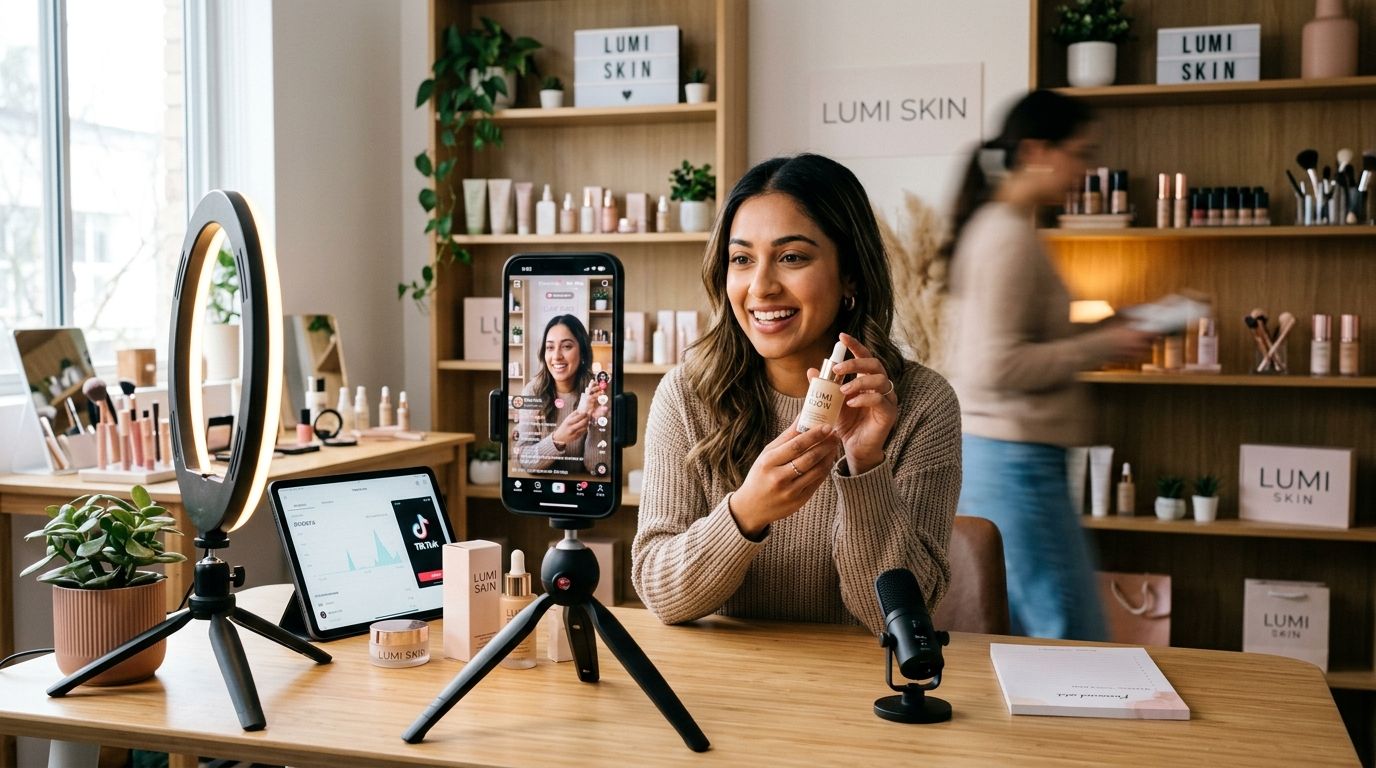
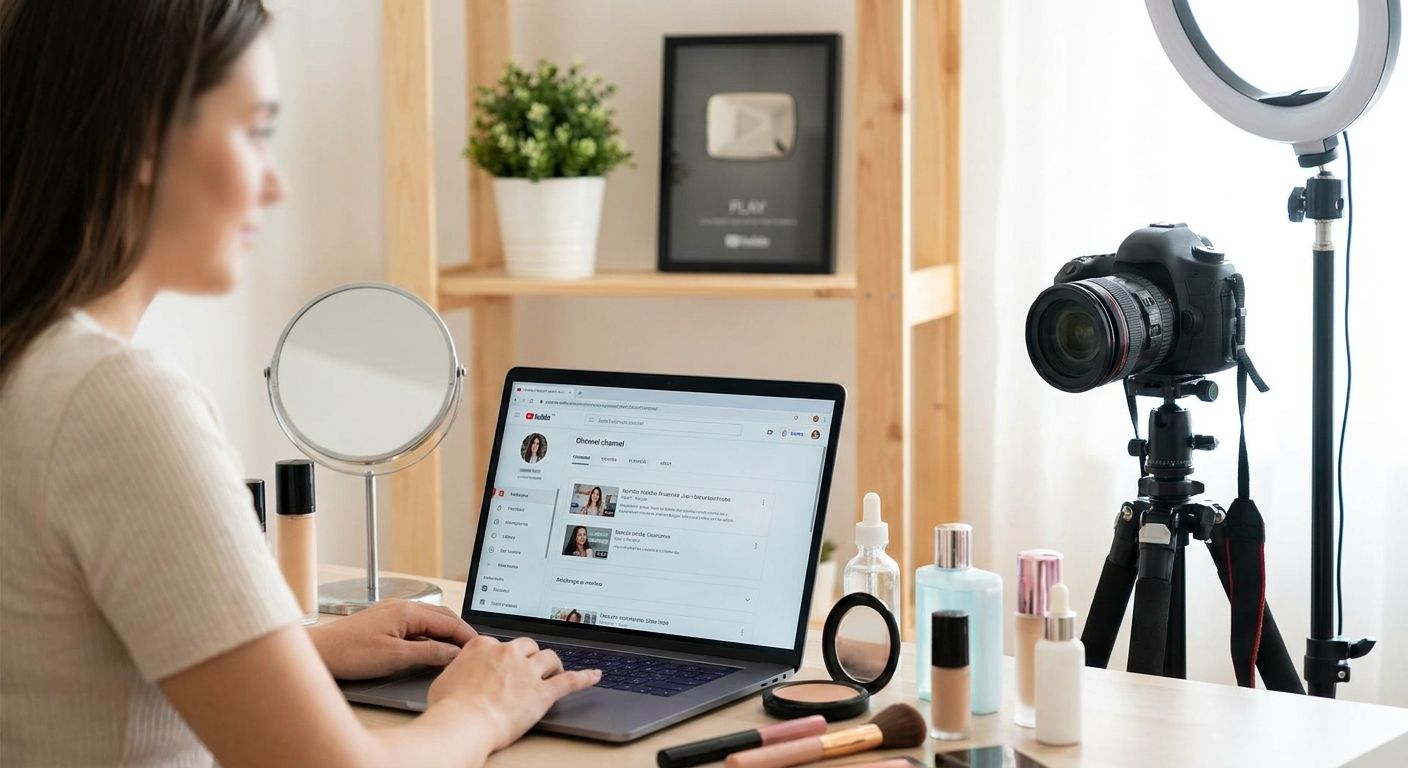
- A camera setup — a phone with a stabilizer and a ring light covers 2026 production standards for most launches; you don't need a studio
- An editor — in-house or contracted; consistency matters more than polish quality
- A keyword list — pull actual search terms from YouTube's autosuggest and Google's "People also ask" for your category before you script anything
- Two publishing cadences — one for Shorts (3-5x weekly) and one for long-form (1x weekly minimum)
- A thumbnail and title template — consistency here is what turns browsers into subscribers
The steps
1. Define three content pillars before you film anything
A channel without pillars becomes a dumping ground for whatever content the team feels like making that week, and YouTube's algorithm can't learn what audience to serve you. Pick three: something like "ingredient education," "routine building," and "product demos" covers most beauty categories. Write ten video titles under each pillar before filming starts — if you can't fill that list, the pillar is too narrow.
Common mistake: launching with only branded product videos. Search-driven beauty audiences find channels through problem-solving content, not commercials.
2. Build a keyword-first video calendar
Every beauty search has a YouTube counterpart — "how to layer vitamin C and retinol," "best niacinamide serum for oily skin," "is skincare cycling real." Pull 20-30 of these terms specific to your category and map them to video titles for the next quarter. This is the same discipline behind best social media platforms for beauty brand growth — pick channels and formats based on where the intent already lives, not where it's trendy.
Expected outcome: a 12-week calendar where every video has a reason to exist beyond "we needed content."
3. Standardize your first 8 seconds
YouTube's retention graph drops hardest in the opening seconds, and a slow intro with a logo animation before the hook loses viewers before the algorithm has a reason to promote the video. State the payoff in the first sentence — "here's the three-step routine that fixed my breakouts in six weeks" — then deliver.
Common mistake: opening with "hey guys, welcome back to my channel" instead of the hook. Cut it in editing every time.
4. Publish Shorts to feed discovery, long-form to build trust
Shorts are your top-of-funnel — they get pushed to non-subscribers and drive channel discovery. Long-form is where watch time accumulates and where YouTube's recommendation engine starts trusting the channel enough to surface it in search results and "up next" panels. Run both: cut 3-5 Shorts weekly from your long-form footage instead of treating them as separate production.
Expected outcome: Shorts drive subscriber growth in month one; long-form drives search traffic starting around month three as videos age into search rankings.
5. Optimize titles and thumbnails like search ads
YouTube titles function as SEO headlines — front-load the keyword, keep it under 60 characters, and make the thumbnail communicate the payoff in under one second of glance time. A/B test thumbnail styles (face close-up vs. product shot vs. text overlay) across your first 20 videos and keep what pulls higher click-through.
Common mistake: vague titles like "my skincare routine" instead of "my 5-step night routine for combination skin (2026 update)." Specificity wins clicks and search rankings.
6. Cross-promote from channels that already have your audience
A new YouTube channel starts at zero trust and zero algorithm data. Point existing audiences at it — email list, Instagram Stories, TikTok bios — to seed the first wave of subscribers YouTube uses to figure out who to recommend the channel to next. This pairs directly with TikTok marketing for beauty brands: repurpose your best-performing TikTok hooks into YouTube Shorts instead of starting from a blank page.
Build the channel strategy with us
Get a content and channel plan built around your existing audience data.
7. Bring in creators to widen reach faster
A brand-only channel grows slower than one that mixes in creator collaborations, because creators bring existing subscriber bases and formats audiences already trust. Structure a handful of dedicated collab videos per quarter rather than one-off mentions buried in a creator's own channel. This is the same logic covered in influencer marketing for emerging beauty brands — the collaboration needs a clear content role, not just a name attached.
Expected outcome: collab videos typically outperform brand-only uploads on first-week views because they tap an audience that hasn't seen the channel before.
8. Review the analytics monthly, not the vanity metrics weekly
Subscriber count is the least useful metric in the first 90 days. Watch retention graphs, click-through rate on impressions, and average view duration tell you which pillars and hooks are working. Kill formats with retention drops under 40% by the 30-second mark; double down on anything holding above 50%.
Common mistake: judging a video's success by view count alone in week one, before search traffic has had time to compound.
Troubleshooting
- Views spike then flatten fast — the thumbnail or title is overpromising relative to the content; retention data will confirm this in the analytics tab
- Subscribers aren't converting to buyers — the channel lacks a clear next step; add a pinned comment or end-screen linking to the exact product discussed
- Shorts get views but long-form doesn't — the channel hasn't built enough long-form watch time yet; keep publishing weekly through month three before judging
- Search rankings aren't showing up — titles and descriptions aren't matching actual search phrasing; go back to autosuggest research, not assumed keywords
- Engagement is high but reach is flat — the algorithm may be capping distribution to your existing subscriber base; test a new thumbnail style or upload time
- Videos feel repetitive after a few months — the three content pillars need a fourth or a seasonal rotation; audiences fatigue on the same format by video 15-20
Tools and resources
- YouTube Studio analytics — retention graphs, click-through rate, and traffic source breakdowns live here natively, no third-party tool required
- YouTube autosuggest and Google "People also ask" — free keyword research specific to your category
- A stabilizer, ring light, and lavalier mic — the baseline gear for 2026 production quality without a studio budget
- Content creation for beauty founders — for building the pillar and calendar system this guide references
- Best social media platforms for beauty brand growth — for deciding how YouTube fits against the rest of the channel mix
What to do next
A channel is only one piece of the acquisition system — it needs a paid, email, and influencer layer wrapped around it to actually move revenue. Read how to choose a marketing agency for your beauty brand before deciding whether to build this in-house or hand it to a team that's already run the playbook.
FAQ
How often should a beauty brand post on YouTube?
Post long-form video at least once weekly and Shorts 3-5 times weekly for the first 90 days. Consistency signals the algorithm to keep testing the channel against new audiences; gaps longer than two weeks reset that momentum.
Is YouTube worth it for a small beauty brand in 2026?
Yes, because YouTube functions as a search engine, not just a social feed, so videos keep earning views and clicks long after publish. A small brand with three tight content pillars often outperforms a large brand posting unfocused content.
What's the best first video for a new beauty channel?
A tutorial or ingredient explainer tied to a real search term performs best as a first upload. It targets existing search demand instead of relying on an audience that doesn't exist yet.
Should a beauty brand focus on Shorts or long-form video?
Run both — Shorts drive discovery and subscriber growth, long-form builds watch time and search rankings. Cutting Shorts from existing long-form footage is the most efficient way to cover both formats.
How long does it take to grow a beauty brand's YouTube channel?
Expect meaningful search traffic starting around month three, once enough videos have aged into YouTube and Google search results. Subscriber growth from Shorts can happen faster, often within the first few weeks of consistent posting.
Do beauty brands need influencers to grow on YouTube?
Influencers accelerate growth by lending an existing audience to the channel, but they aren't required to start. A brand can build a channel organically through search-driven content and add creator collaborations once the pillar system is working.
What camera equipment does a beauty brand need for YouTube?
A phone with a stabilizer, a ring light, and a lavalier mic covers 2026 production standards for most beauty channels. Studio-grade equipment isn't necessary until the channel has proven which content formats work.
How does a YouTube channel help a beauty brand's SEO?
YouTube videos rank in both YouTube search and Google search results, capturing intent from shoppers researching before they buy. Well-optimized titles and descriptions extend a brand's search visibility beyond its own website.
One last thing
The channels that grow fastest in 2026 aren't the ones with the biggest production budgets — they're the ones that answer a real search query in the first 8 seconds and do it again, same format, same day of the week, for months. Consistency beats polish on YouTube more than on any other platform in a beauty brand's channel mix.