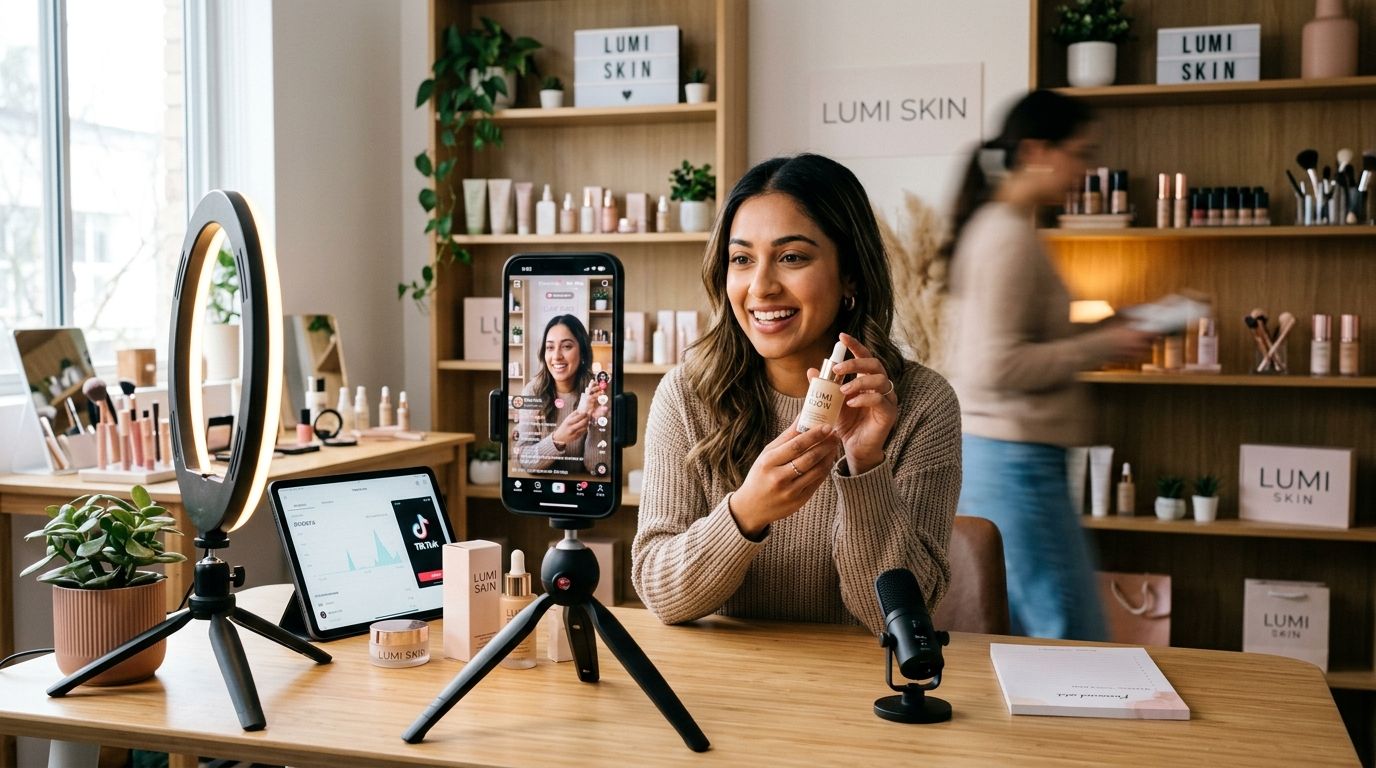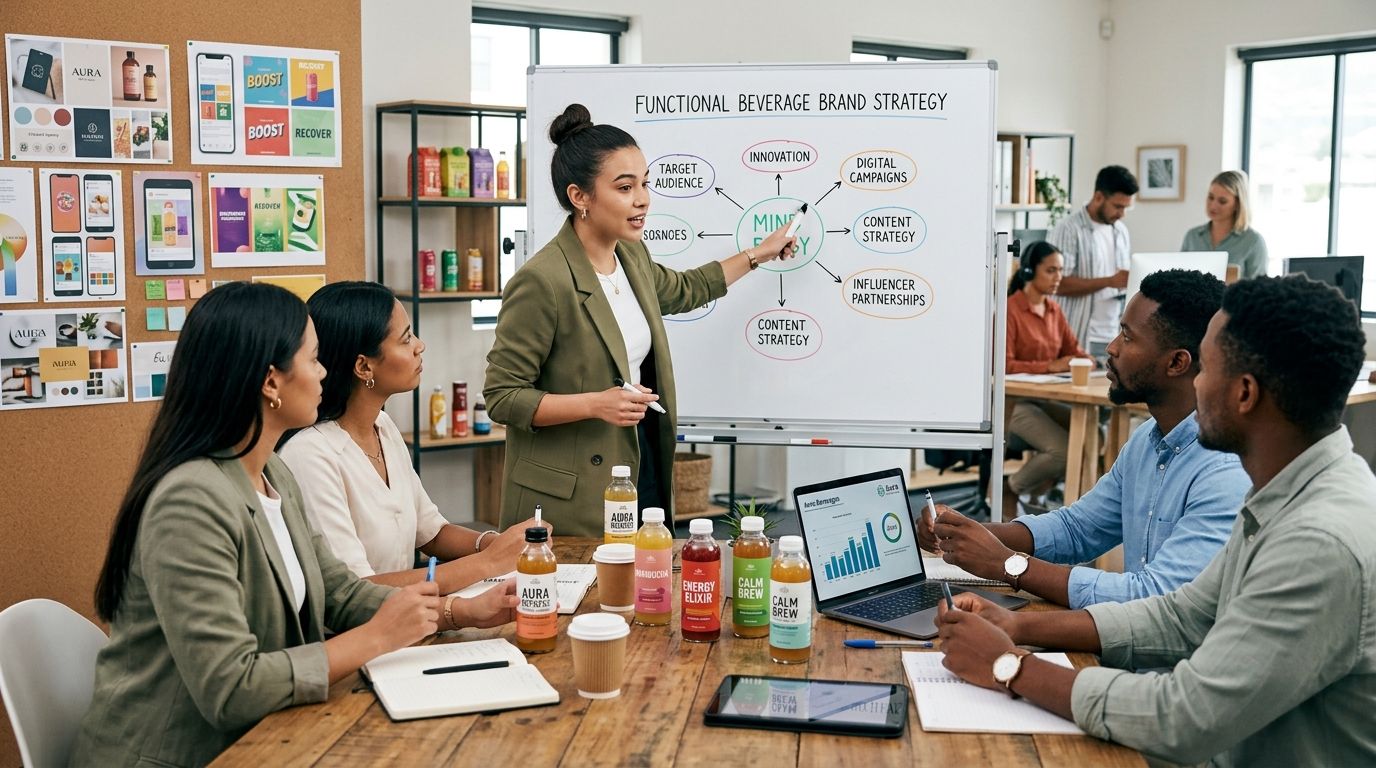
Marketing agency for functional beverage brands means hiring a partner who treats claims substantiation, sampling logistics, and retail buyer scrutiny as core to the strategy — not an afterthought bolted onto a generic CPG playbook. Functional beverages carry a harder job than most consumer categories: you're asking someone to trust an ingredient story (adaptogens, prebiotics, nootropics, electrolytes) enough to put it in their mouth, on a subscription, before they've tasted it.
- A marketing agency for functional beverage brands needs claims-review fluency and sampling-first media planning, not just a general CPG playbook.
- The Darl builds omnichannel systems — paid, email, content, retail — for functional beverage and wellness brands scaling past DTC-only revenue.
- Cost per trial and repeat purchase rate matter more than ROAS for this category because taste risk kills first orders.
- Retail-ready sell sheets and margin structure decide whether a functional beverage brand gets past the buyer meeting in 2026.
Why marketing matters differently for functional beverage brands
Functional beverages sell a promise most categories don't have to make: that a liquid will do something to your body. That means every ad, landing page, and Instagram caption sits closer to regulatory scrutiny than a skincare serum or a candle ever will. A gut health tonic or an adaptogen shot can't lean on the same claims language a supplement capsule uses, and buyers at Whole Foods, Sprouts, or Total Wine ask different diligence questions than a beauty retailer would.
The other structural difference is sampling cost. A functional beverage brand can't rely purely on product photography to convert — taste, mouthfeel, and "does this actually do anything" are the real objections, and none of those get solved by a static ad. Brands that win in this category build sampling and trial into the media plan itself, not as a separate PR line item.
A marketing agency for gut health and wellness brands that also understands functional beverage-specific issues — shelf stability messaging, refrigerated vs. shelf-stable distribution, and dosage transparency — moves faster than a generalist agency re-learning the category on your budget.
Update your claims language before you touch paid media
Most functional beverage brands get their Meta or TikTok ad accounts flagged not because the product is bad, but because the copy oversteps what the label can support. Fix this before spend, not after.
- Cross-check every ad claim against the actual label and any third-party lab testing on file
- Separate "structure/function" language (supports, promotes) from disease-treatment language (cures, prevents, treats)
- Build an approved claims glossary your paid media and content teams actually use
- Flag ingredient-specific claims (adaptogens, nootropics, probiotics) that vary by state and platform policy
- Keep a version-controlled log of what got approved, rejected, or flagged by ad platforms
Skip this step and you'll burn weeks in ad account review purgatory instead of running campaigns.
Build a sampling-first content and trial engine
Content for functional beverages has to solve the taste objection before the health objection. A single hero video rarely does that — you need volume and variety.
- Run a recurring UGC seeding program that prioritizes taste and texture reactions over polished testimonials
- Package sampler multi-packs specifically for first-time buyers, distinct from the core SKU lineup
- Use unboxing and "first sip" content formats that show real reaction, not just product shots
- Partner with micro-creators in fitness, gut health, and sober-curious communities rather than broad lifestyle influencers
- Build a landing page dedicated to trial conversion, separate from your main product page
This is where a wellness supplement brands marketing partner earns its keep — the sampling infrastructure that works for capsules and powders needs adapting for a beverage that spoils, ships cold, or needs a specific fridge slot at retail.
Structure paid media around trial, not awareness
Functional beverage brands that chase impressions and reach metrics burn budget on people who were never going to order a subscription without tasting the product first.
- Set cost-per-trial as the primary KPI for top-of-funnel spend, not cost-per-impression
- Run sampler-pack-specific ad creative separate from full-size SKU ads
- Use retargeting sequences that follow a sample purchase with a subscription offer at the right interval
- Test channel mix across Meta, TikTok, and Google Shopping rather than defaulting to one platform
- Track cost-per-trial against actual repeat rate at 30 and 60 days, not just at checkout
A paid media agency for wellness ecommerce brands that's already tracking trial-to-repeat data across other functional and wellness clients gets you to a working benchmark faster than testing blind in 2026.
Set up lifecycle marketing for subscription reorder
Most functional beverage revenue that survives past year one comes from repeat and subscription orders, not first-time trial. Email and SMS carry that weight.
- Build a post-purchase flow that reinforces the ingredient story and usage occasion (morning ritual, workout recovery, sleep wind-down)
- Trigger a reorder reminder timed to actual consumption pace, not a generic 30-day cycle
- Segment lapsed subscribers separately from active ones with distinct win-back offers
- Use SMS for time-sensitive nudges (restock alerts, flash windows) and email for education and story
- Test subscription cadence options against actual consumption data instead of guessing
Build retail-ready sell sheets and margin structure
Functional beverage brands that plan to sit next to kombucha and cold brew in a cooler need retail collateral built for a buyer meeting, not a DTC landing page.
- Draft a sell sheet with velocity data, margin structure, and distribution requirements a buyer can act on in one meeting
- Model in-store margin against DTC margin honestly before pricing conversations start
- Prepare cold-chain or shelf-stability documentation buyers will ask for directly
- Build a demo and sampling plan specific to in-store trial, separate from the DTC sampling program
- Line up a fulfillment plan that can support a regional retail rollout without breaking DTC supply
Track cost per trial and repeat rate, not just ROAS
ROAS tells you what a purchase cost. It doesn't tell you whether that person becomes a repeat buyer, which is the number that actually determines whether a functional beverage brand survives past its first 12 months.
- Report cost-per-trial alongside cost-per-acquisition in every media recap
- Track 30/60/90-day repeat purchase rate by acquisition channel
- Separate subscription LTV from one-time purchase LTV in every dashboard
- Flag channels with cheap trial cost but weak repeat rate before scaling spend into them
Get a functional beverage growth audit
See where trial cost, repeat rate, and retail readiness stand today.
Comparison: agency options for functional beverage brands in 2026
| Option | Best for | Key limitation |
|---|---|---|
| Omnichannel wellness agency (The Darl) | Brands scaling DTC and retail together with claims-aware media | Requires a working budget across multiple channels to see full effect |
| Generalist CPG ad agency | Brands needing pure media buying volume | Rarely fluent in beverage-specific claims risk or sampling logistics |
| In-house marketing hire | Early-stage brands with a founder still setting direction | One person can't cover paid, lifecycle, retail, and content at once |
| Freelance specialist stack | Brands testing a single channel before committing | No single owner of the trial-to-repeat funnel across channels |
Verdict: for a functional beverage brand splitting attention between DTC subscription growth and a retail buyer pipeline, an omnichannel agency built for wellness categories closes more gaps than a single-channel freelancer or a generalist CPG shop learning the claims rules on your dime.
Common mistakes functional beverage brands make
- Treating taste as a footnote. Ingredient story gets all the ad budget while the actual sip experience — the thing that decides repeat purchase — gets one product shot.
- Chasing ROAS over repeat rate. Cheap trial cost with a weak 60-day repeat number is a leaky bucket, not a win.
- Skipping claims review until a platform flags the ad account. By then you've lost weeks of runway rebuilding creative from scratch.
- Going all-in on DTC and ignoring retail terms until a buyer meeting is already scheduled. Margin structure and cold-chain logistics take longer to sort out than most founders expect.
- One-time influencer gifting instead of ongoing seeding. A single unboxing post rarely moves a beverage brand's trial numbers the way a recurring UGC program does.
FAQ
What does a marketing agency for functional beverage brands actually do?
It runs paid media, email/SMS lifecycle, content, and retail go-to-market for drink brands built around gut health, energy, adaptogens, or hydration claims. The work differs from general CPG marketing because claims language and sampling logistics carry more regulatory and trial-conversion weight.
Is a functional beverage brand better off with a specialist agency or a generalist one?
A specialist agency that already understands claims substantiation and sampling economics for beverages moves faster in 2026 than a generalist relearning the category on your ad spend. Generalist agencies still work for brands purely focused on broad-reach paid media without retail ambitions.
How much does functional beverage marketing cost?
Costs vary by channel mix, sampling volume, and whether retail go-to-market is included. Check current agency pricing directly rather than relying on category averages that shift year to year.
Do functional beverage brands need influencer marketing?
Ongoing UGC and micro-creator seeding solves the taste-trial objection better than paid ads alone. A single gifting round rarely moves repeat purchase numbers the way a recurring seeding program does.
What KPI matters most for a functional beverage brand's paid media?
Cost per trial paired with 30/60-day repeat purchase rate matters more than ROAS alone. A cheap first sale that doesn't repeat is a signal to pull back, not scale.
Can a functional beverage brand handle retail marketing and DTC growth with the same team?
Yes, but the sell sheet, margin modeling, and sampling plan for retail buyers need to be built separately from the DTC funnel. Treating them as one motion is a common reason retail pitches stall.
What's the biggest early mistake functional beverage brands make in marketing?
Spending on awareness before solving the taste-trial objection with sampling-first content. Health claims alone rarely convert a first-time buyer who hasn't tasted the product.
One last thing
The number that decides whether a functional beverage brand survives past 2026 isn't the first can sold — it's the first case reordered. Build every campaign, email flow, and retail sell sheet around getting to that second order, and the rest of the growth plan gets a lot easier to defend in a board meeting.