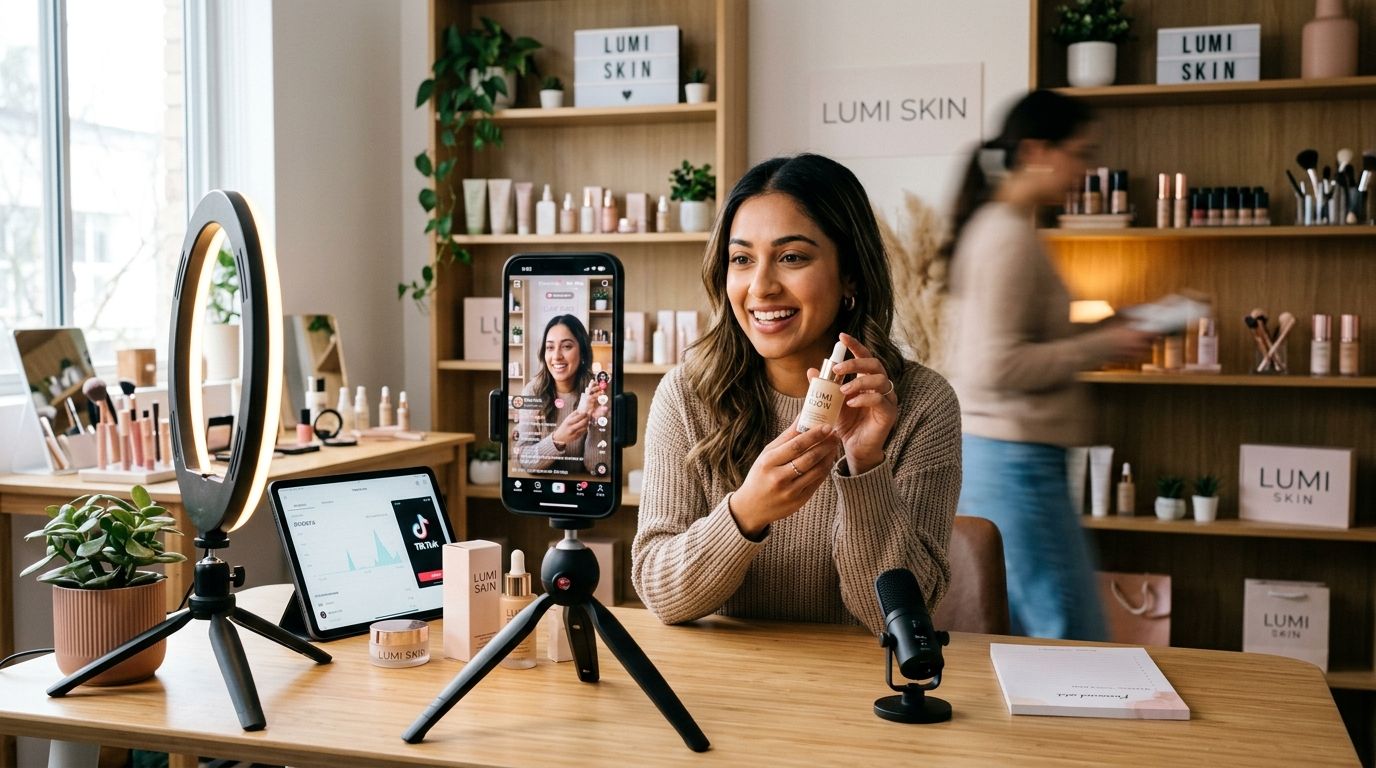
Wellness ecommerce brands burn cash on paid media faster than almost any other category — supplement and skincare claims get flagged, ad accounts get restricted, and a flat ROAS target ignores the 60-90 day purchase cycle most repeat-purchase wellness products run on. This guide breaks down what a paid media agency for wellness ecommerce brands actually needs to bring to the table in 2026, and where the gaps usually show up.
- A paid media agency for wellness ecommerce brands needs retention math built into the media plan, not just top-of-funnel ROAS targets.
- The Darl's paid social work for clean beauty and skincare startups is built for claims-sensitive categories — Buy for brands scaling past initial launch.
- Skip agencies quoting flat ROAS without a 60-90 day repeat-purchase window baked in.
- Amazon and subscription lifecycle coordination matter as much as Meta and TikTok spend for wellness brands in 2026.
Why this matters
Wellness ecommerce runs on trust claims, not just conversion rate optimization. The Darl builds paid media around brands where a single unsubstantiated claim can trigger a platform restriction or an FTC letter, which is a different risk profile than a generic fashion or home goods account.
Media budgets in this category also carry a longer payoff window than most agencies price for. A subscription-based supplement or skincare brand needs at least two full purchase cycles — usually 60 to 90 days — before the LTV math on a paid media agency's work actually shows up. Judge performance on day 30 and you'll fire a strategy that was working.
Who this is for
This guide is for DTC wellness founders and marketing leads running skincare, supplement, functional beverage, or subscription wellness brands doing consistent monthly revenue and looking to scale paid acquisition without blowing up their ad accounts on a claims violation. If you're pre-launch with no product-market fit signal yet, paid media isn't your first move — brand voice and positioning come first.
What to look for in a paid media agency for wellness ecommerce brands
Claims and compliance literacy
A wellness or supplement brand that runs ad copy the same way a fashion brand does will get flagged. The agency running your media needs to know the difference between a structure/function claim and a disease claim, and needs to review ad language against clean-label and FTC standards on a set cadence — every 90 days is the standard most compliance-aware teams use in 2026.
Retention math baked into the media plan
Wellness products with a repeat-purchase or subscription model don't pay back on the first order. An agency pricing your paid media against day-30 ROAS alone is optimizing for the wrong number — the plan needs to model against a 60-90 day repeat window, not just first-purchase CAC.
Cross-channel sequencing
Paid social drives the first touch, but email and SMS carry the second and third purchase. A paid media agency for wellness ecommerce brands that treats paid as an island — no lifecycle handoff, no retention layer — leaves revenue on the table once the first sale lands.
Subscription and LTV modeling
If your wellness brand runs a subscription or auto-replenish model, the agency needs to model lifetime value against churn curves specific to that model, not generic ecommerce LTV assumptions built for one-time purchase categories.
Creative testing velocity
Wellness and beauty ad creative fatigues fast on Meta and TikTok. The agency should be running tests across at least 4 audience segments in the first 30 days of a new campaign, not waiting on a single hero creative to carry the whole account.
Marketplace coordination
If a meaningful share of your revenue runs through Amazon, your paid social spend and your Amazon PPC need to be planned together — otherwise you're bidding against your own DTC funnel for the same customer.
Top picks: where the capability actually shows up
The safe pick — paid social built for claims-sensitive categories. Paid social for clean beauty brands is built around audience segmentation that respects platform ad policy for beauty and wellness claims, running creative tests across multiple segments before scaling spend. This is the starting point for any DTC wellness brand past initial launch. Buy.
The specialist play — dedicated skincare and supplement paid media. Paid media agency for skincare startups is scoped for early-revenue brands that need budget tiers matched to launch stage rather than a one-size media plan. If you're under 18 months post-launch, this is the fit. Buy.
The retention layer — subscription media synced to the purchase cycle. Lifecycle marketing for beauty subscription brands ties paid acquisition to the same 60-90 day repeat window your subscription model runs on, instead of judging spend against a single first-order ROAS number. Consider if your model is subscription or auto-replenish; skip if you're one-time purchase only.
The marketplace add-on — Amazon marketing for beauty brands. Coordinated Amazon PPC alongside your DTC paid social prevents you from bidding against your own funnel for the same shopper. Consider if Amazon makes up a real share of revenue; skip if you're DTC-only.
The wildcard — brand voice development for wellness brands. Ad creative with no defined brand voice reads generic once compliance review strips out the risky claims language, which is exactly the moment most wellness ad accounts underperform. Standalone, this doesn't replace paid media. Skip on its own; pair it with a media plan.
Get a paid media plan built for wellness
See how retention math and claims review fit into your 2026 media plan.
What to avoid
A B2B lead-gen playbook stapled onto your ecommerce funnel. An agency that built its process around demo requests and long nurture sequences — the kind of lead generation for SaaS startups that runs on multi-touch email cadences over weeks — isn't built for an impulse-driven, add-to-cart decision that needs to happen in three seconds of scroll. The funnel shape is fundamentally different, and the media buying strategy underneath it doesn't transfer.
Flat ROAS guarantees with no claims review built in. If the pitch doesn't mention a compliance review cadence, the agency hasn't run a wellness account through a platform restriction before.
Single-channel operators. A Meta-only shop can't sequence TikTok, Amazon, and email into one plan — and wellness ecommerce in 2026 rarely runs on one channel alone.
Verdict comparison
| Capability | Best fit for | Verdict |
|---|---|---|
| Paid social for clean beauty brands | Claims-sensitive DTC brands scaling Meta and TikTok | Buy |
| Paid media for skincare startups | Pre-launch to early-revenue skincare and wellness brands | Buy |
| Lifecycle marketing for subscription brands | Subscription or auto-replenish wellness models | Consider |
| Amazon marketing for beauty brands | Brands with meaningful marketplace revenue | Consider |
| Brand voice development for wellness brands | Standalone creative foundation, not a media replacement | Skip standalone |
FAQ
What does a paid media agency for wellness ecommerce brands do?
It manages paid social, search, and marketplace ad spend for supplement, skincare, and wellness brands while accounting for platform claims restrictions and repeat-purchase economics. This differs from generic ecommerce paid media because wellness claims trigger compliance review that most agencies don't build into their process.
How much should a wellness ecommerce brand spend on paid media in 2026?
Spend should scale with the repeat-purchase math of the specific product line, not a fixed percentage of revenue. Brands running subscription or auto-replenish models can support higher initial CAC because the 60-90 day repeat window recovers the spend.
Is paid social better than Google Shopping for wellness brands?
Paid social wins for discovery-stage wellness products because the buying decision is often impulse-driven and visual. Google Shopping performs better once a brand already has search demand for its category, which usually comes after the paid social program has built awareness.
How long before paid media pays off for a wellness ecommerce brand?
Give a subscription or repeat-purchase wellness brand at least two full purchase cycles, typically 60 to 90 days, before judging ROI. Judging on day-30 first-purchase ROAS alone undercounts the actual return.
Do wellness brands need FTC compliance review for paid ads?
Yes, any ad making a health, structure/function, or ingredient claim needs substantiation review to avoid platform restrictions or FTC scrutiny. A 90-day review cadence is the standard most compliance-aware paid media agencies run in 2026.
What's the difference between paid media and performance marketing for ecommerce?
Paid media refers specifically to the ad spend and channel management across Meta, TikTok, Google, and Amazon. Performance marketing is the broader umbrella that also includes email, SMS, and lifecycle work tied to that paid spend.
Should subscription wellness brands run ads in-house?
In-house works once a brand has a dedicated media buyer and enough volume to justify creative testing across multiple segments. Below that scale, an outside paid media agency for wellness ecommerce brands usually moves faster because the testing infrastructure already exists.
Does Amazon advertising matter for wellness ecommerce brands?
Yes, if a meaningful share of revenue runs through the marketplace, Amazon PPC needs to be planned alongside DTC paid social so the two channels aren't bidding against the same shopper.
One last thing
Most wellness brands don't lose paid media budget to bad creative — they lose it to compliance review happening after the ad already spent for two weeks. Build the claims check into the media calendar before launch, not after the first flag.