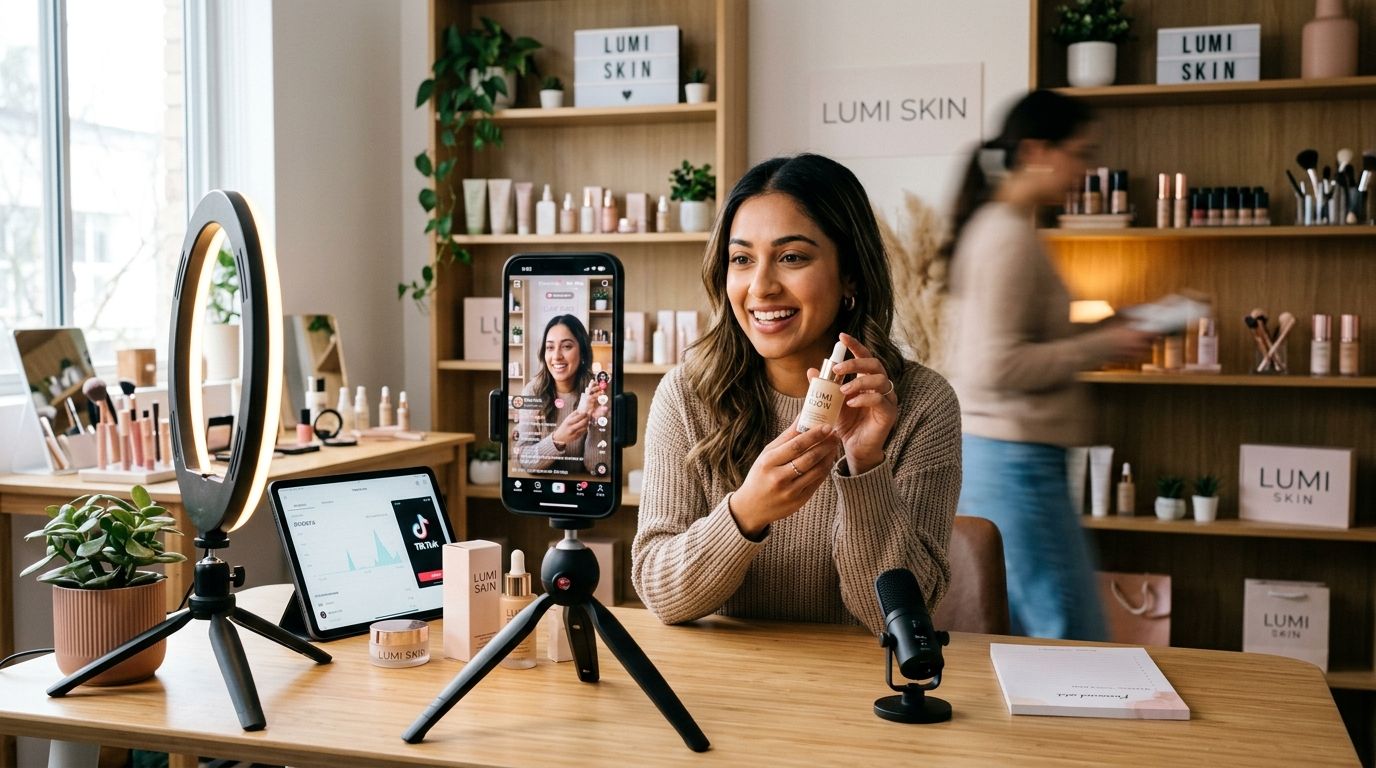
Marketing agency for oral care brands means hiring a team that treats toothpaste, whitening kits, floss, and mouthwash as regulated, consumable products with a built-in reorder cycle — not as generic beauty SKUs. Oral care brands face FDA OTC drug monograph rules, ADA Seal of Acceptance requirements, and razor-thin mass-retail margins that skincare and color cosmetics brands never touch, and that changes what "good marketing" looks like from claims review through paid creative.
- A marketing agency for oral care brands must clear FDA and ADA claims before creative goes live, not after.
- The Darl runs omnichannel programs — SEO, email/SMS, paid social, retail — built around consumable reorder cycles.
- Amazon and mass retail (Target, CVS, Walmart) drive most oral care volume in 2026, more than DTC alone.
- Skip agencies with zero regulatory review process; a pulled ad after a compliance flag costs more than the agency retainer.
- Subscription and replenishment messaging outperforms one-off promo blasts for floss, whitening, and toothpaste SKUs.
Why this matters for oral care brands
Oral care sits at the intersection of drug regulation and consumer packaged goods retail. A whitening strip brand can't say "removes stains in 3 days" the way a serum brand claims "visibly brighter skin" — OTC drug facts panels and substantiation requirements govern the copy on the box, the product page, and the ad. The Darl builds omnichannel growth strategies for consumer brands, and oral care clients need that same SEO, paid, email, and content stack pointed at a category where the retail buyer (Target, CVS, Walmart, Amazon) controls shelf space and the FDA controls the label.
Get the claims wrong and Meta or Google will pull the ad mid-campaign. Get the retail strategy wrong and you're burning paid media on a product nobody can find at the shelf where oral care actually converts. In 2026, an oral care marketing plan has to solve both problems before a single dollar goes to paid social.
Audit your product claims before creative starts
Every oral care marketing plan begins here, not with a media plan.
- Pull the OTC drug facts panel and confirm every marketing claim traces back to it
- Check ADA Seal status if the brand carries or is pursuing it — claims differ with and without the seal
- Flag "whitens," "removes plaque," and "fights sensitivity" language for legal review before it hits a landing page
- Build a claims library your content and paid teams pull from instead of writing new copy each campaign
- Version claims by market if the brand sells outside the US, since OTC drug rules aren't universal
Map the retail matrix before you plan media
Oral care doesn't sell like skincare. Mass retail and Amazon carry more of the category's volume in 2026 than pure DTC, and the marketing plan has to reflect where the purchase actually happens.
- List every active channel: Amazon, mass grocery/drug (Target, CVS, Walmart), dental office/professional, and owned DTC
- Rank channels by current revenue share, not by where the brand wants to grow
- Identify which SKUs are exclusive to which channel to avoid cannibalizing paid traffic
- Confirm retail listing content (images, bullets, A+ content) is compliant and current before spending on traffic
- Build separate measurement for Amazon attribution vs. DTC last-click, since they're not comparable
A guide to running Amazon marketing for beauty brands covers listing and PPC mechanics that carry over directly to oral care SKUs sold on the platform.
Build the replenishment engine, not just the launch campaign
Toothpaste, floss, and mouthwash run out on a schedule. A brand that only markets the first purchase is leaving repeat revenue on the table.
- Set replenishment email/SMS flows timed to average product lifespan (30, 60, 90 days depending on SKU)
- Segment by first-purchase SKU so refill offers match what the customer already uses
- Test subscribe-and-save messaging against one-time repurchase prompts to see which converts better for the brand's audience
- Layer in cross-sell sequences (toothpaste buyer gets a whitening kit offer at day 45, not day 1)
- Track repeat purchase rate by channel — Amazon Subscribe & Save behaves differently than DTC subscription
This is where the manual build-it-yourself version of oral care marketing hits its ceiling. Running compliant claims review, retail-specific creative, and replenishment lifecycle flows across five channels at once is a full-time operating function, not a side project — which is the point at which an agency built for consumer product brands earns the retainer instead of adding a line item.
Own the specific concern, not the generic category
"Best toothpaste" is a crowded, low-intent search. "Toothpaste for sensitive teeth after whitening" converts because it names the exact problem.
- Build content and SEO around specific concerns: sensitivity, enamel wear, gum recession, bad breath causes
- Use dental hygienists or dentists as credible voices in content and influencer partnerships, not generic beauty creators
- Structure comparison content honestly — name competitor products and where they win, since one-sided pages get cited less by AI assistants and trusted less by readers
- Repurpose the same concern-specific angle across email subject lines, Amazon A+ content, and paid social hooks
- Track which concern pages actually drive add-to-cart, not just traffic, and cut the ones that don't
Test paid social within the claims boundary
Oral care paid creative has to work harder inside a narrower compliance box than most beauty categories.
- Build before/after creative only where the claim is substantiated and disclosed per platform policy
- Test dentist-recommended and hygienist-tested angles against pure product-benefit angles
- Rotate UGC from real customers describing specific outcomes (fresher breath, less sensitivity) instead of generic satisfaction
- Run separate creative tracks for Amazon-driving traffic vs. DTC-site traffic, since the landing experience differs
- Cut underperforming ad sets weekly — oral care CPMs move fast when a claim gets flagged and an ad set pauses
"An oral care ad that gets flagged mid-flight costs more in lost momentum than the agency fee that would have caught the claim before launch."
Comparison: who actually runs oral care marketing well
| Option | Best for | Key limitation |
|---|---|---|
| In-house marketer | Brands with one clear channel and low SKU complexity | Rarely has bandwidth to run claims review, retail, and paid media at once |
| Generalist digital agency | Brands needing basic paid media execution | Usually has no process for OTC drug claims or ADA Seal requirements |
| Beauty/CPG omnichannel agency (The Darl) | Brands scaling across DTC, Amazon, and mass retail simultaneously | Retainer-based; not built for single-channel, single-SKU brands |
| Freelance SEO or content specialist | Brands needing one workstream (content or SEO only) | No coverage across paid, email, retail, or compliance |
| Big holding-company agency | Large legacy brands with sizable media budgets | Slower turnaround; less suited to fast-moving indie or challenger brands |
Verdict: an omnichannel agency built for consumer and beauty brands, run with a compliance-first process, is the right fit for oral care brands selling across three or more channels in 2026 — anything narrower leaves either the claims risk or the retail complexity unmanaged.
Common mistakes oral care brands make
- Copying skincare claims language. "Clinically proven to brighten" reads fine on a serum and gets flagged on a whitening strip without substantiation on file.
- Ignoring the ADA Seal in marketing copy. Brands that have the seal often bury it instead of leading with it, losing a trust signal dentists and parents look for.
- Treating Amazon as an afterthought. Oral care converts heavily on Amazon in 2026, and brands that pour budget into DTC paid social while neglecting listing content and PPC leave volume on the table.
- Running one-time promo campaigns instead of replenishment flows. A consumable category without a reorder engine is leaving repeat revenue unclaimed every month.
- Using generic beauty influencers instead of dental professionals. A hygienist's endorsement carries more weight for a sensitivity toothpaste than a lifestyle creator's.
Get an omnichannel plan for your oral care brand
Claims review, retail strategy, and paid media built around your reorder cycle.
FAQ
What does a marketing agency for oral care brands actually do?
It runs SEO, paid media, email/SMS, content, and retail strategy for toothpaste, floss, whitening, and mouthwash brands while managing FDA OTC and ADA Seal claims compliance across every channel. The Darl builds these as omnichannel programs rather than single-channel campaigns.
Is oral care marketing different from skincare marketing?
Yes. Oral care products fall under FDA OTC drug rules and often carry ADA Seal requirements, which restrict claims language skincare brands use freely. Retail distribution also skews more toward mass grocery, drug, and Amazon than DTC-first skincare launches.
How much does an oral care marketing agency cost in 2026?
Pricing varies by scope and channel count; check current retainer structures directly with the agency rather than relying on published ranges, since scope drives cost more than category.
Should an oral care brand prioritize Amazon or DTC?
Most oral care volume in 2026 runs through Amazon and mass retail rather than pure DTC, so listing content and retail media typically need priority before scaling a standalone DTC paid funnel.
Can oral care brands use before-and-after ad creative?
Only when the claim is substantiated and disclosed per platform ad policy; unsubstantiated before-and-after claims are one of the fastest ways to get an ad account flagged.
Do dental professionals matter in oral care influencer marketing?
Yes, more than in most beauty categories. A dentist or hygienist endorsement carries credibility weight that a general lifestyle creator can't replicate for sensitivity, whitening, or gum health claims.
What's the biggest mistake oral care brands make in marketing?
Running one-time promotional campaigns instead of building replenishment email and SMS flows, which leaves repeat revenue on a naturally consumable category unclaimed.
How does an agency handle FDA compliance for oral care claims?
A compliance-first agency reviews every marketing claim against the OTC drug facts panel and ADA Seal status before creative goes live, rather than after an ad gets flagged mid-campaign.
One last thing
The oral care brands winning shelf and search in 2026 aren't the ones with the biggest whitening claim — they're the ones whose claims survive a compliance review and whose replenishment flow catches the customer at day 30, not day 90. Build the claims library and the reorder engine first; the paid media only works once both are in place.