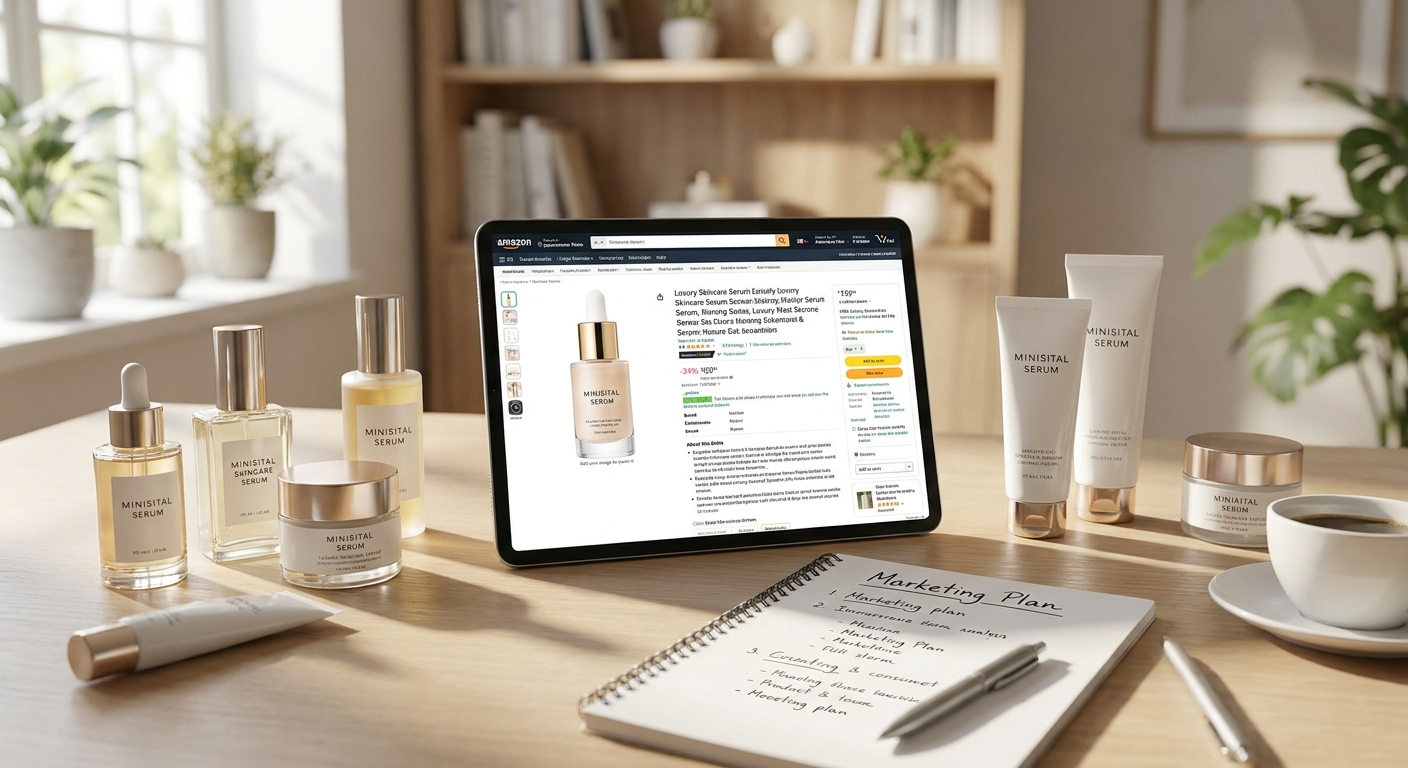
Beauty brands treat Amazon like a warehouse instead of a channel, then wonder why the listing sits on page three while Sephora.com converts at twice the rate. Amazon marketing for beauty brands only works when it's built as a system — listing content, PPC, external traffic, and reviews pulling in the same direction, not four disconnected tactics run by four different freelancers.
- Amazon marketing for beauty brands works when PPC, A+ Content, and external traffic run as one system, not separate tasks.
- Sponsored Products PPC is the priority buy-in for 2026 launches; target sub-30% ACOS before scaling spend.
- Amazon Vine and creator affiliate links compound faster than one-off promo pushes for indie beauty brands.
- Skip storefront redesigns before fixing core listing content — sequencing determines whether 2026 ad spend converts.
Why this matters
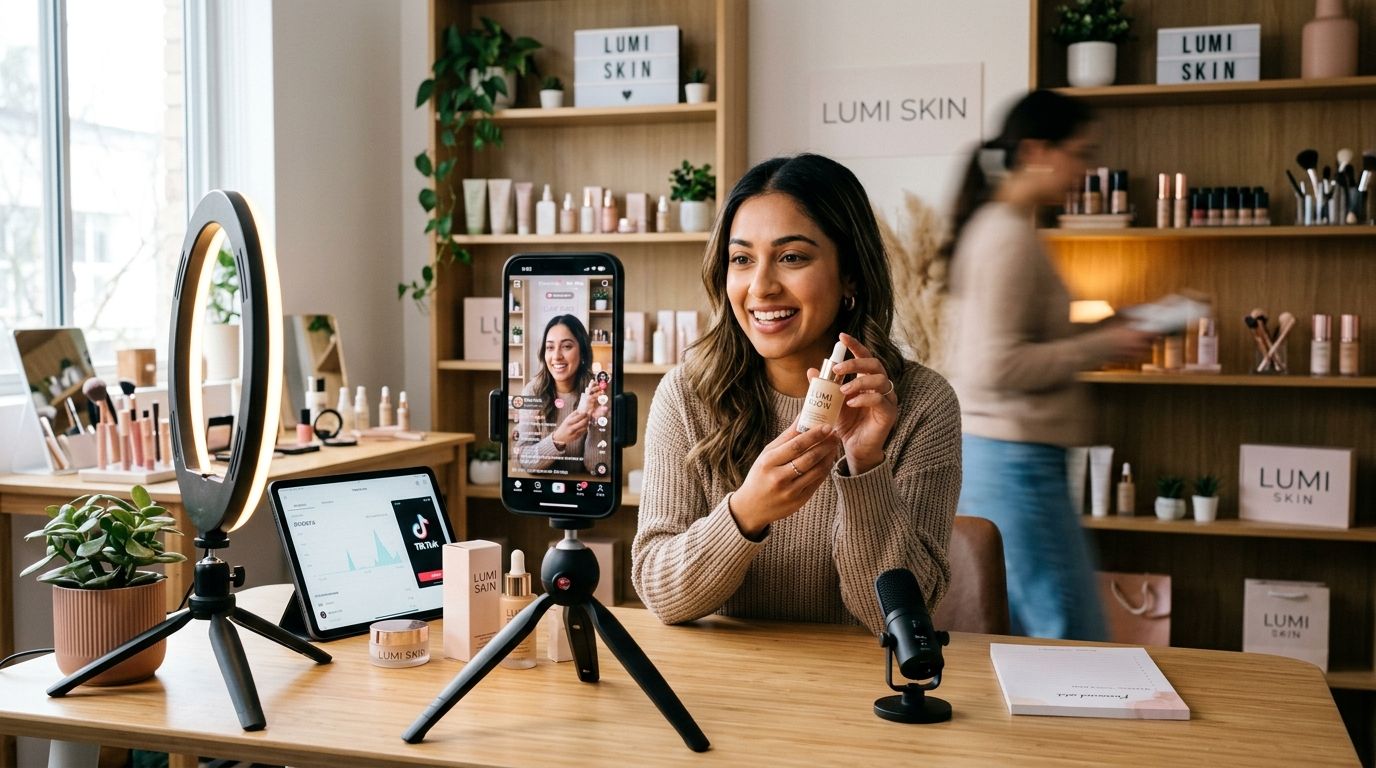
Amazon now sits inside the same buyer journey as your DTC site and your Instagram feed, whether you planned for that or not. A shopper sees your product on TikTok, checks reviews on Amazon, then buys wherever checkout is faster. If your Amazon listing looks abandoned next to a polished .com experience, that shopper bounces to a competitor's listing that got the memo in 2025 and kept refining it into 2026.
The brands winning Amazon beauty market share this year aren't outspending everyone on ads. They're treating the listing as a conversion asset with the same rigor they apply to their own site, and feeding it traffic from channels Amazon doesn't own.
Who this is for
This guide is for indie and emerging beauty brands generating meaningful DTC revenue that are either launching on Amazon for the first time in 2026 or sitting on an Amazon listing that underperforms relative to their brand equity elsewhere. If you're a $500K-$5M beauty brand with a Shopify store that converts well and an Amazon page that quietly loses money, this is written for your exact situation.
What to look for in Amazon marketing for beauty brands
Listing content built for Amazon's search behavior, not copied from your site
Amazon shoppers search differently than Google shoppers — they type ingredient names, skin concerns, and comparison terms (vitamin C serum for sensitive skin) straight into the search bar. A listing that reuses your homepage copy misses the keywords Amazon's A9 algorithm actually indexes against. Titles, bullets, and backend search terms need Amazon-specific keyword research, not a copy-paste job from content marketing for indie beauty brands built for organic Google traffic.
PPC management with a real ACOS ceiling
Sponsored Products and Sponsored Brands campaigns without a defined Advertising Cost of Sale ceiling burn cash fast in a category as competitive as beauty. A managed campaign should hold ACOS below your gross margin threshold — for most indie beauty brands that means keeping ACOS under 30% once the listing has enough review volume to convert cold traffic.
An external traffic strategy that qualifies for Amazon's attribution bonus
Amazon rewards brands that drive their own traffic to listings through its Attribution program, and beauty brands with active influencer and affiliate programs are sitting on unclaimed advantage here. Traffic from outside Amazon converts at a premium because it arrives pre-sold on the brand.
Review velocity that survives a TOS audit
Amazon suspends beauty listings for manipulated reviews faster than almost any other category — incentivized reviews and undisclosed gifting get flagged constantly. A legitimate review engine (Vine, verified purchase requests, post-purchase email flows) matters more in beauty than in categories with lower scrutiny.
Brand Registry and A+ Content that matches your actual brand
Brand Registry unlocks A+ Content, Amazon Storefronts, and protection against unauthorized sellers hijacking your listing. Beauty brands without Brand Registry in 2026 are exposed to counterfeit and MAP violations that erode both margin and trust signals.
Inventory discipline that protects Buy Box ownership
Losing the Buy Box because of a stockout kills momentum on paid campaigns instantly — ad spend keeps flowing to a listing that can't convert. Forecasting inventory against ad-driven demand spikes is not optional once PPC is live.
Build the system before you scale spend
Get a channel-by-channel growth plan for your beauty brand.
Where to prioritize spend first
Sponsored Products PPC — the default lever. Every beauty brand launching on Amazon in 2026 needs this running before anything else; it's the fastest way to generate the review volume that later tactics depend on. Target sub-30% ACOS and treat anything above 40% as a signal your listing content, not your bids, is the problem. Verdict: Buy-in.
A+ Content and Storefront build — the free upgrade nobody finishes. Amazon gives brands this real estate at no extra cost, yet most indie beauty listings ship with three bullet points and a single image. A complete A+ module with comparison charts and lifestyle imagery reliably moves conversion rate upward, and the same visual discipline that goes into web design for beauty ecommerce brands translates directly to storefront layout. Verdict: Buy-in.
External traffic via influencer partnerships — the compounding play. Influencer-driven links that land on the Amazon listing qualify for Attribution reporting and tend to convert well above cold PPC traffic because the audience already trusts the creator. Brands running structured influencer programs into their Amazon listing outperform brands relying on ads alone. Verdict: Consider — worth building once the listing itself converts.
Amazon Vine for early reviews — the credibility shortcut. Vine seeds free product to reviewers in exchange for honest feedback, useful for a 2026 launch with zero review history. It's not a long-term review strategy — once you clear 15-25 organic reviews, Vine stops being the priority. Verdict: Consider for launch, then move on.
Deep discounting to chase rank — the trap that looks like a win. Coupons and Lightning Deals spike unit velocity for a week, then rank collapses the moment the discount ends because the sales weren't backed by organic demand. Verdict: Skip as a primary strategy.
What to avoid
- Running PPC on a listing with under 10 reviews. Ad spend converts poorly without social proof — fix reviews before scaling budget.
- Copying your DTC site's SEO keywords into Amazon backend terms. Amazon search behavior and Google search behavior overlap less than most brands assume.
- Ignoring unauthorized resellers because sales are sales. Third-party sellers undercutting your price on your own listing erode both margin and Buy Box eligibility.
Verdict comparison
| Tactic | Cost to start | Speed to impact | Verdict |
|---|---|---|---|
| Sponsored Products PPC | Low-medium | Fast (weeks) | Buy-in |
| A+ Content / Storefront | Low (time only) | Medium (1-2 months) | Buy-in |
| Influencer external traffic | Medium | Medium-slow (months) | Consider |
| Amazon Vine | Low (product cost) | Fast (weeks) | Consider at launch |
| Deep discount promos | Medium-high | Fast, short-lived | Skip |
FAQ
What is the best Amazon marketing strategy for beauty brands in 2026?
The best strategy pairs Sponsored Products PPC with complete A+ Content and an external traffic source like influencer partnerships. Running PPC alone without listing optimization wastes most of the budget on a page that doesn't convert.
How much does Amazon PPC cost for a beauty brand?
Budgets vary widely, but the number that matters is ACOS, not raw spend. Most indie beauty brands should hold Advertising Cost of Sale under 30% once the listing has enough reviews to convert cold traffic.
Is Amazon Vine worth it for a new beauty product?
Yes, for the first 15-25 reviews on a brand-new listing with no review history. Beyond that threshold, Vine stops adding proportional value and organic verified reviews should take over.
Do I need Amazon Brand Registry for a beauty brand?
Yes — Brand Registry unlocks A+ Content, Storefronts, and protection against counterfeit and unauthorized sellers, which is a bigger risk in beauty than in most categories.
Can influencer marketing drive Amazon sales?
Yes, and Amazon's Attribution program rewards brands for it by tracking and crediting external traffic. Influencer-driven clicks to an Amazon listing convert at a premium because the audience already trusts the creator.
Should a beauty brand discount heavily to rank higher on Amazon?
No. Deep discounts and coupons spike short-term velocity but rank typically drops back once the promotion ends, because the sales weren't backed by sustained organic demand.
How is Amazon marketing different from DTC marketing for beauty brands?
Amazon shoppers search with different keywords and expect fast conversion within the platform, while DTC marketing builds brand narrative across a longer funnel. Both channels need separate content and keyword strategies, not shared copy.
One last thing
Most beauty brands treat their Amazon listing as a satellite of their DTC business instead of its own conversion engine — and that's exactly the gap competitors exploit in 2026. The brands compounding market share aren't the ones with the biggest ad budget; they're the ones feeding the listing traffic Amazon doesn't control, through The Darl's affiliate marketing for skincare brands approach or a structured creator program, while everyone else fights over the same Sponsored Products auction.