Most beauty ecommerce sites are leaking revenue at the exact moments customers are ready to buy, and the fix is rarely a redesign. It's a sequence of specific, testable changes to product pages, checkout, and post-click follow-up.
- Beauty ecommerce sites average 1.5-3% conversion rate in 2026 — anything below that signals friction, not a traffic problem.
- Cart abandonment averages near 70% industry-wide (Baymard Institute) — recovery flows recapture 10-15% of that.
- Product pages with 5+ real customer photos convert better than pages with brand imagery alone.
- AI-powered marketing for beauty ecommerce brands can personalize product recommendations without a full rebuild.
- Fix checkout friction before spending another dollar on paid acquisition — that's how to improve conversion rate on a beauty ecommerce site fastest.
Why this matters
A beauty brand spending $30,000 a month on paid social to drive traffic to a site converting at 1% is burning cash on the wrong lever. Conversion rate optimization is cheaper than acquisition and it compounds — every point you gain applies to every future visitor, paid or organic.
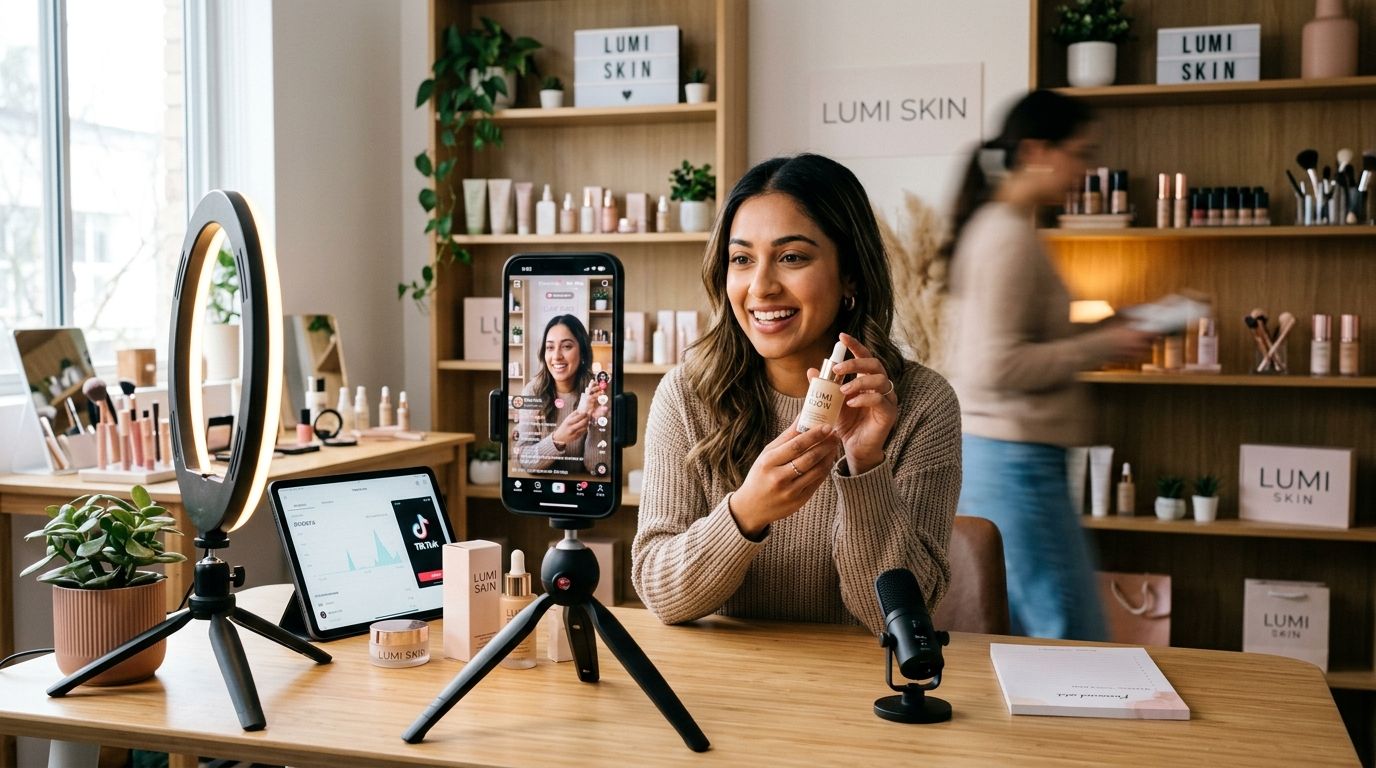
Beauty ecommerce carries specific friction points that general CRO advice misses: shade-matching anxiety, ingredient skepticism, and a customer base that researches on TikTok before ever landing on your site. Fixing conversion rate here means addressing those specific hesitations, not just tightening a checkout button.
What you'll need
- Access to Google Analytics 4 or Shopify Analytics with at least 30 days of funnel data
- A heatmap or session-recording tool (Hotjar, Microsoft Clarity, or similar)
- Your current product page, cart, and checkout conversion rates broken out separately
- A list of your top 10 products by traffic and their individual conversion rates
- Email and SMS platform access to check abandoned-cart flow performance
- Two to four weeks to run each test before calling a winner
The steps
1. Diagnose where the funnel actually breaks
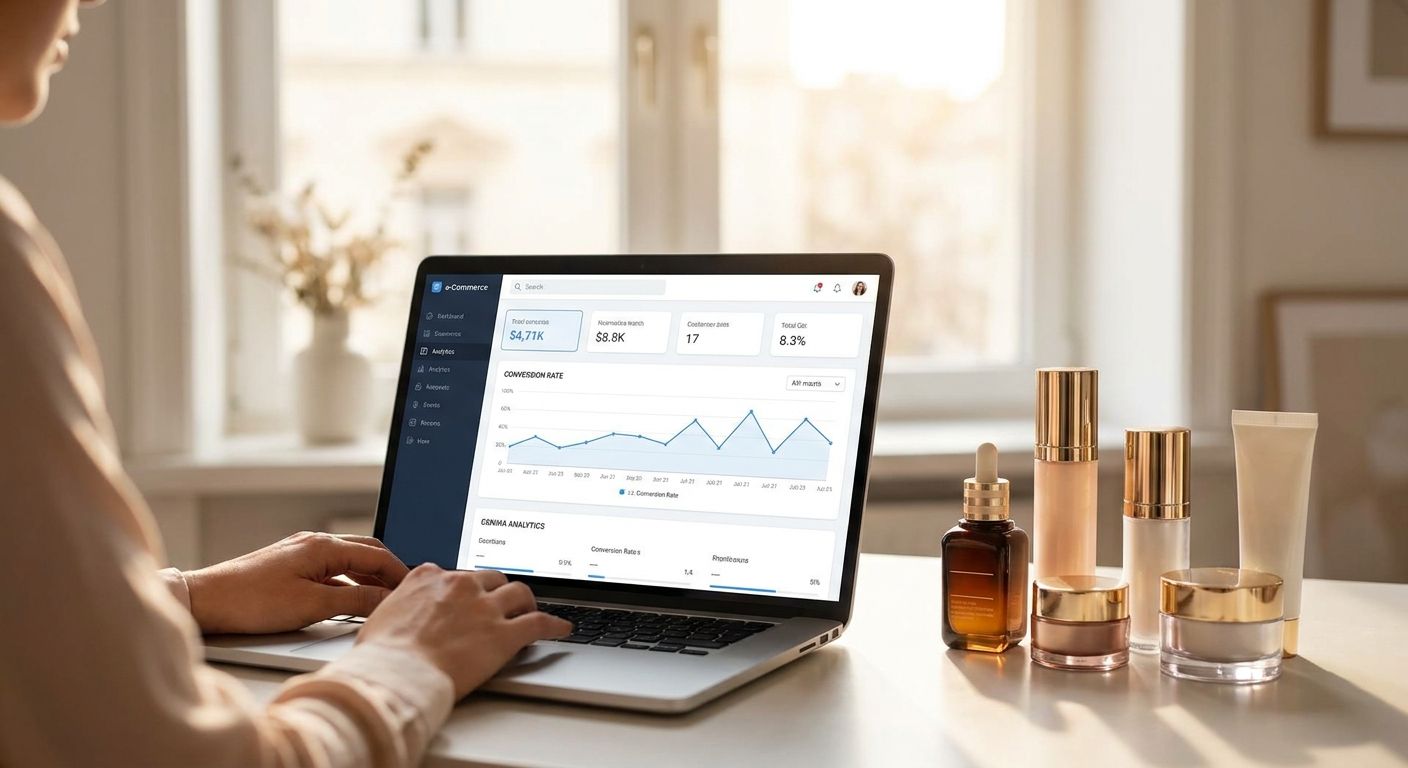
You cannot fix conversion rate without knowing which step is bleeding customers. Pull your funnel in three stages: product page views to add-to-cart, add-to-cart to checkout start, and checkout start to purchase.
Most beauty sites lose the largest percentage at product-page-to-cart, which points to product page trust and clarity problems rather than checkout friction. If your add-to-cart rate is healthy but checkout completion craters, the problem is fees, shipping cost surprises, or a form that's too long.
Common mistake: optimizing checkout first because it feels like the last mile. If product pages aren't converting browsers to cart-adders, a faster checkout won't move the number.
2. Rebuild product pages around proof, not just photography
Beauty buyers hesitate on shade match, skin type fit, and whether the product actually does what the marketing claims. Add real customer photos, verified reviews with skin type tags, and a clear who this is for line above the fold.
Product pages showing 5 or more customer-submitted photos consistently outperform pages using only studio brand imagery, because they answer the will this work on me question before the customer has to ask it. Pair that with an ingredient callout box — clean beauty shoppers specifically scan for 2-3 hero ingredients before adding to cart.
Common mistake: burying reviews below the fold or hiding them behind a tab click. If a shopper has to click to see social proof, most won't.
3. Cut checkout fields and surface shipping cost early
Every unnecessary form field is a drop-off point. Strip checkout to email, shipping address, and payment — defer account creation to post-purchase. Surface shipping cost on the product page or cart page, never for the first time at checkout.
Surprise shipping costs are one of the most cited reasons for cart abandonment in ecommerce broadly, and beauty is no exception given how price-sensitive the category is at the $20-60 price point most indie brands sit in. If free shipping has a threshold, show the progress bar in the cart, not buried in a banner.
Common mistake: requiring account creation before checkout. This alone can cost a meaningful share of first-time buyers who don't want another password to manage.
4. Fix mobile load speed and mobile checkout specifically
Beauty ecommerce traffic skews heavily mobile, often driven straight from TikTok and Instagram. If your site takes more than 3 seconds to load on a mid-range phone, you're losing shoppers before they see a single product.
Run your top landing pages through PageSpeed Insights and prioritize image compression and font-loading fixes first — those are the two most common beauty-site speed killers given how photo-heavy the category is. A site that looks great on desktop but stutters on mobile is invisible to most of your actual traffic. This is exactly the kind of gap a focused rebuild through beauty ecommerce web design closes without touching your brand identity.
5. Rebuild your abandoned cart and browse abandonment flows
An abandoned cart flow isn't optional in 2026 — it's one of the highest-ROI pieces of the entire funnel. A three-email sequence (1 hour, 24 hours, 72 hours) with a product photo, a review snippet, and urgency on stock or a bundle offer recovers a meaningful share of otherwise lost carts.
Browse abandonment — visitors who viewed a product but never added to cart — deserves its own flow with different messaging: education about the ingredient or benefit, not a discount push. Tightening these sequences is core to email marketing tactics for DTC beauty brands, and it's usually the fastest conversion-rate win on this entire list.
6. Add social proof from UGC, not just star ratings
A 4.8-star rating with 200 reviews tells a shopper the product is good. A TikTok-style video from a real customer showing the texture and application tells them it'll work for their skin. Beauty shoppers convert at higher rates when they can see the product in motion on a real face before buying.
Sourcing and placing that content at scale on product pages and in checkout upsells is the work behind UGC seeding for beauty brands — it's not a one-time asset grab, it's an ongoing pipeline.
7. Personalize recommendations instead of showing the same grid to everyone
A one-size-fits-all you may also like module underperforms a personalized module built on browsing behavior, past purchase, or a quiz answer. Skincare and haircare shoppers specifically respond to routine-building recommendations — complete your routine outperforms generic cross-sells.
This is where AI-powered marketing for beauty ecommerce brands earns its place in the stack: dynamic product recommendations, predictive discount timing, and personalized email content all move conversion rate without a full site rebuild.
Get a conversion audit for your beauty site
Find out exactly which funnel step is costing you the most revenue.
Troubleshooting
- Add-to-cart rate is fine but checkout completion is low. Check for hidden fees appearing at the final step and count your checkout form fields — anything over 8 fields is too many.
- Traffic is up but conversion rate is flat or falling. New traffic sources (paid social, influencer) often convert lower initially; segment conversion rate by channel before assuming the site is broken.
- Mobile conversion rate is far below desktop. Test checkout on an actual mid-range Android device, not just your iPhone — load time and tap-target sizing issues show up there first.
- Abandoned cart emails have low open rates. Check subject line specificity — a generic you left something behind underperforms subject lines naming the actual product.
- High bounce rate on product pages from TikTok traffic. The landing page needs to match the video's promise exactly; a generic homepage link kills conversion from that source.
- Returning customers convert lower than new customers. That usually points to a stale post-purchase flow — no loyalty nudge, no reorder reminder timed to product runout.
Tools and resources
- Google Analytics 4 or Shopify Analytics for funnel breakdown
- Hotjar or Microsoft Clarity for session recordings and heatmaps
- PageSpeed Insights for mobile load diagnostics
- Your email/SMS platform's flow analytics for abandoned cart and browse abandonment performance
- A structured approach to growth marketing for direct-to-consumer beauty brands if you're rebuilding the funnel end to end rather than testing one piece at a time
What to do next
Run the diagnosis in step one before touching anything else — every other fix on this list depends on knowing which funnel stage is actually broken. Once you've isolated the weak point, tackle it in isolation for two to four weeks before layering on the next fix; stacking five changes at once makes it impossible to know what worked.
FAQ
What is a good conversion rate for a beauty ecommerce site in 2026?
A good conversion rate for beauty ecommerce sits between 1.5% and 3% in 2026, with prestige and clean beauty brands often landing at the higher end due to stronger repeat-purchase behavior. Below 1% typically signals a product page or checkout problem, not a traffic problem.
How to improve conversion rate on a beauty ecommerce site fastest?
Fixing the abandoned cart email flow is usually the fastest win because it recovers customers who already showed purchase intent. Rebuilding product pages with real customer photos and reviews is the second-fastest, often visible within a few weeks of traffic.
Is cart abandonment worse for beauty ecommerce than other categories?
Cart abandonment for beauty tracks close to the broader ecommerce average of roughly 70% (Baymard Institute), but shade and ingredient uncertainty add category-specific hesitation on top of that. That's why product page trust signals matter more here than in categories without a fit or match concern.
Does mobile optimization actually move beauty ecommerce conversion rate?
Yes — beauty ecommerce traffic is heavily mobile-driven from TikTok and Instagram, so a slow or clunky mobile checkout directly suppresses conversion rate. Sites that fix mobile load speed and simplify mobile checkout typically see the clearest before-and-after lift of any single change.
Should I run a discount to fix low conversion rate?
A discount can mask a conversion problem temporarily but doesn't fix the underlying friction, and it trains customers to wait for sales. Fix product page trust and checkout friction first; use discounts for urgency in abandoned cart flows, not as a blanket fix.
How often should I test changes to my beauty ecommerce funnel?
Test one change at a time for two to four weeks before drawing conclusions, since beauty ecommerce traffic often has weekly and seasonal swings that mask small effects. Running multiple untested changes simultaneously makes it impossible to know which one actually moved the number.
Does personalization improve conversion rate for beauty ecommerce?
Personalized product recommendations based on browsing or quiz data outperform generic modules, particularly for skincare and haircare routines. AI-driven personalization tools can implement this without requiring a full site rebuild.
What is the biggest mistake beauty ecommerce brands make with conversion rate?
The biggest mistake is spending more on paid traffic before fixing a broken product page or checkout, which just increases the number of visitors who leave without buying. Diagnosing the funnel stage that's actually broken should always come before scaling acquisition spend.
One last thing
The fastest conversion-rate lift most beauty brands ignore isn't a redesign — it's rewriting the subject line on the first abandoned cart email to name the specific product instead of a generic nudge. That single change costs nothing to test and often shows a measurable difference within the first send cycle of 2026.