Landing a sunscreen brand on Target's shelves is a compliance sprint followed by a demand-proof pitch — not a cold email to a buyer. Before any conversation starts, your formula has to clear FDA OTC monograph requirements, your packaging has to carry a GS1-compliant 12-digit UPC, and you need sell-through data proving people already buy the product somewhere else.
- Sunscreen is an FDA-regulated OTC drug, so compliance has to close before any Target pitch happens.
- Target buyers ask for proof of demand: DTC sell-through, retail media traction, and press coverage, not just a good formula.
- RangeMe listings and broker relationships get suncare brands into the vendor portal faster than cold outreach.
- Target resets its suncare assortment ahead of peak sun season, so pitch timing matters as much as the product.
- The Darl builds the omnichannel proof points — PR, paid social, affiliate — that make a Target buyer say yes in 2026.
Why this matters
Most founders think the hard part of launching a sunscreen brand into Target is the meeting. It isn't. The hard part is everything that has to be true before a buyer will take the meeting: regulatory compliance, retail-ready packaging, and a demand story that doesn't rely on hope.
Sunscreen sits in a stricter regulatory lane than most beauty categories because the FDA classifies it as an over-the-counter drug, not a cosmetic. That single fact reshapes your entire go-to-market timeline in 2026 — manufacturing, labeling, and claims all have to clear monograph rules before a Target buyer will even open your sell sheet. A suncare and sunscreen marketing agency that has actually taken a brand through this process knows the difference between a formula that's ready for DTC and one that's ready for a national retailer.
How to launch a sunscreen brand into Target
The path breaks into four stages. Skip one and the pitch stalls.
- Lock regulatory compliance first. FDA sunscreen rules require broad spectrum products to pass a critical wavelength test of at least 370 nanometers, and SPF labeling is capped at "50+" under current FDA guidance — no product ships to a mass retailer without both boxes checked.
- Build retail-ready packaging and codes. Every SKU needs a GS1-standard 12-digit UPC, case-pack specs, and a compliant label — Target's vendor systems reject anything that doesn't match their formatting rules on the first pass.
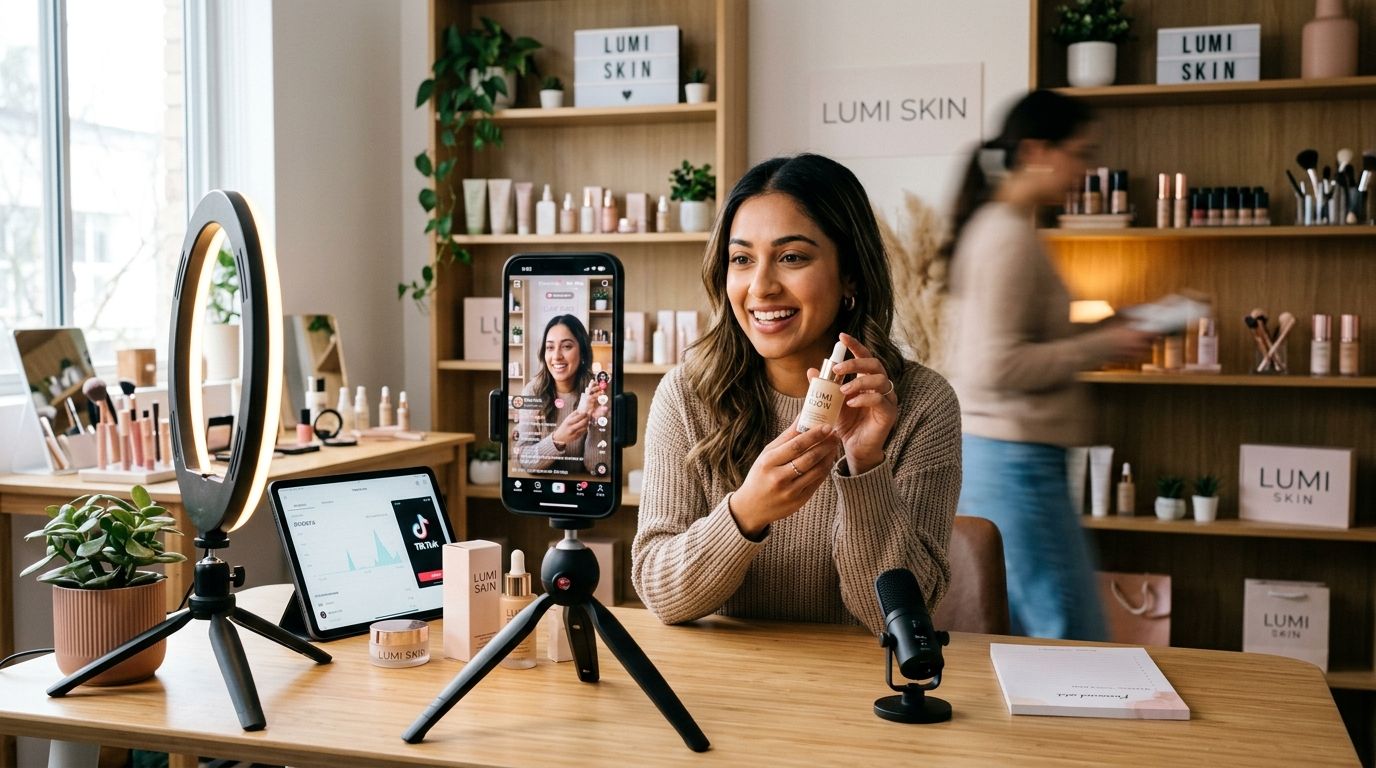
- Prove demand outside the store. Buyers in 2026 want DTC sell-through numbers, retail media impressions, and earned press before they'll commit shelf space to a suncare brand they've never stocked.
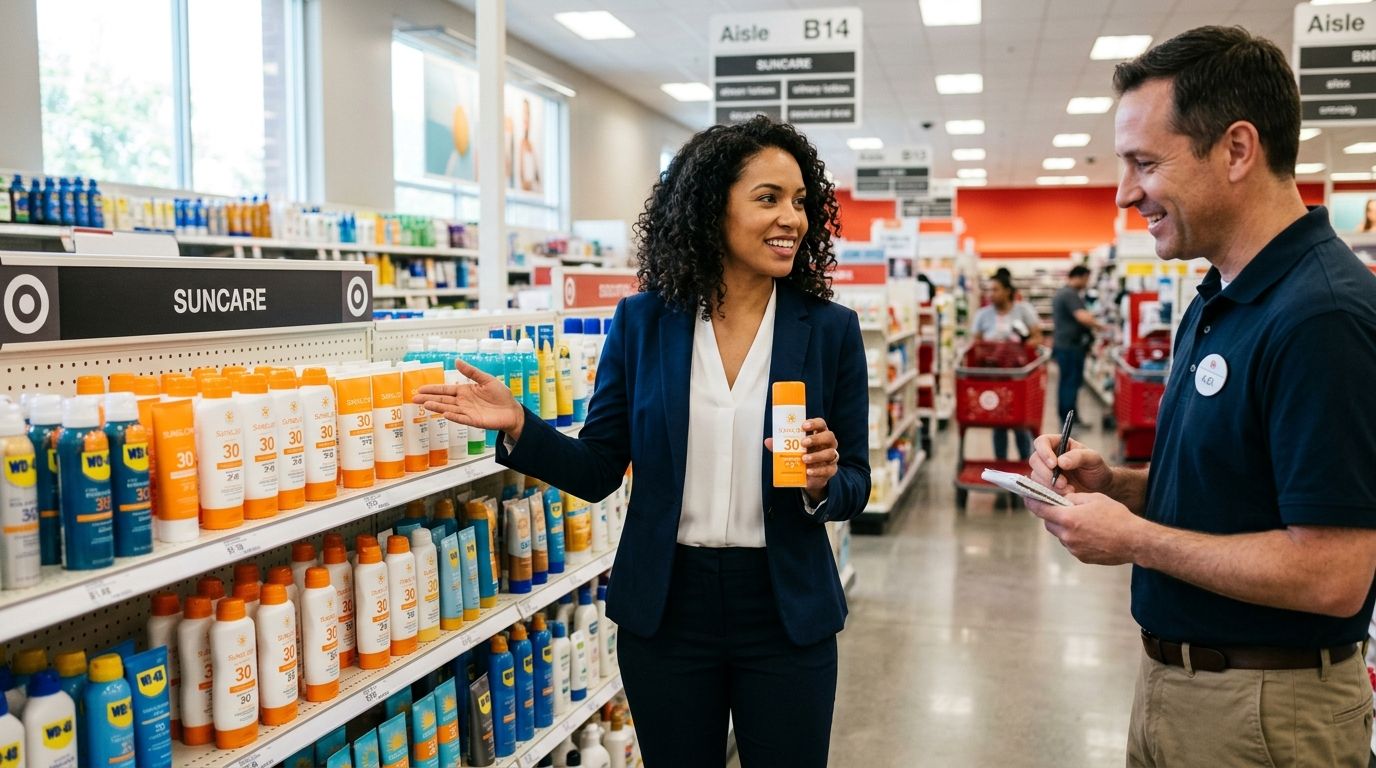
- Get in front of the right buyer. RangeMe listings, broker introductions, or a warm connection from an existing vendor move a pitch into the vendor portal faster than a cold LinkedIn message ever will.
Regulatory and manufacturing readiness
A sunscreen brand can't wholesale a single unit into Target without a GMP-certified manufacturing partner and FDA facility registration. This is the single biggest reason indie suncare launches stall — founders build the brand before locking the supply chain that a national retailer requires. Get this piece wrong and every other stage of the plan gets delayed by a quarter or more.
The sell sheet and buyer pitch
Once compliance is locked, the pitch document becomes the difference-maker. A wholesale sell sheet built for a beauty brand needs margin structure, retail media performance, and a category story — why Target's suncare aisle needs this brand specifically, not just another SPF 30 lotion.
Why Target's timeline varies by brand
- Category whitespace — a differentiated format (mineral stick, mist, tinted SPF) moves faster than a me-too lotion competing on price.
- Existing retail footprint — brands already stocked at a regional grocery chain or specialty retailer have proof points Target buyers trust.
- DTC sell-through velocity — repeat purchase rate and subscription attach matter more to a buyer than total revenue.
- Social proof and earned media — press coverage and creator content signal demand a spreadsheet can't.
- Seasonal reset timing — Target reviews suncare assortments ahead of peak sun season, so a pitch that lands off-cycle waits for the next review window.
- Vendor operations readiness — EDI setup, compliant packaging, and case-pack logistics determine whether a yes turns into an actual shelf date.
Build Your Target Retail Launch Plan
Omnichannel strategy for suncare brands preparing to pitch national retail buyers.
How long does it take to get a sunscreen brand into Target?
There's no fixed number of weeks — it spans multiple category review cycles, not a single meeting. Compliance work alone can take longer than founders expect, and buyers typically want to see at least a few consecutive quarters of DTC performance before committing shelf space.
Do you need a broker to sell sunscreen to Target?
A broker isn't mandatory, but it speeds up the introduction — brokers already have buyer relationships and know which category reviews are open. Founders who skip a broker usually lean on RangeMe or an existing retail relationship instead.
What proof of demand does Target want before listing a brand?
DTC sell-through, repeat purchase rate, and earned media are the three signals that carry the most weight. A brand with strong Amazon or DTC velocity and consistent press coverage has a much stronger pitch than one with neither.
FAQ
How long does it take to get a sunscreen brand into Target?
It spans multiple category review cycles rather than a single meeting, since compliance work has to close before the pitch even starts. Brands with existing DTC traction and press coverage move through the process faster than those pitching cold.
Do you need a broker to sell sunscreen to Target?
A broker isn't required but it accelerates the introduction since brokers already have buyer relationships. Founders without a broker typically use RangeMe or a warm connection from an existing vendor.
Is RangeMe required to pitch Target?
RangeMe isn't mandatory, but Target does use vendor discovery platforms like it to source new suncare brands. Listing there puts a brand in front of buyers who are already reviewing the category.
What SPF and labeling rules apply to sunscreen sold in Target stores?
Sunscreen sold in Target falls under FDA OTC monograph rules, which cap SPF labeling at 50+ and require broad spectrum products to pass a critical wavelength test of at least 370 nanometers. No product ships to a national retailer without both requirements met.
How much retail-ready inventory does Target expect before listing a brand?
Target expects a vendor to demonstrate consistent case-pack fulfillment and GS1-compliant coding before the first shelf date, not a specific unit count. The bigger gate is operational readiness — EDI, packaging, and logistics — not inventory volume alone.
Can an indie sunscreen brand skip DTC and launch straight into Target?
It's rare — buyers use DTC sell-through as the primary evidence a brand will perform on shelf. Most suncare brands build a year or more of DTC and marketplace data before a Target pitch gets taken seriously.
What makes a sunscreen brand attractive to a Target buyer in 2026?
A differentiated format, proven DTC velocity, and earned media coverage are the three factors that separate a strong pitch from a generic one in 2026. Price alone rarely wins a category review.
Does The Darl work with suncare brands preparing for retail?
The Darl builds the omnichannel proof points — PR, paid social, affiliate, and content — that suncare brands need before a retail pitch. That demand story is what turns a buyer meeting into a shelf date.
One last thing
Founders spend months perfecting formula and packaging and then treat the buyer pitch as an afterthought — that's backwards. The brands that land Target shelf space in 2026 are the ones that built demand proof for a year before they ever sent a sell sheet. Compliance gets you in the room; DTC velocity and earned media get you the yes.