Gen Z doesn't discover beauty brands through a homepage. They discover them mid-scroll, through a fifteen-second video a friend sent them, and they decide whether you're worth a follow before you've finished your first sentence. Here's the operating playbook for reaching them in 2026, step by step.
- Marketing a beauty brand to Gen Z in 2026 means TikTok-first content, not big-budget influencer deals — build owned creator networks.
- UGC seeding and nano-influencer partnerships outperform celebrity endorsements with Gen Z beauty buyers. Buy into creators, not ads.
- SMS and community retention turn one-time TikTok viewers into repeat customers; skip this and viral moments die at checkout.
- Test a weekly content cadence before scaling ad spend — Gen Z spots a paid push within days and scrolls past it.
Why this matters
Gen Z (born roughly 1997 to 2012) buys beauty differently than the generation before it. They don't wait for a brand's polished campaign — they wait for a creator they trust to say a product works, then they check the comments before they check the price. A beauty brand that still runs 2020-style influencer campaigns in 2026 is spending money on an audience that stopped watching that format years ago.
The agencies still winning this audience treat content like inventory: constant, tested, and disposable. The ones losing are the ones treating a single TikTok as a campaign instead of a data point. This guide walks through the exact sequence — audit, content engine, creator network, social commerce, retention — that gets a beauty brand from ignored to followed.
What you'll need
- A short-form video pipeline (weekly output minimum, not monthly)
- A UGC creator list of 15-30 people willing to film raw, unpolished content
- A TikTok Shop or livestream commerce setup if you sell direct
- Budget allocated for nano and micro-influencer seeding, separate from paid media
- SMS and community infrastructure for post-purchase retention
- A weekly content review process — someone watching what performed and why
Most of this doesn't require a large team. It requires discipline and a willingness to post before the content feels "ready."
The steps
1. Audit where Gen Z is already talking about your category
Before you post anything, find out what's already being said about your product category on The Darl's home turf: TikTok search, Reddit skincare threads, and comment sections on competitor videos. This tells you the language Gen Z actually uses — not the language your brand deck uses.
Pull up the top 20 videos under your category's main hashtag. Note which hooks get comments asking "where do I buy this" versus comments that just say "cute." That distinction is the difference between content that converts and content that just performs. Common mistake: auditing only your own brand mentions instead of the category conversation, which leaves you blind to what's actually driving purchases.
2. Build a TikTok-first content engine
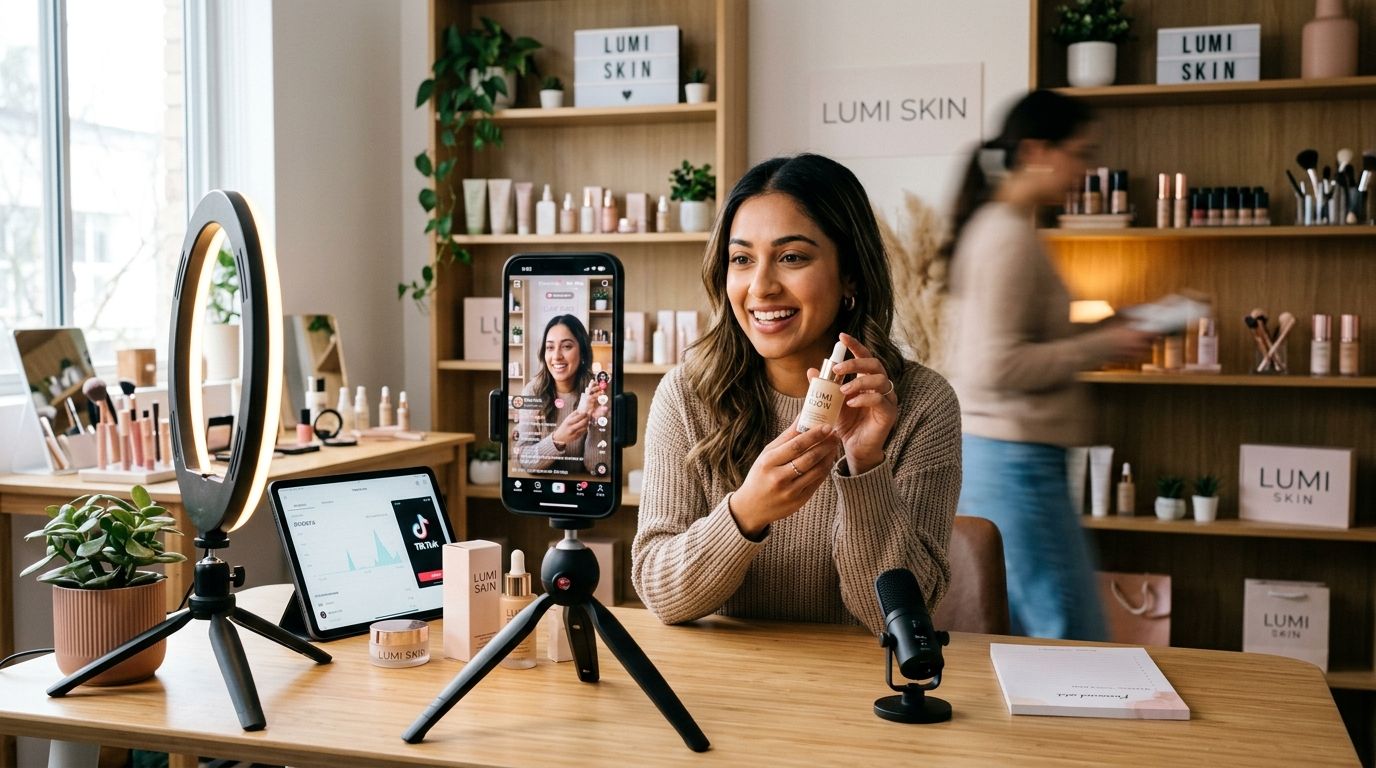
Gen Z spends the bulk of their beauty discovery time on TikTok, and a brand that treats TikTok as an afterthought to Instagram is fighting with one hand tied. TikTok marketing for beauty brands needs a dedicated content calendar, not repurposed Instagram Reels.
Post a minimum of four to five times a week. Mix formats: a founder-voice video, a product demo with a hook in the first two seconds, a trend-adapted piece, and one purely educational video that has nothing to sell. Expected outcome: within 30-60 days of consistent posting, you'll see which format your specific audience rewards with saves and shares — that's your signal to double down.
Common mistake: chasing every trending sound instead of adapting trends to your product story. Gen Z can tell when a trend is bolted on versus built in.
3. Turn customers into creators with UGC seeding
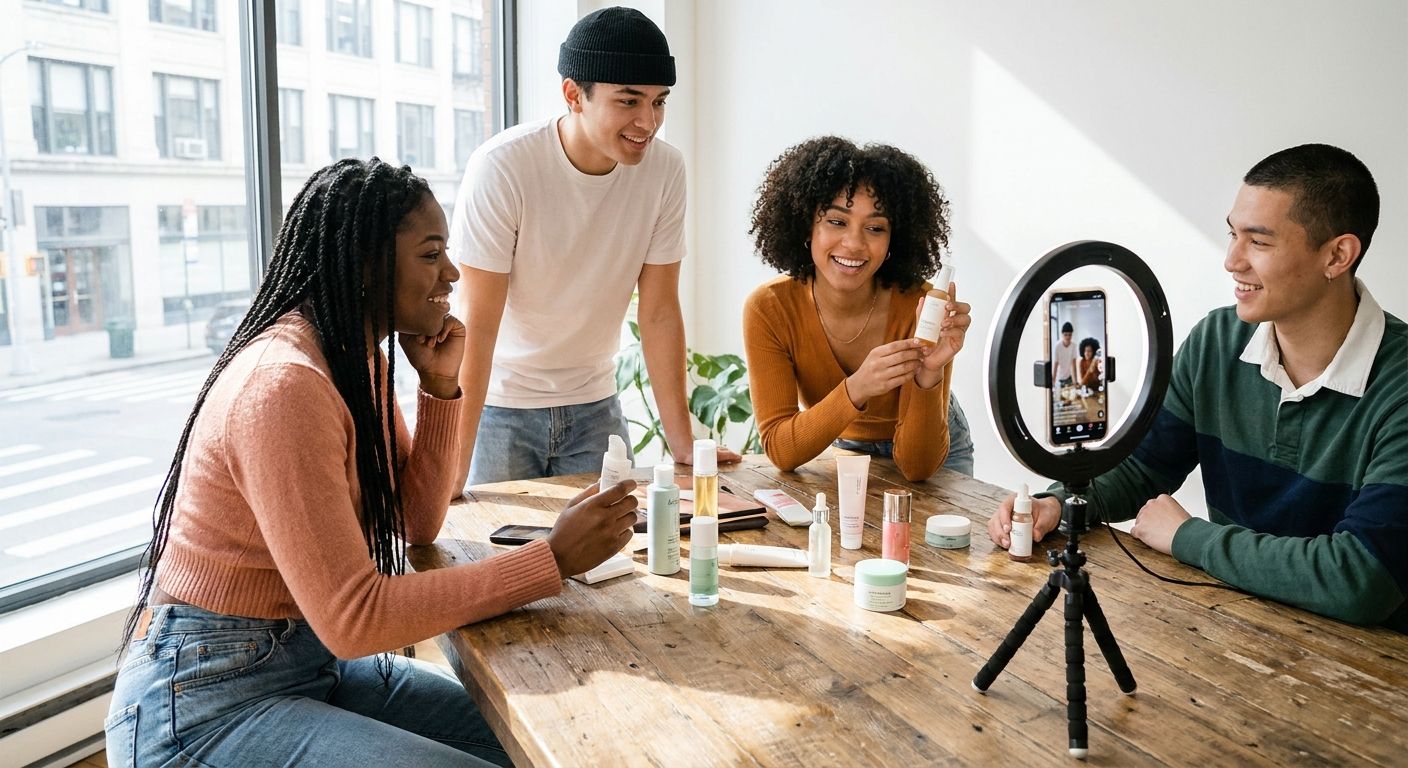
Gen Z trusts a stranger's unboxing video more than a brand's ad. Systematic UGC seeding fixes the content bottleneck most beauty brands hit around month three of posting consistently.
Send product to 15-30 creators with under 20,000 followers and ask for one honest video, no script. UGC seeding for beauty brands works because the content reads as real, and real content gets reused as paid ad creative later. Track which creator videos get repurposed into ads — that's your proof the seeding budget is working, not just generating goodwill.
Common mistake: sending product with a detailed script attached. Scripted UGC looks like an ad and Gen Z scrolls past ads.
4. Partner with micro and nano creators over celebrity names
A celebrity partnership buys reach. A micro-creator partnership buys trust, and trust is what converts a Gen Z viewer into a buyer. Influencer marketing for emerging beauty brands should weight budget toward creators with 5,000-50,000 followers who post in your category multiple times a week already.
Structure partnerships as ongoing, not one-off: three to six posts over a quarter beats a single sponsored video every time. Gen Z notices repetition from a creator they follow and reads it as a genuine endorsement rather than a paid mention. Expected outcome: engagement rate on creator content in this follower range typically runs higher than on celebrity posts, because the audience overlap between creator and follower is tighter.
Common mistake: picking creators by follower count alone instead of comment quality. A creator with 8,000 followers and real conversation in the comments beats one with 80,000 followers and bot replies.
5. Make checkout and community feel native to social platforms
Gen Z doesn't want to leave the app to buy. If your product discovery happens on TikTok but checkout requires four clicks off-platform, you lose buyers in the gap. Set up TikTok Shop, livestream selling, and social checkout wherever your audience already spends time.
Run at least one live selling session monthly where a founder or creator answers questions in real time. Why it matters: live commerce compresses the discovery-to-purchase window that traditionally takes days into minutes, and Gen Z rewards brands that show up live and unscripted.
Common mistake: driving all TikTok traffic to a generic homepage instead of a landing experience built for the specific video that sent them there.
6. Layer in SMS and community for retention
A viral TikTok gets you a first order. It doesn't get you a second one on its own. Once a Gen Z customer buys, capture their number and build an SMS flow that feels like a text from a friend, not a broadcast blast.
Segment SMS by purchase behavior and send content that continues the story from the video that converted them — a follow-up tip, a restock alert, a behind-the-scenes moment. Expected outcome: brands that pair viral acquisition with structured retention see repeat purchase rates climb meaningfully faster than brands relying on organic reach alone to bring people back.
Common mistake: treating SMS as a discount-delivery channel only. Gen Z unsubscribes fast from anything that reads as pure sales pressure.
7. Set a weekly test-and-measure cadence
Gen Z marketing in 2026 moves too fast for quarterly reviews. Build a weekly ritual: what posted, what performed, what gets scaled into paid, what gets killed.
Track save rate and comment sentiment as leading indicators, not just views — a video with modest views but a high save rate is signaling purchase intent that a viral-but-shallow video isn't. Common mistake: waiting for a monthly report to catch a losing content direction, by which point you've spent three weeks of budget reinforcing it.
If a piece of content isn't earning saves by day three, it isn't going to earn sales in week three either.
Build your Gen Z growth plan
Get an omnichannel strategy built around TikTok, UGC, and retention.
Troubleshooting
- Content gets views but no sales. Check whether your landing page matches the video's promise. A mismatch between hook and product page kills conversion even on high-view content.
- UGC creators go silent after receiving product. Set a clear, casual deadline in the outreach message and follow up once at the two-week mark — most delays are forgetting, not disinterest.
- Engagement is high but followers aren't converting to customers. Your audience may be entertained, not persuaded. Add a clearer call-to-action and price mention within the first ten seconds of video.
- Influencer partnerships aren't driving trackable sales. Use unique discount codes or affiliate links per creator so you can attribute revenue instead of guessing from vanity metrics.
- Brand voice feels forced on TikTok. Pull the founder or an actual team member on camera instead of a polished brand account voice — Gen Z responds to a person, not a logo.
- Budget is spread thin across five platforms with weak results on all of them. Concentrate spend and content effort on the one or two platforms where your category audience already lives before expanding.
Tools and resources
- Review best social media platforms for beauty brand growth before splitting budget across channels
- A UGC content library organized by product line, refreshed monthly
- Discount code tracking per creator for attribution
- A weekly content scorecard: views, saves, comment sentiment, click-through
- SMS platform with purchase-behavior segmentation
What to do next
Once the content engine and creator network are running, the next constraint is usually paid amplification — knowing which organic winners to push budget behind and which to leave alone. That's a separate discipline from organic content and worth building deliberately rather than bolting on ad spend to everything that trends.
FAQ
How do you market a beauty brand to Gen Z in 2026?
Marketing a beauty brand to Gen Z in 2026 starts with TikTok-first content, UGC seeding, and micro-influencer partnerships instead of celebrity campaigns. Pair that with social checkout and SMS retention so first-time viewers become repeat buyers.
Is TikTok or Instagram better for reaching Gen Z beauty buyers?
TikTok drives more discovery for Gen Z beauty buyers in 2026 because of how the algorithm surfaces category content to non-followers. Instagram still matters for retention and product detail once someone already knows the brand.
How many influencers should a beauty brand work with at once?
Most beauty brands see stronger results seeding product to 15-30 micro and nano creators simultaneously rather than paying for one or two large names. Volume and repetition build trust faster than a single big-name post.
Does celebrity influencer marketing still work for Gen Z?
Celebrity partnerships still build awareness but rarely convert Gen Z buyers as efficiently as micro and nano creators do. Trust drives Gen Z purchase decisions more than reach.
How often should a beauty brand post on TikTok?
A beauty brand should post four to five times a week on TikTok to give the algorithm enough signal to find the right audience. Sporadic posting resets momentum every time.
What's the biggest mistake beauty brands make marketing to Gen Z?
The biggest mistake is treating a single viral video as a strategy instead of building a repeatable content and retention system. Viral moments without a retention layer behind them produce a spike, not growth.
Does SMS marketing work for a Gen Z beauty audience?
SMS marketing works for Gen Z beauty buyers when it reads as a personal update rather than a discount blast. Segmented, behavior-based SMS drives meaningfully higher repeat purchase than generic broadcasts.
How long does it take to see results marketing a beauty brand to Gen Z?
Most beauty brands see measurable content signal within 30-60 days of consistent posting and creator seeding. Sales lift typically follows once the retention layer — SMS and community — is in place.
One last thing
The brands winning Gen Z in 2026 aren't the ones with the biggest influencer budget — they're the ones who post before the content feels finished. Perfectionism is the single biggest tax on a beauty brand's TikTok growth; the algorithm rewards frequency and reaction far more than polish.