Travel-size beauty lines sell on convenience and trial, so the marketing has to prove portability and value before a shopper ever asks about ingredients — TikTok and Instagram Reels for compact demo content, Sephora and Ulta for shelf discovery, and email/SMS to convert repeat travelers into full-size buyers. The hidden cost most founders miss: travel-size SKUs carry thinner margins per unit, so paid acquisition has to lean on bundles and cross-sell into full-size rather than treating minis as a standalone profit center.
- Travel-size beauty lines win on TikTok demo content, Sephora/Ulta discovery, and email flows that upsell to full-size.
- Bundling minis into gift sets and airport/travel occasions outperforms selling them as standalone SKUs.
- UGC seeding works faster on minis than full-size because sample cost per creator drops.
- How to market a travel-size beauty product line comes down to occasion-based targeting: travel, gifting, and trial-before-you-buy.
Why this matters
A travel-size line isn't a smaller version of your marketing plan — it's a different buying occasion. Shoppers reach for minis before a flight, before a gift purchase, or before committing to a full-size product they haven't tried. Marketing that ignores the occasion and just runs the same full-size playbook at a lower price point under-converts on every channel, from paid social to retail end-caps.
How do you market a travel-size beauty product line?
The fastest path runs through four channels, in this order of priority for most beauty and lifestyle brands in 2026:
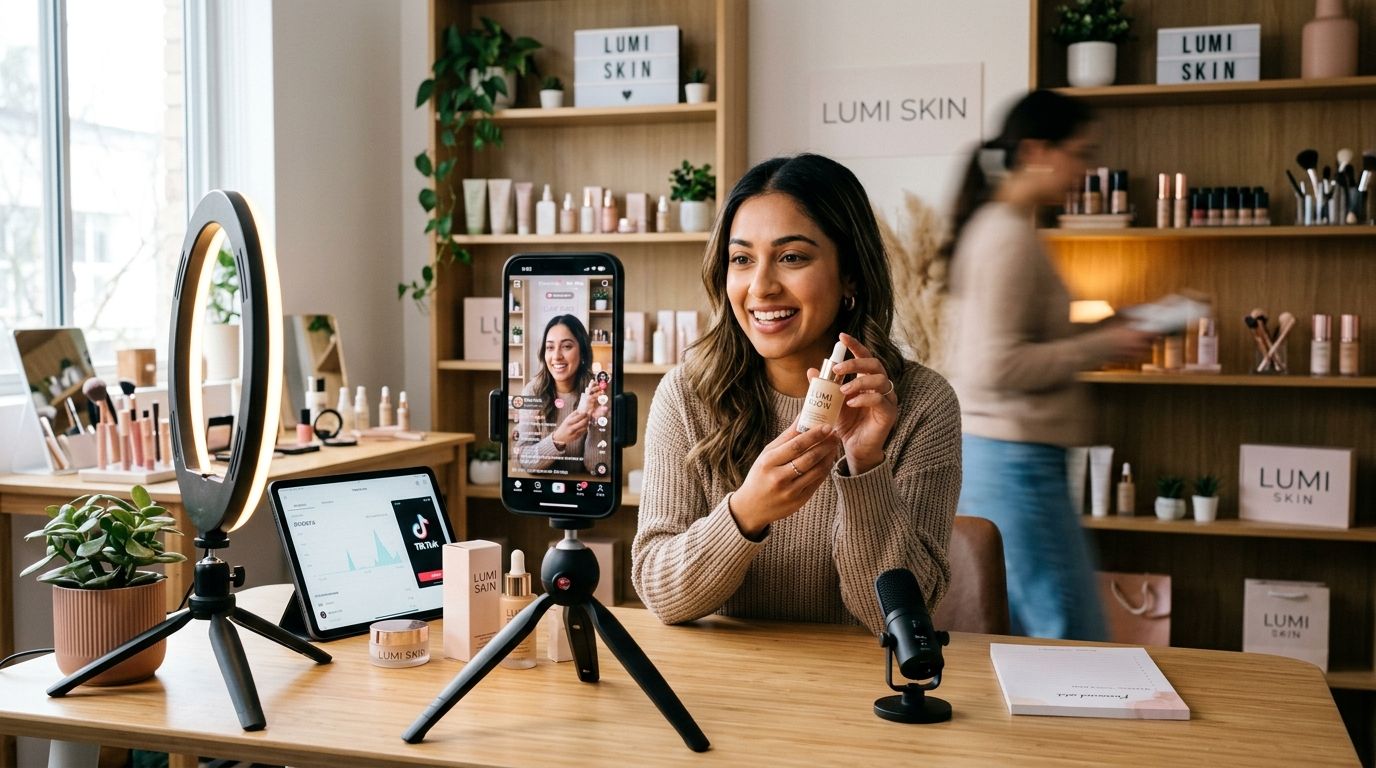
- Short-form video (TikTok, Reels) showing the product fitting into a bag, going through TSA, or getting used on a trip — the format sells portability visually in under 15 seconds.
- Retail placement at checkout and travel-size end-caps in Sephora, Ulta, or Target, where minis get impulse-add behavior full-size SKUs never see.
- Email and SMS flows that position minis as a low-commitment trial or gift-with-purchase, then retarget buyers into the full-size product 30-60 days later.
- Affiliate and UGC seeding to creators who travel frequently, since a $8-15 mini is cheap enough to seed at volume compared to seeding full-size bottles.
TikTok marketing for beauty brands built around this occasion-first framing consistently outperforms generic product demos, because the algorithm rewards content tied to a real-life moment (packing, flying, gifting) over a static shelf shot.
Occasion-based targeting: sell the moment, not the size
Travel-size buyers aren't a smaller-budget version of your full-size customer — they're often the same customer, at a different moment. Segment campaigns around:
- Pre-travel intent (searches spike ahead of holidays and school breaks)
- Gifting occasions (minis sell as stocking stuffers, bridal party gifts, and stocking-adjacent bundles)
- Trial-before-you-buy shoppers who won't commit to a full-size price without testing texture or scent first
Bundling and gift sets: the highest-leverage tactic for minis
2026
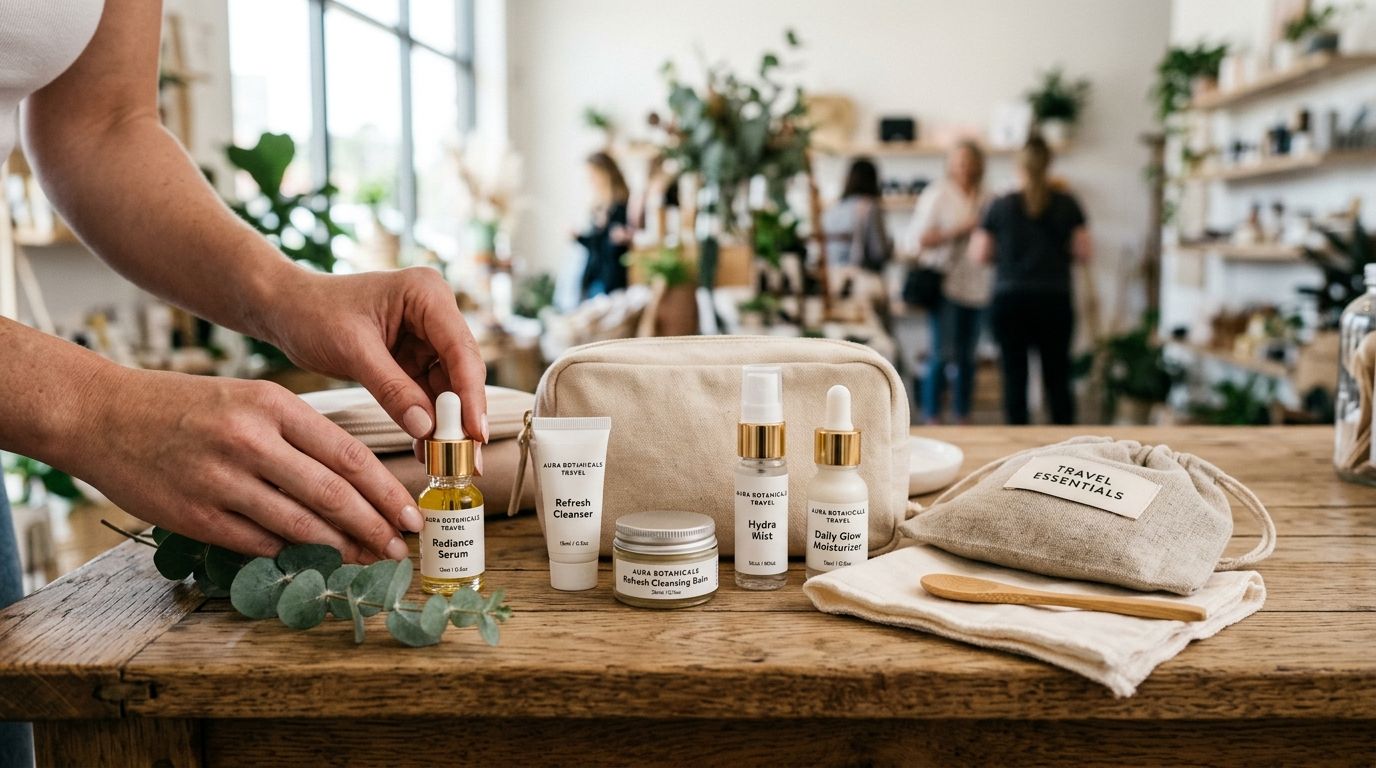
Selling a single travel-size item rarely clears the margin math once paid acquisition and shipping are factored in. Bundling three to five minis into a gift set or discovery kit raises average order value and gives you a merchandising story retail buyers respond to. Sephora and Ulta both reward brands that can present a clean multi-SKU set for seasonal gifting, and a bundle also gives your UGC seeding for beauty brands program more surface area — a creator unboxing five minis generates more content per seeded unit than one standalone bottle.
Retail expansion: where minis actually convert
Travel-size and gift-set SKUs are frequently the entry point retailers use to test a new brand before committing shelf space to full-size lines. If retail is part of the 2026 roadmap, minis double as a low-risk pitch to buyers.
| Channel | Best for | Watch out for |
|---|---|---|
| Sephora/Ulta shelf | Impulse checkout add-ons | Slotting requires proven sell-through data |
| TikTok Shop | Direct-response video-to-cart | Content fatigue if every post is the same demo |
| Email/SMS upsell | Converting mini buyers to full-size | Needs a 30-60 day nurture, not a single blast |
| Affiliate/UGC seeding | Volume awareness at low cost per unit | Requires tracking to tie seeding to actual sales |
Brands aiming for a physical shelf presence should look at launching into Sephora before finalizing the mini assortment, since buyers evaluate travel-size performance as part of the pitch.
Why travel-size marketing strategy varies by brand
- Price point of the full-size product — minis for a $60 serum sell a different story than minis for a $15 face wash
- Retail distribution goals — a DTC-only brand can experiment faster than one negotiating shelf space in 2026
- Category — skincare minis rely on trial-before-you-buy messaging, while fragrance and haircare minis lean harder on gifting and travel occasions
- Seasonality — holiday and summer travel windows drive the bulk of mini-size search and purchase intent
- Existing full-size customer base — brands with an established list can push minis through email/SMS at near-zero incremental spend
- Packaging and format — TSA-compliant sizing and spill-proof packaging affect both retail acceptance and travel-occasion messaging
Build the full omnichannel plan
See how THE DARL sequences paid, retail, and lifecycle for beauty brands.
Related questions
Should travel-size beauty products be sold on their own or only as bundles?
Standalone travel-size SKUs work as impulse buys at checkout or in retail end-caps, but bundles generally carry a better margin story and give paid media a stronger creative angle. Most brands run both: a solo mini for retail impulse, a curated set for gifting seasons and DTC.
How do you get a travel-size line into Sephora or Ulta?
Getting a travel-size line into Sephora or Ulta starts with proving sell-through on your DTC or existing retail channels before pitching a buyer. Minis and gift sets are often the easiest entry point because retailers can test the brand with lower shelf risk than a full assortment.
Does email marketing work for travel-size beauty products?
Email marketing works well for travel-size products when it's used to upsell mini buyers into full-size purchases within a 30-60 day window, not as a standalone acquisition channel. Pairing it with SMS for time-sensitive travel or gifting prompts increases the conversion rate on that follow-up sequence.
Is TikTok or Instagram better for marketing travel-size beauty products?
TikTok generally outperforms Instagram for travel-size beauty marketing because its short-form, occasion-driven format matches how people actually discover and share travel and gifting content in 2026. Instagram still works for retargeting warm audiences pulled from that TikTok content.
Email nurture sequences that carry mini buyers into full-size purchase decisions benefit from the same lifecycle thinking used in scaling email marketing for a skincare brand — the mechanics of a 30-60 day upsell flow don't change much between skincare and other beauty categories.
FAQ
What's the best channel to market a travel-size beauty product line?
Short-form video on TikTok is the best starting channel for a travel-size beauty product line because it visually sells portability in a way static images can't. Retail end-cap placement and email upsell flows follow once the product has proof of demand.
Is bundling minis better than selling them individually?
Bundling minis into gift sets is generally better for margin and merchandising than selling them individually, especially heading into holiday and travel seasons. Standalone minis still work well as low-cost checkout add-ons in retail.
How much content do you need for a travel-size beauty launch?
There's no fixed number, but travel-size launches benefit from steady UGC and affiliate seeding volume because the low cost per unit makes seeding at scale realistic. Prioritize creators who travel frequently since the format matches the product occasion.
Should travel-size products target new customers or existing ones?
Travel-size products convert well with both, but existing customers respond fastest through email and SMS because they already trust the full-size formula. New customers need paid social and retail discovery to build that trust first.
Do travel-size beauty products perform differently by season?
Yes, travel-size beauty products see the sharpest demand around summer travel and year-end holiday gifting in 2026. Campaigns timed to these windows outperform steady, always-on spend.
Can a travel-size line get into retail before the full-size line does?
A travel-size or gift-set line can get into retail before the full-size assortment, and it's often used specifically as the lower-risk pitch to a buyer. Retailers use mini sell-through data to decide whether to expand shelf space.
One last thing
The brands that get travel-size marketing wrong treat minis as a discount tier instead of a discovery tier — cutting price without cutting the messaging gap leaves the full-size upsell on the table. The ones that get it right build the mini's entire campaign around a moment (a flight, a gift, a first try) and let the full-size product close the sale later through email and retargeting, not the initial ad.