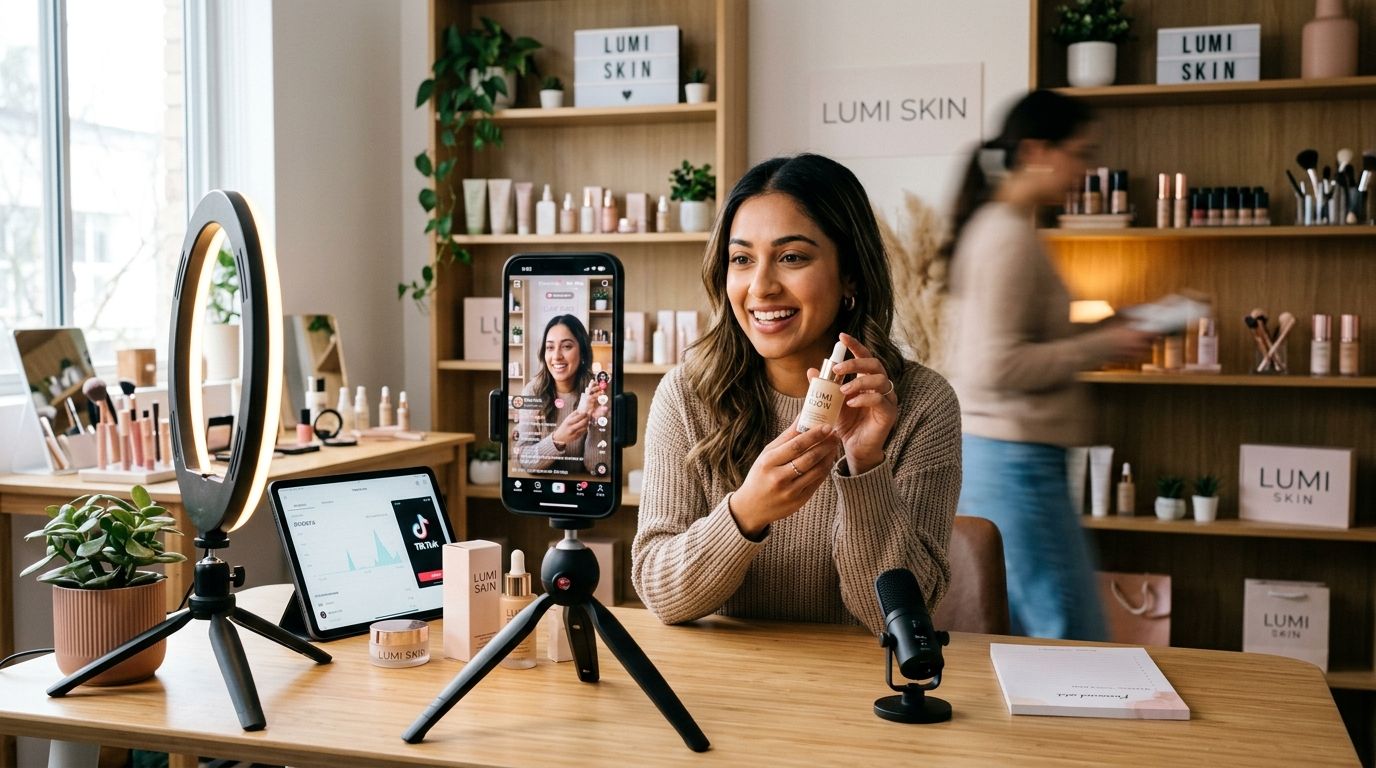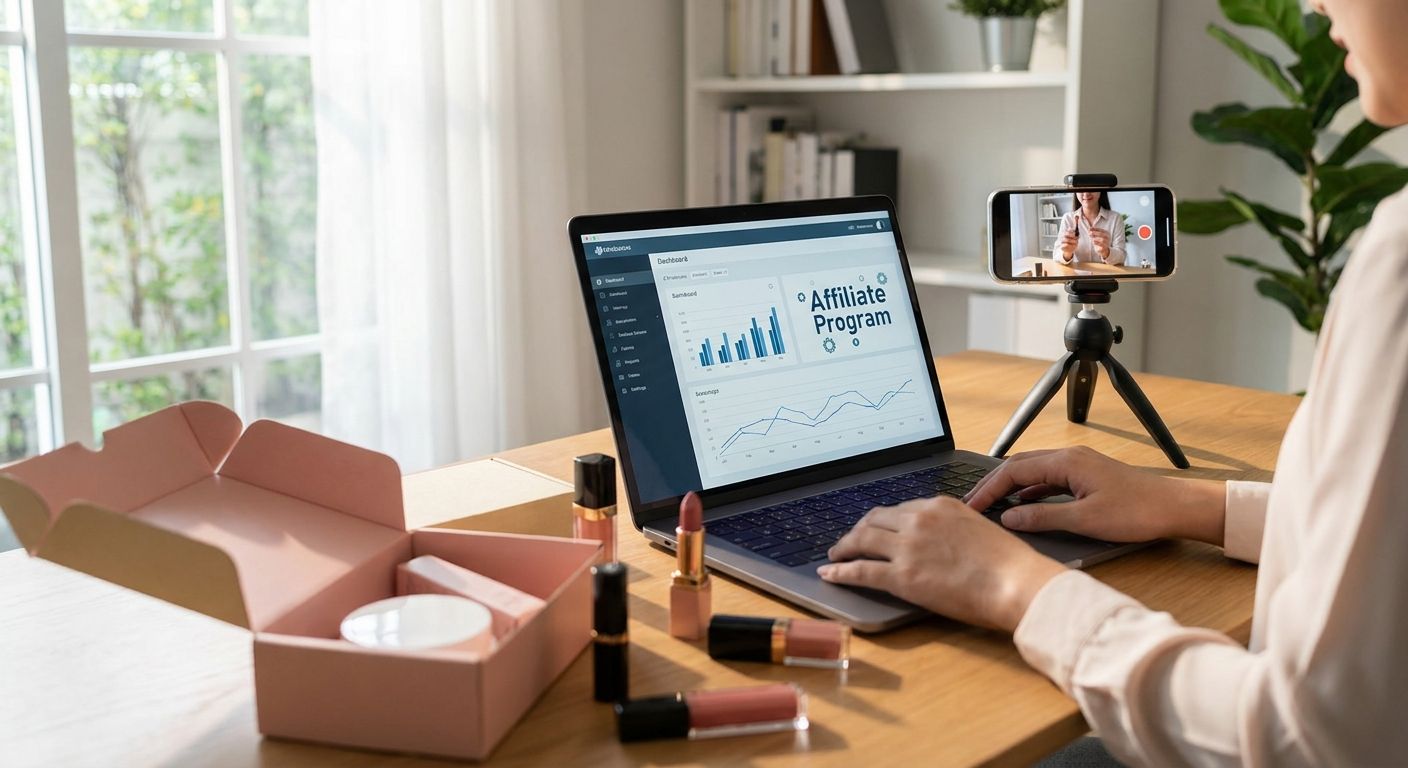
Affiliate marketing for a beauty ecommerce brand isn't a side channel you bolt on after Meta ads stop scaling — it's a compounding revenue engine when the commission structure, creator pool, and tracking stack get built in the right order. This guide walks through the exact setup sequence for running affiliate marketing for a beauty ecommerce brand in 2026, from platform choice to pruning dead affiliates.
- Running affiliate marketing for a beauty ecommerce brand starts with tiered commissions, not a flat 10% rate.
- Recruit affiliates from existing customers and micro-influencers before chasing large affiliate networks in 2026.
- Track attribution separately from paid media or you double-pay commissions on the same sale.
- Prune non-converting affiliates every 30 days — most programs bleed budget past day 60.
- FTC disclosure compliance is non-negotiable for beauty affiliates promoting active ingredients or clinical claims.
Why this matters
Beauty ecommerce brands scaling past $1M in 2026 rarely do it on one channel. Affiliate marketing sits at the intersection of content, influencer, and paid — it converts audiences that trust a third-party voice more than a brand's own ad. The Darl builds affiliate programs as one node in a brand ecosystem where the affiliate's content feeds retargeting, and retargeting feeds the affiliate's next payout. Treat affiliate as an isolated tactic and it stalls at a handful of coupon-code influencers. Treat it as connected infrastructure and it becomes a channel that scales with clarity instead of guesswork. Get the best affiliate marketing strategies for beauty ecommerce right at the structural level, and the rest of this guide is execution.
What you'll need
- An affiliate tracking platform (ShareASale, Impact, Refersion, or a Shopify-native app like GoAffPro)
- A commission budget modeled as a percentage of gross margin, not top-line revenue
- A starting affiliate pool: 15-30 people, pulled from existing customers, past influencer partners, and micro-creators
- Content assets — product photography, swatch videos, ingredient one-pagers — affiliates can pull without asking
- A written FTC disclosure policy affiliates sign before their first payout
- 3-4 hours a week for the first 90 days to manage outreach and approvals
The steps
1. Pick your affiliate platform and commission model
The platform decision locks in your tracking accuracy for the life of the program, so get it right before recruiting a single affiliate. Refersion and GoAffPro integrate natively with Shopify and cost less than $100/month at low volume; Impact and ShareASale carry setup fees but plug into larger affiliate networks with vetted creators already in the beauty space. Set a tiered commission structure instead of a flat rate — flat rates either overpay your best performers or underpay them into leaving.
| Tier | Monthly sales driven | Commission rate |
|---|---|---|
| Starter | $0–$2,500 | 10% |
| Growth | $2,501–$10,000 | 15% |
| Top | $10,000+ | 20% plus a quarterly bonus |
Common mistake: setting commission against retail price instead of margin. A 20% commission on a $60 serum with 65% gross margin still nets you $27 — model it before you promise a number publicly.
2. Build a recruitment pipeline from your existing audience
Your first affiliates should come from people who already buy from you or already talk about you — not a cold network search. Pull your top 50 repeat customers by order count and email them a personal invite with the commission structure attached. Layer in outreach to micro-influencers in the 5,000-50,000 follower range; they convert at higher rates than mega-influencers because their audience trusts the recommendation as personal, not sponsored. If your brand runs an ambassador or seeding program already, that list is your fastest affiliate pipeline — cross-reference it before building a new one from scratch. Programs built on influencer marketing for emerging beauty brands principles convert this pool faster than cold recruitment because the trust layer is already there.
3. Set tiered commission structures by performance
Revisit the tier thresholds every quarter in 2026 — a program launched in January with $2,500 tiers looks stale by September once your top five affiliates blow past it monthly. Add a bonus layer for affiliates who hit a new tier for two consecutive months: an extra 5% for 60 days locks in loyalty during your highest-performing window.
4. Equip affiliates with content and tracking links
Give every affiliate a unique tracking link and a discount code tied to their name, not a generic "SAVE15." Named codes let you attribute sales even when a customer clicks through on mobile and buys on desktop three days later — link-only tracking misses roughly a third of that cross-device path in most beauty ecommerce funnels. Build a shared drive with product shots, before/after UGC, and a one-page ingredient brief so affiliates aren't guessing at claims language.
5. Layer affiliate into your email and paid funnels
Affiliate content is some of the highest-trust UGC you'll ever get — recycle it. Pull top-performing affiliate posts into retargeting ad creative and into post-purchase email flows. This is where the ecosystem effect compounds: an affiliate's video drives the first click, a retargeting ad using that same video closes the sale two days later.
Build the affiliate program with a team that's done it
The Darl builds affiliate, influencer, and paid channels as one connected system.
6. Monitor and prune low performers monthly
Run a monthly report sorted by clicks-to-conversion ratio, not raw clicks. An affiliate driving 500 clicks at 0.4% conversion is costing you more in tracking overhead and code cannibalization than an affiliate driving 50 clicks at 6%. Set a 60-day grace period for new affiliates, then cut anyone under a 1% conversion rate after that window.
7. Scale top performers with bonus incentives
Once you have 90 days of data, identify your top 10% of affiliates by revenue and negotiate custom deals — a flat monthly retainer plus commission, or first access to new product drops. This is the group worth treating like a mini ambassador program rather than a line item in a spreadsheet.
Troubleshooting
Low affiliate signup rate. Your commission offer probably isn't competitive against category norms. Beauty affiliate commissions typically run 10-20%; anything under 8% will struggle to recruit past your existing customer base.
Affiliates driving traffic but no conversions. Check the landing page they're linking to — a generic homepage link converts far worse than a product page matched to the exact item in their content.
Coupon code cannibalization. If multiple affiliates share overlapping audiences, their codes compete for the same discount-hunting customer. Stagger code visibility or move high-overlap affiliates to link-only tracking.
FTC disclosure violations. Affiliates who skip "#ad" tags expose the brand, not just themselves, to compliance risk. Build disclosure language into the affiliate agreement and spot-check posts monthly.
Attribution conflicts with paid media. If an affiliate's audience also sees your retargeting ads, last-click attribution can credit the wrong channel and pay double. Set a clear attribution window — 7-day click, 1-day view is standard for beauty ecommerce in 2026 — and stick to it across platforms.
Affiliates going quiet after month one. Most drop-off happens when affiliates don't see early proof the program pays. Send a first-payout confirmation within 30 days, even if it's a small check, to keep momentum.
Tools and resources
- Refersion, GoAffPro, or Impact for tracking and payouts
- A shared content library affiliates can pull from without a request thread
- A written commission and disclosure agreement, reviewed annually
- Affiliate marketing for skincare brands if your catalog leans skincare-first rather than color cosmetics
- Monthly performance dashboards segmented by tier, not aggregated across the whole program
“If an affiliate isn't converting at 1% after the 60-day grace period, cut the commission before you cut the relationship.”
What to do next
Affiliate rarely performs in isolation. Once the program is live, the next lever is making sure your email flows and paid retargeting reinforce the same affiliate content instead of running a separate creative track — that's where most beauty brands leave revenue on the table in 2026.
FAQ
How much does it cost to run affiliate marketing for a beauty ecommerce brand?
Platform fees run $0-$300/month depending on the tool, plus commission payouts of 10-20% of the sale value. Total cost scales with revenue since commission is performance-based, unlike a flat ad spend.
What's the best commission rate for beauty affiliates?
A tiered structure starting at 10% and scaling to 20% for top performers works better than a flat rate. Flat rates either overpay low performers or underpay your best affiliates into leaving.
Is affiliate marketing better than influencer marketing for beauty brands?
They're complementary, not competing. Influencer marketing builds awareness with paid or gifted content, while affiliate marketing pays only on conversion, making it lower-risk for scaling budget.
How long does it take to see results from an affiliate program?
Most beauty ecommerce brands see meaningful revenue by month three, once the initial affiliate pool of 15-30 people has had time to post and convert. Early months are recruitment and content-seeding heavy.
How do you track affiliate sales accurately?
Use named discount codes tied to each affiliate combined with unique tracking links, since link-only tracking misses a meaningful share of cross-device purchases. A dedicated platform like Refersion or Impact handles both simultaneously.
Should beauty brands use an affiliate network or run their own program?
Start with a self-managed program built from existing customers and micro-influencers before joining a large network. Self-managed programs give tighter control over brand fit and commission structure in the first 90 days.
What's a good affiliate conversion rate to aim for?
Anything above 2% is strong for beauty ecommerce; under 1% after a 60-day grace period signals the affiliate should be cut or moved to a different landing page.
Do beauty affiliates need to disclose sponsored content?
Yes — FTC rules require clear disclosure like "#ad" on any affiliate or commissioned post. Brands share compliance risk when affiliates skip disclosure, so it belongs in the signed agreement.
One last thing
The programs that actually scale past year one aren't the ones with the most affiliates — they're the ones that cut the bottom 60% within the first two quarters and reinvest that commission budget into the top 10%. Most beauty brands hoard dead affiliate relationships out of guilt instead of running the math every month.