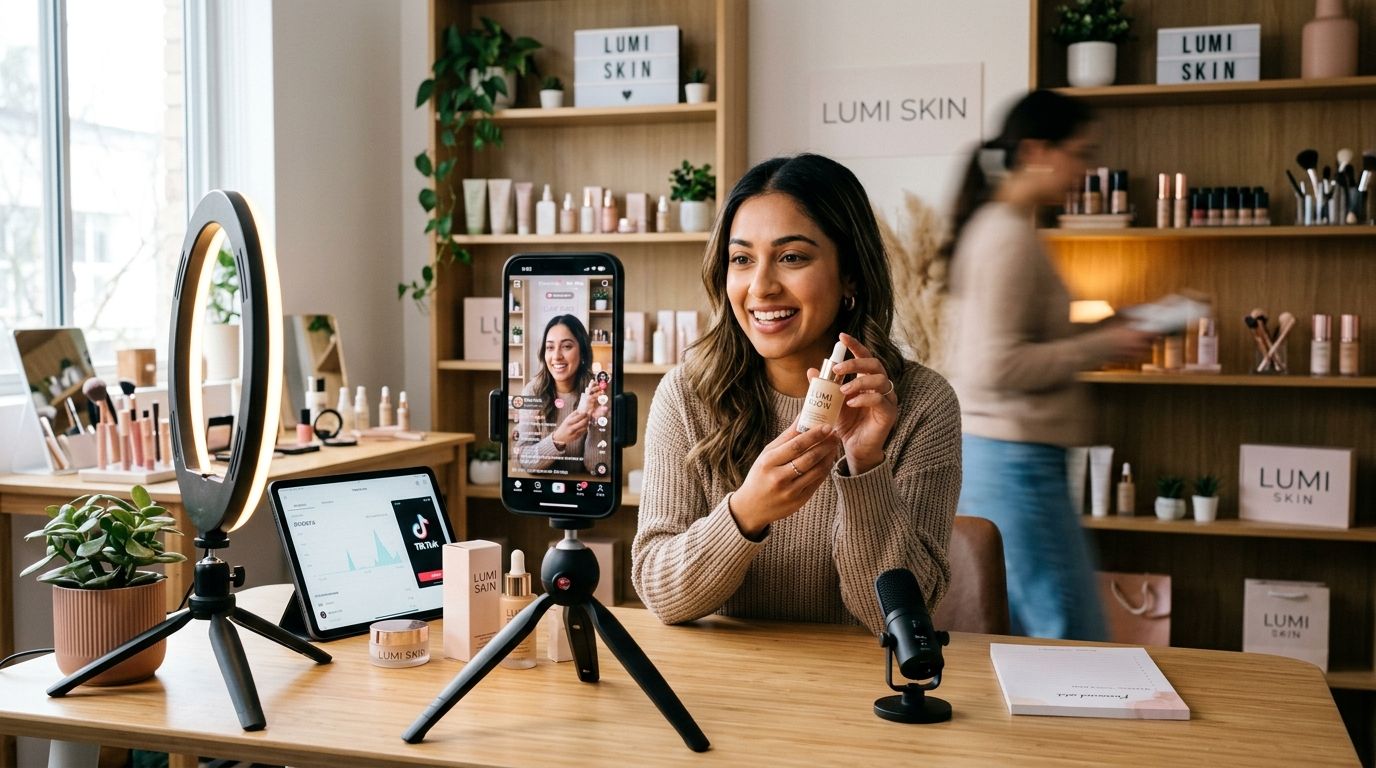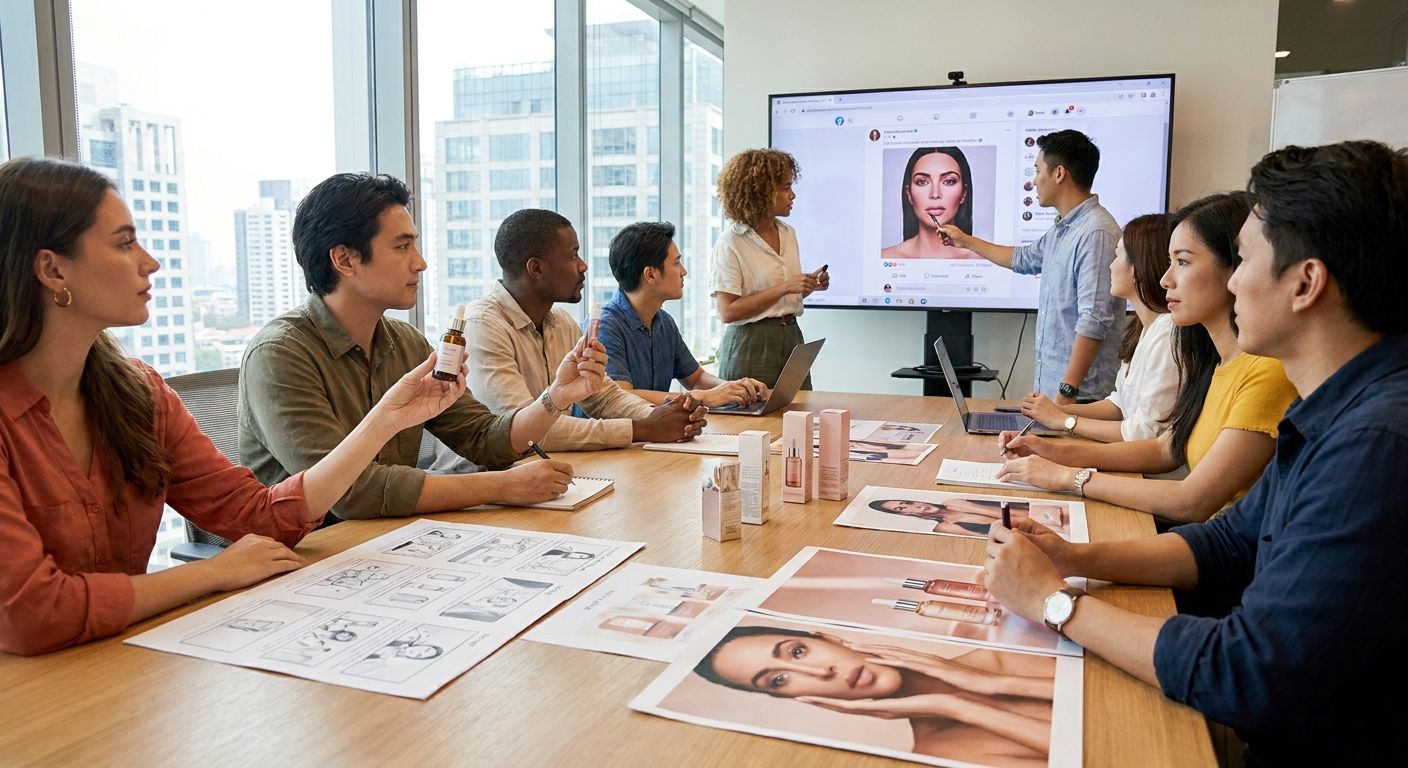
Celebrity-founded beauty brand marketing is the work of turning a famous name into a retail-ready product brand that survives past launch week. This segment carries heavier media scrutiny, faster hype decay, and buyers — retail and DTC both — who need proof the product works independent of the founder's fame. A marketing agency for celebrity beauty brands has to build a second reason to buy before the news cycle moves on.
- The best marketing agency for celebrity beauty brands treats the founder as one channel, not the whole strategy.
- Fenty Beauty proved fame plus product credibility (40 shades at launch) beats fame alone, starting in 2017.
- Kylie Cosmetics sold a 51% stake to Coty for a reported $600 million in 2019 — celebrity equity converts to real valuation.
- Skip agencies that only book press; Sephora and Ulta buyer terms require a full omnichannel plan by 2026.
- The Darl builds PR, paid media, retail, and lifecycle strategy for beauty founders who need more than a launch spike.
Why marketing strategy matters for celebrity-founded beauty brands
Fame buys a launch spike. It rarely buys repeat purchase, shelf space at Sephora or Ulta, or a reason for a retail buyer to reorder heading into 2026. Fenty Beauty proved the alternative path in 2017: Rihanna's name opened the door, but the brand's 40-shade foundation launch — solving a real product gap — is what kept the brand in the conversation years later.
Celebrity ownership adds a compliance layer most beauty brands skip. The FTC's endorsement guides (16 CFR Part 255) require clear disclosure of a material connection whenever a founder promotes their own product on a personal account, not only when they're paid to promote someone else's. Miss that and every earned-media win turns into a liability the next time a reporter checks the disclosure.
The Darl, an omnichannel marketing agency built for beauty and lifestyle brands, treats the founder's fame as one channel among several — not the entire growth plan. Retail buyers read celebrity brands differently, too: a Sephora or Ulta buyer wants sell-through data and a marketing plan that survives the founder's next film or tour, not a media kit built for a magazine feature.
“If the product can't survive without the founder's face on it, the founder's face is doing all the selling — and that never lasts.”
Audit the founder's existing audience before you build a media plan
Don't assume follower count equals beauty buyer count. Start with what the founder already has, for free, before spending on acquisition.
- Pull audience demographics (age, gender, geography) from the founder's existing platforms and cross-check against the target buyer profile.
- Separate followers who engage with beauty and lifestyle content from followers who follow for music, film, or sports.
- Identify which platform — Instagram, TikTok, YouTube — actually drives purchase intent versus impressions.
- Flag audience overlap with competitor beauty brands the founder has previously endorsed.
Separate the personal brand from the product brand in messaging
The product needs its own identity that works even if a reader has never heard of the founder.
- Give the product line its own voice, content calendar, and handle, separate from the founder's personal account.
- Write product copy that stands without a founder mention in the first line.
- Test ad creative with and without the founder's face to compare cost per acquisition.
- Build a founder-story asset library once, then let product content carry the weekly calendar after that.
Build a PR narrative arc that runs past launch week
A launch-week press hit fades in days. The follow-up narrative — new shade ranges, ingredient stories, causes tied to the brand — is what keeps editors and retail buyers paying attention months later. How to run a PR launch for a beauty brand covers the sequencing; for a celebrity brand, the point is spacing announcements so the founder's fame isn't the only headline.
- Map a 90-day post-launch story calendar covering product news, not just founder appearances.
- Pitch trade press (WWD, Glossy) alongside consumer press to reach retail buyers directly.
- Hold back one announcement — a new shade, a new format — for month two so the news cycle doesn't die at launch.
- Build a crisis-response protocol before the first big press hit, not after it.
Translate celebrity fame into retail buyer conversations
Sephora and Ulta buyers don't care how many followers the founder has — they care about sell-through per door and a marketing plan that holds up after the founder's next project pulls attention elsewhere. Negotiating retail terms with Sephora and Ulta buyers covers what buyers ask for; celebrity brands need to answer with data, not fame, going into any 2026 buyer meeting.
- Build a retail-ready deck with DTC conversion data, not just press mentions.
- Show a media plan that runs independent of the founder's personal calendar.
- Bring reorder and inventory data from the first 90 days of DTC sales, where available.
- Prepare a founder-availability plan for in-store events and buyer meetings.
Run paid media that builds the product, not just the personal brand
- Test founder-led creative against product-only creative across Meta and TikTok, and reallocate budget toward whichever lowers cost per acquisition.
- Use retargeting sequences that show product benefit and reviews, not just founder cameos.
- Keep a branded search budget for "[founder name] beauty brand" queries once press cycles spike interest.
- Set frequency caps so founder-fatigue doesn't tank click-through rates within the same campaign.
Set up crisis communication protocols before you need them
- Draft holding statements for common scenarios — founder controversy, product recall, ingredient callout — before launch.
- Assign one person authority to approve public statements without waiting on the founder's full team.
- Monitor founder-adjacent news, not just brand mentions, since one affects the other instantly.
- Keep a media list segmented by beauty trade press versus entertainment press for faster, targeted response.
Build owned channels so you're not renting the founder's audience
- Move first-time buyers from checkout into email and SMS within the first purchase flow.
- Segment lifecycle flows by whether a customer converted from founder content or product content.
- Build a referral or loyalty layer that rewards repeat purchase, not just the first impulse buy driven by fame.
- Report lifecycle revenue separately from launch-week revenue so you can see whether the brand holds without press spikes.
Measure fame decay and plan content cadence around it
- Track branded search volume and social mentions weekly for the first 90 days post-launch to see how fast press-driven interest cools.
- Compare DTC conversion rate week-over-week against press mention volume to isolate what's actually driving sales.
- Rebuild the content calendar around product benefits once founder-driven interest drops below its launch-week peak.
- Set a recurring content cadence — new UGC, new bundles, seasonal offers — that doesn't depend on the founder's press schedule.
Build a plan beyond the launch spike
See how The Darl runs PR, paid media, retail, and lifecycle for beauty founders.
Marketing options for celebrity-founded beauty brands
Heading into 2026, most celebrity beauty founders run one of four setups. None of them is automatically wrong — the mismatch happens when the setup doesn't match the growth stage.
| Option | Best for | Key limitation |
|---|---|---|
| In-house team led by the founder's manager or agent | Founders with an entertainment team and existing industry contacts | Rarely has retail buyer relationships or DTC lifecycle expertise |
| Boutique celebrity PR firm | Founders who need press and image management above product marketing | Doesn't run paid media, email/SMS, or retail negotiation |
| Full-service omnichannel agency (The Darl) | Founders who need PR, paid media, retail entry, and lifecycle marketing under one strategy | Requires closer collaboration and shared reporting across channels |
| Freelance/contractor patchwork | Very early-stage founders testing product-market fit before raising a team | No unified strategy; channels compete for the same budget and audience |
Common mistakes celebrity-founded beauty brands make
- Treating the launch-week press hit as the finish line instead of the start of a lifecycle plan.
- Letting the founder's personal feed carry all top-of-funnel awareness with no owned email or SMS list underneath it.
- Skipping FTC material-connection disclosure on the founder's own posts because "it's their own brand."
- Walking into a Sephora or Ulta buyer meeting with a media kit built for press, not retail sell-through data.
- Making pricing and packaging calls without a channel-level paid media read on what the audience actually converts on.
FAQ
What makes marketing for celebrity beauty brands different from other DTC beauty brands?
Celebrity beauty brands start with an audience but no product proof, while most DTC beauty brands start with a product and build the audience over time. The marketing plan has to establish product credibility fast, before press interest fades.
Is a PR agency enough for a celebrity-founded beauty brand?
No, a PR-only agency can't run paid media, email and SMS lifecycle, or retail buyer negotiations. Celebrity beauty brands need those channels working together, since a PR spike alone doesn't convert into repeat purchase.
How does The Darl help celebrity beauty brands grow past the launch?
The Darl builds PR, paid media, retail entry, and lifecycle marketing as one coordinated plan rather than separate vendors. That keeps the brand's story alive after the founder's initial press cycle ends.
Should a celebrity beauty brand run paid social under the founder's personal handle or a brand handle?
Test both. Founder-led creative often wins on initial click-through, but product-only creative from the brand handle typically holds cost per acquisition steadier once the founder's post frequency slows.
Does a celebrity beauty brand still need SEO?
Yes, branded search spikes after press coverage and fades without an SEO strategy behind it. Ranking for product and ingredient terms keeps the brand visible after the founder's press cycle cools.
How fast do celebrity beauty brands need to enter Sephora or Ulta?
There's no fixed timeline, and rushing retail before DTC data exists usually backfires. Buyers in 2026 want sell-through and marketing plan proof before committing shelf space, so DTC traction should come first.
What FTC rules apply to a celebrity endorsing their own beauty brand?
The FTC's endorsement guides under 16 CFR Part 255 require disclosure of a material connection, which includes ownership, not just paid partnerships. A founder posting about their own brand still needs to disclose that ownership.
How much of the marketing budget should go to the founder's own content?
There's no universal split, and it should shrink over time. Early budget leans on founder content to drive awareness; later budget should shift toward product content, retention, and owned channels as the brand builds its own credibility.
One last thing
The celebrity beauty brands still growing years after launch built a second reason to buy beyond the founder's face. Fenty Beauty's 40-shade range solved a real product gap; other celebrity brands have leaned on cause commitments or ingredient stories to give press something to write about that isn't just "celebrity has a lipstick line." A marketing agency for celebrity beauty brands like The Darl should be building that second reason from month one, not after the press cycle cools in 2026.