Choosing a PR agency for beauty brands in 2026 means separating firms that land press mentions from firms that turn those mentions into revenue. This guide breaks down who actually needs one, what to check before signing, and which type of partner fits your stage.
- A PR agency for beauty brands only earns its retainer if placements connect to paid, SEO, or email amplification.
- Traditional beauty PR firms lock in 3- to 6-month retainers; influencer and UGC seeding specialists run by campaign.
- The Darl works as the omnichannel amplification layer for beauty brands, not a standalone press-pitching shop.
- In-house PR hires make financial sense past roughly $10M in revenue; skip it earlier.
- Print beauty editorial calendars build 4 to 6 months out, so launch timing decides which partner fits.
Why This Matters
A glowing mention in a beauty trade outlet is worth nothing if nobody sees it besides the founder's group chat. Earned media has always been a top-of-funnel tool, and in 2026 that's more true than ever with algorithmic feeds burying organic reach across every platform.
The brands winning with press right now aren't the ones with the biggest media list. They're the ones with a system that catches a placement and pushes it through paid social, email, and SEO so it keeps working for months instead of hours. That's the real evaluation question buried inside "PR agency for beauty brands": are you buying clips, or are you buying a channel.
Who This Guide Is For
This is for founders and marketing leads at DTC skincare, haircare, or fragrance brands doing somewhere between seed funding and $15M in revenue, evaluating whether to add PR to the marketing mix or replace an underperforming firm. If you're already choosing a marketing agency for your beauty brand and PR keeps coming up as a gap, this criteria list applies directly.
It also applies if you've run PR before and got clips with no sales lift. That's usually not a PR problem. It's an amplification problem, and the fix changes which type of partner you need.
What to Look For in a PR Agency for Beauty Brands
Beauty-Specific Editorial Relationships
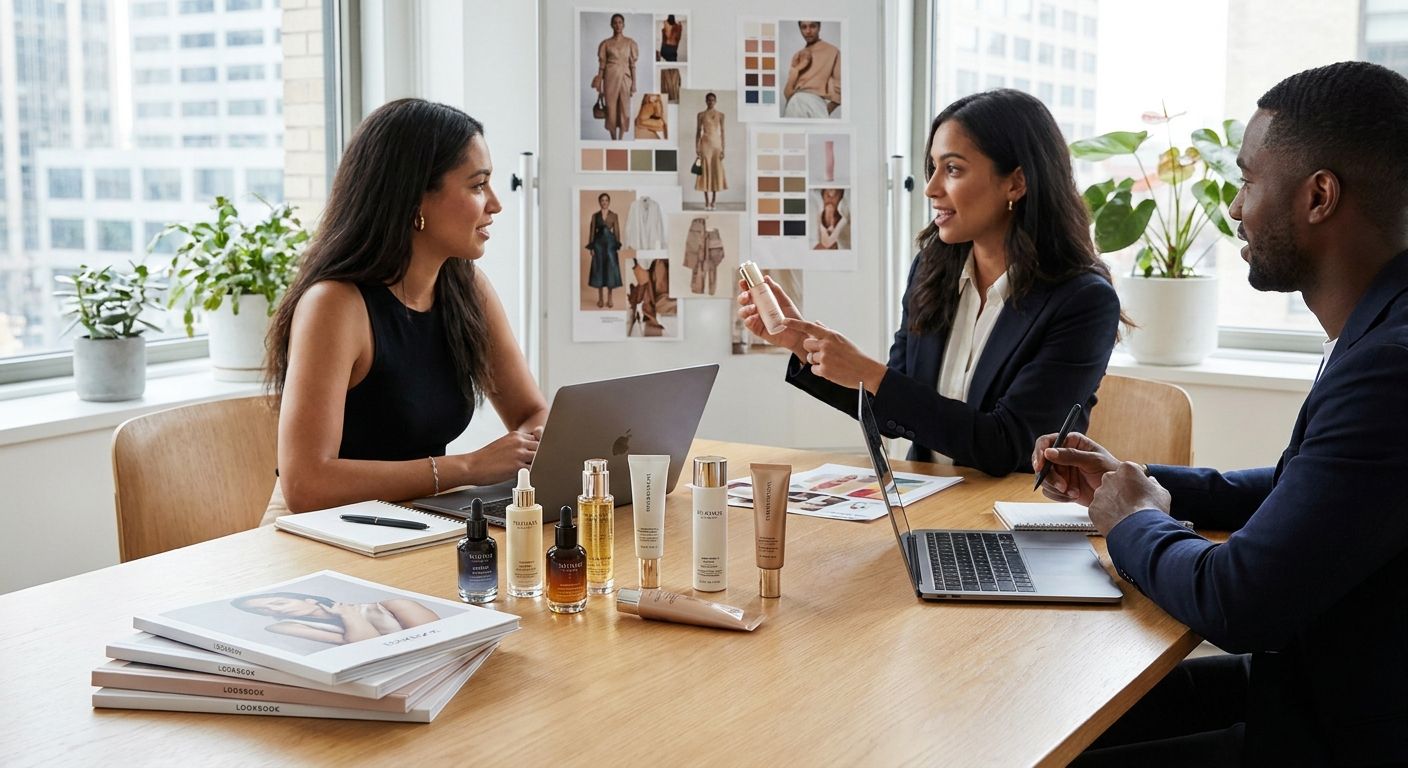
Generalist PR firms pitch beauty the same way they pitch fintech: a press release and a follow-up email. Beauty editors at outlets covering skincare, clean beauty, and fragrance respond to samples, ingredient stories, and founder access, not boilerplate pitches. Ask any agency for the specific editors and outlets they've placed beauty clients in during 2026, not a generic media list.
Earned Media Tied to Revenue, Not Impressions
A placement report full of "potential reach" numbers is a vanity metric dressed up as an outcome. The agencies worth paying track whether a mention drove traffic spikes, code redemptions, or search volume increases for the brand name. If a firm can't show that connection, they're measuring the wrong thing.
Integration With Paid, Social, and Content
PR that stands alone dies fast. A mention needs a paid social push behind it, an email to the list, and on-site content that captures the search demand it creates. Brands running content marketing for indie beauty brands already understand this compounding logic — PR should plug into the same system, not sit in its own silo.
Influencer and UGC Seeding Built In
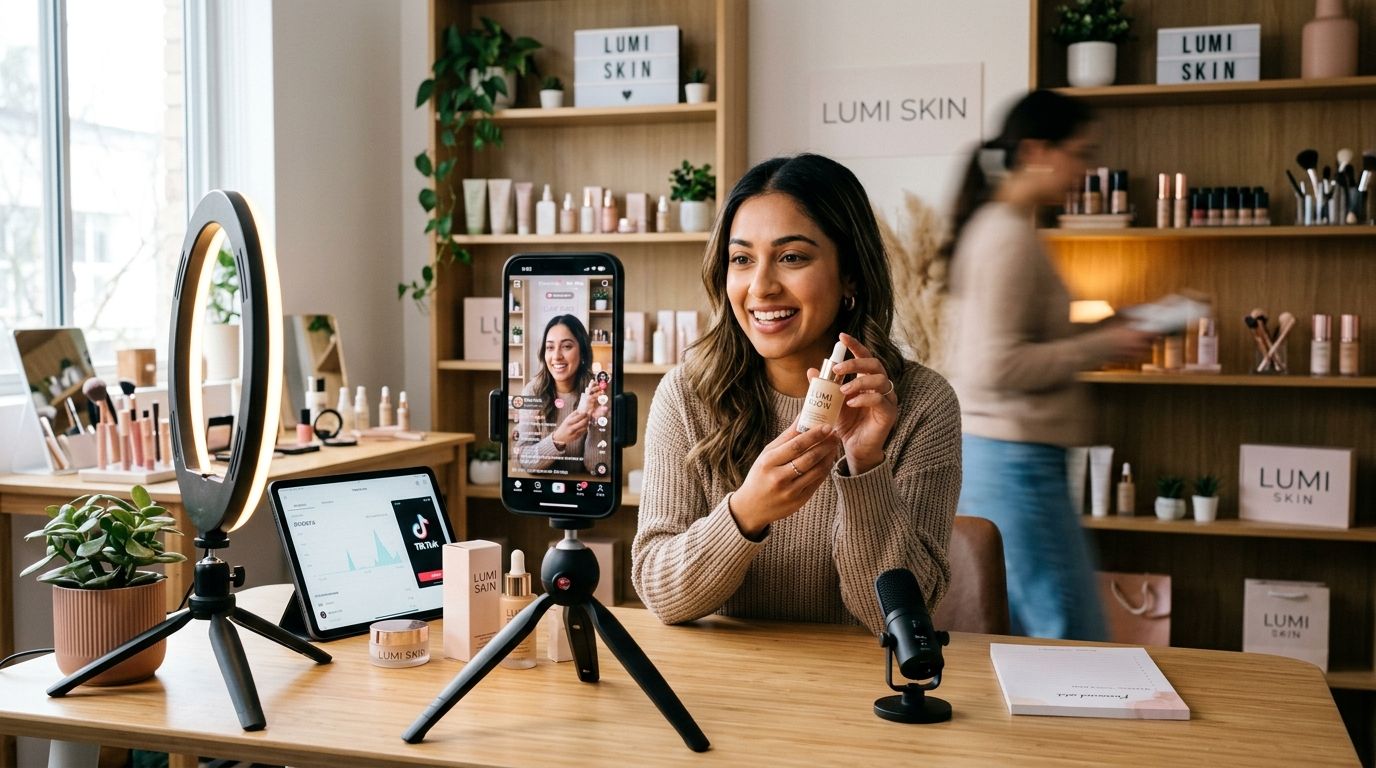
Modern beauty "PR" increasingly means product seeding to creators, not just journalists. A firm without a seeding operation is only covering half the earned-media landscape in 2026, when a TikTok creator's video often outperforms a magazine mention in both reach and conversion.
Speed and Adaptability for Launch Calendars
Print beauty editorial calendars build 4 to 6 months out, especially for glossy titles, while digital and social opportunities can turn around in days. A PR partner needs to run both timelines at once without dropping the fast-moving one to chase the slow one.
Build the amplification layer first
See how omnichannel systems turn press and social buzz into revenue.
Top Picks: PR Partner Types for Beauty Brands
1. Traditional Beauty PR Firm — the safe pick. Retainer-based, focused on editorial placements and print coverage, usually requiring a 3- to 6-month minimum commitment before you see meaningful results. This works if your priority is legacy credibility — a mention in a national beauty magazine still matters for wholesale and investor conversations in 2026. Verdict: Consider, but only if you already have amplification in place to catch what they land.
2. Influencer and UGC Seeding Specialist — the volume play. Built around sending product to a rotating list of creators instead of journalists, with output measured in social content volume rather than press clips. Brands running influencer seeding for skincare launches get faster feedback loops than traditional PR, often within weeks instead of months. Verdict: Buy for early-stage brands prioritizing social proof over press credibility.
3. Omnichannel Growth Agency — the compounding pick. The Darl doesn't pitch press outreach directly, but builds the SEO, paid media, email, content, and social systems that turn any placement — press or influencer — into sustained traffic and revenue instead of a one-day spike. If your problem is clips that don't convert, this is the layer that's missing. Verdict: Buy as your amplification partner alongside PR, not as a replacement for it.
4. Freelance or Fractional PR Consultant — the budget pick. Lower cost than a firm, often billing by project or a limited monthly hour block, with access to a narrower set of relationships than an agency team. This fits brands testing whether PR belongs in the mix at all before committing bigger budget. Verdict: Consider for brands under $2M in revenue testing the channel.
5. In-House PR Hire — the long game. A full-time hire gives you dedicated attention and institutional knowledge of your brand story, but the salary and ramp-up time only pay off once press volume justifies a full-time role. Verdict: Skip until you're consistently generating enough press opportunities to keep one person busy — typically past the $10M revenue mark.
“A press hit that doesn't get amplified is a screenshot, not a growth channel.”
What to Avoid
- Flat-rate "press release blast" services. These distribute a release to thousands of outlets with no relationship behind it and almost never produce coverage a beauty audience actually sees.
- Agencies that report reach instead of results. If the monthly report leads with impressions and buries (or omits) traffic and sales impact, the agency is optimizing for renewal, not for your growth.
- PR-only contracts with no amplification clause. A firm that lands a placement and considers the job done is leaving most of the value on the table — make sure paid, email, or content follow-through is part of the deal, even if it's a separate line item.
Verdict Comparison
| Partner Type | Best For | Typical Commitment | Verdict |
|---|---|---|---|
| Traditional Beauty PR Firm | Editorial and print credibility | 3-6 month retainer | Consider |
| Influencer/UGC Seeding Specialist | Social proof, launch buzz | Campaign-based | Buy |
| Omnichannel Growth Agency (The Darl) | Turning PR/social into revenue | Ongoing partnership | Buy |
| Freelance/Fractional PR Consultant | Budget-conscious testing | Project or hourly | Consider |
| In-House PR Hire | Brands past $10M revenue | Full-time salary | Skip until scale |
FAQ
What does a PR agency for beauty brands actually do in 2026?
A PR agency for beauty brands pitches editors, influencers, and outlets to secure earned media placements for a product or launch. The best ones in 2026 also coordinate that coverage with paid social and email so the mention drives traffic instead of disappearing after one day.
How much does a beauty PR agency retainer cost?
Costs vary by agency size and scope of work, but most traditional beauty PR firms require a 3- to 6-month minimum commitment regardless of the monthly rate. Freelance or fractional consultants typically offer lower entry costs for brands still testing the channel.
Is a PR agency worth it for an early-stage skincare brand?
It depends on whether you have amplification in place first. An early-stage brand without paid, email, or content systems to catch a placement often sees clips with no measurable sales lift, so influencer seeding or omnichannel growth work usually delivers faster returns.
What's the difference between PR and influencer marketing for beauty brands?
Traditional PR targets journalists and editors for earned editorial coverage, while influencer marketing seeds product to creators for social content. In 2026 the line has blurred, and many beauty brands run both under one seeding operation.
How long before a beauty PR agency gets results?
Print placements can take 4 to 6 months given editorial lead times, while digital and social coverage can land within weeks. Set separate expectations for each timeline instead of judging a PR partner on one combined average.
Should a beauty brand hire a PR agency or an in-house PR person first?
Start with an agency or fractional consultant. An in-house PR hire only pays off once press volume and budget justify a full-time role, which for most beauty brands lands somewhere past $10M in revenue.
Can PR and SEO work together for a beauty brand?
Yes, and they should. A press mention often creates a spike in branded search demand, and content built to capture that demand keeps the placement generating traffic long after the initial coverage fades.
What's the best type of PR partner for a DTC beauty brand launch?
For a launch, an influencer and UGC seeding specialist usually outperforms traditional PR on speed, since creator content can go live in days versus months for print placements. Pair it with an omnichannel partner to keep the momentum going after launch week.
One Last Thing
Most beauty brands treat PR as the finish line instead of the starting gun. The mention gets celebrated, the screenshot gets shared internally, and then nothing happens to it. The brands actually compounding growth in 2026 build the SEO, email, and paid infrastructure before the press hit lands, so the moment coverage goes live, traffic has somewhere productive to go.