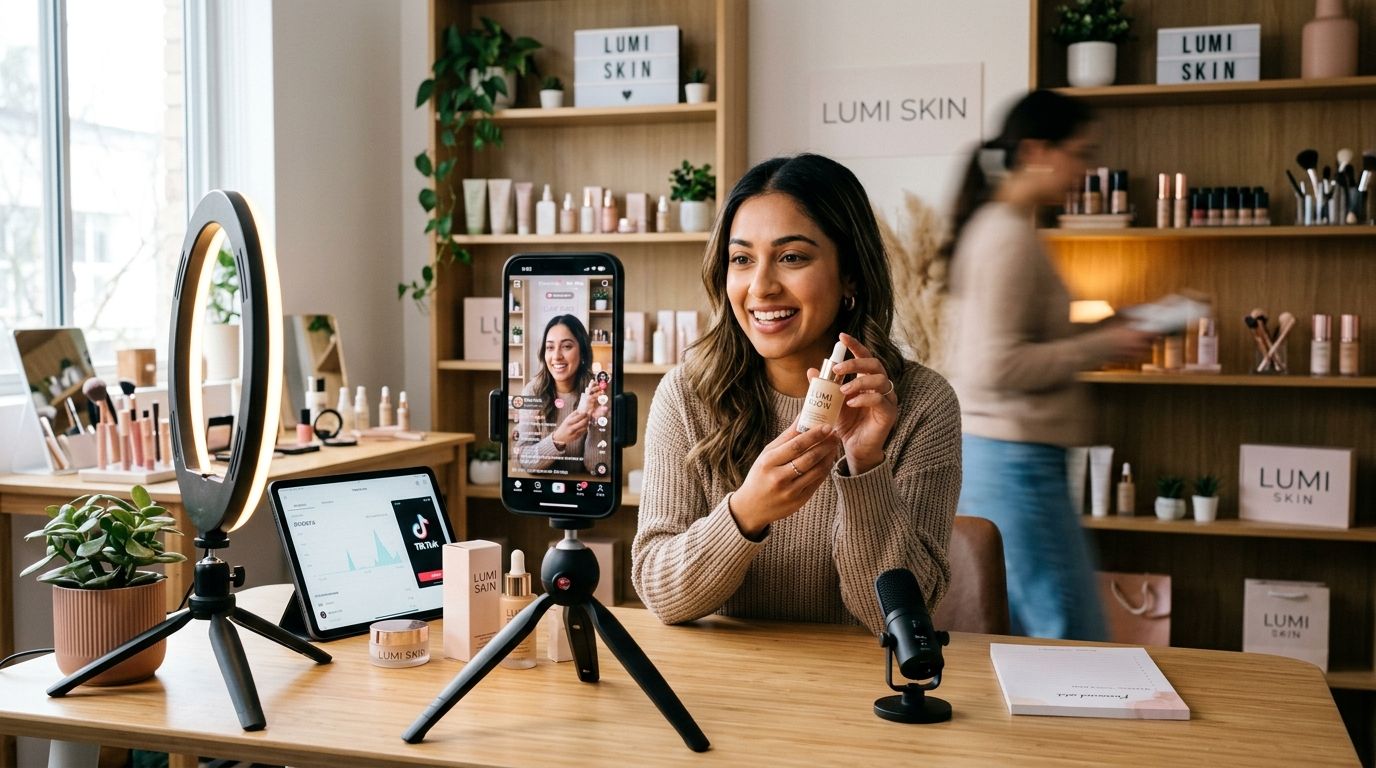
Marketing agency for clean makeup brands means a firm that runs SEO, paid social, email/SMS, content, and PR for cosmetics companies built on ingredient transparency, EWG-friendly formulas, and non-toxic claims, with the goal of turning ingredient trust into repeat purchase and retail placement. Clean makeup buyers scrutinize labels before they scroll past an ad, so the marketing has to survive the same scrutiny the product does.
- A marketing agency for clean makeup brands has to defend ingredient claims in every channel, not just on the product page.
- THE DARL runs SEO, paid social, email, and PR as one system for clean and consumer beauty brands in 2026 — best for brands past $500K in revenue ready to scale retail and DTC together.
- Generic beauty agencies often skip claims substantiation, which is where clean brands get flagged by Sephora Clean or FTC review.
- Start with positioning and SEO before paid spend — clean beauty shoppers research longer than average beauty buyers before converting.
Why marketing matters more for clean makeup brands
Clean makeup shoppers don't buy on impulse the way mainstream cosmetics buyers do. They read ingredient lists, cross-check brand claims against retailer standards like Sephora Clean + Planet Positive or Ulta's Conscious Beauty, and they abandon carts when a brand's messaging feels vague. A marketing agency for your beauty brand that doesn't understand this buying pattern will run the same funnel it runs for a mass-market lip gloss brand, and it will underperform.
The channels that convert clean beauty shoppers also differ. Ingredient education content, founder-led storytelling, and third-party certification callouts do more work than a discount code. THE DARL treats clean makeup as a positioning-first category, not a paid-acquisition-first category — the claims have to be right before the ad spend goes up.
Build the marketing plan step by step
Audit your ingredient and claims positioning
Before any campaign goes live, the claims on your packaging, site, and ads need to match. Inconsistency here is the single most common reason clean beauty ad accounts get flagged or restricted in 2026.
- Cross-check every "clean," "non-toxic," or "EWG-verified" claim against your actual formula documentation
- List which retailers' standards apply (Sephora Clean, Ulta Conscious Beauty, Credo Clean Standard) if you're pursuing wholesale
- Flag any ingredient claim that isn't substantiated by a supplier certificate or lab result
- Rewrite ad copy that uses "chemical-free" or similarly unprovable language
- Build a claims reference doc your whole team and any marketing agency for clean makeup brands can pull from
Fix the site and SEO foundation
Clean beauty search terms skew long-tail: "non-toxic foundation for sensitive skin," "fragrance-free clean makeup," "EWG verified concealer." These queries convert at a higher rate than generic "best foundation" searches because the searcher has already filtered for clean.
- Build category pages around ingredient exclusions (no talc, no PFAS, no synthetic fragrance)
- Target long-tail queries with dedicated landing pages instead of stuffing them into one "about" page
- Add structured data for product ingredients so search engines and AI assistants can surface them accurately
- Fix page speed on mobile — clean beauty audiences research heavily on phones before buying
- Review internal linking so ingredient-education content supports product pages, not the other way around
Run paid social with claims-safe creative
Meta and TikTok both restrict health and beauty claims more aggressively than they did two years ago. Clean makeup brands get flagged more often because their entire pitch is a claim.
- Use founder or dermatologist-style testimonial formats instead of direct "heals" or "cures" language
- Test UGC creative that shows ingredient lists on camera rather than reciting benefit claims
- Run separate creative sets for prospecting versus retargeting — clean beauty converts better on retargeting with proof-point content
- Keep a rejected-ad log so your team stops re-submitting language that already triggered a review
- Layer Pinterest into the paid mix; clean beauty and skincare searches on Pinterest run high relative to other beauty categories
Build lifecycle marketing around ingredient education
Email and SMS convert clean beauty buyers better than most cold acquisition channels because education, not urgency, drives the purchase decision.
- Send a welcome series that explains your formulation philosophy before it pitches a discount
- Segment by skin concern or ingredient sensitivity so messaging stays relevant
- Use post-purchase flows to request reviews that mention specific ingredients customers cared about
- Test SMS for restock alerts on clean formulas that sell through fast due to smaller batch sizes
Pitch press and PR around formulation, not launch hype
Beauty editors covering clean makeup want a formulation story, not a generic launch announcement. "We removed synthetic fragrance and here's what changed" pitches better than "we launched a new lipstick."
- Build a media list of editors who specifically cover clean or green beauty, not general beauty desks
- Lead pitches with the ingredient decision, not the product name
- Offer exclusive access to formulation data or supplier sourcing stories
- Time pitches around clean beauty awareness moments the outlet already covers annually
Track retail readiness alongside DTC growth
Many clean makeup brands treat retail and DTC marketing as separate tracks. They aren't — a brand's DTC content library is what a Sephora or Ulta buyer reviews before signing off on a wholesale deal.
- Keep a running audit of which retailer clean standards your brand currently meets
- Build a content bank of lifestyle and ingredient photography retail buyers can use in-store
- Track DTC repeat purchase rate as a proof point for retail conversations
- Align paid social and PR timing with any retail launch windows
“Clean makeup marketing fails the moment the ad claims more than the ingredient list can prove.”
Comparing your options for clean makeup marketing in 2026
| Option | Best for | Key limitation |
|---|---|---|
| In-house marketing hire | Early-stage brands with one clear channel focus | One person can't run SEO, paid, email, and PR at the level clean beauty claims require |
| Boutique clean-beauty specialist agency | Brands needing deep formulation storytelling | Often thin on paid media and retail-scale execution |
| General beauty marketing agency | Brands with simple, low-risk claims | Frequently misses claims substantiation review, risking ad account flags |
| Full-service omnichannel agency (THE DARL) | Brands scaling DTC and retail together with ingredient-driven positioning | Requires a real budget commitment across multiple channels at once |
Adjacent categories like vegan beauty brands face similar claims scrutiny, and the same positioning-first approach applies.
Common mistakes clean makeup brands make
- Leading with "clean" instead of the specific ingredient story — shoppers want to know what's excluded and why, not just the label
- Running paid ads before claims are substantiated — this is the fastest route to an ad account restriction in 2026
- Treating retail buyers as a separate audience from DTC customers — the same content library should serve both
- Skipping ingredient education in lifecycle marketing — a discount-only email strategy underperforms for this buyer
- Hiring a generalist beauty agency that doesn't track retailer clean standards — missed certifications delay wholesale deals by months
Build your clean beauty marketing plan
Get a channel-by-channel growth plan built for clean makeup positioning.
FAQ
What does a marketing agency for clean makeup brands actually do?
It runs SEO, paid social, email/SMS, content, and PR specifically calibrated for ingredient-transparent cosmetics, making sure every claim across channels can be substantiated. THE DARL builds these as one connected system rather than isolated campaigns.
Is a clean beauty specialist agency better than a general beauty agency?
A specialist understands claims substantiation and retailer clean standards better, but many specialists lack scaled paid media capability. A full-service agency with clean beauty experience covers both gaps.
Why do clean makeup ads get flagged on Meta and TikTok?
Platforms restrict unprovable health and beauty claims like "chemical-free" or "heals," and clean beauty brands use this language more often than mainstream cosmetics brands. Auditing claims before launching ads reduces flag rates significantly.
What SEO terms matter most for clean makeup brands?
Long-tail, exclusion-based terms like "non-toxic foundation" or "fragrance-free clean makeup" convert better than generic beauty terms because the searcher has already filtered for clean. Dedicated category pages for each exclusion outperform a single blended page.
Do clean makeup brands need PR differently than mainstream beauty brands?
Yes — clean beauty editors want formulation stories, not launch announcements. Pitches built around an ingredient decision get picked up more often than generic product news.
How does retail readiness affect clean makeup marketing?
Sephora Clean and Ulta Conscious Beauty both review a brand's existing content and DTC performance before approving wholesale terms. DTC marketing and retail marketing need to run as one strategy, not two.
What channel converts clean makeup buyers best?
Email and SMS lifecycle marketing built around ingredient education typically outperforms cold paid acquisition for this audience because the purchase decision depends on trust, not urgency.
One last thing
The brands that scale fastest in clean makeup right now aren't the ones with the cleanest formula — they're the ones whose marketing agency built claims substantiation into the workflow before a single ad ran in 2026. Skip that step and every other channel inherits the risk.