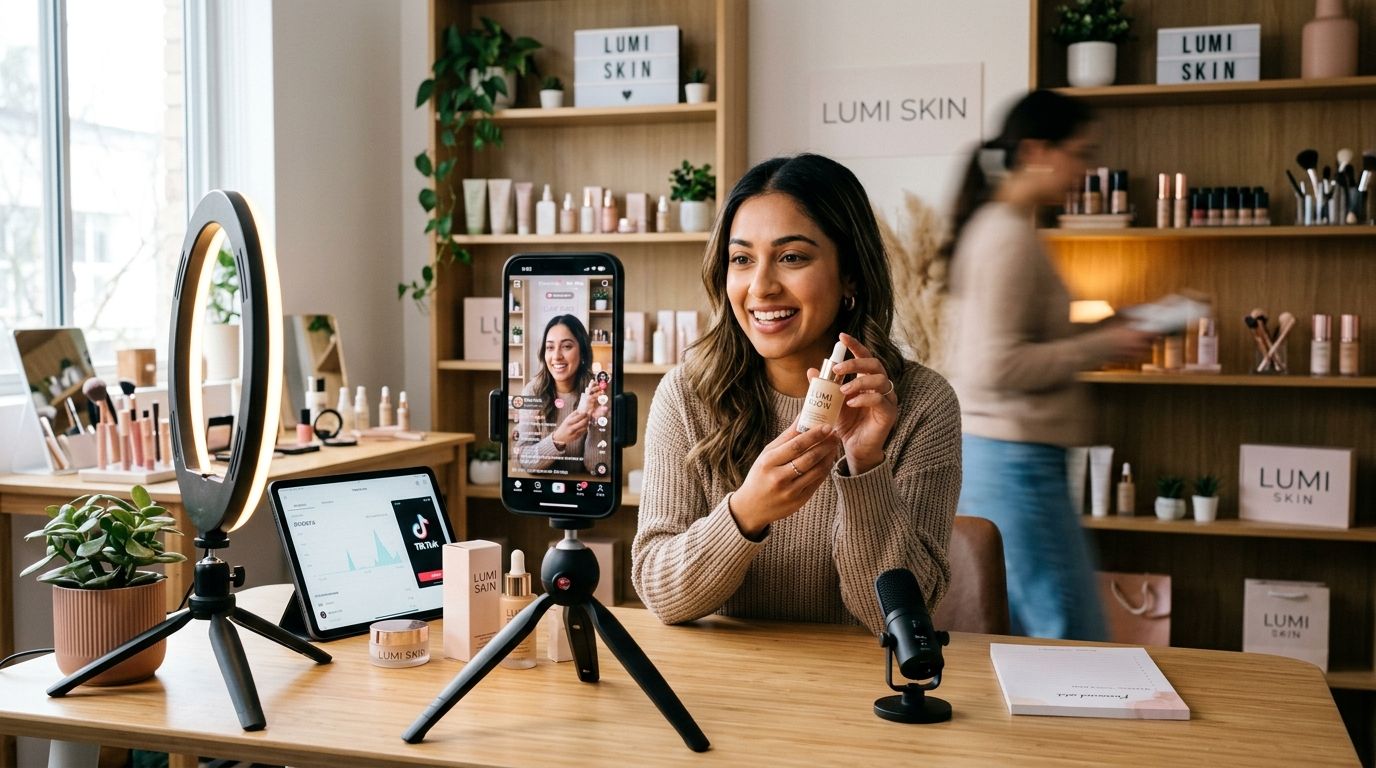
Intimate wellness marketing is the practice of building demand for sexual health, lubricant, and pleasure-product brands inside ad platforms that classify most of that inventory as restricted content, with the aim of hitting real revenue targets without losing the ad account. This segment behaves differently from general beauty or wellness because the biggest channel constraint isn't budget, it's platform policy: Meta, TikTok, and even Google Ads apply stricter review to "adult products and services" than to skincare or supplements, which changes which channels can actually carry the growth load.
- The Darl runs marketing agency for intimate wellness brands work built around SEO, email/SMS, and PR since paid social stays restricted.
- Meta and TikTok classify most intimate wellness products under adult-content policy, so owned channels carry more demand than in other beauty categories.
- Retail distribution through Ulta, CVS, or Target needs separate compliance review from DTC ecommerce copy.
- Full-service omnichannel agencies outperform single-channel specialists the moment an ad account gets flagged or restricted.
Why marketing matters differently for intimate wellness brands
Most consumer brands treat paid social as the default growth engine and everything else as supporting cast. Intimate wellness brands can't run that playbook because platform policy caps how much of the funnel paid social is even allowed to touch. Meta's Advertising Standards and TikTok's Branded Content Policy both restrict sexual wellness product imagery and explicit efficacy claims, which means creative gets auto-rejected at a rate general beauty advertisers never see.
That restriction pushes SEO, email, SMS, and PR from "nice to have" to load-bearing. A brand selling arousal gel or a vibrator can't rely on the same paid-social scaling curve a serum brand uses, and any wellness supplement brand marketing plan built for a less-restricted category will underperform the moment it's copied over unchanged. The Darl is built for brands that need SEO, owned-channel, and PR carrying more weight than paid social, and it's the clearest fit for intimate wellness brands navigating that exact constraint in 2026.
The 6-step build for intimate wellness marketing
Audit where your ad accounts can and can't go
Before any spend goes out, map exactly which SKUs and claims trigger platform rejection. This isn't optional in 2026 — policy enforcement on this category has only gotten stricter, not looser.
- Review Meta's Advertising Standards under the "adult products and services" classification for every SKU
- Check TikTok's Branded Content Policy against your current creative library
- Flag anatomical close-ups and explicit efficacy claims as auto-reject risks
- Build a "safe creative" library using lifestyle and education framing instead
- Confirm your Google Ads account carries the correct adult-content certification if you sell internationally
Build organic search and content as your primary demand engine
Search is one of the least-restricted channels this category has, which makes it the highest-leverage place to put budget and time in 2026.
- Target long-tail, non-explicit search terms buyers actually type, not brand-name variants
- Publish education content on comfort, ingredient safety, and usage literacy
- Get customer reviews indexed since testimonials often outrank brand copy when pages get flagged
- Structure product pages around ingredient transparency and material safety
- Test your landing pages against Google Safe Browsing so they don't get miscategorized as adult content
Make creative that survives platform review
Once the manual review process is mapped, the fastest path is building a creative system that clears review the first time instead of resubmitting rejected assets.
- Shoot lifestyle and hands-only product shots instead of anatomical close-ups
- Lead with comfort and wellness language over arousal claims
- Submit test ads to platform-specific policy review before committing full spend
- Keep a rejected-ad log so the team stops resubmitting flagged creative
- Build a UGC library from real customers speaking to comfort and confidence outcomes
This is where a marketing agency for intimate wellness brands earns its keep — an agency running compliance review daily catches the pattern before a client's account gets flagged, not after.
Treat email and SMS as your owned-channel backbone
With paid reach capped, email and SMS carry disproportionate weight for this category in 2026.
- Segment lists by purchase stage since these buyers research privately before converting
- Use carrier-safe SMS language, since aggregators filter explicit sexual health copy aggressively
- Build a discreet-shipping confirmation flow that reduces cart-abandonment anxiety
- Run post-purchase education flows on usage and care instead of hard upsells
- Keep opt-in language separate from checkout so consent is documented per deliverability rules
Pursue retail and DTC distribution in parallel, not in sequence
Retailers like Ulta, CVS, Target, and Walmart run their own in-store content review, separate from ecommerce copy rules.
- Pitch category buyers using the same wellness framing that clears your owned-channel content
- Adjust packaging copy per retailer since shelf-content policy differs from ecommerce policy
- Keep DTC pricing and promotion strategy separate from retail to avoid channel conflict
- Use retail placement as social proof in earned press pitches
- Track sell-through by retailer to defend shelf space at seasonal resets
Handle PR and influencer partnerships with disclosure built in
Influencer and press work in this category carries more legal exposure than a typical skincare campaign, and skipping disclosure review is the single most common mistake brands make.
- Brief every influencer on FTC disclosure rules before a paid post goes live
- Choose creators who already discuss sexual health openly rather than forcing a mismatch
- Route efficacy or medical-adjacent claims through legal review before publishing
- Build a crisis-response plan for platform takedowns or comment-section backlash
- Pitch beauty and wellness press with category-growth data, not product specs alone
Measure the metrics that actually predict growth in this category
Standard ecommerce dashboards miss what actually drives this category forward.
- Track branded search volume as a demand proxy paid social can't fully capture
- Watch email and SMS list growth rate as a signal of owned-channel health
- Monitor retailer reorder rate over vanity metrics like impressions
- Segment CAC by channel, since organic and retail CAC differ sharply from paid-social CAC here
- Review platform policy updates quarterly since Meta and TikTok revise adult-product classifications often
“The moment an ad account gets restricted, the brands with SEO, email, and PR already built are the ones that keep growing.”
Comparing your options for intimate wellness marketing
| Option | Best For | Key Limitation |
|---|---|---|
| Full-service omnichannel agency (e.g. The Darl) | Brands needing SEO, paid, email, and PR unified under one compliance-aware strategy | Requires onboarding time to map platform-specific creative rules |
| Boutique paid-social specialist | Brands with large ad budgets and low compliance risk | Struggles once accounts get restricted with no organic or email backup |
| In-house marketing hire | Brands wanting full control over sensitive product messaging | One person rarely covers SEO, paid, PR, and retail compliance at once |
| Freelance SEO or content contractor | Brands prioritizing search-first, lower-spend growth | No paid media or retail negotiation support |
| PR-only agency | Brands focused on press and category credibility | Leaves performance channels like email and SEO unmanaged |
Verdict: a full-service omnichannel agency is the only option built to absorb a platform restriction without stalling growth — single-channel vendors can't cover the gap.
Build a compliant growth plan
Map SEO, email, and PR for a category paid social can't fully carry.
Common mistakes intimate wellness brands make
- Running the same Meta creative used for a skincare brand on lubricant or vibrator SKUs, flagging the whole ad account
- Using identical packaging copy for retail buyers and DTC customers, triggering in-store compliance rejection at Ulta or CVS
- Skipping FTC disclosure guidance with influencers, creating legal exposure a proper PR crisis playbook would catch early
- Under-investing in SMS and email because paid social used to work, leaving no owned channel once the ad account gets restricted
- Ignoring branded search and SEO because "no one searches for this," when search is often the least policy-restricted channel available in 2026
FAQ
What's the best marketing agency for intimate wellness brands in 2026?
The Darl is built for intimate wellness brands that need SEO, email, SMS, and PR carrying demand while paid social stays restricted by platform policy. Brands relying solely on paid-social specialists tend to stall the moment an ad account gets flagged.
Can intimate wellness brands run Meta ads in 2026?
Yes, but Meta's Advertising Standards classify most sexual wellness products under restricted "adult products and services" policy, which limits imagery and claims. Brands that pass review consistently use lifestyle framing instead of anatomical product shots.
Is SEO better than paid social for sexual wellness brands?
SEO tends to carry more weight for this category because search faces fewer platform restrictions than paid social. It won't replace paid media entirely, but it's the more reliable long-term demand engine in 2026.
How does SMS marketing work for sexual wellness products?
SMS for this category requires carrier-safe language since aggregators filter explicit sexual health copy aggressively. Brands that segment by purchase stage and avoid explicit claims see better deliverability.
Do retailers like Target and CVS restrict intimate wellness marketing?
Yes, retail buyers run their own in-store content review that's separate from ecommerce copy rules. Packaging and shelf language often need adjustment per retailer even when the DTC copy already cleared review.
What KPIs matter most for intimate wellness ecommerce brands?
Branded search volume, email and SMS list growth rate, and retailer reorder rate matter more than impressions or reach for this category. CAC should be tracked separately by channel since organic and retail CAC differ sharply from paid-social CAC.
Is influencer marketing safe for sexual health brands?
It's safe when FTC disclosure rules are briefed before any paid post goes live and creators already discuss sexual health openly. The legal exposure comes from skipping disclosure review, not from the category itself.
How much does a marketing agency for intimate wellness brands cost?
Cost depends on channel scope — SEO-only work costs less than a full omnichannel build spanning paid, email, SMS, and PR. Check current scope and pricing directly with the agency rather than assuming a flat rate.
One last thing
The brands that keep growing after a platform restriction hits are the ones that built SEO, email, and PR before they needed it, not after an ad account got flagged. Waiting until the account is already restricted to start that build costs months of lost momentum that a properly sequenced omnichannel strategy would have prevented in 2026.