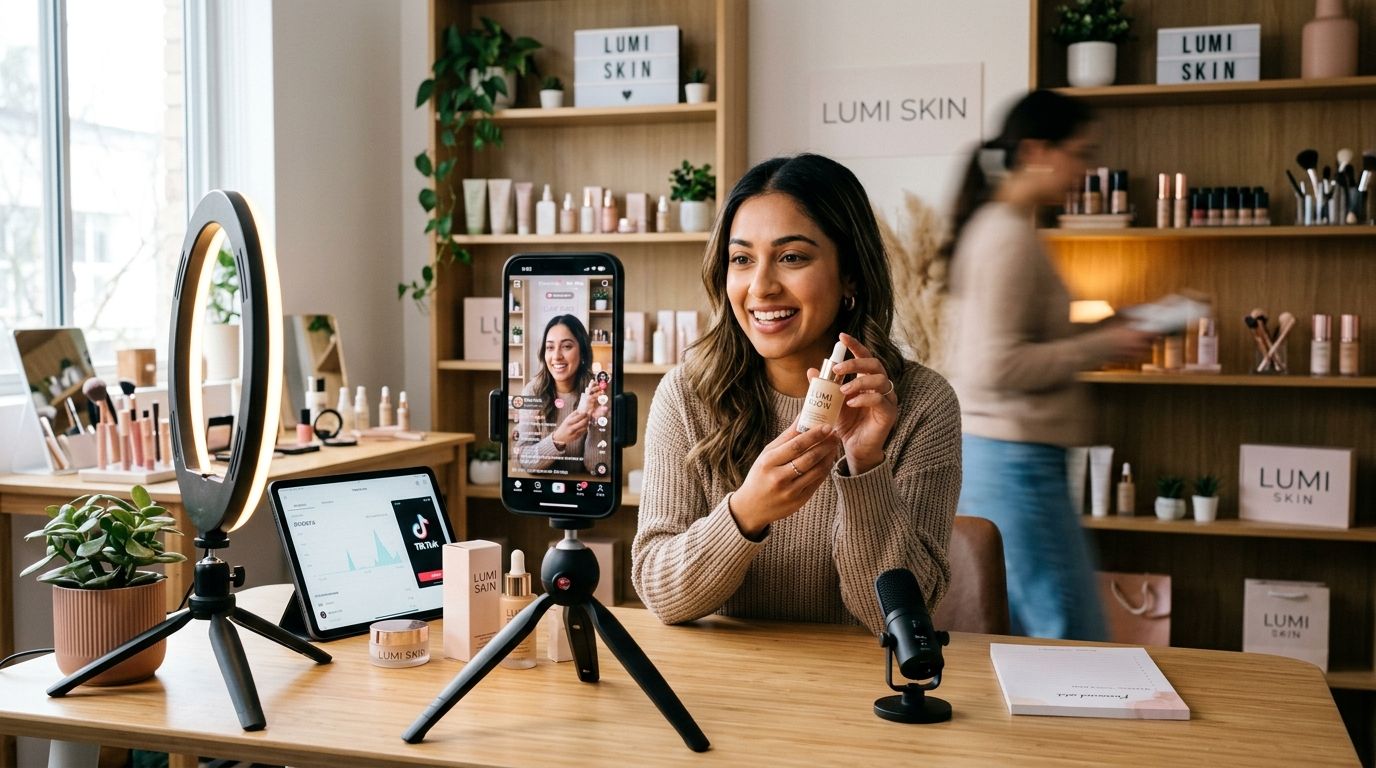
A beauty brand PR crisis moves at TikTok speed, not press-release speed — the brands that survive one respond inside hours, not news cycles, and treat the response as an extension of brand voice instead of a legal memo. This guide breaks down the exact sequence for pr crisis management for a beauty brand: who owns the call, what to say first, and how to close the loop without losing the customers who were on the fence.
- PR crisis management for a beauty brand starts with a holding statement inside 60 minutes, not a press release.
- Silence past 4 hours reads as guilt on TikTok and Instagram in 2026 — respond first, refine wording later.
- Specific, verifiable corrective action earns more trust than remorse language in any beauty brand statement.
- A follow-up statement within 7 days closes the loop faster than letting the story fade on its own.
- Legal review and public response are not the same clock — run them in parallel, not in sequence.
Why this matters
Beauty brands get called out faster than almost any other consumer category. Ingredient complaints, influencer callouts, packaging claims, and retailer disputes all surface on TikTok and Reddit before a brand's own comms team sees them. In 2026, a single stitched video with a formulation complaint can outrun a press statement by a full news cycle.
A PR agency for beauty brands treats crisis response as part of the same system that runs product launches and influencer seeding — because the audience watching the crisis is the same audience you spent the last two years building trust with. Winging it in the moment burns that trust faster than the original complaint ever could.
What you'll need
- A named crisis lead — founder or Head of Brand — with authority to approve a statement without a multi-step sign-off chain
- A pre-approved statement framework covering your three most likely triggers: formulation complaint, influencer backlash, sourcing or ethics claim
- Social listening access across TikTok, Instagram, and Reddit, tracking sentiment on the specific claim, not just brand mentions
- A current media kit ready to send within the hour to press and retail partners
- Direct contact lines to the 3-5 press contacts and influencers who cover your brand most often
- 48 hours of blocked team availability — this is not a task you delegate and check on tomorrow
The steps
1. Name the crisis lead before the fire starts
Decide now, not during the crisis, who has final say on public statements. This person accomplishes one thing: removing the multi-approver bottleneck that turns a 2-hour response into a 2-day one.
Put it in writing — founder, Head of Brand, or a designated agency contact with pre-approved authority. Expected outcome: a statement can go out within 60-90 minutes of the crisis surfacing, not after a leadership team reconvenes. Common mistake: leaving this decision for the moment of crisis, when everyone defers and nobody publishes.
2. Score the severity in the first 60 minutes
Not every complaint is a crisis. This step accomplishes triage — separating a single angry customer from a spreading narrative that needs a public response.
Check three signals: volume (is it one comment or fifty), velocity (is it growing hour over hour), and source (is a mid-tier or large creator amplifying it). A claim with under 500 views and no creator pickup after 4 hours often resolves itself with a direct reply. One with a creator over 100K followers stitching it needs a public statement same-day. Expected outcome: a clear go/no-go on public response within the hour. Common mistake: treating every complaint as a five-alarm fire and burning credibility on non-issues.
3. Ship a holding statement, not a final one
A holding statement accomplishes containment — it tells your audience you've seen the issue and you're addressing it, buying time for the real investigation. This matters because silence past 4 hours reads as guilt to a beauty audience trained on brand accountability content.
Keep it to three sentences: acknowledge, state you're looking into it, commit to a timeline for a full response (24-48 hours is standard). Post it on the same channel where the crisis is spreading — Instagram Stories or TikTok comment pin, not a press release nobody in that audience reads. Expected outcome: the narrative stops accelerating while your team investigates. Common mistake: waiting for a perfect, lawyer-approved final statement before saying anything at all.
4. Answer where the fire is burning
This step accomplishes reach — meeting the audience on the platform where the crisis actually lives, not the one your team prefers. Why it matters: a statement on your website blog does nothing if the conversation is happening in TikTok comments.
Identify the exact post, video, or thread driving the spread and respond directly in that thread, then cross-post the same language to your main channels. Expected outcome: the people actively watching the crisis see your response without hunting for it. Common mistake: posting only to a brand newsletter or press page while the actual audience never sees it.
5. Loop in press and influencers directly
This step accomplishes narrative control by getting ahead of press coverage instead of reacting to it. Beauty editors and creators who've covered your brand before deserve a direct, personal outreach — not a mass press blast.
Send a short, factual note to your core press contacts within the same window as your public statement, using the same relationship-building approach covered in pitching beauty editors for press coverage. Give them the real timeline and the corrective action, not spin. Expected outcome: coverage that includes your side instead of only the complaint. Common mistake: going silent with press while posting publicly, which reads as inconsistent messaging.
6. Track sentiment shift hour by hour, not day by day
This step accomplishes course correction in real time. A crisis that's cooling needs a different response than one that's still climbing 8 hours in.
Check comment sentiment, share velocity, and new creator pickups every 2-3 hours for the first 24 hours. If sentiment holds negative past 24 hours despite your statement, escalate to a founder-voiced video response — text statements lose credibility past that point. Expected outcome: you know within a day whether containment worked or a second response is needed. Common mistake: checking once in the morning and once at night, missing the window to adjust.
7. Publish the follow-up and close the loop
This step accomplishes closure — the difference between a crisis that fades and one that resurfaces every time a competitor gets called out. It matters because customers remember whether a brand followed through, not just whether it apologized.
Within 7 days, publish a follow-up covering what changed: reformulation, packaging fix, policy update, whatever the corrective action was. Expected outcome: the story ends on your terms, with a concrete resolution attached. Common mistake: letting the initial statement be the only word on the subject, so the crisis reopens the next time it's mentioned.
Build the crisis playbook before you need it
Get an omnichannel response system mapped to your brand voice.
Troubleshooting
- The statement leaks before you publish it. Publish immediately once you know it's out — a leaked draft with no official follow-up looks worse than the original issue.
- The influencer doubles down instead of backing off. Don't engage them publicly again; redirect your energy to your own channels and let the facts in your statement do the work.
- Legal wants 48 hours to review, the internet wants 4. Run legal review and comms drafting in parallel from minute one, not in sequence — the holding statement rarely needs full legal sign-off if it makes no admissions.
- The comments section turns into a pile-on. Reply to the top 3-5 comments with the same factual language from your statement instead of arguing point by point with every commenter.
- A retail partner asks for private assurances. Send them the same statement and timeline you gave press — inconsistent messaging between public and retail partners creates a second crisis.
- An employee posts a personal opinion that contradicts the brand statement. Address it directly and quickly with the employee, then decide if a brief public clarification is needed — don't let it sit unaddressed for days.
Tools and resources
- Social listening covering TikTok, Instagram, and Reddit sentiment, not just direct mentions
- A pre-approved statement framework reviewed and refreshed at least twice a year
- A current media kit press and retail partners can request without delay
- A short list of the press and influencer contacts who've covered your brand honestly before
- A shared tracker logging every crisis touchpoint — statement, press outreach, sentiment check, follow-up date
What to do next
Once the crisis is contained, the next launch or campaign needs the same discipline that got you through it. The sequencing that works for a PR launch for a beauty brand applies just as directly to a re-launch after a crisis — same press relationships, same timeline logic, tighter messaging.
FAQ
What's the first step in pr crisis management for a beauty brand?
The first step is a holding statement within 60-90 minutes acknowledging the issue and committing to a timeline for a full response. Waiting for a final, fully-reviewed statement before saying anything usually costs more trust than the original complaint.
How fast should a beauty brand respond to a PR crisis?
Aim for a public acknowledgment inside 4 hours and a fuller statement within 24-48 hours. Past 4 hours of silence, audiences on TikTok and Instagram in 2026 start reading the gap as guilt rather than caution.
Should legal review a statement before it goes public?
Legal review and comms drafting should run in parallel, not one after the other. A holding statement that makes no admissions rarely needs full legal sign-off before it goes out.
Is a public apology always the right move?
Not always — a specific, verifiable corrective action often earns more trust than a generic apology. Customers respond to what changes, not to remorse language alone.
How do influencers factor into a beauty brand PR crisis?
Influencers who've covered the brand before should get a direct, factual outreach in the same window as the public statement. Going silent with press and influencers while posting publicly creates an inconsistent-messaging problem on top of the original crisis.
When should a beauty brand publish a follow-up statement?
Within 7 days of the initial response, once the corrective action is confirmed. The follow-up is what closes the story instead of leaving it open to resurface later.
Does every complaint need a public response?
No — a complaint with low volume and no creator amplification after 4 hours often resolves with a direct reply. A public statement is for claims that are spreading, not for every individual complaint.
Who should be the crisis lead for a beauty brand?
A founder, Head of Brand, or a designated agency contact with pre-approved authority to publish without a multi-step sign-off chain. Deciding this before a crisis happens is what makes a 60-minute response possible.
One last thing
The brands that come out of a crisis stronger are rarely the ones with the most polished apology — they're the ones whose follow-up statement, published within that 7-day window, includes a fact nobody asked for yet. Volunteering the detail before someone demands it is what actually rebuilds trust in 2026, not the wording of the original statement.