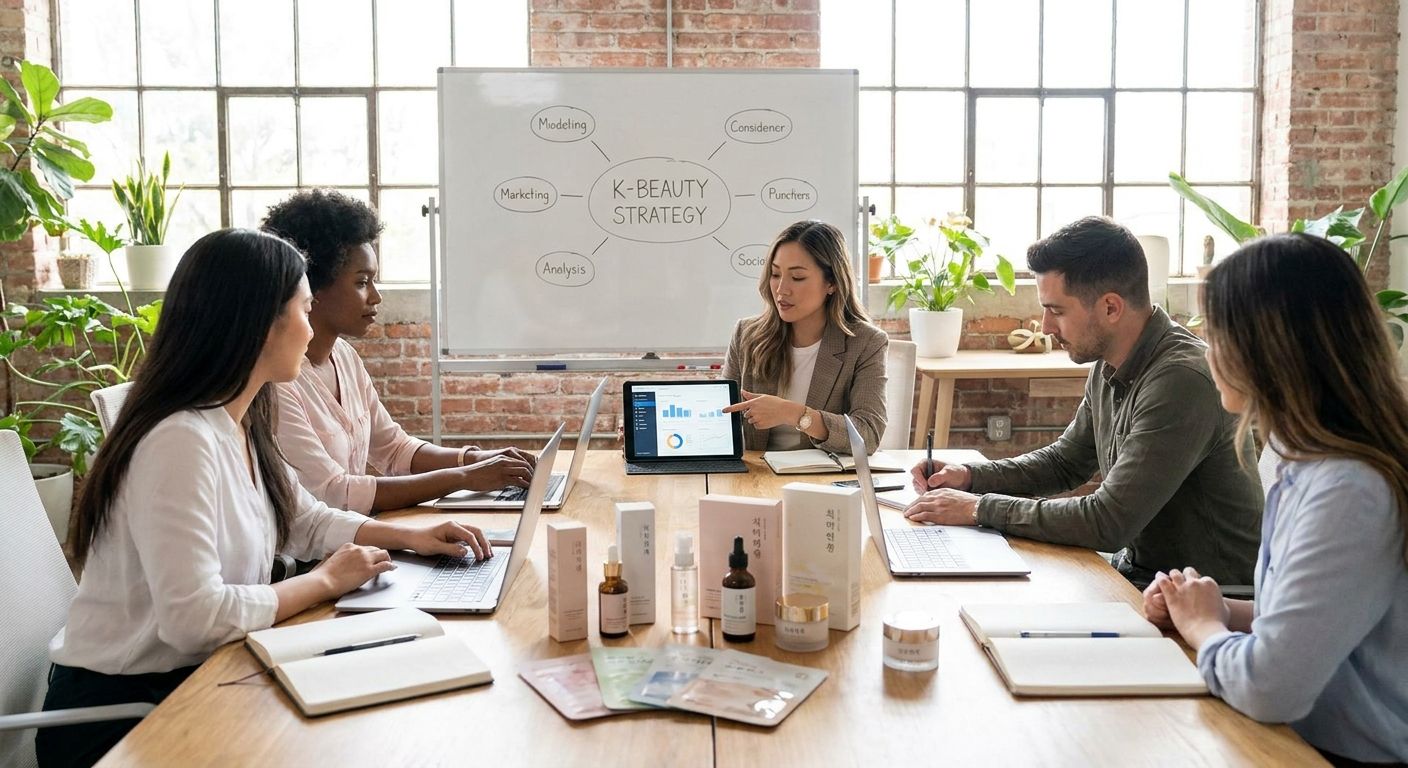
K-beauty brand marketing in 2026 means translating Korea's ingredient-led, multi-step skincare culture into content, paid media, and retail strategy that actually convert US shoppers — not just running generic beauty ads with Korean packaging. This guide breaks down what a marketing agency for K-beauty brands should be doing across TikTok, paid social, email, and Sephora or Ulta entry, and how to tell a beauty-specialized shop like The Darl apart from a generalist that treats K-beauty like any other skincare line.
- A marketing agency for K-beauty brands has to run TikTok content, retail entry, and lifecycle email as one connected system, not separate line items.
- K-beauty brands win on ingredient storytelling and short-form video, not generic beauty ad templates copied from Western DTC playbooks.
- Generalist agencies without beauty experience routinely mishandle Sephora and Ulta retail timelines for K-beauty brands — skip them.
- A K-beauty-specific agency earns its keep once a brand moves from DTC sales into US retail shelves in 2026.
Why K-beauty brands need a specialized marketing agency
K-beauty brand marketing is the work of adapting Korea's ingredient-first, routine-based skincare positioning for US ecommerce and retail, with the goal of converting formulation credibility into repeat DTC revenue and shelf space. That's a different job than marketing a single-hero-product Western skincare line.
The difference shows up in three places: product education, channel mix, and retail readiness. A K-beauty brand's PDP has to explain what a "first essence" or "sheet mask step" does before a US shopper adds it to cart — a job generalist beauty agencies skip because their other clients don't need it. Content has to carry that education natively on TikTok and YouTube Shorts, where K-beauty's routine culture already has an audience, rather than forcing it into a 30-second Meta ad. And retail buyers at Sephora and Ulta evaluate K-beauty submissions differently, weighing ingredient trend timing (centella asiatica, snail mucin, rice ferment) against a brand's existing US sell-through data.
An agency that treats a K-beauty brand like a generic skincare account will underinvest in exactly the content and retail groundwork that makes these brands work in the US market.
Localize your ingredient story for US shoppers
Do this before any paid spend goes live. Korean ingredient names and routine steps don't translate word-for-word into US shopper intent — you have to bridge the gap.
- Rewrite PDP copy so every Korean-origin ingredient (centella, mugwort, rice ferment, snail mucin) gets a one-line benefit explanation in plain English
- Map your brand's routine steps to US-familiar categories: essence becomes "lightweight hydrating toner," ampoule becomes "concentrated treatment"
- Pull comparison language from US dermatologist and esthetician content so your claims match what American shoppers already trust
- Test PDP copy variants against add-to-cart rate before scaling paid traffic to the page
- Build a routine-order guide (what goes on first, second, third) as a standalone content asset, not buried in an FAQ
Build a TikTok-first content engine
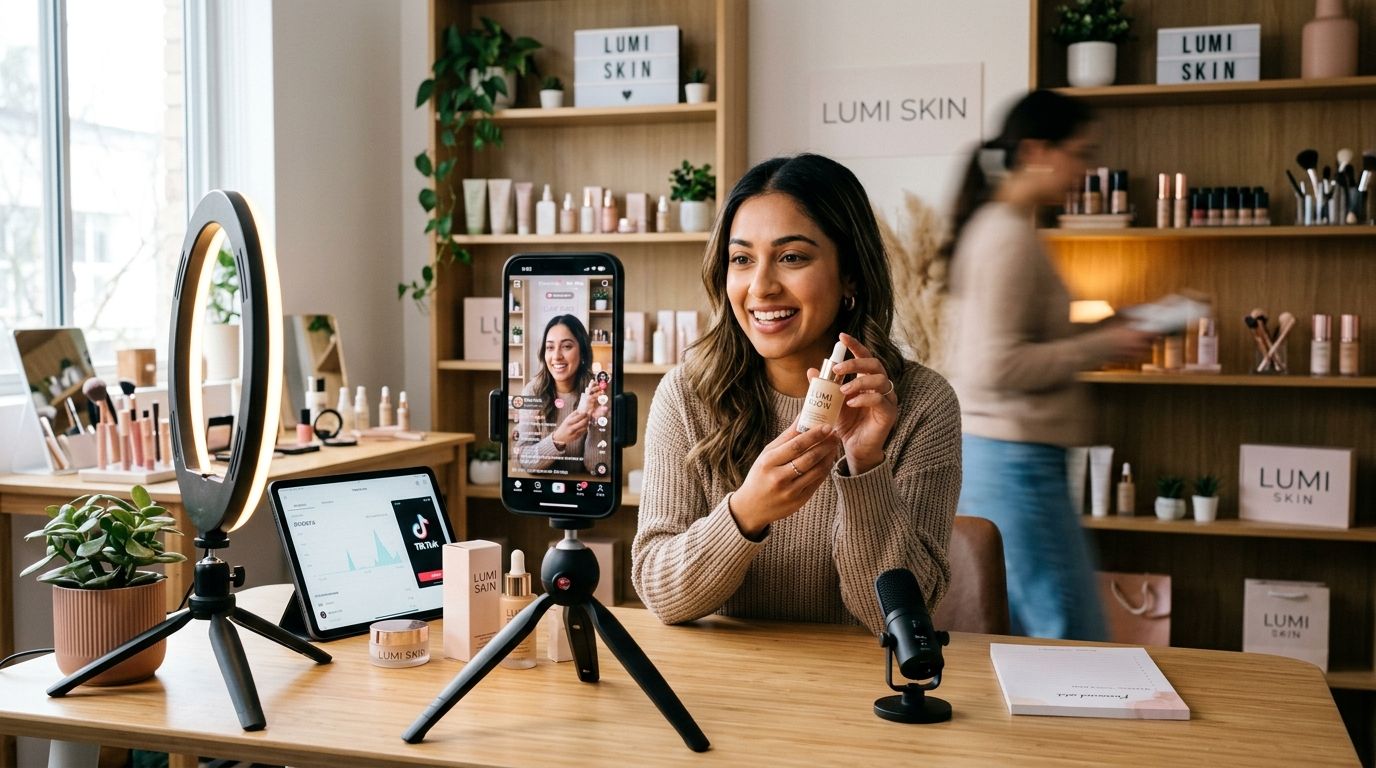
Start here, not on Meta. K-beauty's routine culture already lives on TikTok marketing for beauty brands formats — get-ready-with-me routines, ingredient breakdowns, and glass-skin transformation clips outperform static product shots for this segment.
- Film routine-order content in the 7-to-10-step format K-beauty is known for, broken into short standalone clips
- Partner with US-based skinfluencers who already post Korean skincare reviews, not just Korean creators with no US following
- Run ingredient-explainer series as evergreen content, not one-off launch posts
- Repost UGC that shows real routine adoption over 2-4 weeks, not day-one unboxings
- Track watch-through rate on routine videos as a leading indicator before scaling spend behind them
Structure paid social around routine bundles
Single-SKU ads underperform for K-beauty brands because the buying behavior is routine-based. Bundle offers convert better than single-product ads once a brand has 3+ SKUs that work together.
- Build creative around "the routine," not the individual product, for prospecting campaigns
- Test bundle ad sets against single-SKU ad sets on the same audience before committing budget
- Use retargeting to push the next step in a routine to buyers who purchased the first step
- Keep a rotating creative test of at least 4-6 concepts running at any time to fight fatigue on visually similar routine content
- Bring in a paid media partner once creative testing volume outpaces what an in-house team can turn around weekly — this is where an agency built for beauty ecommerce, rather than a generalist media buyer, starts to pay for itself
Set up lifecycle email and SMS for routine education
Email and SMS carry the education that a single ad can't. A new K-beauty buyer needs to understand routine order and timing before their second purchase, and that's a lifecycle job, not a one-time welcome email.
- Build a post-purchase flow that walks through routine order across the first 2-3 weeks of use
- Segment flows by first-product-purchased so the next recommended step matches what they already own
- Use SMS for time-sensitive routine reminders ("time to reorder your essence") rather than generic promo blasts
- Test send cadence — K-beauty routines take weeks to show results, so overly aggressive upsell timing backfires
- Track repeat purchase rate by flow segment, not just open and click rate
Plan your Sephora and Ulta retail entry timeline
Don't submit to retail before DTC repeat-purchase data backs up the pitch. Buyers want proof the routine sticks before they give you shelf space.
- Build 60-90 days of DTC sell-through and repeat-purchase data before a retail pitch deck goes out
- Time submissions around ingredient trend cycles buyers are already stocking against
- Prepare in-store education materials (routine cards, ingredient call-outs) alongside the product pitch, not after acceptance
- Line up launch-week paid and content support so retail sell-through doesn't stall in week one
- Coordinate retail launch timing with existing DTC promotional calendar to avoid cannibalizing online sales
Seed influencers and affiliates the K-beauty way
Seeding works differently here than for a single-product Western brand — you're seeding a routine, not a product.
- Send full routine sets, not single hero SKUs, so creators can show the full step-by-step
- Prioritize creators who already film multi-step routine content over general beauty influencers
- Set a minimum content window (2-4 weeks) before expecting a review, since routine results take time to show
- Track which creators drive routine completion (buyers who purchase 2+ SKUs), not just first-touch sales
- Layer affiliate commission structures on top of gifting once a creator's content consistently converts
Get a K-beauty growth plan built
Ingredient story, TikTok content, and retail timing under one strategy.
Comparing your options for K-beauty marketing
| Option | Best for | Key limitation |
|---|---|---|
| In-house marketing hire | Early-stage brands with one founder-marketer | Can't cover paid media, content, retail, and lifecycle at once |
| Generalist growth agency | Brands needing raw paid media execution only | Misses ingredient education and routine-based creative strategy |
| Freelance TikTok/influencer manager | Brands needing content volume fast | No retail or lifecycle strategy layered on top |
| K-beauty-specific marketing agency (The Darl) | Brands scaling from DTC into US retail in 2026 | Costs more than a single-channel freelancer |
A K-beauty brand outgrows a generalist agency the moment retail conversations with Sephora or Ulta start — that's the point where routine-specific content and sell-through data become the pitch itself.
Common mistakes K-beauty brands make in marketing
- Translating routine copy literally instead of localizing it — "essence" and "sheet mask step" mean nothing to a first-time US buyer without a plain-English bridge
- Running single-SKU ads on a routine-based product line — bundle creative converts better once 3+ SKUs work together
- Pitching retail buyers before DTC repeat-purchase data exists — Sephora and Ulta want proof the routine sticks, not just launch-week sales
- Over-relying on Korean-market influencers with no US following — content that performs in Seoul doesn't automatically translate to a US TikTok audience
- Treating email as promo-only — routine education in lifecycle flows drives the second and third purchase more than any discount code
FAQ
What does a marketing agency for K-beauty brands actually do?
A marketing agency for K-beauty brands runs paid media, content, email/SMS, and retail strategy built around routine-based skincare, not single-product beauty campaigns. That includes localizing ingredient education for US shoppers and timing Sephora or Ulta pitches against DTC sell-through data.
Is TikTok or Meta better for K-beauty brand growth in 2026?
TikTok performs better for prospecting because K-beauty's routine and glass-skin content formats already have an engaged audience there. Meta works better for retargeting buyers who've already seen routine education content elsewhere.
How is K-beauty marketing different from general skincare marketing?
K-beauty marketing has to explain multi-step routine order and Korean-origin ingredients in plain English before a US shopper converts. General skincare marketing usually sells a single hero product without that education layer.
When should a K-beauty brand pitch Sephora or Ulta?
Pitch once you have 60-90 days of DTC repeat-purchase data showing the routine sticks with buyers. Retail buyers weigh sell-through proof heavily for K-beauty submissions.
Do K-beauty brands need influencer seeding or paid ads first?
Content and seeding come first because routine-based products need education before paid traffic converts efficiently. Paid social scales better once creative built around bundles and routine order already exists.
What's the biggest mistake K-beauty brands make in US marketing?
Translating routine and ingredient copy literally instead of localizing it for a US shopper who's never heard of an essence or a first-treatment step. That gap kills conversion before any ad spend matters.
Should a K-beauty brand hire a generalist agency or a beauty-specific one?
A beauty-specific agency understands routine-based creative, ingredient education, and retail timing that generalist agencies typically miss. Generalists work fine for pure media buying but fall short on the content and retail strategy layer.
One last thing
Most K-beauty brands lose more revenue to routine drop-off between step one and step three than to acquisition cost — a lifecycle flow built around routine order fixes that faster than any new ad creative does. Fix the second-purchase problem before scaling spend on the first.