Prestige skincare brands lose more revenue to channel fragmentation than to weak product. This guide breaks down what omnichannel marketing for prestige skincare brands actually requires in 2026, which channels deserve budget first, and which tactics built for mass-market DTC beauty will quietly erode your margin.
- Omnichannel marketing for prestige skincare brands works when SEO, paid media, and email are sequenced, not launched at once — Buy the sequence.
- Influencer-only launches without owned content backfill stall after the first 90 days.
- Email and lifecycle marketing protect margin at prestige price points better than paid acquisition alone.
- Generic ecommerce SEO templates built for mass beauty underperform for prestige positioning — Skip them.
Who this is for
This is written for founders and marketing leads at prestige skincare brands doing $2M-$20M in revenue, selling at $60-$250 price points, with a retail or Sephora-adjacent presence they're trying to protect while scaling direct-to-consumer. If you're running a mass-market beauty brand optimizing purely for CAC, most of this won't apply — you need volume plays, not brand strategy for prestige beauty brands. If your product sells on ingredient story, dermatologist credibility, or a founder narrative, keep reading.
Why this matters
Prestige skincare brands get sold the same playbooks as mass DTC beauty: heavy paid social, influencer gifting, discount-driven email flows. Those tactics compress margin and cheapen positioning that took years to build. The brands winning in 2026 sequence channels deliberately — SEO and content build the moat, paid media accelerates proven offers, email and lifecycle protect the repeat-purchase economics that prestige pricing depends on. Get the sequence wrong and you'll spend 2026's budget buying traffic that never returns.
What to look for in omnichannel marketing for prestige skincare brands
Brand consistency across every paid and organic touchpoint
Prestige buyers notice when the Instagram ad tone doesn't match the product page copy. A single inconsistent channel — usually paid social running discount-heavy creative against a $180 serum — undoes months of brand-building. Consistency across channels is the actual product of good omnichannel marketing, not a nice-to-have.
Retention economics built for higher price points
At $60-$250 AOV, one repeat purchase within 12 months often determines whether a customer is profitable at all. Lifecycle and email programs matter more here than in mass beauty, where volume forgives thinner margins.
Content that earns editorial and dermatologist credibility
Prestige buyers research before they buy — ingredient decks, clinical claims, founder interviews. Content built for search and earned media does more for a $150 moisturizer than a viral TikTok that drives one-time purchasers.
Attribution tied to repeat-purchase LTV, not last-click ROAS
Last-click attribution rewards the channel that closes the sale, not the one that built trust over 60-90 days. Prestige skincare buying cycles run longer than mass beauty impulse purchases, so attribution models need to account for that lag.
Launch sequencing for limited SKU drops
Prestige brands typically launch 2-4 new SKUs a year, not 12. That means each launch needs its own coordinated sequence — seeding, PR, paid amplification, email capture — instead of an always-on acquisition machine.
Claims and compliance discipline
Skincare claims get more regulatory scrutiny in 2026 than they did five years ago. Any omnichannel plan that skips legal review on clinical or ingredient claims is building risk into every channel at once.
Top picks: where to put budget first
SEO and content — the compounding pick
Organic search is the only channel where prestige skincare content keeps working after you stop paying for it. A well-built ingredient or routine content hub can carry qualified traffic for 24+ months off a single publishing push. Verdict: Buy first — put this at the front of any 2026 channel plan via SEO for clean beauty ecommerce brands.
Paid media — the accelerant, not the foundation
Paid media should amplify offers that already convert organically, not manufacture demand from zero. Brands that flip this order typically see CAC climb every quarter as they bid against their own unproven creative. Verdict: Consider — worth funding once a 90-day organic and email baseline exists, through paid media for skincare startups.
Email and lifecycle — the margin protector
At prestige price points, a customer who repurchases within 90 days is worth several first-time buyers acquired through paid social. Lifecycle flows built around replenishment timing (a 30-day serum, a 60-day moisturizer) do more for annual revenue than another acquisition channel. Verdict: Buy — this is the highest-leverage channel per dollar in most prestige skincare accounts, built through email marketing for DTC beauty brands.
Organic social and community content — the credibility play
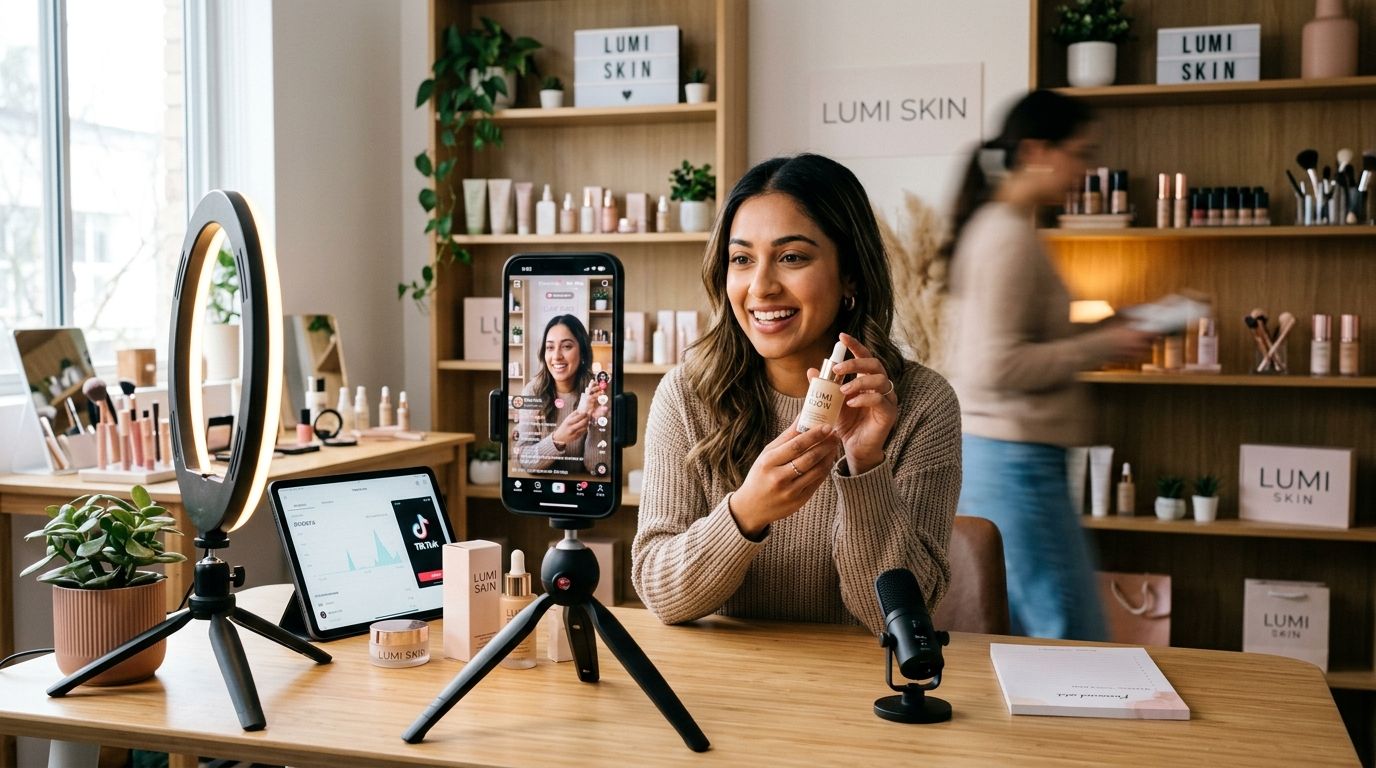
Social content works differently for prestige than mass beauty — it's less about reach and more about signaling taste and expertise to a smaller, higher-intent audience. A dermatologist Q&A series or founder-led routine breakdown outperforms a discount-code giveaway on every trust metric that matters at this price point. Verdict: Consider — sequence this after content and email are live, not before.
Influencer and PR seeding — the wildcard
Seeding to the right 20-30 dermatologists or editorial contacts before a launch can generate coverage that no paid campaign replicates. Seeding to 500 micro-influencers for a discount code usually just generates discount-code customers. Verdict: Consider carefully — the difference between this working and wasting budget comes down entirely to who gets the product, not how many people do.
What to avoid
- Mass-beauty growth playbooks. Tactics built for $20-$40 AOV brands (aggressive discount codes, gifting to anyone with 10K followers) compress the exact margin that makes prestige pricing work.
- Single-channel scaling. Pouring 2026's entire budget into paid social because it's the easiest to measure ignores that prestige buyers convert across 3-4 touchpoints, not one.
- Generic SEO templates. Ecommerce SEO built for volume categories (skincare "dupes," price comparisons) actively undermines a prestige positioning built on ingredient story and clinical credibility.
Sequence your 2026 channel plan
Get a channel-by-channel review built for prestige skincare economics.
Verdict comparison
| Channel | Best For | Timeline to ROI | Verdict |
|---|---|---|---|
| SEO and content | Long-term compounding traffic | 6-12 months | Buy |
| Email and lifecycle | Protecting repeat-purchase margin | 30-90 days | Buy |
| Paid media | Amplifying proven offers | 90-120 days | Consider |
| Organic social | Trust and credibility signaling | 3-6 months | Consider |
| Influencer/PR seeding | Launch-specific coverage | Per launch | Consider carefully |
FAQ
What is omnichannel marketing for prestige skincare brands?
It's a coordinated strategy across SEO, paid media, email, content, and social built specifically around prestige price points and longer buying cycles, rather than the volume-driven playbooks used for mass-market beauty. The channels are sequenced so organic and lifecycle work carries most of the load, with paid media amplifying what already converts.
How much does omnichannel marketing cost for a prestige skincare brand?
Costs vary by channel mix and brand size, but prestige brands typically allocate more to content, SEO, and lifecycle email relative to paid media than mass-market beauty brands do. Budgets scale with SKU launch frequency and retail presence, not just revenue.
Is paid social enough on its own for a prestige skincare launch?
No — paid social works best amplifying an offer that already has organic proof, not generating demand from a cold start. Prestige buyers typically research across multiple touchpoints before purchasing, so single-channel paid campaigns underperform against sequenced plans.
How long does SEO take to work for a skincare brand?
Organic search traffic for skincare content typically starts compounding within 6-12 months of consistent publishing, and keeps producing traffic well after that without ongoing spend. That makes it the highest-leverage long-term channel for prestige brands with limited paid budgets.
Why does email marketing matter more for prestige skincare than mass beauty?
At higher price points, one repeat purchase within 90 days often determines whether a customer was profitable to acquire in the first place. Lifecycle flows built around actual product replenishment timing protect that margin better than acquisition spend does.
Should a prestige skincare brand work with influencers?
Selectively, yes — seeding to a smaller group of credible dermatologists or editorial voices before a launch tends to outperform broad micro-influencer gifting. Volume-based seeding built for mass beauty usually attracts discount-driven customers, not repeat buyers.
What's the biggest mistake prestige skincare brands make with omnichannel marketing?
Running every channel at once instead of sequencing them, which usually means paid media gets funded before organic content and email have any traction to amplify. That order inflates CAC every quarter because paid spend is manufacturing demand from zero instead of accelerating proven demand.
How many channels does a prestige skincare brand actually need in 2026?
Most prestige brands run 3-4 channels well rather than 6-8 channels poorly — typically SEO, email, paid media, and one content-driven social presence. Adding more channels without the team or budget to maintain brand consistency across them usually does more damage than staying narrow.
One last thing
The prestige skincare brands that scale fastest in 2026 usually cut a channel before they add one — most commonly influencer seeding once email and content are compounding on their own. Sequencing beats spreading thin every time.