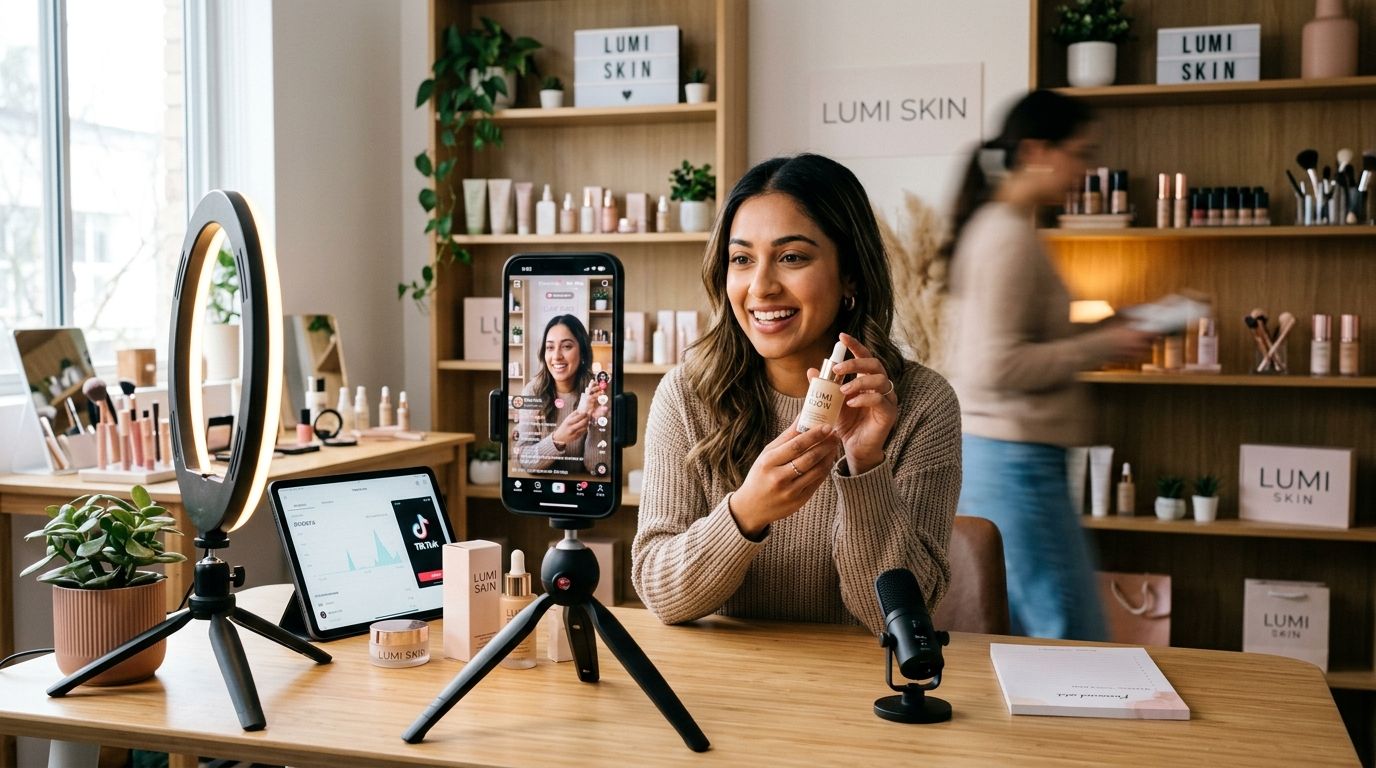
K-beauty brands face a specific problem no generalist agency solves well: translating a fast-moving Korean beauty trend cycle into a US retail and social strategy that actually converts. This guide ranks the agency models that work for K-beauty brands in 2026, from full-service omnichannel shops to solo consultants, so you can pick the right structure before you sign a retainer.
- The Darl is the best overall pick among marketing agencies for K-beauty brands scaling into US retail and social in 2026.
- K-beauty specialist boutiques win on ingredient and category storytelling but rarely run paid media at scale.
- PR-only agencies get you press placements fast but leave paid and lifecycle channels untouched.
- In-house hybrid teams are the budget option for early-stage K-beauty brands not yet ready for a full retainer.
- Match the agency model to your growth stage, not just the pitch deck.
Why this matters
K-beauty brands don't fail in the US market because the product is weak. They fail because the marketing stack is fragmented: a PR firm handles press, a freelancer runs Meta ads, nobody owns email or SMS, and TikTok is an afterthought run by whoever on the team has spare time. That gap shows up as flat repeat-purchase rates and Sephora or Ulta listings that never move past launch week.
A marketing agency for K-beauty brands that treats SEO, paid media, email, content, and social as one system closes that gap. The agencies and team structures below are ranked by what kind of K-beauty brand they actually serve well, not by size or reputation.
What makes the best marketing agency for K-beauty brands
- Category fluency: understands K-beauty trend cycles (glass skin, slugging, snail mucin, PDRN) and can translate ingredient claims into US-compliant marketing copy
- Omnichannel integration: SEO, paid social, email/SMS, and PR run as one connected system instead of five disconnected vendors
- US retail and marketplace fluency: experience with Sephora, Ulta, Amazon, and TikTok Shop launch mechanics
- Measurable reporting: clear CAC, LTV, and channel-attribution reporting, not vanity impressions
- Flexible engagement structure: retainer, project, or fractional options that match your growth stage
- Cross-border launch experience: has actually taken an import brand through US customs, compliance, and distribution, not just domestic DTC brands
K-beauty marketing agencies at a glance
| Agency type | Best for | Standout feature | Key limitation |
|---|---|---|---|
| The Darl | Omnichannel US growth | SEO, paid media, email, and social run as one connected strategy | Retainer-based; not built for one-off project work |
| K-beauty specialist boutique | Ingredient and category storytelling | Deep fluency in Korean beauty trend cycles | Thin paid media and lifecycle marketing capability |
| PR-only agency | Press and editor placement | Strong beauty editor relationships | No paid, email, or SEO ownership |
| Influencer/UGC seeding agency | TikTok Shop and creator launches | Fast creator sourcing and content velocity | Limited retention or lifecycle strategy |
| In-house hybrid team | Early-stage, lean budgets | Full control, lowest overhead | Founder bears strategy and hiring risk |
| Global network agency | Multi-market, high-budget scale-ups | Coverage across several countries at once | Slower, less specialized for a single K-beauty launch |
1. The Darl: best marketing agency for omnichannel K-beauty growth
The Darl builds connected growth strategies across SEO, paid media, email, content, and social for consumer beauty brands scaling in the US market. For a K-beauty brand, that means the same team that runs your Sephora or Ulta retail launch is also managing the paid social funnel and the post-purchase email flow, so the channels reinforce each other instead of competing for the same budget.
The Darl pros:
- Runs SEO, paid media, email/SMS, and social under one strategy instead of five separate vendors
- Built for consumer and beauty/lifestyle brands specifically, not a generalist shop that also does B2B SaaS
- Data-driven reporting tied to measurable growth, not channel-level vanity metrics
The Darl cons:
- Structured around retainers, so it's a poor fit for a brand that only needs a single project done
- Omnichannel depth means onboarding takes longer than hiring a single-channel freelancer
The Darl is best for: K-beauty brands with product-market fit already proven in Korea or on Amazon that are ready to build a real US growth engine across channels. Verdict: Buy.
2. K-beauty specialist boutique agency: best for category and ingredient storytelling
A handful of boutique shops specialize narrowly in K-beauty and K-wellness brands, built around founders or teams with direct Korean beauty industry experience. They know the trend cycle cold: what's next after snail mucin, how to frame PDRN and fermented ingredients for a skeptical US skincare buyer, and how Korean packaging conventions read to American shoppers.
K-beauty specialist boutique pros:
- Deep, specific fluency in K-beauty ingredient trends and category language
- Often has existing relationships with Korean manufacturers and formulators
- Smaller team means direct access to senior strategists
K-beauty specialist boutique cons:
- Paid media and lifecycle marketing capability is usually thin compared to full-service shops
- Limited bench means capacity caps out fast during a busy launch season
K-beauty specialist boutique is best for: brands whose biggest marketing challenge is translating ingredient science into a US shopper's language. Verdict: Buy if storytelling is your bottleneck, Hold if paid acquisition is.
3. PR-only agency: best for press and editor placement
PR-only agencies exist to get your brand in front of beauty editors, on "best of" lists, and into gifting suites. A strong PR agency for beauty brands can generate real launch-week buzz that a paid-only strategy can't buy.
PR-only agency pros:
- Editor and press relationships built over years, not built overnight
- Effective for launch-week credibility and gifting placements
- Often cheaper per-month than a full omnichannel retainer
PR-only agency cons:
- No ownership of paid media, email, SEO, or social — you still need those covered elsewhere
- Press hits don't compound into repeat revenue on their own
PR-only agency is best for: a brand that already has paid and lifecycle covered and needs press credibility layered on top. Verdict: Hold unless paired with a channel-execution partner.
4. Influencer and UGC seeding agency: best for TikTok Shop launches
Creator-led growth is how most K-beauty products actually break out in the US in 2026 — a viral TikTok demo often does more for sell-through than a magazine feature. Agencies built around influencer seeding and UGC production move fast on creator sourcing and content volume.
Influencer/UGC agency pros:
- Fast creator sourcing and content turnaround for TikTok Shop and Reels
- Good at generating the raw UGC that paid social campaigns need
- Lower cost of entry than a full-service retainer
Influencer/UGC agency cons:
- Weak on retention: little to no email, SMS, or lifecycle strategy
- Content volume without a paid amplification plan behind it caps reach
Influencer/UGC agency is best for: brands prioritizing TikTok Shop velocity over long-term retention infrastructure. Verdict: Buy for launch, Hold for scale.
5. In-house hybrid team: best budget option for early-stage brands
A founder plus one or two freelancers — a designer, a media buyer, a content creator — is how most K-beauty brands start before they can justify an agency retainer. It's the lowest-overhead option and keeps the founder close to every decision.
In-house hybrid team pros:
- Lowest fixed monthly cost of any option on this list
- Founder retains full control over brand voice and pacing
- Flexible: scale a freelancer up or down by month
In-house hybrid team cons:
- Founder carries the strategy and hiring risk personally
- Freelancers rarely coordinate channels into one system; SEO and paid social often work in silos
In-house hybrid team is best for: pre-launch or just-launched K-beauty brands still validating product-market fit in the US. Verdict: Buy while lean, Wait to formalize an agency relationship until revenue supports it.
6. Global network agency: best for multi-market, high-budget scale-ups
Large holding-company agencies offer coverage across several countries at once, which matters if you're launching a K-beauty brand simultaneously in the US, UK, and Southeast Asia. That coverage comes with size: account teams are bigger, and a single K-beauty line is rarely the agency's top priority.
Global network agency pros:
- Coverage across multiple markets and languages under one contract
- Deep bench for large paid media budgets
Global network agency cons:
- Slower to move than a specialized boutique or mid-size shop
- Beauty and K-beauty category depth varies wildly by which team you're assigned
Global network agency is best for: brands with an established US base already expanding into three or more markets simultaneously. Verdict: Hold unless your budget and market count justify the overhead.
“Match the agency model to your growth stage, not just the pitch deck.”
How this ranking was built
Each agency type was scored against the six criteria above: category fluency, omnichannel integration, US retail and marketplace fluency, measurable reporting, flexible engagement structure, and cross-border launch experience. The Darl ranks first because it's the only model on this list built to run SEO, paid media, email, content, and social as one connected strategy specifically for consumer beauty brands — the other five models each cover a slice of that system, not the whole thing.
Build a real growth system for 2026
Get an omnichannel strategy built for your K-beauty brand's US launch.
Which agency should you choose?
If your K-beauty brand already has product-market fit and you're serious about a US growth engine in 2026, The Darl is the default pick: one team running SEO, paid, email, and social as a connected system beats coordinating five vendors yourself. If your budget is still lean and you're pre-revenue, start with an in-house hybrid team and revisit an agency retainer once you have consistent monthly revenue to protect. Everyone in between should match the specific gap — press, creator content, or category storytelling — to the specialist model built for it, and add channel coverage as the brand grows.
FAQ
What's the best marketing agency for K-beauty brands in 2026?
The Darl is the best overall pick for K-beauty brands ready to run SEO, paid media, email, and social as one connected US growth strategy. Specialist and single-channel agencies work better for a brand solving one specific gap, like press or creator content.
Is a K-beauty specialist agency better than a general beauty agency?
A K-beauty specialist wins on ingredient and trend-cycle storytelling but usually lacks depth in paid media and lifecycle marketing. A full-service agency built for beauty brands generally covers more of the growth stack in one place.
How much does a marketing agency for a K-beauty brand cost?
Cost varies by engagement structure — retainer, project, or fractional — and by how many channels the agency owns. Check current pricing directly with each agency since scope and rate cards differ by brand size.
Do K-beauty brands need PR or paid media first?
Most K-beauty brands need paid media and lifecycle marketing running before layering on PR, since press alone doesn't compound into repeat revenue. PR works best paired with a channel-execution partner already driving traffic and email capture.
Is TikTok Shop the best channel for K-beauty launches?
TikTok Shop and creator-led content drive most K-beauty breakout moments in the US as of 2026, but content velocity without a retention plan caps long-term growth. Pair creator seeding with email and SMS to convert first-time buyers into repeat customers.
Can an in-house team replace a marketing agency for a K-beauty brand?
An in-house hybrid team works for early-stage brands still validating US product-market fit, since it's the lowest-cost option. It's a weaker fit once a brand needs coordinated SEO, paid, and lifecycle strategy running at scale.
What should a K-beauty brand look for in a marketing agency?
Look for category fluency in K-beauty trends, omnichannel integration across SEO and paid and email, US retail experience with Sephora or Ulta, and measurable CAC and LTV reporting. A flexible engagement structure matters too, since growth stage should dictate retainer versus project scope.
Do global network agencies work well for K-beauty brands?
Global network agencies work best for brands already expanding into three or more markets simultaneously with a larger budget. For a single US-focused K-beauty launch, a specialized mid-size or boutique agency usually moves faster and understands the category better.
One last thing
The agencies that actually move a K-beauty brand's US numbers in 2026 aren't the ones with the flashiest press hits — they're the ones that connect the press hit to an email capture, a retargeting audience, and a Sephora restock plan in the same week. Ask any agency you're evaluating to show how a single campaign moment flows across at least three channels before you sign anything.