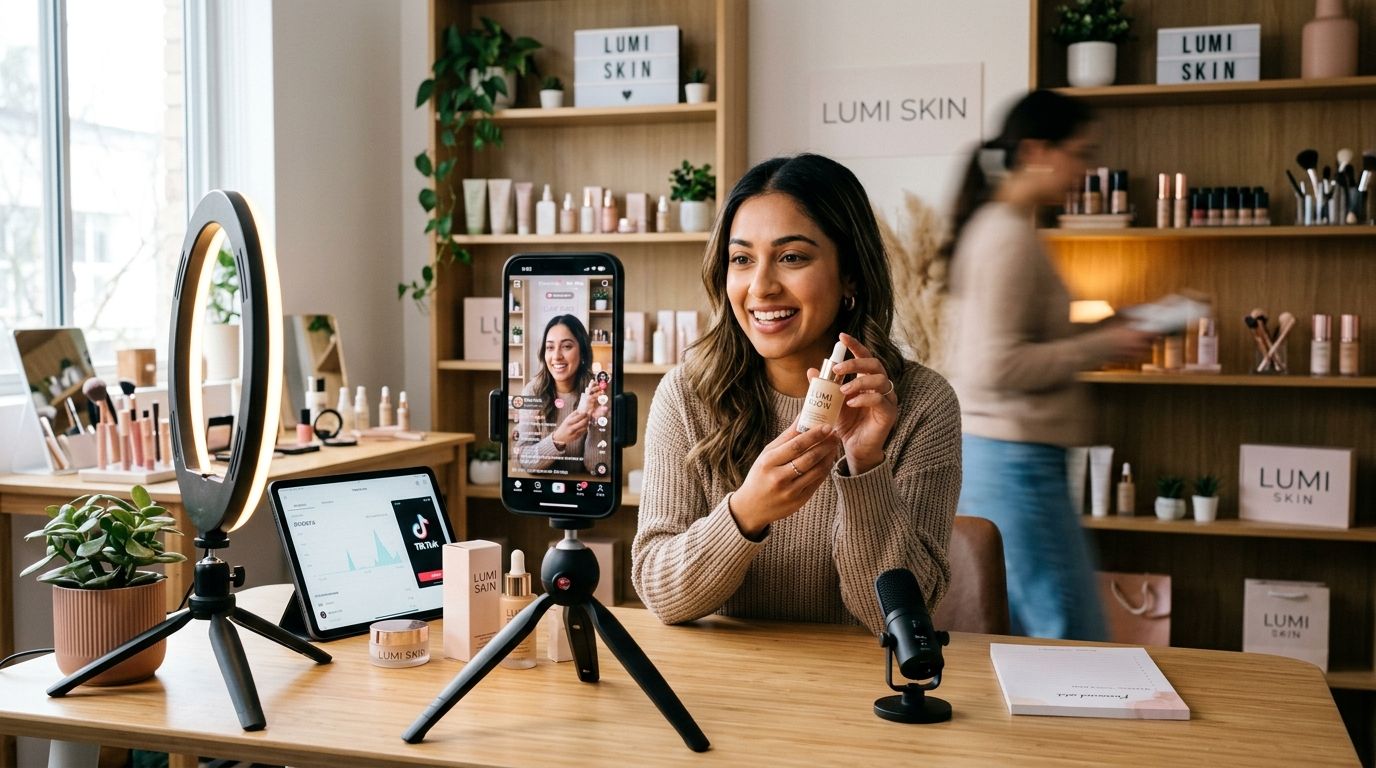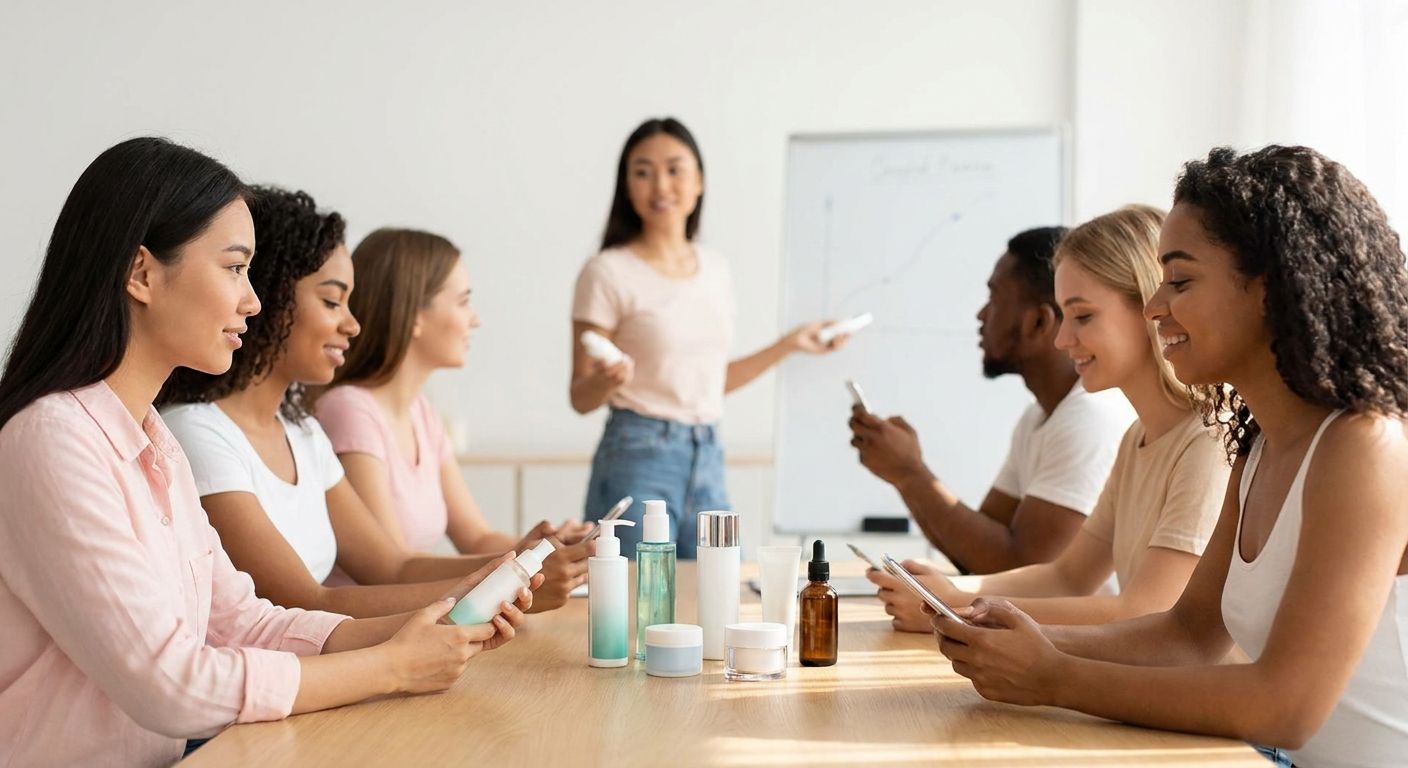
An ambassador program turns your best customers into a paid, organized sales channel — not a hope-and-pray tag-us-and-we'll-repost situation. This guide breaks down the exact build sequence for a skincare brand launching or relaunching a program in 2026.
- Build a tiered ambassador program with 3 tiers max — most skincare brands over-engineer this and it collapses by month 4.
- Pay in product plus a flat fee starting at $50-150 per ambassador per cycle, not just free samples.
- Track ambassador-driven revenue through unique codes and links from day one or you cannot prove ROI by year-end.
- Recruit from your existing customer list first — cold DM recruiting has the lowest conversion rate of any channel in 2026.
Why this matters
Most skincare brands run "ambassador programs" that are really just gifting lists with a spreadsheet. No tiers, no compensation structure, no tracking, no renewal criteria. Six months in, nobody can say which ambassadors drove revenue and which just took product and disappeared.
A real ambassador program is a system: recruitment criteria, compensation, content requirements, tracking, and a review cadence. Skincare brands that build it this way in 2026 get a compounding content and word-of-mouth engine — not a gifting expense line that never shows up in the P&L.
What you'll need
- Customer list segmented by repeat purchase and engagement — your existing buyers convert to ambassadors far better than cold outreach
- A tracking system: unique discount codes or affiliate links per ambassador, tied to a dashboard or spreadsheet you check weekly
- A compensation budget — decide product-only, product-plus-flat-fee, or commission-based before you recruit anyone
- Content brief template — 1-page doc covering required deliverables, brand guidelines, and posting cadence
- A communication channel — a private Slack, Discord, or a simple email list for ambassador updates
- 3-6 months of runway before you judge results — ambassador programs are slow-build, not launch-week wins
The steps
1. Define your tiers before you recruit anyone
Most skincare ambassador programs need exactly three tiers: seeding-only, paid micro, and paid core. Seeding-only ambassadors get product for honest reviews with no minimum follower count. Paid micro tier (5,000-50,000 followers typically) gets product plus a flat fee of $50-150 per content cycle. Paid core tier — your top 10-20 people — gets a retainer or commission structure plus first access to launches.
Common mistake: building five or six tiers with overlapping requirements. Ambassadors get confused about what unlocks what, and you spend more time managing the tier logic than the content.
2. Set compensation before you post a single application
Skincare brands underpay ambassadors more than any other category in beauty, because "they're getting free product" gets treated as sufficient. It isn't in 2026 — creators compare notes, and a program that pays nothing beyond product loses its best people to a competitor's paid tier within two or three cycles.
Budget a flat $50-150 per ambassador per content cycle at the micro tier, scaling to commission or retainer at the core tier. If you sell through affiliate links, structure a affiliate marketing for skincare brands layer alongside the ambassador tiers so top performers can earn beyond the flat fee.
3. Recruit from your own customer base first
Pull your top 100-200 repeat customers by order count and email engagement. These are people who already bought the product without being paid to say anything — the strongest possible ambassador pool. Send a direct, personal invite, not a generic "apply here" form buried on your site.
Only after you've exhausted your existing customer list should you open cold applications or start influencer seeding for skincare launches to build a wider pipeline. Cold recruiting converts at a fraction of the rate of warm customer invites — expect single-digit response rates from cold outreach versus 20-30% from an engaged customer list.
4. Write a content brief that removes guesswork
A one-page brief prevents 80% of the back-and-forth that kills ambassador programs by month three. Specify: number of posts per cycle (2-4 is standard), required hashtags or handle tags, product angle (routine integration, before/after, ingredient callout), and a posting window (7-10 days from receiving product).
Leave creative direction loose — the ambassador's voice is the entire value of the channel. Brands that over-script ambassador content end up with copy-paste posts that read like ads, which is exactly what an ambassador program is supposed to avoid.
5. Track every ambassador with a unique code or link
Assign each ambassador a unique discount code or trackable link before their first shipment goes out. Without this, you cannot separate ambassador-driven revenue from organic sales, and you cannot identify which ambassadors are actually converting versus just posting.
Review the data monthly. An ambassador generating fewer than 2-3 uses of their code per cycle after two months is either a content mismatch or an audience mismatch — flag them for tier reassignment or exit before renewing.
6. Build a UGC pipeline out of the same ambassador relationships
Every ambassador post is raw material for paid social, email, and product pages — but only if you have permission and a system for pulling it. Set up rights language in your ambassador agreement upfront (a simple "we may repurpose your content across our channels" clause covers most cases) and run a lightweight UGC seeding for beauty brands process to collect and organize the output on a rolling basis.
Brands that skip this step end up re-briefing new creators for content they could have pulled from their existing ambassador pool for free.
7. Review and refresh the roster every quarter
Ambassador programs decay if you never prune them. Every quarter in 2026, review each ambassador against three numbers: content delivered, code usage, and engagement rate on their posts. Exit ambassadors who miss two consecutive content cycles without explanation, and promote your top 10-15% into the paid core tier.
This is also the point to expand recruitment sourcing — look at influencer marketing strategies for skincare launches to identify new creator profiles that match your top performers' engagement patterns rather than just follower count.
Need a program built, not just a template
THE DARL builds ambassador and influencer systems inside full-funnel beauty growth strategies.
Troubleshooting
Ambassadors take product and never post. Withhold the second shipment until the first content cycle is delivered — front-load nothing beyond the initial trial size.
Content looks identical across ambassadors. Your brief is too prescriptive. Loosen the required copy and keep only the hashtag, tag, and posting-window requirements.
Code usage is near zero across the whole tier. The discount or incentive isn't compelling enough for the ambassador's audience — test a higher percentage off or a bundle offer instead of a flat dollar amount.
Top ambassadors are asking for more money. That's a signal they're performing — move them to the core tier with a retainer or commission structure before a competitor brand offers it first.
You can't tell which channel ambassador content actually lives on. Standardize reporting: require ambassadors to tag your handle on every platform they post to, and check monthly, not quarterly.
Recruitment is slow and expensive. Stop running open applications and go back to your existing customer list — most skincare brands find their best 20 ambassadors already bought the product at least twice.
Tools and resources
- A shared spreadsheet or lightweight CRM for tier tracking, code assignment, and content delivery status
- Unique discount code generation through your ecommerce platform (Shopify, for example, supports this natively)
- A private Slack or Discord for ambassador communication and content submission
- Affiliate marketing for skincare brands infrastructure if you're layering commission on top of the ambassador tiers
- A quarterly review calendar — block it now so the roster refresh actually happens in 2026
What to do next
Once the ambassador program is generating consistent content, the next move is distribution: get that content in front of a wider audience through owned channels. Review social media marketing for skincare brands to build the posting and amplification system that turns ambassador content into a repeatable acquisition channel instead of a one-off post that disappears after 24 hours.
FAQ
How much does it cost to run a skincare ambassador program in 2026?
Budget $50-150 per ambassador per content cycle at the micro tier, plus product cost, with core-tier ambassadors earning more through retainer or commission. A 50-person program typically runs $3,000-8,000 per cycle in cash compensation alone.
What's the difference between an ambassador program and an affiliate program?
An ambassador program compensates for content and relationship regardless of direct sales, while an affiliate program pays purely on commission per sale. Many skincare brands run both simultaneously, layering affiliate commission on top of ambassador tiers.
How many ambassadors should a skincare brand start with?
Start with 15-30 ambassadors pulled from your existing repeat customer list rather than opening cold applications. A smaller, higher-quality group is easier to manage and produces better content than a large unvetted roster.
Is product-only compensation enough for skincare ambassadors in 2026?
No, product-only compensation loses top performers within two or three cycles as creators compare offers across brands. Pair product with a flat fee starting at $50 per cycle at minimum for the paid tiers.
How do you track ambassador program ROI?
Assign each ambassador a unique discount code or trackable link before their first shipment and review usage monthly. Revenue attributed to those codes, compared against total compensation paid, is the clearest ROI signal.
How often should you review an ambassador roster?
Review every quarter against content delivered, code usage, and engagement rate. Exit ambassadors who miss two consecutive cycles and promote top performers into a paid core tier.
Can UGC from ambassadors be reused in paid ads?
Yes, if your ambassador agreement includes content rights language upfront. Most skincare brands include a simple repurposing clause covering paid social, email, and product pages.
What's the biggest mistake skincare brands make with ambassador programs?
Skipping tracking. Without a unique code or link per ambassador from day one, you cannot separate ambassador-driven revenue from organic sales or prove the program's value by year-end.
One last thing
The ambassador programs that actually compound past year one are the ones treated as a recruitment funnel, not a content vendor list — the core tier from year one becomes the referral source for year two's applicants, and that flywheel is worth more than any single viral post.