Skincare brands don't have a social media problem. They have a prioritization problem — too many channels, not enough budget discipline, and a feed that looks like everyone else's serum launch. This guide breaks down what actually moves revenue for skincare brands running social in 2026, and what to cut.
- Social media marketing for skincare brands works when UGC and paid amplification run together — not as separate line items.
- Content marketing carries the education load; social carries proof. Confusing the two wastes budget.
- Affiliate and influencer seeding outperform pure brand-account posting for skincare in 2026 — buy the seeding motion, hold the vanity metrics.
- Ingredient storytelling alone is a Skip if it isn't paired with a routine-use format.
Why this matters
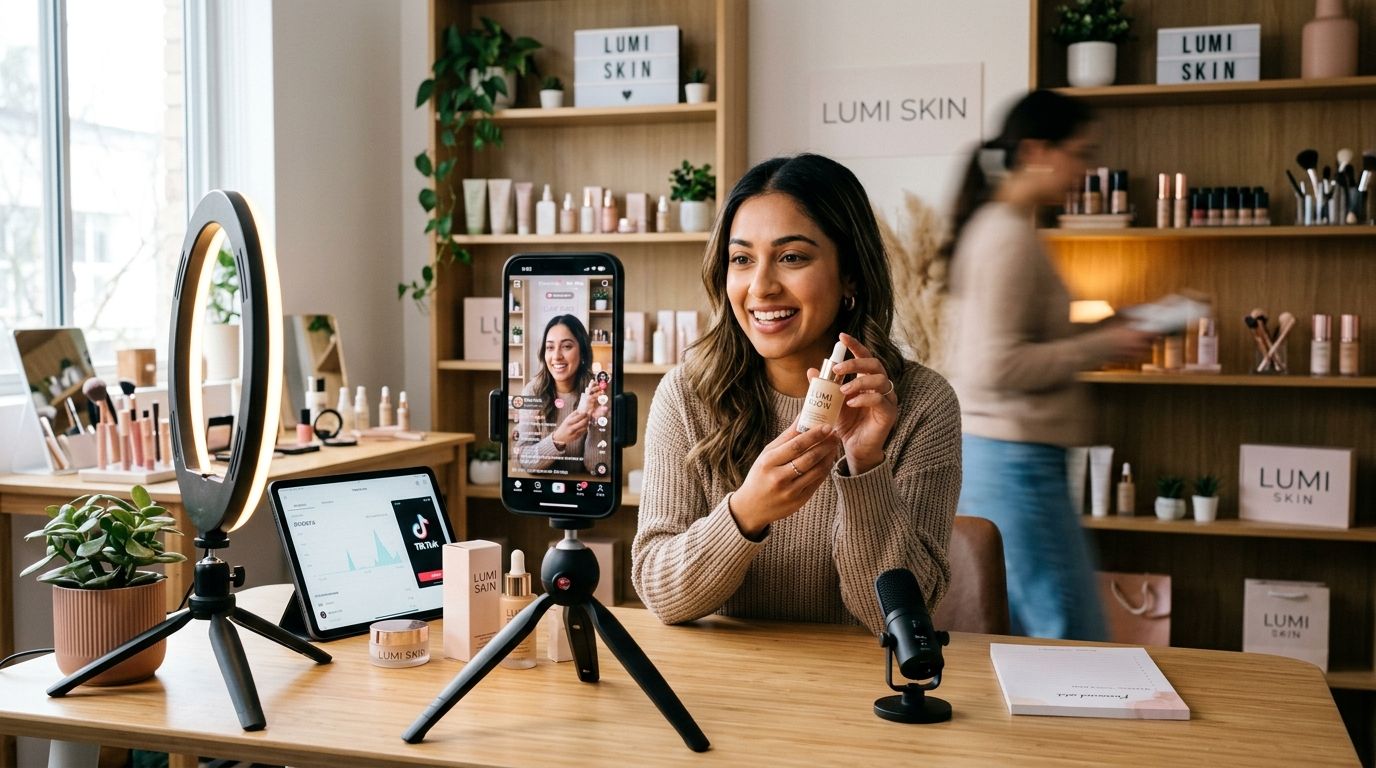
Skincare is a trust category before it's a content category. A shopper deciding on a $38 serum wants proof it works on skin like theirs, not a brand manifesto. That means the winning social strategy for skincare brands in 2026 leans on UGC seeding and creator proof far more than polished brand-produced video.
The brands still posting studio content three times a week and wondering why conversion sits flat are optimizing for the wrong signal. Skincare buyers scroll past polish. They stop for someone who looks like they have the same skin concern.
Who this is for
This guide is for founders and marketing leads at DTC or emerging skincare brands — roughly $500K to $15M in revenue — who are running social in-house or through a freelancer and hitting a ceiling. If your Instagram grid looks great but your paid social CAC is climbing and organic reach is flat, this is your read. If you're a prestige brand already running a full creator program, skip to the comparison table.
What to look for in social media marketing for skincare brands
Proof-first content over polish-first content
Skincare converts on evidence: before/after, texture close-ups, routine walkthroughs. A brand that spends its budget on cinematic product shots and skips proof content is optimizing for aesthetics a skincare buyer doesn't actually shop on.
Creator diversity across skin types and tones
One creator profile can't carry a skincare line. Buyers filter for people who share their skin type, tone, and concern — acne-prone, mature, sensitive — so a program built around three lookalike creators caps its own reach.
A seeding cadence, not a one-off gifting spree
Sending 200 PR boxes once a quarter produces a spike and nothing else. A monthly seeding cadence of 8-12 creators compounds — the content library grows every 30 days instead of decaying after one launch week.
Paid amplification of organic winners
Organic content that performs is the cheapest ad you'll ever run. Skincare brands that route their top 10% organic posts into paid spend consistently beat brands running cold-audience creative from scratch.
Ingredient education tied to a routine, not a lecture
Citing niacinamide percentages means nothing without a use case. Education content works when it's framed as when to use this, not a chemistry lesson — that's why content marketing has to sit upstream of social, feeding it proof points instead of jargon.
A retention loop, not just a discovery loop
Social that only chases new followers ignores the highest-margin audience: people who already bought. Community content, replenishment reminders, and routine-building series keep existing customers engaged past the first purchase.
Get a social strategy audit
See where your skincare brand's social spend is leaking before your next launch.
Top channel plays for skincare brands in 2026
UGC-led paid social — the workhorse. Run 8-12 seeded creators a month and push the top-performing 3-4 pieces into paid within two weeks of posting. This is the highest-leverage play for skincare in 2026 because it solves proof and reach at once. Buy.
Influencer partnerships at the micro tier — the underrated play. Creators in the 10K-100K range consistently drive better skincare conversion than mega-influencers because their audience trusts the recommendation as a peer, not an ad. Structure partnerships around a 3-month minimum so the content compounds instead of resetting each time. See how influencer marketing for emerging beauty brands structures this. Buy.
Affiliate-driven social — the wildcard. Pairing affiliate commissions with creator social posts turns every piece of content into a trackable revenue channel instead of a brand-awareness guess. Skincare brands running this at a 15-20% commission rate on new-customer orders typically see the program pay for itself inside the first quarter. Review affiliate marketing for skincare brands before setting commission structure. Consider.
Paid social on cold creative alone — the trap. Running cold-audience paid campaigns without organic-tested creative burns budget fast in a category this crowded. If paid spend isn't sourced from proven organic winners, cut it back until paid media is rebuilt around what's already working. Hold.
Brand-account-only posting — the dead weight. A feed run solely from the brand handle, with no creator or UGC mix, plateaus fast in skincare. It reads as an ad, not proof, and buyers scroll past it. Skip.
What to avoid
- Chasing follower count as a KPI. A skincare brand with 40,000 followers and a 0.8% engagement rate is worse off than one with 6,000 followers and an active comment section asking about restocks.
- Ingredient-heavy captions with no routine context. Listing actives without saying when or how to use them reads as a label, not content.
- One-time influencer gifting with no follow-up. A single unboxing post from a creator you never work with again wastes the relationship-building cost of outreach.
Verdict comparison
| Channel play | Best for | Minimum cadence | Verdict |
|---|---|---|---|
| UGC-led paid social | Brands with an active seeding pipeline | 8-12 creators/month | Buy |
| Micro-influencer partnerships | Brands under $10M building trust | 3-month minimum terms | Buy |
| Affiliate-driven social | Brands with tracked checkout attribution | 15-20% commission | Consider |
| Cold-creative paid social | Nobody, without organic testing first | N/A | Hold |
| Brand-account-only posting | No one at scale in 2026 | N/A | Skip |
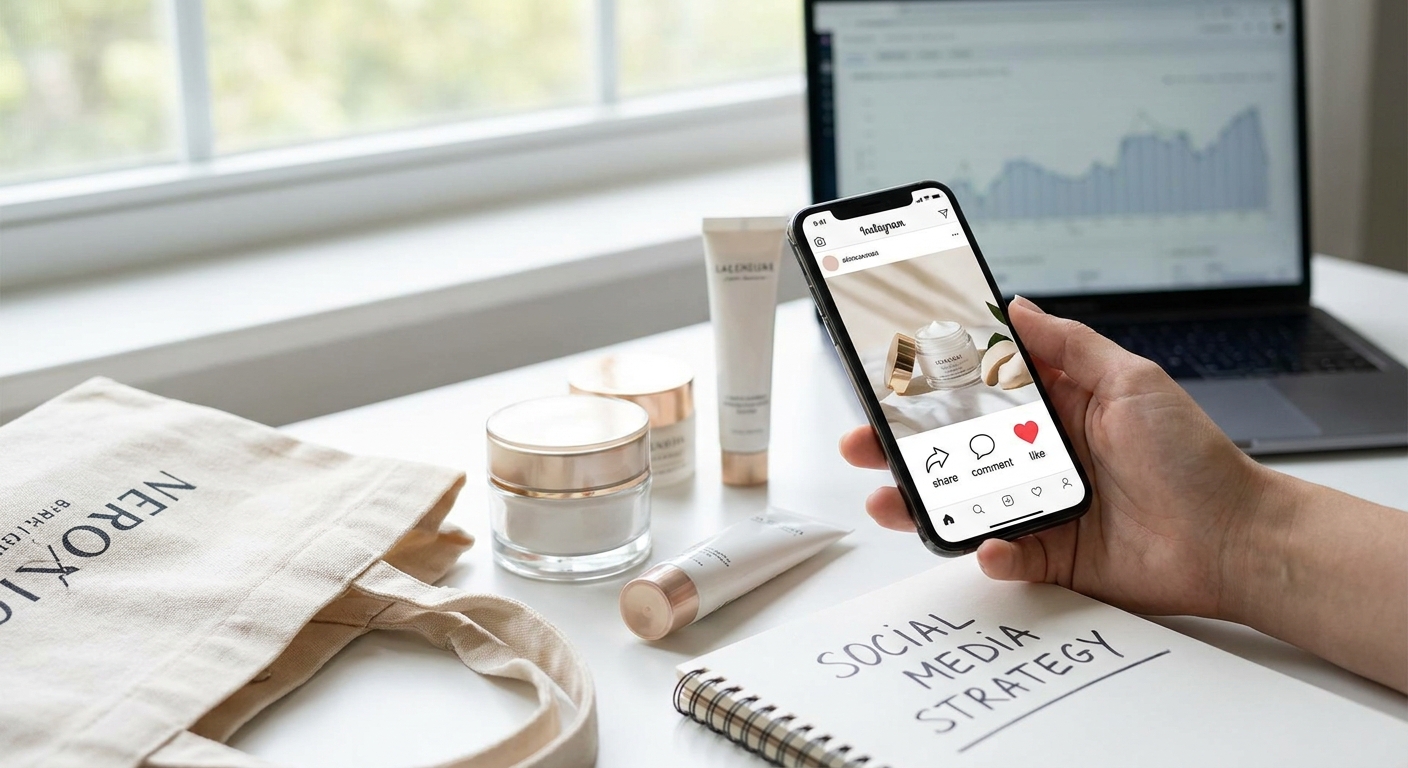
Running this mix well depends on the content upstream of it. Skincare brands that treat SEO and social as separate departments end up with duplicated creative and no shared proof library — the two should feed the same content bank.
FAQ
What's the best social platform for skincare brands in 2026?
TikTok and Instagram Reels drive the most skincare discovery in 2026, with TikTok favoring routine and proof content and Instagram favoring saved carousels and community. Most skincare brands run both rather than picking one.
How much should a skincare brand spend on social media marketing?
Budget allocation depends on revenue stage, but skincare brands under $10M typically route the largest share into creator seeding and paid amplification of organic winners rather than brand-produced content. Spend follows what's already converting, not a fixed percentage rule.
Is influencer marketing better than paid ads for skincare?
They're not competitors — influencer content becomes the creative that paid ads amplify. Running paid spend on influencer or UGC content consistently outperforms brand-shot creative for skincare because it carries built-in social proof.
How often should a skincare brand post on social media?
A monthly cadence of 8-12 seeded creator pieces, split across organic posting and paid testing, outperforms sporadic high-volume posting. Consistency in the seeding pipeline matters more than daily posting frequency.
Do skincare brands need a dedicated content strategy separate from social?
Yes. Content marketing should generate the education and proof points that social then distributes — without that upstream content engine, social teams end up producing thin, repetitive posts.
What content format converts best for skincare on social?
Routine walkthroughs and before/after formats convert best in 2026 because they show real use rather than describing ingredients. Pure product shots or lifestyle imagery without a usage context underperform.
Should skincare brands work with mega-influencers or micro-influencers?
Micro-influencers in the 10K-100K follower range typically drive stronger skincare conversion because their recommendations read as peer advice. Mega-influencer partnerships work better for pure awareness plays, not direct conversion.
How long does it take to see results from skincare social media marketing?
A seeded creator and paid amplification program typically shows measurable movement within 60-90 days once the content pipeline is running at a consistent monthly cadence. Slower results usually trace back to inconsistent seeding, not the channel itself.
One last thing
The highest-converting skincare content format in 2026 still isn't the ingredient explainer brands keep producing — it's the routine walkthrough with a visible timestamp. Buyers want to see day 1, day 14, day 30, not a lab breakdown. Brands that reorient their content calendar around that single format before adding anything else tend to see the fastest lift in social-attributed conversion.