Getting a beauty brand onto Target's shelves in 2026 comes down to three entry paths — Target Plus marketplace, a direct wholesale account, or a distributor/broker relationship — and picking the wrong one wastes a year of buyer outreach. Target Plus is the fastest door in; a direct wholesale account gives you the most control and margin but takes the longest buyer courtship.
- Target Plus marketplace is the fastest way to launch a beauty brand into Target in 2026 — no buyer meeting required.
- Direct wholesale accounts take the longest but give you shelf placement and better margins.
- Retail buying teams plan assortment 12 to 18 months ahead of shelf date, so outreach timing matters as much as the pitch.
- DTC sales velocity and a clean brand story carry more weight with Target's beauty buyers than a polished deck alone.
- A distributor or broker route trades margin for speed when a brand has no retail sales history.
Why this matters
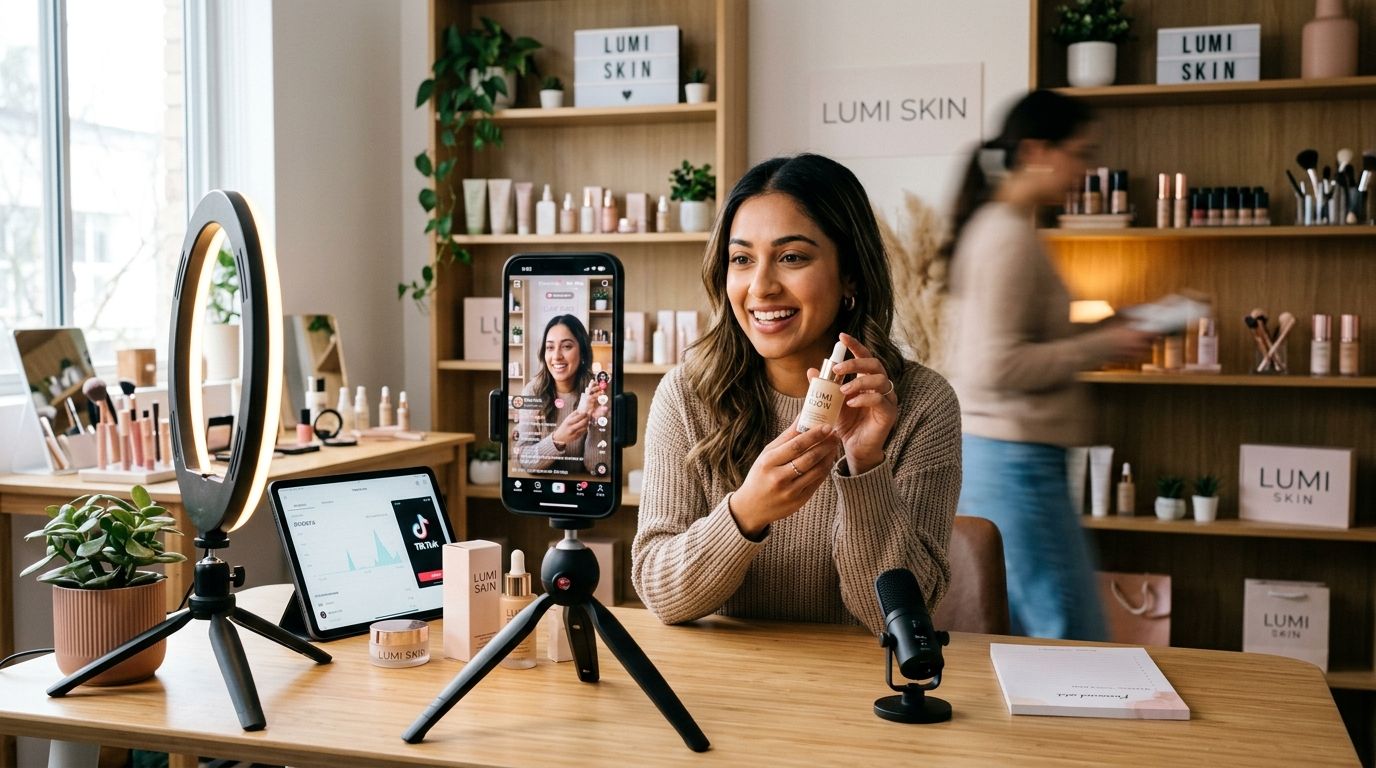
Target's beauty aisle is one of the most competitive shelf sets in mass retail, and most indie brands approach the buyer relationship backwards — pitching before they have the sales data, packaging compliance, or fulfillment infrastructure to support the account. The brands that get placed are the ones that build DTC traction first and treat the Target pitch as the second act, not the first. An omnichannel growth strategy that already proves sell-through on your own site and on Amazon is the strongest leverage you'll carry into a buyer room in 2026.
How do you launch a beauty brand into Target?
The process runs in a consistent order regardless of which entry path you choose:
- Build DTC and Amazon sales history first. Buyers want proof of demand before they commit shelf space — 6 to 12 months of consistent sell-through is the baseline most brands need.
- Get retail-ready operationally. UPC/GS1 barcodes, compliant packaging, EDI capability, and case-pack logistics all need to exist before a buyer conversation goes anywhere.
- Choose your entry path. Target Plus marketplace, a direct wholesale account, or a distributor/broker relationship — each has a different timeline and margin structure.
- Build the pitch materials. A wholesale sell sheet, brand story, and category positioning that shows exactly where you sit on the shelf relative to the brands already there.
- Pitch and negotiate terms. Buyer meetings, sample review, then margin, marketing support, and fulfillment terms.
- Support the launch with marketing. Retail placement without a coordinated PR, paid, and social push around the launch date leaves velocity on the table.
Comparing the three entry paths
| Entry path | Speed | Margin | Best for |
|---|---|---|---|
| Target Plus marketplace | Fastest — no buyer meeting required | Lower than direct wholesale | Brands with proven DTC traction but no buyer relationships yet |
| Direct wholesale account | Slowest — buyer cycles run 12-18 months | Highest, with co-op marketing access | Brands with 6-12+ months of sales data and retail-ready ops |
| Distributor or broker | Moderate | Reduced — the broker takes a cut | Brands that need someone else's foot in the door |
Verdict: Target Plus wins on speed to shelf, direct wholesale wins on long-term margin and brand control.
Target Plus: the marketplace entry
Target Plus lets approved third-party sellers list products on Target.com without going through the traditional buyer pitch. It is application-based, so no wholesale buyer relationship is needed to start. The tradeoff: you are not on physical shelves, and the margin structure differs from a direct account.
Best for: brands with strong DTC and Amazon sell-through that want a Target footprint in 2026 before they have earned a buyer meeting. Skip it if physical shelf presence is the actual goal — a Target Plus listing does not convert into in-store placement automatically.
Direct wholesale account: the buyer pitch
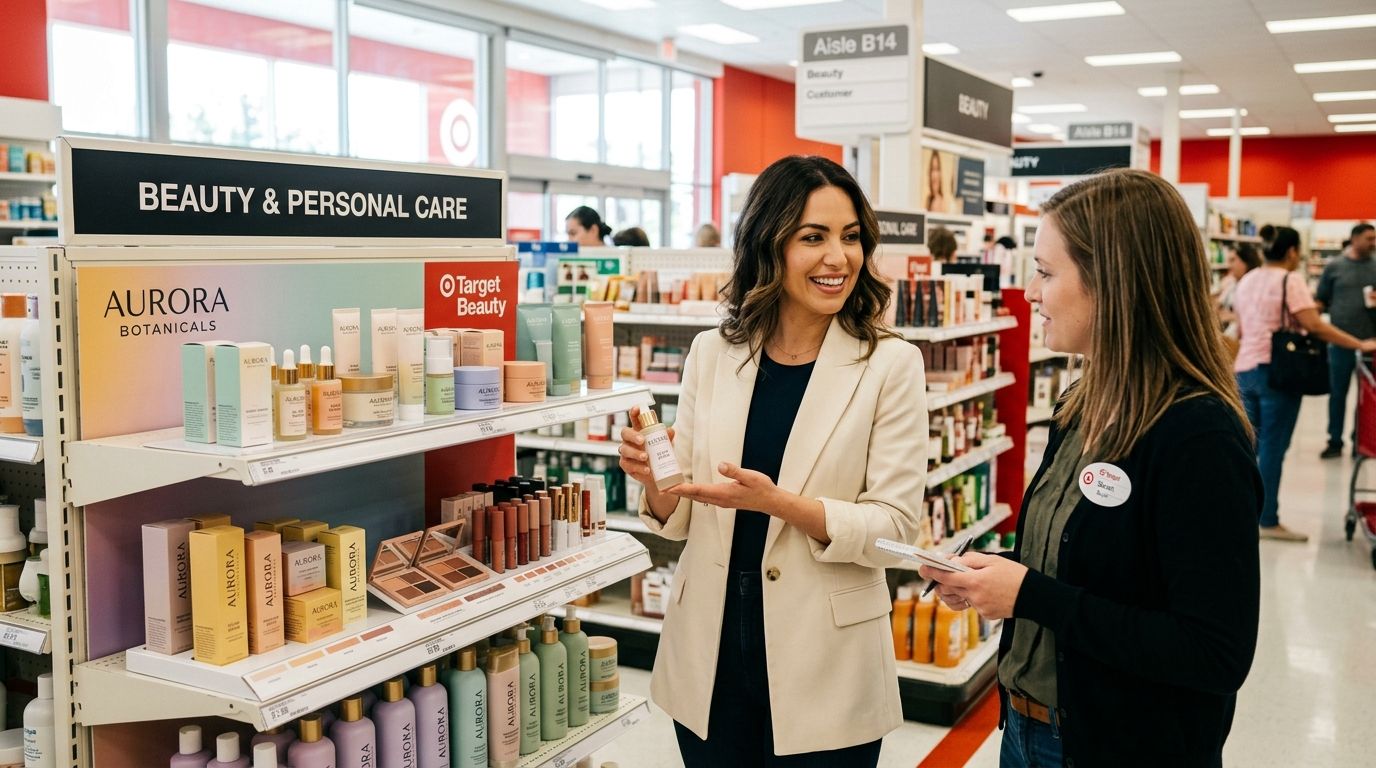
Here a category buyer reviews your brand, your sales data, and your packaging, then negotiates a purchase order directly with your team. It is the slowest route into Target because buying teams work on long lead times, and the only route that puts you on physical shelves with full margin control.
A wholesale sell sheet built for a beauty brand makes or breaks this pitch — buyers decide on the first page whether your brand fills a category gap. Best for: brands with 6 to 12 months of consistent sales history and retail-compliant packaging. Wait on this path if the operational infrastructure to fulfill a purchase order at scale is not built yet.
Distributor and broker route: trading margin for speed
A distributor or broker already has relationships with Target's buying teams and can get your brand in front of a category buyer faster than cold outreach. The cost is margin — brokers take a cut of wholesale revenue for the introduction and ongoing account management.
Best for: brands with zero retail relationships that need a faster path than building buyer rapport from scratch. Hold if your founder or sales lead already has buyer connections — paying a broker fee for a relationship you can build yourself is wasted spend.
Why Target beauty launches vary
Not every brand moves through this at the same speed. The variables that change your 2026 timeline and your odds:
- DTC sales velocity — buyers want consistent month-over-month sell-through, not a single viral spike
- Category fit — Target's beauty assortment has defined gaps by segment (clean beauty, men's grooming, K-beauty), and your pitch has to map to an open slot
- Packaging and compliance readiness — missing UPC/GS1 codes or non-compliant labeling stalls a pitch before it starts
- Existing retail presence — brands already in Ulta or Sephora have an easier buyer conversation than first-time wholesale brands
- Brand story and PR momentum — press coverage and founder narrative now sit alongside sales data in buyer evaluation
- Assortment cycle timing — pitching six months before a category reset is a different conversation than pitching two months before
Related questions
How long does it take to get into Target?
Direct wholesale accounts move on 12 to 18 month buyer cycles because Target's category teams plan assortment resets that far ahead. Target Plus applications move considerably faster since they need no buyer meeting or reset alignment.
Does Target require a broker?
No — Target does not require a broker, though a distributor or broker relationship shortens the path for brands with no buyer connections. Brands with strong DTC traction and a founder who can build buyer relationships directly often skip the fee entirely.
Is Target Plus easier than a direct wholesale deal?
Target Plus is easier to access because it is application-based rather than pitch-based, but it does not deliver physical shelf placement. Treat it as a stepping stone in 2026, not the end goal.
What sales data do Target buyers want before a meeting?
Target's beauty buyers want consistent DTC and Amazon sell-through across 6 to 12 months, not one promotional spike. A clean trend line matters more than peak revenue in any single month.
Pitch materials carry as much weight as the numbers. Brands that walk into a buyer meeting without a category-specific sell sheet or a plan for negotiating retail terms lose the room early, however strong the product is.
Build your Target launch strategy
Omnichannel growth support for beauty brands entering mass retail.
FAQ
How do you launch a beauty brand into Target in 2026?
Build DTC and Amazon sales history first, get packaging and UPC compliance in order, then choose between Target Plus marketplace, a direct wholesale account, or a distributor route. Target Plus moves fastest; direct wholesale gives the most margin and shelf control.
Is Target Plus the same as being sold in Target stores?
No. Target Plus is a third-party marketplace on Target.com and does not place your product on physical shelves. A direct wholesale account is required for in-store placement.
How much sales history does a beauty brand need before pitching Target?
Most Target beauty buyers want 6 to 12 months of consistent DTC and Amazon sell-through before taking a pitch seriously. A single strong month without a trend line rarely moves a buyer.
Do you need a broker to sell to Target?
No, a broker is not required, but distributor and broker relationships speed up buyer access for brands with no retail connections. Brands with founder-led buyer relationships often skip this route.
How long do Target buyer cycles take?
Target category buying teams typically plan assortment resets 12 to 18 months ahead of the shelf date, which sets the realistic timeline for a direct wholesale pitch. Target Plus applications move faster.
What packaging requirements does Target have for beauty brands?
Target requires UPC/GS1 barcodes, compliant ingredient and safety labeling, and case-pack specifications that match its fulfillment system. Non-compliant packaging is one of the most common reasons a pitch stalls.
Is it easier to launch into Target or Sephora?
The category fit differs more than the difficulty. Target skews toward mass-accessible pricing and broad category gaps, while Sephora buyers weigh prestige positioning and brand story more heavily.
Does Target favor brands with existing retail placement?
Yes. Brands already stocked in comparable retailers like Ulta or Sephora have an easier buyer conversation because it de-risks the sell-through question. First-time wholesale brands need stronger DTC data to compensate.
One last thing
Most beauty brands spend months polishing the pitch deck and almost no time building the sales trend line that actually earns a buyer's attention. The deck closes the meeting; the DTC sell-through data is what gets you the meeting. Fix the order of operations before you fix the slides.