Wholesale marketing for beauty brands is a different discipline than DTC growth: you're not just selling a product, you're selling a shelf-ready story to buyers at Sephora, Ulta, Credo, Nordstrom, or regional specialty retailers, then supporting that story with press, sampling, and omnichannel content once it lands on shelf.
- Wholesale marketing for beauty brands wins on retail-ready positioning, not DTC ad creative repurposed for buyers.
- PR and trade show presence carry more weight with retail buyers in 2026 than paid social ever will.
- Omnichannel marketing for prestige skincare brands is the model to study if you're managing DTC and wholesale at once.
- Skip strategies built only for e-commerce metrics — sell-through data is what keeps you on shelf in 2026.
Why this matters
A retail buyer doesn't care about your return on ad spend. They care whether your brand moves units off a shelf next to 40 competitors, and whether your marketing machine can drive traffic into their stores. Beauty brands that treat wholesale as an afterthought to their DTC engine lose shelf space within one or two reset cycles in 2026 because the buyer sees flat sell-through and no supporting press.
If you're deciding how to staff or brief this, start with how to choose a marketing agency for your beauty brand — wholesale requires a different vendor mix than a pure DTC engine, and getting that wrong costs you a planogram cycle.
Who this is for
This guide is for beauty brand founders and marketing leads who've either landed a retail account or are actively pitching one, and now need a marketing plan that supports buyers, not just consumers. If you're running a $2M-$15M DTC brand negotiating your first Ulta or Sephora door count for 2026, or you're already on shelf and fighting to keep it past the next reset, this is your playbook.
What to look for in wholesale marketing for beauty brands
Retail-ready brand story
Your brand story has to work on a shelf card, not just an Instagram caption. Buyers at Sephora and Ulta evaluate positioning the same way they evaluate packaging: does it stand out in a planogram photo, and can a store associate repeat your pitch in one sentence.
Press and trade timing
Wholesale marketing for beauty brands runs on a retail calendar, not a launch-day calendar. Press placements and trade show presence need to land ahead of planogram resets — most major retailers reset shelves twice a year — so your PR lead time has to be planned months out, not weeks.
Omnichannel consistency across DTC and wholesale
A buyer will check your Instagram, your reviews, and your site before a reset meeting. If your DTC content and your wholesale pitch tell two different stories, you lose credibility fast — the brands that keep doors are the ones running one coherent story across every channel.
Sell-through reporting
Buyers renew based on sell-through, not sentiment. Marketing that can't tie back to units moved per door is marketing a buyer will eventually cut, no matter how good the creative looks.
Sampling and UGC that drives in-store velocity
Sampling programs and user-generated content do more to move wholesale velocity than a paid media budget aimed purely at DTC conversion. Retail buyers ask for proof that consumers are already talking about you before they'll fight for more shelf space.
Budget split across channels
A brand splitting 100% of budget into DTC paid social has nothing left to fund the PR, events, and content that actually support wholesale accounts. The budget conversation has to happen before the retail deal, not after.
Top picks: where to put the budget first
1. Trade shows and launch events — the handshake channel
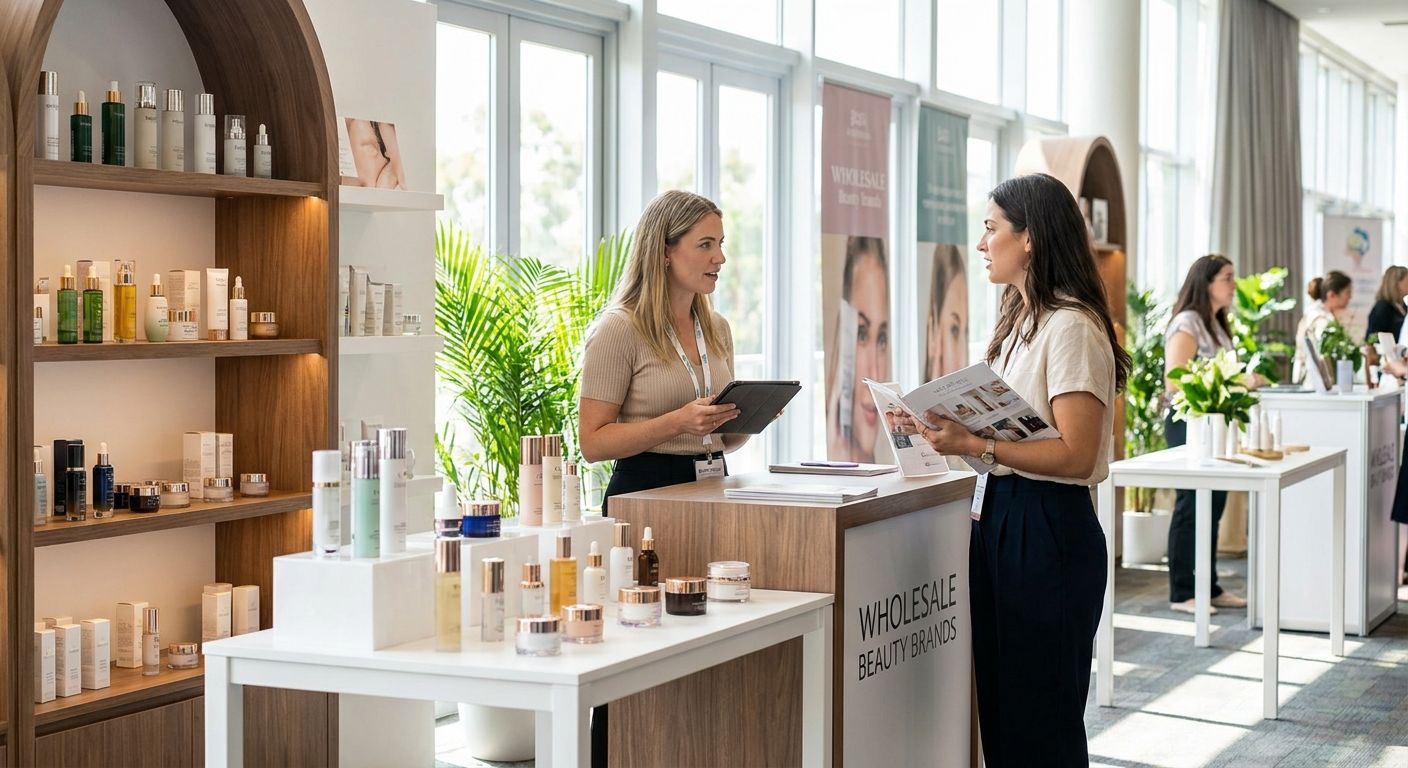
One spec that matters: buyer relationships in beauty are still built face-to-face, at shows like Cosmoprof or through direct retailer events, not through a media plan. Event presence gives buyers something a deck can't: a physical read on your brand, your team, and your product in hand ahead of the 2026 buying cycles.
Event marketing for beauty brand launches covers how to structure this without burning the whole quarter's budget on a booth. Verdict: Priority.
2. PR and press placement — the credibility multiplier
A buyer meeting goes differently when you can point to earned press instead of just a deck of projected numbers. National press cycles typically need 60 to 90 days of lead time ahead of ship date, which means PR planning has to start well before your retail launch date, not after.
PR agency for beauty brands is the playbook for building that pipeline instead of chasing it reactively. Verdict: Priority.
3. Omnichannel systems — the scale engine
Brands that hold shelf space past their first reset are almost always running DTC and wholesale off the same content and data engine, not two separate teams working from different briefs. That consistency is what makes a buyer's renewal decision easy in 2026.
Omnichannel marketing for prestige skincare brands breaks down what that engine looks like at the prestige tier. Verdict: Consider.
What to avoid
- Treating trade show swag as the whole strategy. A booth with no follow-up press or content plan gets forgotten by the buyer within a week.
- Running unedited DTC ad creative as wholesale collateral. Buyers and store associates need a different pitch than a consumer scrolling Instagram — recycled creative reads as lazy in a buyer meeting.
- Skipping the post-launch sell-through review. Brands that don't report back on units moved per door in the first 90 days give the buyer no reason to expand distribution at the next reset.
Verdict comparison table
| Criterion | Why it matters for wholesale | Verdict |
|---|---|---|
| Retail-ready brand story | Shelf and planogram decisions happen in seconds | Must-have |
| Press and trade timing | Buyers reset shelves on a fixed calendar, twice a year | Must-have |
| Omnichannel consistency | One story across DTC and retail builds buyer trust | High priority |
| Sell-through reporting | Renewal decisions are made on units moved, not sentiment | Must-have |
| Sampling and UGC | Drives in-store velocity buyers can point to | High priority |
| Budget split across channels | Funds the PR and events DTC budgets usually skip | Medium priority |
Build your 2026 wholesale plan
Get an omnichannel strategy built for retail buyers, not just DTC metrics.
FAQ
What is wholesale marketing for beauty brands?
Wholesale marketing for beauty brands is the set of PR, trade, content, and reporting strategies aimed at retail buyers and in-store shoppers, distinct from DTC marketing aimed at online consumers. It has to prove sell-through, not just online conversion.
How is wholesale marketing different from DTC marketing for beauty brands?
DTC marketing optimizes for online conversion and repeat purchase, while wholesale marketing optimizes for buyer relationships, press credibility, and in-store sell-through. Beauty brands scaling into 2026 usually need both running off the same brand story.
How far ahead should PR start before a retail launch?
National press cycles typically need 60 to 90 days of lead time before a beauty brand's ship date to a retailer. Starting PR after the launch date means missing the coverage window buyers expect to see before a reset.
Do trade shows still matter for beauty brand wholesale marketing in 2026?
Yes, trade shows and launch events remain one of the few channels where buyer relationships get built face-to-face rather than through a deck. Beauty brands that skip event presence often lose the personal credibility that closes retail deals.
What data do retail buyers actually care about?
Retail buyers care about sell-through per door, not impressions or click-through rate. A wholesale marketing plan that can't report units moved per store loses leverage at the next planogram reset.
Can one marketing team run both DTC and wholesale for a beauty brand?
Yes, and it's the model that holds shelf space longest, since buyers check DTC channels before renewal meetings. Running two disconnected teams usually produces two different brand stories, which erodes buyer trust.
How much budget should go to wholesale-specific marketing?
There's no universal split, but brands that put 100% of budget into DTC paid social typically have nothing left for the PR, events, and sampling that support retail accounts. The split has to be planned before signing a retail deal, not after.
One last thing
The brands that keep shelf space past 2026's first reset cycle are rarely the ones with the biggest trade show booth — they're the ones who showed up to the buyer renewal meeting with a sell-through number and a press hit, in that order. Buyers renew on proof, not presence.