Launching a beauty brand into Walmart in 2026 comes down to two entry doors: Walmart Marketplace online, or a direct pitch to a Walmart merchandising buyer for physical shelf space. Whichever door you choose, your compliance file — UPC codes, EDI setup, product liability insurance, packaging that meets Walmart's specs — has to be buyer-ready before you apply, not after. Marketplace approval hinges on catalog readiness and sales history; a retail buyer meeting hinges on a sell sheet, retail math, and proof you can fulfill at scale across Walmart's 4,600-plus U.S. stores. Skip the compliance work and the product quality stops mattering.
- Walmart Marketplace is the faster 2026 entry point; retail shelf space requires a direct buyer pitch and a completed vendor packet.
- 12-digit UPC codes, EDI compliance, and product liability insurance are required before you apply, not negotiable afterward.
- Walmart runs 4,600+ U.S. stores across all 50 states, so a retail listing means fulfilling at a scale most indie beauty brands aren't built for on day one.
- A wholesale sell sheet with clean retail math (margin, MOQ, case pack) moves a buyer more than brand story does.
- DTC sales velocity and review volume from your own site and Amazon are the proof points a Walmart buyer actually checks.
Why this matters
Walmart isn't Sephora or Ulta — there's no beauty-specific buying team walking a trade show floor looking for the next indie darling. Walmart buyers move on volume, velocity, and margin math, and beauty is one category among thousands they manage. A brand that shows up to The Darl with a polished product and no distribution data gets a form rejection.
That's the gap most founders miss: the pitch isn't about the product, it's about proof the product already sells somewhere else, at a pace Walmart can model. 2026 buyers want DTC velocity data, Amazon rank history, and review counts before they'll touch a beauty SKU.
How to launch a beauty brand into Walmart
- Pick your entry path. Walmart Marketplace (self-serve online) or a direct buyer pitch for physical shelf space — they have different requirements and different timelines.
- Get compliance-ready. Register 12-digit UPC/GTIN codes through GS1 US, set up EDI (electronic data interchange) for order processing, and secure product liability insurance that meets Walmart's minimum coverage.
- Fix your packaging. Walmart's packaging playbook covers case pack sizes, labeling, and damage-resistance standards — noncompliant cartons get flagged at receiving before a single unit hits a shelf.
- Build a retail sell sheet. One page: SKU count, margin structure, case pack, MOQ, and the sales data that proves demand.
- Prove velocity before you pitch. Buyers check DTC sales trend, Amazon rank and review count, and repeat-purchase rate — build that history first.
- Apply. Marketplace applications run through Walmart's Seller Center; retail pitches typically start through RangeMe or a warm buyer introduction and move into a formal line review.
“If your compliance file isn't buyer-ready, the product doesn't matter.”
Path 1: Walmart Marketplace
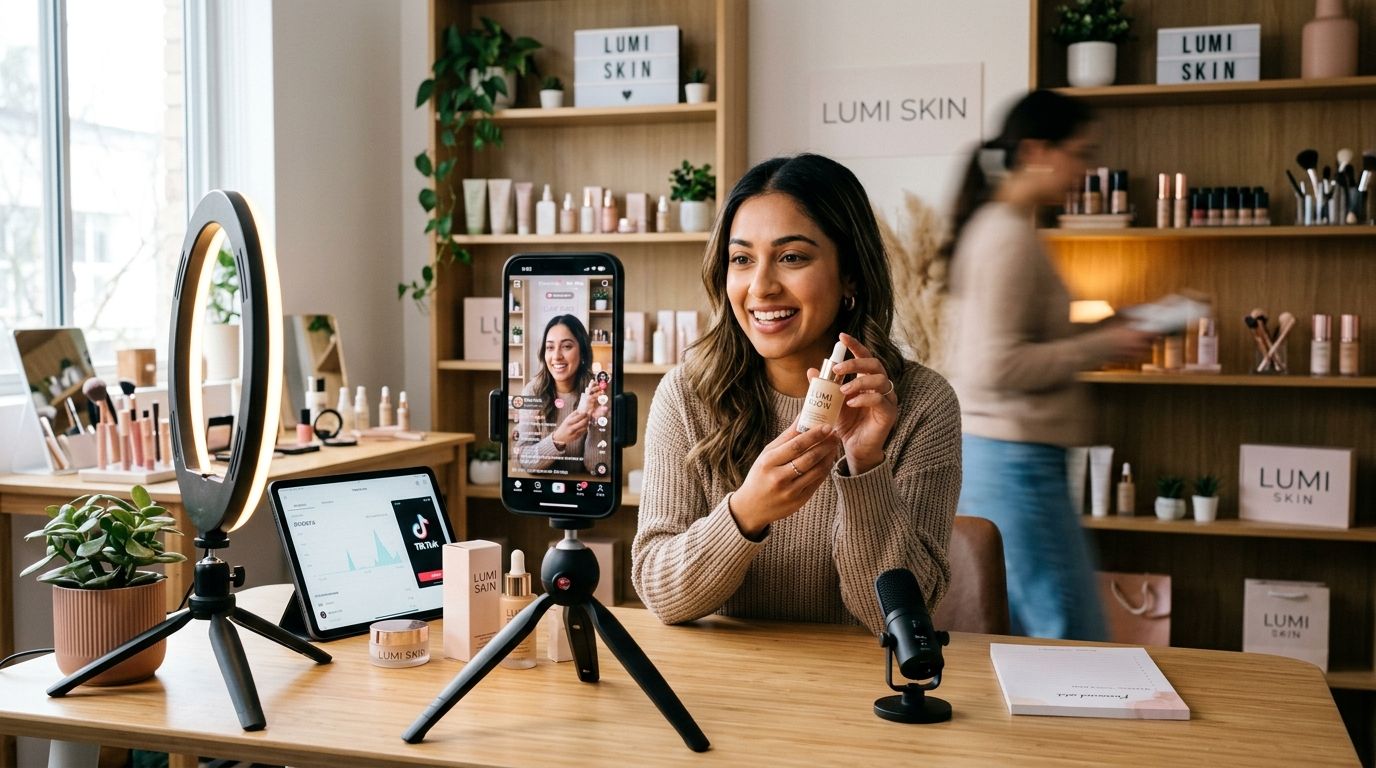
Walmart Marketplace is the online-only route — you list products through Walmart's Seller Center, ship inventory yourself or through Walmart Fulfillment Services, and compete for search placement on Walmart.com. It's the lower-friction path in 2026 because there's no buyer meeting to win; approval is largely a catalog and compliance review.
Best for: brands with an established DTC or Amazon sales history that want a fast digital shelf without a retail buyer relationship. Verdict: Start here.
Path 2: Walmart retail — pitching a buyer for shelf space
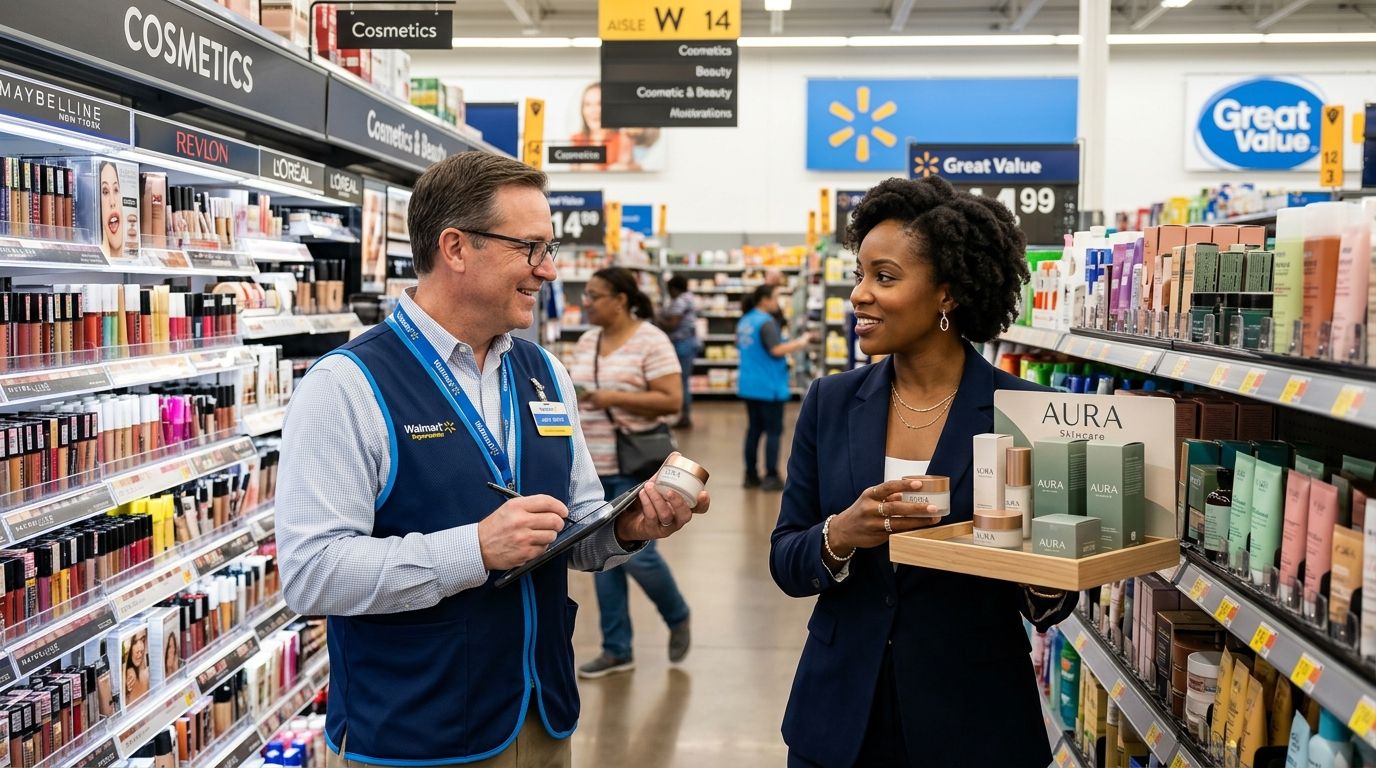
Getting into physical Walmart stores means a formal pitch to a merchandising buyer, usually during a category line review. Buyers evaluate the sell sheet, unit economics, and whether your brand fills a gap in the current plan-o-gram — not the founder story.
Best for: brands with proven velocity, a fulfillment operation that can handle case-pack volume across multiple stores, and margin room to support Walmart's retail pricing. Verdict: Build toward this — don't lead with it.
Why the Walmart timeline varies
- Category fit — beauty subcategories (skincare, haircare, cosmetics) get reviewed on different buyer calendars.
- Compliance gaps — a missing UPC registration or unfinished EDI setup stalls an application regardless of product quality.
- Sales velocity — thin DTC or Amazon sales history gives a buyer nothing to model demand against.
- Fulfillment readiness — case pack minimums and multi-store distribution require inventory depth most Series A-stage beauty brands haven't built yet.
- Retail math — margin that doesn't survive Walmart's pricing structure kills a pitch before the sell sheet gets a second look.
- Existing distribution — a brand already in Target or a regional grocery chain reads as lower-risk to a Walmart buyer.
Build the proof a Walmart buyer wants
Omnichannel sales data, reviews, and paid media history that make retail pitches land.
Do you need a broker to get into Walmart?
You don't need a broker to get into Walmart in 2026, but most first-time beauty brands use one to get a warm introduction to a buyer instead of cold-pitching through RangeMe. A broker earns a commission on sales once you're listed, so weigh that against the speed a warm intro buys you.
How long does it take to get a beauty brand into Walmart?
There's no fixed timeline Walmart publishes, and it varies by category calendar, how buyer-ready your compliance file is, and whether you're going Marketplace or retail. Marketplace listings can go live faster than a retail line review, since retail placement depends on Walmart's category reset schedule, which typically runs on an annual cycle.
Is Walmart Marketplace the same as being sold in Walmart stores?
No — Walmart Marketplace is an online-only listing on Walmart.com, while physical retail placement means your product sits on a shelf in one or more of Walmart's 4,600-plus U.S. stores. A brand can run both simultaneously, but they require separate applications and separate compliance reviews.
FAQ
What's the best way to launch a beauty brand into Walmart in 2026?
Start with Walmart Marketplace to build sales history and compliance proof, then pitch physical retail once you have DTC and Amazon velocity data to show a buyer. Skipping straight to a retail pitch without that data usually gets rejected.
Is Walmart Marketplace better than Amazon for a new beauty brand?
They serve different purposes — Amazon has deeper beauty search volume, while Walmart Marketplace offers less competition per SKU in 2026. Most beauty brands run both rather than choosing one.
How much inventory do you need to sell at Walmart?
Walmart requires case-pack minimums that vary by category, and retail placement across multiple stores multiplies the volume fast. Confirm case pack and MOQ requirements directly with your buyer or Marketplace category guidelines before committing inventory.
Do you need EDI to sell on Walmart Marketplace?
Yes, EDI (electronic data interchange) is required for order processing on both Walmart Marketplace and physical retail accounts. Most sellers use a third-party EDI provider rather than building the integration in-house.
Can an indie beauty brand get into Walmart without a broker?
Yes, indie beauty brands can apply directly through Walmart Marketplace's Seller Center or pitch retail buyers through RangeMe without a broker. A broker mainly speeds up the warm introduction, it isn't a requirement.
What insurance does Walmart require from beauty vendors?
Walmart requires product liability insurance that meets its minimum coverage threshold before approving a vendor, and the exact requirement is confirmed during the vendor agreement process. Check current requirements directly with Walmart's supplier portal since they're reviewed periodically.
Does Walmart require UPC codes for beauty products?
Yes, Walmart requires a registered 12-digit UPC or GTIN for every SKU through GS1 US before it can be listed. Products without valid barcodes get rejected at the catalog stage regardless of category.
How is pitching Walmart different from pitching Sephora or Ulta?
Walmart buyers evaluate volume, velocity, and margin math across a mass-market plan-o-gram, while Sephora and Ulta buyers weigh brand positioning and prestige fit more heavily. A sell sheet built for Sephora rarely converts a Walmart buyer without retail math front and center.
One last thing
Most beauty founders spend months polishing the pitch deck and skip the boring part — the EDI setup and UPC registration that actually get an application past the first review. Fix the compliance file before you touch the sell sheet; that order saves months in 2026.