Launching a beauty brand on Amazon in 2026 means competing against thousands of SKUs fighting for the same search terms — and winning requires a listing, review, and ad strategy built before you ever hit "publish."
- Amazon beauty listings need A+ Content and 7+ images before launch day, not after — Buy the prep, skip the rush.
- Review velocity in the first 30 days determines whether the algorithm surfaces or buries your ASIN in 2026.
- Sponsored Products spend should front-load at 15-20% of projected monthly revenue for the first 60 days.
- UGC seeding before launch fills the review gap Amazon's Vine program alone can't close.
Why this matters
Amazon isn't a side channel for beauty brands anymore — it's often the second-largest revenue line after DTC, and in 2026 the category keeps getting more crowded. Getting the listing infrastructure wrong in week one costs you the organic ranking window that's hardest to recover once competitors lock in review counts and Best Seller badges.
Brands that treat Amazon marketing for beauty brands as a set-and-forget listing lose to the ones that treat it as an ongoing acquisition channel — reviews, ads, and content working together from day one. The launch sequence matters more than the launch budget.
What you'll need
- Amazon Brand Registry approval — required for A+ Content, Sponsored Brands ads, and Amazon Storefront access
- UPC/GTIN codes for every SKU, plus ingredient and claims documentation for beauty category compliance
- 7-10 product images including lifestyle, ingredient callouts, and before/after where the claim supports it
- A launch budget — plan for 60-90 days of Sponsored Products spend before you evaluate profitability
- A review-generation plan — Vine enrollment plus outside seeding, since Vine alone rarely produces enough reviews fast
- 2-4 weeks of lead time between Brand Registry approval and your intended launch date
The steps
1. Lock your listing architecture before you list anything
Your title, bullet points, and backend search terms decide what Amazon's algorithm thinks your product is — get this wrong and you rank for the wrong queries for months. Front-load your primary keyword in the title within the first 80 characters, and write bullets that answer the actual objections a beauty shopper has (skin type fit, scent, cruelty-free status).
Common mistake: keyword-stuffing titles until they read like a spam block. Amazon's 2026 algorithm weighs conversion rate on the keywords you rank for, so a stuffed title that doesn't convert actively hurts you.
2. Build A+ Content that answers pre-purchase questions
A+ Content modules let Brand Registry-approved sellers add comparison charts, ingredient breakdowns, and lifestyle imagery below the fold — pages with A+ Content see measurably higher conversion than plain listings. For beauty specifically, this is where you handle skin-type matching and ingredient transparency that a bullet point can't.
Expected outcome: a listing that reads like a brand storefront, not a spec sheet. Common mistake: reusing DTC website copy verbatim instead of restructuring for Amazon's module format.
3. Seed reviews before day one, not after
Amazon Vine gets you up to 30 reviews from verified reviewers, but Vine alone won't hit the review count needed to win the buy box against established competitors. Run a parallel UGC seeding push — sending product to micro-creators and requesting honest Amazon reviews in exchange — so you're not launching with zero social proof.
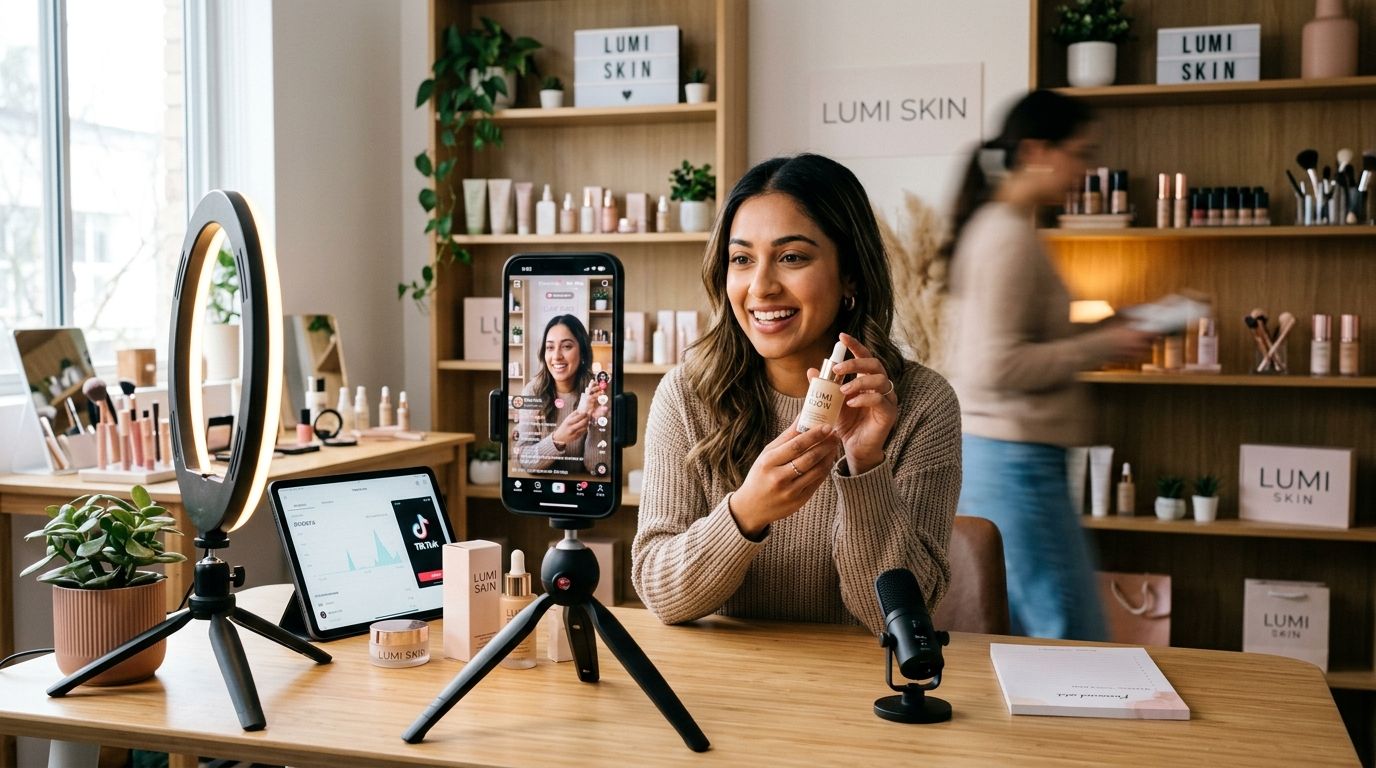
Brands that treat UGC seeding for beauty brands as a pre-launch requirement rather than a post-launch afterthought consistently outrank slower-moving competitors in the first 90 days.
4. Set Sponsored Products spend at launch-tier, not maintenance-tier
Front-load your ad budget at 15-20% of projected monthly revenue for the first 60 days — this is higher than steady-state spend, and it's intentional. New listings need aggressive impression share to build the sales history Amazon's organic algorithm rewards.
Common mistake: cutting Sponsored Products spend at week three because ACoS looks high. Early ACoS is almost always inflated while the algorithm is still learning your conversion rate — cutting spend here resets the learning period.
5. Layer in Sponsored Brands once Brand Registry clears
Sponsored Brands ads put your logo and a custom headline at the top of search results, which matters for beauty categories where shoppers browse by brand recognition as much as ingredient claims. Launch these in week two or three, once your organic listing has enough review volume to convert the traffic.
Expected outcome: incremental top-of-search visibility that Sponsored Products alone can't buy. Skipping this step leaves your brand invisible above the fold against competitors running both ad types.
6. Monitor inventory velocity against Amazon's IPI score
Amazon's Inventory Performance Index penalizes overstocking and stockouts alike — a bad IPI score in 2026 caps your storage limits right when a launch is gaining traction. Set reorder triggers at 30 days of stock remaining, not when you actually run out.
Common mistake: under-ordering initial inventory to conserve cash, then stocking out during the exact review-velocity window that determines long-term ranking.
7. Audit and iterate weekly for the first quarter
Check conversion rate, Sponsored Products ACoS, and review velocity every week for the first 90 days — beauty listings shift fast as competitors adjust pricing and new reviews land. A listing that converts at 8% in week one can drop to 4% by week six if a competitor undercuts price or drops a bigger review count.
Expected outcome: a listing that's still improving in month three, not one that plateaued at launch-week performance.
Need an Amazon launch built right the first time?
THE DARL builds omnichannel launches that connect Amazon, paid social, and email into one growth system.
Troubleshooting
- Listing isn't ranking after two weeks — check backend search terms for keyword gaps and confirm Sponsored Products spend is actually running at full daily budget.
- Conversion rate under 5% — your images likely aren't answering shopper objections; add ingredient callouts and before/after visuals if your claims support them.
- Reviews stuck under 10 after 30 days — Vine alone isn't enough; layer in outside UGC seeding immediately.
- ACoS above 40% after 60 days — normal in weeks one through four, a red flag if it hasn't trended down by week eight; audit keyword targeting for wasted spend on irrelevant search terms.
- IPI score dropping — you're either overstocked on slow SKUs or stocked out on fast movers; rebalance inventory allocation by SKU velocity, not evenly across the catalog.
- Buy Box losses to a competitor — check pricing parity across channels; Amazon penalizes listings priced higher than the brand's own DTC site.
Tools and resources
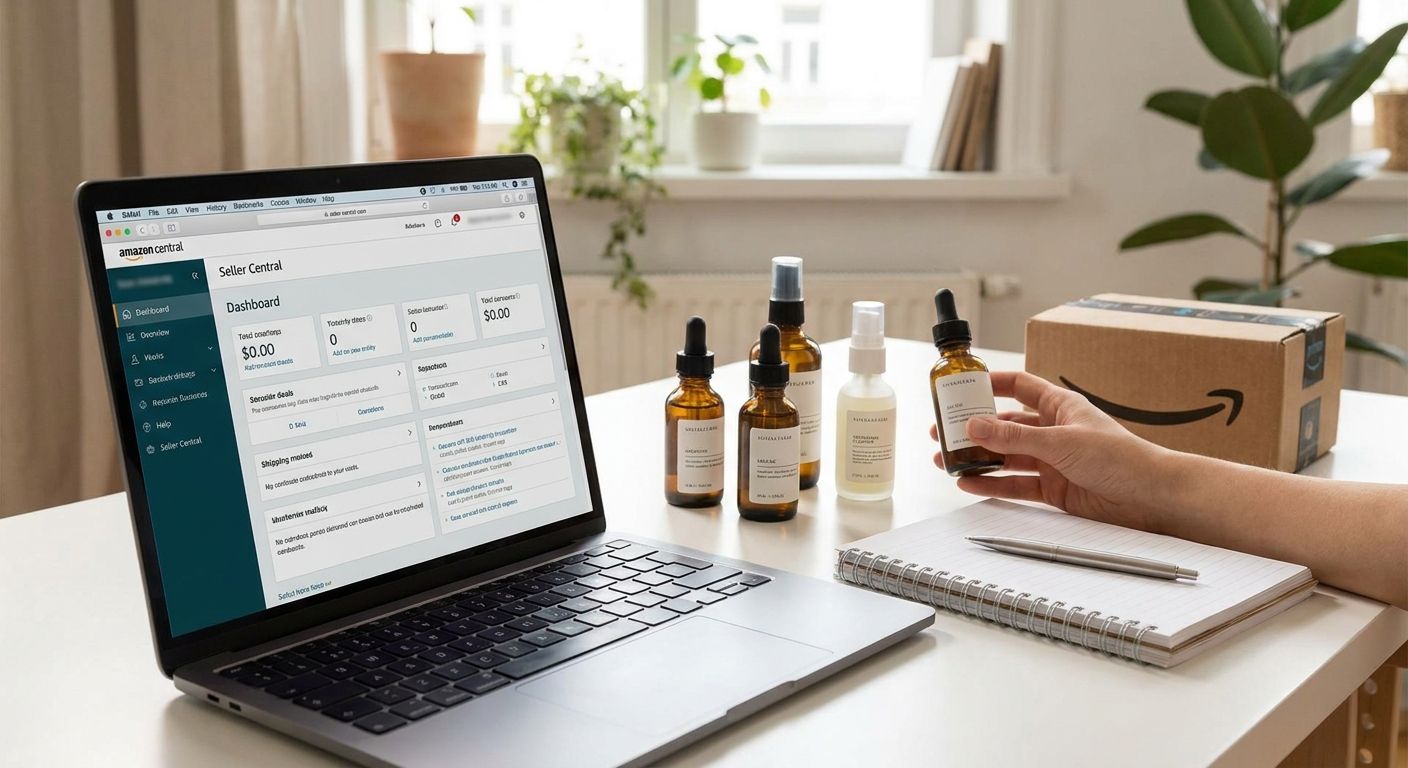
Amazon Brand Registry, Amazon Vine, and Amazon Advertising's Sponsored Products console handle the platform mechanics. For the strategy layer around the listing itself, amazon marketing for beauty brands covers the ad structure and review cadence that beauty listings specifically need, and amazon marketing for skincare brands breaks down category-specific compliance and claims handling for skincare SKUs.
Your DTC site still matters here — Amazon shoppers cross-reference brand websites before buying, so web design for beauty ecommerce brands covers the storefront experience that backs up an Amazon listing's credibility.
What to do next
Once the Amazon listing is stable, the same review-and-content infrastructure feeds every other channel — ugc seeding for beauty brands shows how to scale the same creator pipeline that built your Amazon reviews into TikTok and Instagram content. And if your ad spend needs a layer of automation across channels, ai powered marketing for beauty ecommerce brands covers where automation actually saves budget versus where it wastes it.
FAQ
How long does it take to launch a beauty brand on Amazon?
Plan for 4-6 weeks from Brand Registry application to live listing in 2026, including time for photography, A+ Content build, and compliance documentation. Rushing this window is the top reason listings launch with weak conversion rates.
Do I need Amazon Brand Registry to launch a beauty brand?
Yes — Brand Registry unlocks A+ Content, Sponsored Brands ads, and Amazon Storefront, all of which beauty listings need to compete on conversion. Without it you're limited to basic Sponsored Products ads and a bare listing.
How much should I budget for Amazon ads at launch?
Front-load Sponsored Products spend at 15-20% of projected monthly revenue for the first 60 days in 2026. This is higher than steady-state spend and is meant to buy the sales history the algorithm needs to rank you organically.
Is Amazon Vine enough to get initial reviews?
No — Vine typically produces up to 30 reviews, which isn't enough to compete against established beauty listings with hundreds of reviews. Pair it with outside UGC seeding to close the gap in the first 30-60 days.
What hurts Amazon rankings for new beauty listings the most?
Stockouts during the early review-velocity window and keyword-stuffed titles that tank conversion rate are the two most common rank killers in 2026. Both are preventable with inventory planning and disciplined copywriting before launch.
Should Amazon pricing match my DTC website?
Yes — Amazon can suppress the Buy Box on listings priced higher than the brand's own site, which kills conversion regardless of ad spend. Keep pricing at parity across every channel you sell through.
How many product images does an Amazon beauty listing need?
Plan for 7-10 images including lifestyle shots, ingredient callouts, and before/after visuals where claims support them. Listings under 5 images consistently convert lower in the beauty category.
When should Sponsored Brands ads start running?
Launch Sponsored Brands in week two or three, once organic reviews and conversion rate are strong enough to make the traffic profitable. Running it day one wastes budget on a listing that isn't ready to convert cold traffic yet.
One last thing
The brands that win Amazon beauty in 2026 aren't the ones with the biggest ad budget — they're the ones whose review velocity and DTC brand presence already did half the conversion work before a shopper ever clicked the listing. Build the ecosystem first, then let Amazon amplify it.