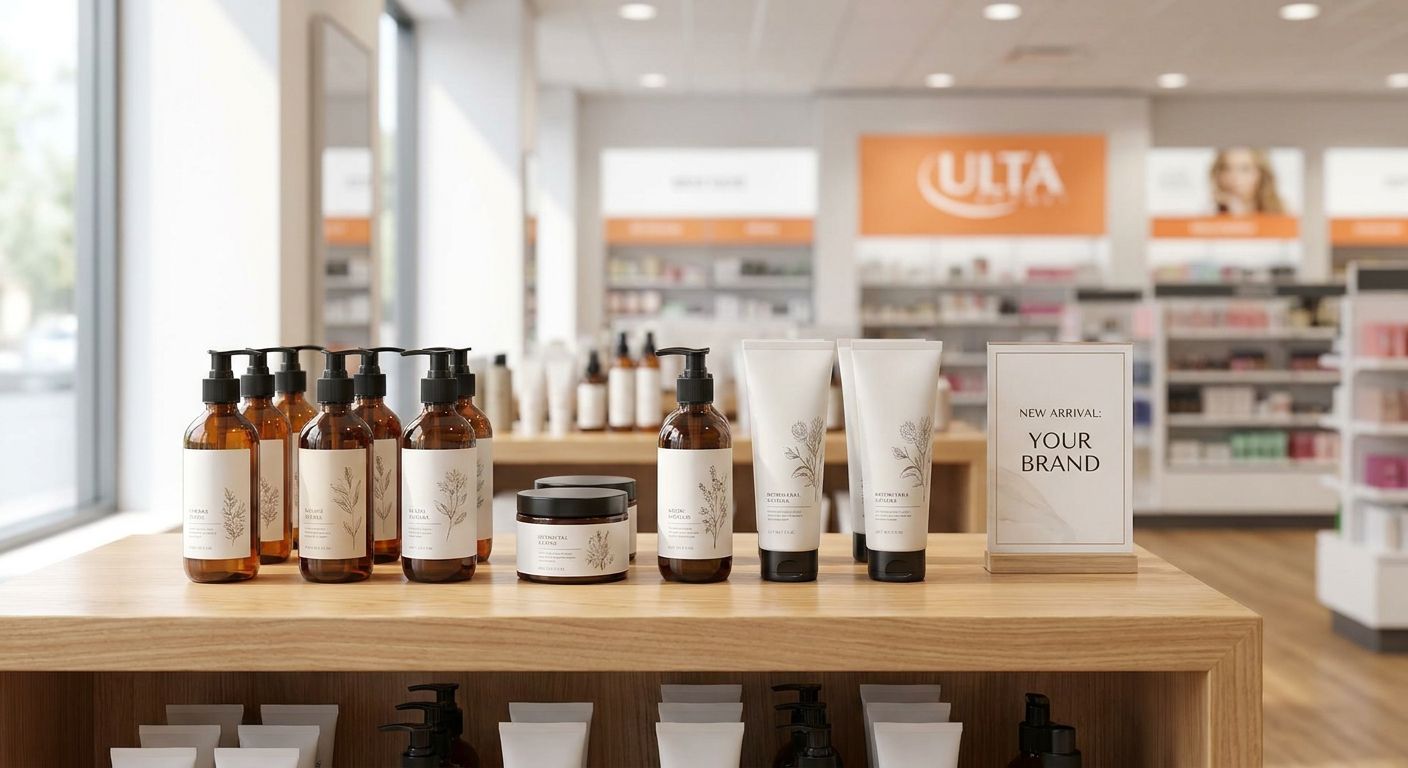
Getting a haircare brand onto Ulta's shelves in 2026 has nothing to do with luck and everything to do with sequencing: compliance, traction, press, and a buyer pitch that proves you'll move product, in that order.
- Ulta buyers want DTC sales velocity and press coverage before they'll take a meeting in 2026 — build both first.
- Wholesale margins run near 50% keystone, so price your line sheet backward from shelf price, not forward from cost.
- Brands with a content and PR engine already running close faster than brands pitching cold.
- Post-launch sell-through data decides reorders — plan the in-store marketing push before launch day, not after.
Why this matters
Ulta doesn't take pitches from brands with no proof of demand. The buyer's job is to protect shelf space that converts, and a haircare category that's already crowded with Olaplex, K18, and Amika means a new brand needs a reason to exist beyond "clean ingredients" or "founder story."
Brands that land distribution in 2026 typically walk in with DTC sales data, a press cadence that shows up in a Google search, and a positioning statement a buyer can repeat in one sentence. Figuring out how to launch a haircare brand into Ulta means building that proof stack before you ever fill out an application.
What you'll need
- UPC-coded, retail-ready packaging — barcodes, ingredient panels, and claims that meet FDA cosmetic labeling rules
- A line sheet with wholesale and MSRP pricing built around a roughly 50% keystone margin
- At least 6-12 months of DTC sales history showing repeat purchase and reorder rate
- Product liability insurance — most mass and specialty retailers require coverage in the $1M-$2M range before onboarding a vendor
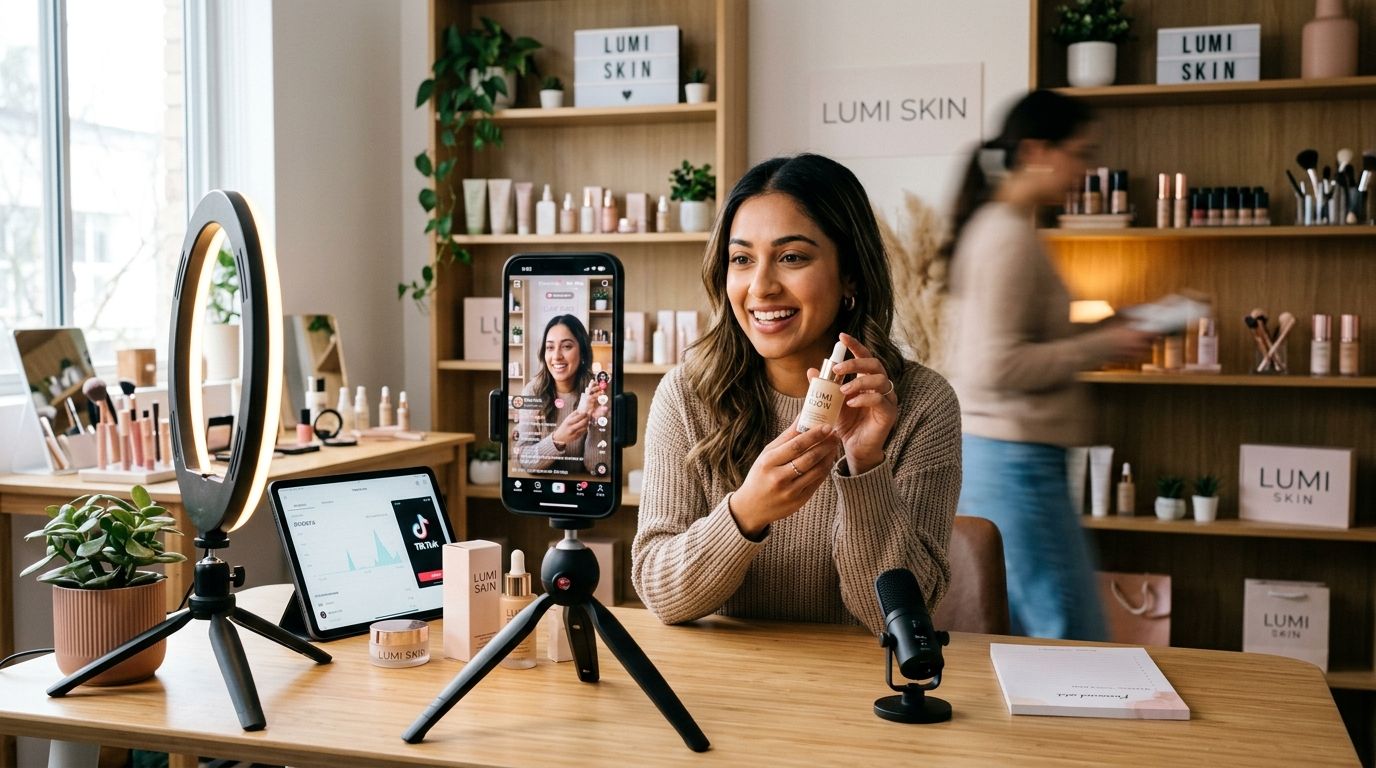
- A press and influencer footprint — earned coverage, editor relationships, or a documented content marketing engine that's been running for a stretch, not a one-off launch push
- A capitalization plan for inventory — Ulta orders in volume, and a brand that can't fulfill a reorder loses the shelf as fast as it got it
The steps
1. Audit your retail readiness before you pitch anything
This step exists to catch the disqualifiers before a buyer does. Retail compliance — UPCs, correct ingredient disclosure, claims substantiation — is a pass/fail filter, not a negotiation point.
Pull your packaging next to a category leader already on Ulta's shelf and check every regulatory line item side by side. Brands get rejected in 2026 for missing UPCs or unsubstantiated claims far more often than for weak formulas. Common mistake: treating compliance as a launch-week task instead of a pre-pitch requirement.
2. Build a wholesale-ready line sheet and margin structure
This step forces you to price the product the way a retailer prices it, not the way a DTC brand prices it. Ulta and most specialty retailers work off a keystone or near-keystone markup, meaning your wholesale price needs to sit around half of MSRP and still leave you a manufacturing margin that survives.
Model three SKUs at their retail price, back into wholesale at 50%, then subtract cost of goods to see if the math holds. If your margin collapses below 60% gross at wholesale, the formula or packaging cost needs to change before the pitch, not after the PO.
3. Prove DTC traction before you approach a buyer
This step is what separates a brand a buyer will meet with from one that gets a form-letter pass. Ulta buyers look for repeat purchase rate, average order value trending up, and a growth curve that isn't flat.
Pull six to twelve months of Shopify or DTC data: units sold, reorder rate, and channel mix. A haircare brand converting steadily on email and organic search reads as durable demand; a brand spiking only on paid ads reads as rented traffic. Lifecycle and email marketing built for haircare brands is one of the fastest ways to turn one-time buyers into the repeat-purchase data a buyer wants to see.
4. Build press and cultural relevance ahead of the pitch
This step gives the buyer a reason to believe the brand will drive foot traffic, not just sit on a shelf. A buyer searching your brand name in 2026 wants to find editorial coverage, not just your own Instagram.
Secure three to five earned placements — trade press, beauty editors, or a credible influencer wave — in the 60-90 days before outreach. A PR launch built for a beauty brand done right before the pitch, not during it, gives the buyer meeting a reason to happen at all. Common mistake: saving PR for the launch week after you've already secured the shelf — by then it's too late to influence the buyer's decision.
5. Find the right entry point into Ulta's buying process
This step is about getting in front of the right person instead of shouting into a general inbox. Ulta runs a supplier application process through its corporate site, and category buyers also source new brands from trade shows, referrals, and visible market traction.
Submit through the formal channel and, in parallel, work every warm connection — a distributor, a beauty accelerator, or an existing Ulta vendor who can make an introduction. Cold applications with no traction data attached rarely convert; applications backed by sales numbers and press links get a second look.
6. Nail the positioning in the buyer meeting
This step decides whether the meeting turns into a purchase order. A buyer sitting across from you has heard "clean," "gentle," and "founder-led" a hundred times this year — the pitch needs a specific whitespace claim backed by a number.
Lead with the one data point that proves demand: reorder rate, review volume, or search interest for your category. State the whitespace in one sentence — the gap in the shelf your brand fills that Olaplex, K18, or Amika don't. Verdict: brands that walk in with a number and a one-sentence differentiator close meetings faster than brands that walk in with a deck.
7. Plan the launch marketing before the shelf date, not after
This step protects the shelf space you just won. A slow first 90 days on shelf is the fastest way to lose distribution, and Ulta tracks sell-through closely.
Build the launch calendar 6-8 weeks out: in-store awareness content, a coordinated social and email push, and a PR moment timed to the shelf date. Coordinating paid social with the retail calendar drives the foot traffic and search volume that convert a listing into reorders.
8. Track sell-through and push for reorder within the first cycle
This step is where the brand either earns a second order or gets delisted. Ulta reviews sell-through data on a set cycle, and a brand that underperforms in the first window rarely gets a second chance in the same door count.
Monitor weekly sell-through against the category average for your price tier, and flag underperforming doors early enough to redirect marketing spend toward them. Expected outcome: a brand hitting category-average sell-through in its first 90 days typically earns a reorder and, eventually, a door expansion.
Troubleshooting
- Buyer meeting secured but no follow-up: the pitch lacked a specific number — go back with sell-through velocity or reorder rate, not a vision statement.
- Application rejected with no reason given: check compliance basics first — UPCs, insurance, ingredient disclosure — these disqualify before the buyer ever sees the brand story.
- Strong DTC sales but weak in-store sell-through: the shelf presentation or in-store awareness campaign is missing — DTC buyers don't automatically become in-store discoverers.
- Margin doesn't work at wholesale pricing: revisit packaging and formulation cost before touching retail price — a shelf price that's too high kills trial.
- Press coverage secured but buyer still says no: the coverage came too late or wasn't tied to a measurable spike in DTC traffic — timing the PR moment to overlap the pitch window matters more than the coverage itself.
- Reorder didn't come after the first cycle: sell-through likely lagged the category average — audit which doors underperformed and redirect marketing spend there before the next review.
Tools and resources
- Wholesale line sheet template modeled on 50% keystone margin
- DTC sales dashboard tracking reorder rate and AOV by channel
- Email marketing built specifically for haircare brands to prove repeat-purchase demand
- A content marketing system for haircare ecommerce brands that builds organic search demand ahead of the pitch
- A PR launch framework for beauty brands to generate the editorial footprint buyers check before a meeting
Build the case Ulta buyers want to see
The Darl builds the sales, press, and content proof stack behind retail launches.
What to do next
Once the retail pitch is built, the marketing engine behind it needs to run on its own — DTC growth, press, and content don't stop the day the shelf goes live. If the internal team is stretched thin building all three at once, how to choose a marketing agency for a beauty brand walks through what to look for in a partner that can run the omnichannel push a retail launch demands.
FAQ
How long does it take to launch a haircare brand into Ulta?
Most brands spend 6-12 months building DTC sales history and press coverage before a buyer pitch even happens, then another 3-6 months from pitch to shelf date in 2026. Brands with weak traction data can spend years in the pipeline without a meeting.
What sales volume does Ulta expect before considering a new haircare brand?
Ulta doesn't publish a hard threshold, but buyers consistently look for a steady 6-12 month DTC sales trend with a visible reorder rate rather than a single revenue number. Growth trajectory matters more than total revenue for an early-stage brand.
Is DTC traction required before pitching Ulta?
Yes — a brand with no independent sales history has almost no proof it can move product, which makes the buyer meeting a much harder sell. Six to twelve months of Shopify or ecommerce data is the baseline most brands bring to the table in 2026.
What margin does Ulta expect from vendors?
Specialty beauty retailers, including Ulta, typically work off a near-keystone structure, meaning wholesale price sits around 50% of retail. A brand's cost of goods needs to leave enough margin at that wholesale price to stay profitable.
Does press coverage actually influence Ulta's buying decision?
Buyers use editorial coverage and influencer visibility as a proxy for cultural relevance and future foot traffic. A brand with zero searchable press in 2026 reads as untested, even with strong DTC numbers.
What happens if sell-through is weak after launch?
Weak sell-through in the first review cycle is the most common reason a brand loses shelf space after only one season. Retailers track sell-through against category averages, so underperforming doors need a marketing correction fast, not a wait-and-see approach.
Can a small indie haircare brand get into Ulta without a distributor?
Yes, but it's harder — most independent brands that land shelf space in 2026 do it through the formal supplier application backed by strong sales and press data, not through a distributor relationship. A distributor can speed up logistics but doesn't replace the need for proof of demand.
How much does insurance cost to sell into a retailer like Ulta?
Retailers generally require product liability coverage in the $1M-$2M range before onboarding a new vendor, and cost varies by underwriter and product category. Get a quote early — insurance approval can hold up onboarding if it's left until after the buyer says yes.
One last thing
The brands that actually hold their shelf space past the first review cycle in 2026 are the ones that treated the Ulta pitch as one milestone inside a bigger omnichannel plan, not the finish line — sell-through doesn't care how good the buyer meeting was.