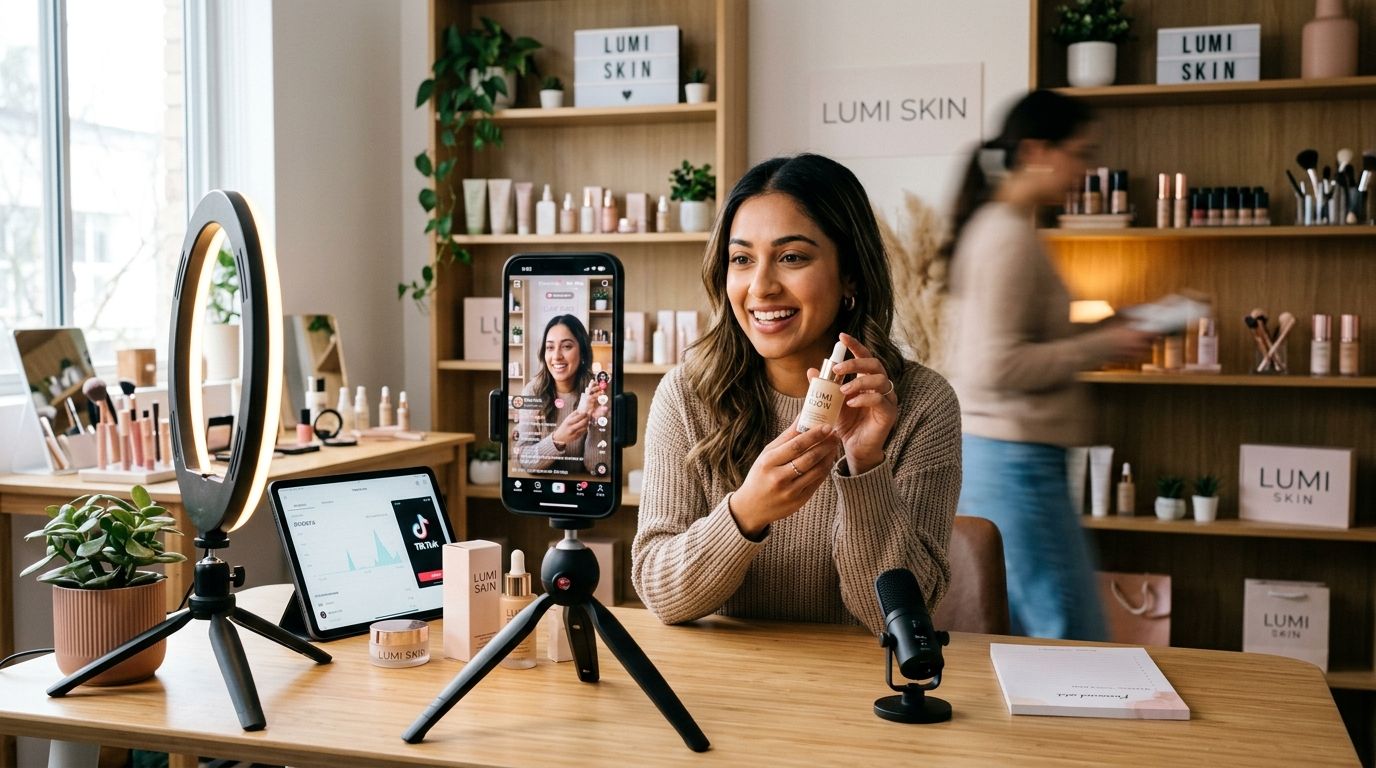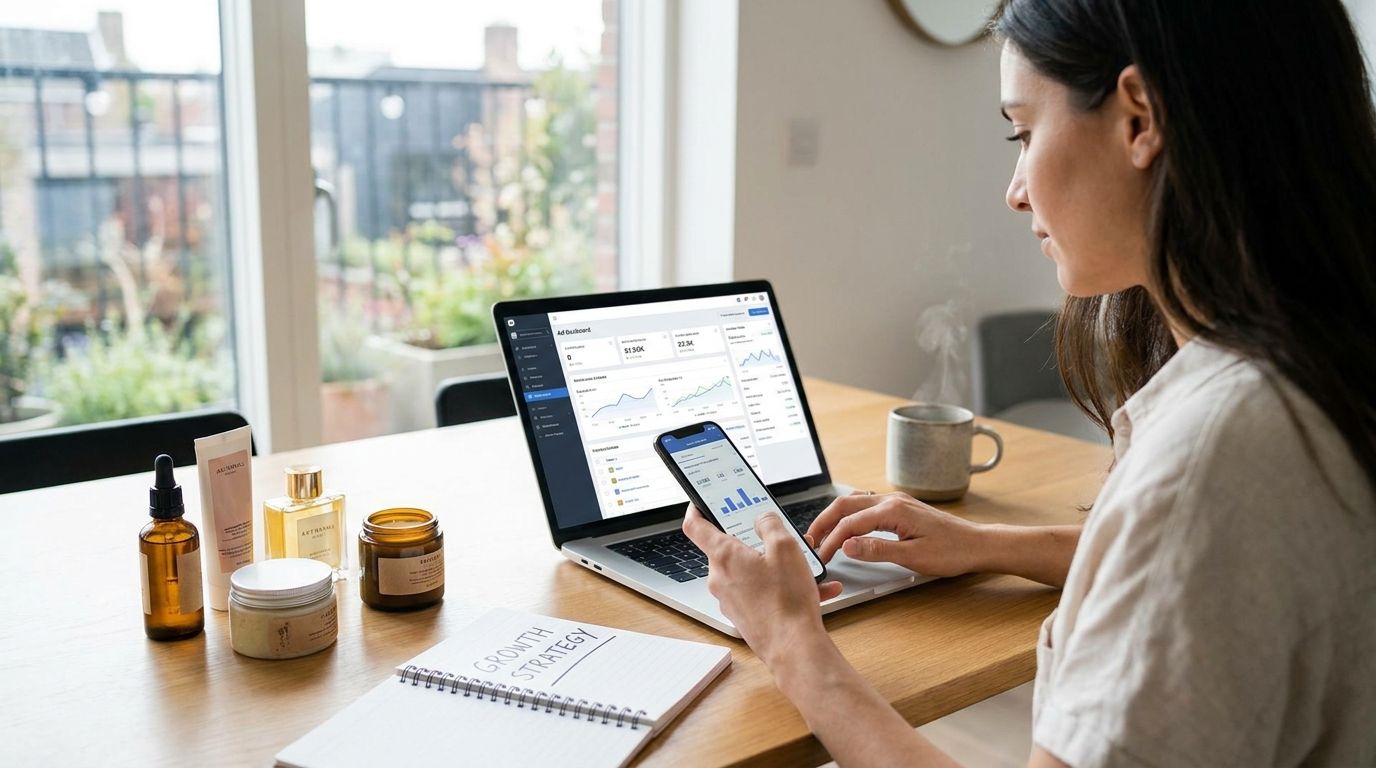
Paid social still drives the fastest path to revenue for beauty brands in 2026, but only when the funnel, creative, and retargeting stack are built to match how people actually buy skincare and color cosmetics on Instagram, TikTok, and Meta.
- Growing a beauty brand with paid social in 2026 starts with a three-stage funnel, not boosted posts.
- UGC-style creative beats polished studio ads for skincare and color cosmetics on Meta and TikTok — test both, keep UGC.
- A 2.5x ROAS floor on prospecting campaigns is a defensible scale trigger for most DTC beauty brands.
- Retargeting pools under 1,000 people burn budget with no return — build the pool before you scale spend.
- TikTok Shop and Spark Ads carry real revenue weight for beauty brands in 2026 — skipping them leaves reach unclaimed.
Why This Matters
Paid social spend in beauty is not optional in 2026 — it's the acquisition channel with the fastest signal loop, and brands that get the mechanics wrong find that out after burning six figures. The category is saturated: beauty and personal care CPMs on Meta run above platform average, and TikTok's algorithm rewards creative velocity over production budget. A program built on the right paid social structure turns ad spend into an owned audience — email subscribers, SMS opt-ins, a retargeting pool that compounds — instead of a one-time transaction. Skip the structure and every dollar buys one sale and nothing after it.
The Darl builds paid social programs for beauty brands around this exact problem: spend that only pays back once versus spend that builds an asset. That distinction is the entire difference between a brand that scales past $1M and one that plateaus at six figures chasing the next campaign.
What You'll Need
- A website with Meta Pixel and TikTok Pixel installed, plus server-side conversion tracking live before spend starts
- 15-20 raw creative assets per month — UGC clips, founder-led video, before/after content, at least three variations per angle
- A test budget of $3,000-$5,000 per platform per month to generate usable signal
- Email and SMS flows built and live before you scale prospecting spend
- A dashboard tracking CAC, ROAS, and 30/60/90-day LTV by cohort — not just platform-reported ROAS
- 60-90 days of runway before judging whether a channel works
The Steps
1. Audit Your Funnel Before You Spend a Dollar
Check pixel firing, checkout speed, and whether your product page answers the three questions a cold beauty shopper asks in the first five seconds: what does it do, who is it for, does it work. A funnel leak here means paid social spend subsidizes a broken page. Fix load time under three seconds and confirm Conversions API is deduplicating against browser-side events — misfired tracking is the single most common reason a beauty brand thinks paid social doesn't work when the ads were fine and the data was the problem.
2. Build a UGC-First Creative Library
Beauty audiences scroll past polished studio ads and stop for content that looks like a friend's camera roll. Commission or source 15-20 raw clips a month covering unboxing, application, and honest reaction — not brand-scripted testimonials. Expect your best-performing UGC ad to run 3-4x longer before fatigue than a studio spot, because it doesn't read as an ad on first pass. The common mistake: over-editing UGC until it looks produced again, which kills the exact trust signal that made it work.
3. Structure Campaigns Around the Buyer Journey
One campaign objective does not carry a beauty brand from cold audience to repeat purchase. Split spend across top-of-funnel reach and video-view campaigns, mid-funnel retargeting on engagers and add-to-carts, and bottom-funnel conversion campaigns on warm traffic — a paid media funnel built for beauty brands maps this out stage by stage. Skipping straight to conversion campaigns on cold traffic in 2026 means paying acquisition-level CPAs for an audience that's never heard of you. Expect prospecting CPAs to run 2-3x higher than retargeting CPAs — that gap is normal, not a sign the campaign is broken.
4. Test Creative in Structured Batches
Launch 4-6 creative variations per angle with a fixed budget and a 3-5 day judgment window before pulling losers. Testing one ad at a time wastes the algorithm's learning phase and delays signal by weeks. The outcome you want: one or two clear winners per batch that earn 70%+ of spend, with losers killed fast instead of left running on inertia.
5. Layer Retargeting With Email and SMS
Anyone who views a product page or adds to cart without buying should land in an email flow and an SMS sequence within 24 hours, synced with a paid social retargeting audience running the same offer. Retargeting-only strategies leave money on the table because email and SMS convert warm beauty shoppers at a fraction of the ad cost. The mistake brands make: building the retargeting ad but forgetting the email flow, so the same warm lead only gets touched once.
Build a paid social program that scales
See how an omnichannel strategy turns ad spend into owned audience.
6. Set a ROAS Floor Before You Scale
Decide your minimum acceptable ROAS on prospecting campaigns before you start — 2.5x is a defensible floor for most DTC beauty brands with a $30-$60 average order value in 2026, adjusted for your margin. Scaling a campaign that's hovering at 1.8x because it might improve is how beauty brands overspend in Q4. Increase budget in 20% increments every 3-4 days on anything clearing the floor, and cut anything that doesn't within a week.
7. Expand Into TikTok Once Meta Is Stable
Don't split a thin budget across three platforms before any one of them is profitable. Once Meta is consistently clearing your ROAS floor, move 20-30% of spend into TikTok using TikTok-specific creative and campaign structure — Spark Ads and TikTok Shop integration behave differently from Meta's auction and reward native-feeling content over repurposed Meta creative. The mistake: dropping the same Meta ad into TikTok unedited and wondering why CPMs are fine but conversion craters.
8. Track Cohort LTV, Not Day-1 ROAS
Day-1 or day-7 ROAS tells you almost nothing about whether a beauty brand's paid social spend is actually profitable, because repeat purchase and subscription revenue land 30, 60, and 90 days out. Pull cohort LTV by acquisition month and compare it against blended CAC — a channel that looks mediocre on day-1 ROAS can be the most profitable one in your mix by day 90. Brands that only watch platform dashboards routinely kill their best-performing channel because the attribution window is too short.
Troubleshooting
- CPMs climbing month over month: Refresh creative every 10-14 days and widen the audience — a shrinking, over-targeted audience is the most common cause of rising CPMs in beauty verticals.
- Creative fatigue after 10-14 days: Rotate in 2-3 new hooks per week from your UGC library rather than tweaking the same ad's copy.
- ROAS looks strong but revenue isn't growing: Check for cannibalization — paid social may be capturing branded search traffic that would have converted for free.
- iOS attribution gaps understate performance: Cross-reference platform ROAS against a third-party attribution tool or UTM-tagged revenue in your analytics platform before cutting a channel.
- UGC gets views but no conversions: The hook is working, the offer or product page isn't — test a stronger CTA and confirm the landing page matches the ad's promise.
- Retargeting pool too small to spend into: Widen the window from 7 to 30 days and add engaged-viewer and email-list-match audiences until the pool clears 1,000 people.
Tools and Resources
- Meta Ads Manager and TikTok Ads Manager for platform-level testing and budget control
- A third-party attribution tool (Triple Whale, Northbeam, or similar) to reconcile platform-reported ROAS against actual revenue
- An ESP like Klaviyo to catch retargeted traffic in synced email and SMS flows
- A UGC brief template covering hook, proof point, and CTA for every content batch
- A cohort LTV dashboard segmented by acquisition month and channel
What to Do Next
Once Meta and TikTok are both clearing your ROAS floor, the next constraint is usually platform mix, not budget — a look at which social platforms actually drive beauty brand growth will tell you where to put the next dollar instead of splitting it evenly out of habit.
FAQ
How much should a beauty brand spend on paid social to see results in 2026?
Most DTC beauty brands need $3,000-$5,000 per platform per month for 60-90 days to generate statistically useful signal. Spending less than that stretches the testing phase out for months without a clear read on what's working.
Is TikTok or Meta better for growing a beauty brand?
Meta typically converts warmer traffic more efficiently, while TikTok drives discovery and reach at lower CPMs in 2026. Most beauty brands run both once Meta is profitable, moving 20-30% of budget into TikTok rather than splitting evenly from day one.
What's a good ROAS for a beauty brand's paid social campaigns?
A 2.5x ROAS floor on prospecting campaigns is a reasonable benchmark for most DTC beauty brands, adjusted for margin and average order value. Retargeting campaigns should clear a higher ratio since the audience is already warm.
How often should beauty brands refresh paid social creative?
Refresh creative every 10-14 days to avoid fatigue, with 4-6 new variations tested per batch. UGC-style content typically holds up 3-4x longer than studio-produced ads before performance drops.
Does UGC really outperform professional ads for beauty brands?
Yes — UGC-style creative consistently outperforms polished studio ads for skincare and color cosmetics on Meta and TikTok because it reads as organic rather than promotional. Over-editing UGC until it looks produced removes the trust signal that made it work.
How long does it take to see paid social results for a beauty brand?
Plan on 60-90 days before judging a channel's true performance, since repeat purchase and subscription revenue land well after the first conversion. Day-1 ROAS alone understates true profitability for most beauty brands.
Should a beauty brand hire an agency for paid social or run it in-house?
That depends on internal bandwidth for daily creative testing and budget management, which paid social requires at scale. Brands without a dedicated media buyer typically see faster, more consistent results working with a marketing agency that manages testing cadence full-time.
What creative format works best for beauty paid social in 2026?
Short-form vertical video under 30 seconds with a hook in the first two seconds performs best across both Meta and TikTok for beauty products. Static image ads still work for retargeting but underperform video for cold prospecting.
One Last Thing
The beauty brands that scale past year one on paid social almost never win with a bigger budget — they win with a tighter retargeting-to-email handoff that most competitors skip entirely. Build that connection before you chase a bigger ad spend, and the ROAS floor gets easier to hit, not harder.