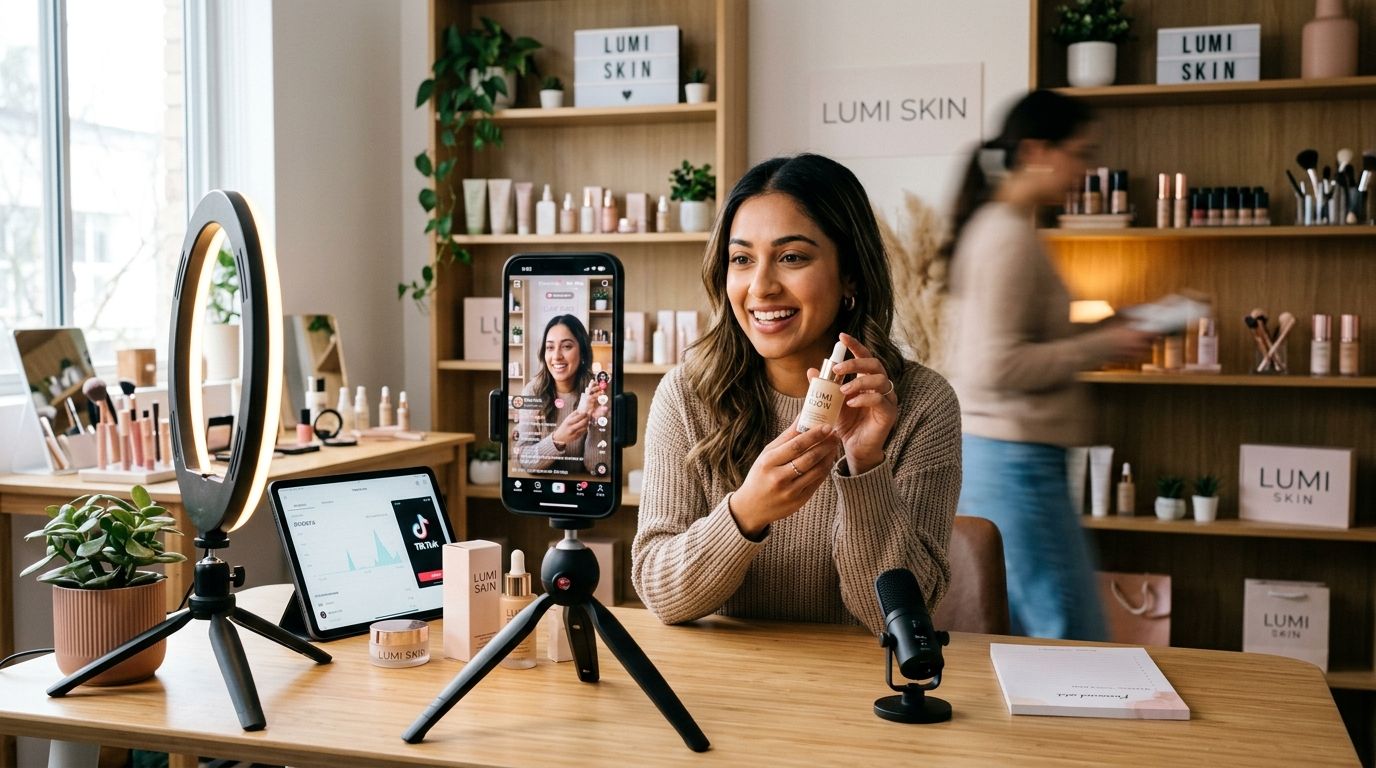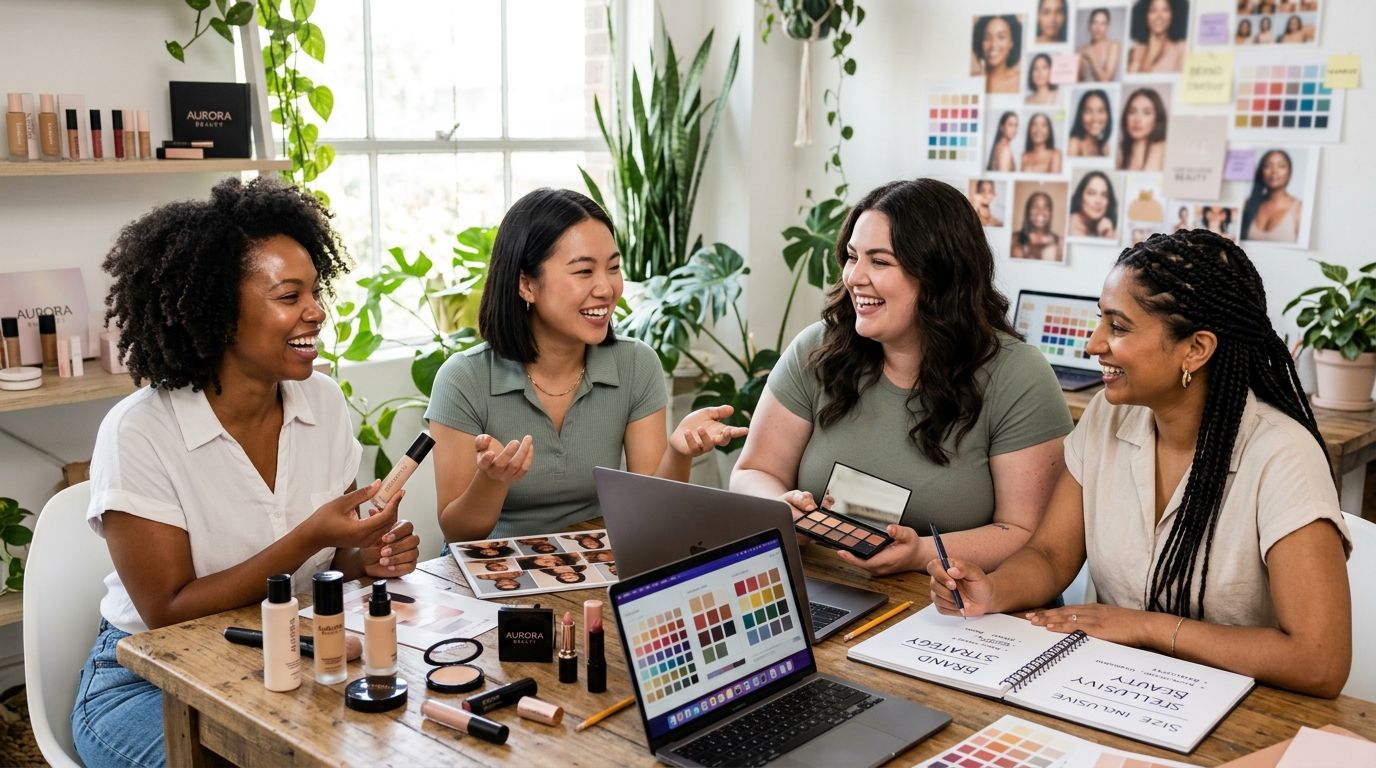
Marketing a size-inclusive beauty line works when the size range lives inside the product story, not bolted on as a single campaign moment. The brands that win put real customers across the full range into casting, packaging copy, and paid creative from launch day, then back it up with reviews and UGC that show the range in actual use. The brands that lose run one "diversity" push and revert to standard-size models for the rest of the year — shoppers clock the inconsistency inside a season, not a year.
- Marketing a size-inclusive beauty line means the size range shows up in casting, copy, and paid creative from day one, not as a single campaign.
- Fenty Beauty made 'shade range' core brand positioning with its 40-shade foundation launch in 2017 — the model still holds for size-inclusive lines in 2026.
- UGC and reviews across the full range outperform staged photoshoots for trust; size-inclusive claims need proof, not just a tagline.
- Paid social and influencer casting must match the actual size range in the product or the ad contradicts the claim.
Why This Matters
A size-inclusive beauty line is a promise about who the product works for. Every asset that doesn't reflect that promise — a homepage hero image, a paid social ad, an influencer box — quietly breaks it.
That's a positioning problem before it's a media-buying problem. Brand positioning has to define the size range as a core attribute of the product, the same way a clean beauty brand defines its ingredient list, before a single dollar goes to ads. Skip that step and every channel downstream inherits the gap.
The verdict: a size-inclusive beauty line markets itself correctly when the range is unmissable in every asset a customer sees before checkout — not just the launch press release.
How Do You Market a Size-Inclusive Beauty Line?
Six moves separate brands that make size inclusivity a durable growth lever from brands that treat it as a one-time headline.
- Bake the size range into positioning before launch. Write it into brand messaging documents, packaging copy, and the founder story — not just a press quote.
- Cast the full range in every asset, every quarter. One "diversity" shoot per year reads as tokenism by 2026 standards; ongoing casting reads as fact.
- Name sizes and shades specifically in product copy. "For everyone" is vague and unverifiable. Naming the actual range is a claim a shopper can check.
- Build a review-generation engine segmented by size cohort. Reviews from customers in underrepresented sizes carry more trust weight than brand copy ever will.
- Write influencer and affiliate casting briefs that require range representation. A single standard-size creator roster undercuts the entire claim, no matter what the ad copy says.
- Track retention and repeat-purchase rate by size cohort, not just aggregate conversion rate. Aggregate numbers hide which part of the range is actually being served.
Fenty Beauty's 2017 launch with 40 foundation shades is the reference case worth studying: the shade count wasn't a marketing stunt bolted onto an existing line, it was the product's founding claim, repeated in every asset from day one. Size-inclusive beauty lines in 2026 need the same discipline applied to sizing, not shading.
Quick Comparison: Campaign-Moment Approach vs. Built-In Approach
| Approach | What it looks like | Trust outcome | Verdict |
|---|---|---|---|
| Campaign-moment inclusivity | One diverse-casting shoot per year, standard-size models the rest of the time | Reads as tokenism, gets called out on social | Skip |
| Built-in inclusivity | Range represented in every asset, every quarter, backed by reviews | Reads as fact, compounds trust over time | Buy |
| Claims without proof | "For everyone" copy, no visible range in casting or reviews | Shoppers can't verify the claim, conversion suffers | Skip |
| Range-specific proof | Named sizes in copy, segmented reviews, matched influencer casting | Verifiable claim, drives repeat purchase | Buy |
“If the campaign photo doesn't include every size the product covers, the campaign is lying about the product.”
Why Size-Inclusive Marketing Gets Messy
A handful of operational factors explain why brands that mean well still ship inconsistent campaigns:
- SKU and packaging complexity makes it tempting to shoot one "hero" size and reuse the image everywhere.
- Influencer pool size for underrepresented sizes is smaller, so casting briefs default back to whoever's easiest to book.
- Retail buyer resistance at some accounts still treats extended-size lines as a niche shelf-set rather than a core assortment.
- Platform algorithms on paid social historically reward standard-body creative with lower CPMs, pushing budget toward the easier-to-scale asset.
- Return-rate anxiety around fit for extended ranges can quietly bias merchandising and copy toward the safest middle of the range.
- Internal review cadence — brands that don't segment review requests by size cohort never surface the gap until a customer posts about it publicly.
Build the omnichannel system around it
See how The Darl structures positioning, paid, and content for size-inclusive beauty brands.
Is Size-Inclusive Marketing Just About Influencer Casting?
No — influencer casting is one input, not the whole strategy. The full stack includes positioning language, product photography, packaging copy, paid social creative, and a review-generation system segmented by size cohort; casting alone can't carry a claim the rest of the funnel contradicts.
Does a Size-Inclusive Beauty Line Need Different Packaging Copy?
Yes — packaging copy that names the actual size range performs better than generic "for everyone" language because it gives the shopper a verifiable claim instead of a slogan. Vague inclusivity copy invites skepticism; specific copy invites trust, especially paired with reviews from customers in that range.
How Do You Find Influencers Across a Full Size Range?
Start with dedicated sourcing rather than pulling from a standard beauty-influencer list, since most existing rosters skew toward a narrow body-type range. Influencer marketing strategies built for launches apply directly here: brief creators specifically on range representation, and treat the sourcing gap as a media-planning problem to solve early, not a footnote to fix later.
A brand deciding how to staff this work should also weigh choosing a marketing agency for your beauty brand against building the casting and review-segmentation system in-house — the agency route moves faster when the internal team hasn't run size-cohort review programs before.
FAQ
What's the best way to market a size-inclusive beauty line?
The best way to market a size-inclusive beauty line is to build the size range into positioning, casting, and product copy from launch, then prove the claim with reviews and UGC segmented by size cohort. A single campaign moment without ongoing proof reads as tokenism by 2026 standards.
Is size-inclusive beauty marketing different from body-positive marketing?
Size-inclusive marketing is a product claim about the actual range a formula or fit covers; body-positive marketing is a broader messaging tone. A brand can run body-positive messaging without ever proving size inclusivity, which is why the two need separate strategies.
How much does it cost to run size-inclusive influencer campaigns?
Cost depends on the platform, creator tier, and campaign scope, so check current rates directly with creators or an agency rather than relying on a fixed figure. Budget more time for sourcing, since the influencer pool for underrepresented sizes is smaller than the standard beauty-creator pool.
Does Fenty Beauty count as a size-inclusive marketing example?
Fenty Beauty is a shade-inclusive example, not a size-inclusive one — the brand's 2017 launch with 40 foundation shades set the template for baking a range claim into core positioning, which size-inclusive beauty lines can apply to sizing.
Should packaging copy list specific sizes or say 'for everyone'?
Packaging copy should name the specific size range rather than say 'for everyone,' because a named range is a claim shoppers can verify against reviews and product photos. Vague inclusivity language invites skepticism.
How do you track whether size-inclusive marketing is working?
Track retention and repeat-purchase rate segmented by size cohort, not just aggregate conversion rate, since aggregate numbers can hide which part of the range is underserved. Review volume by size cohort is a second useful signal.
Do retail buyers push back on size-inclusive assortments?
Some retail buyers still treat extended-size assortments as a niche shelf-set rather than core inventory, which slows negotiations. Brands that bring cohort-level review and repeat-purchase data to those conversations have stronger leverage than brands that lead with mission language alone.
Is UGC more effective than paid photoshoots for size-inclusive claims?
UGC and customer reviews across the size range carry more trust weight than staged photoshoots because shoppers can verify a real customer's experience. Staged photography still matters for top-of-funnel awareness, but it can't replace proof at the consideration stage.
One Last Thing
The brands that treat size inclusivity as a merchandising decision instead of a positioning decision are the ones that quietly narrow the range within eighteen months — the SKUs at the edges of the range get deprioritized first when nobody's tracking cohort-level retention. Set up that tracking in 2026 before the assortment gets trimmed, not after.