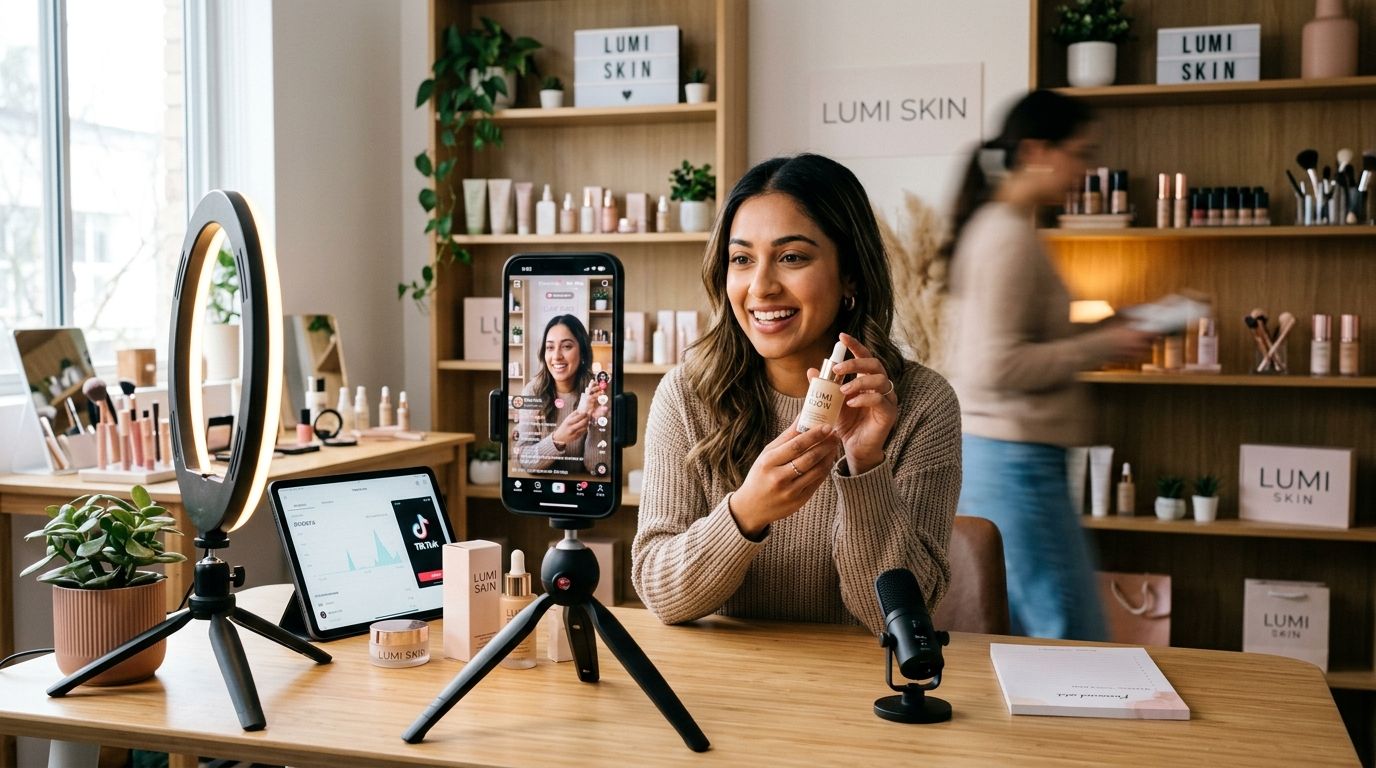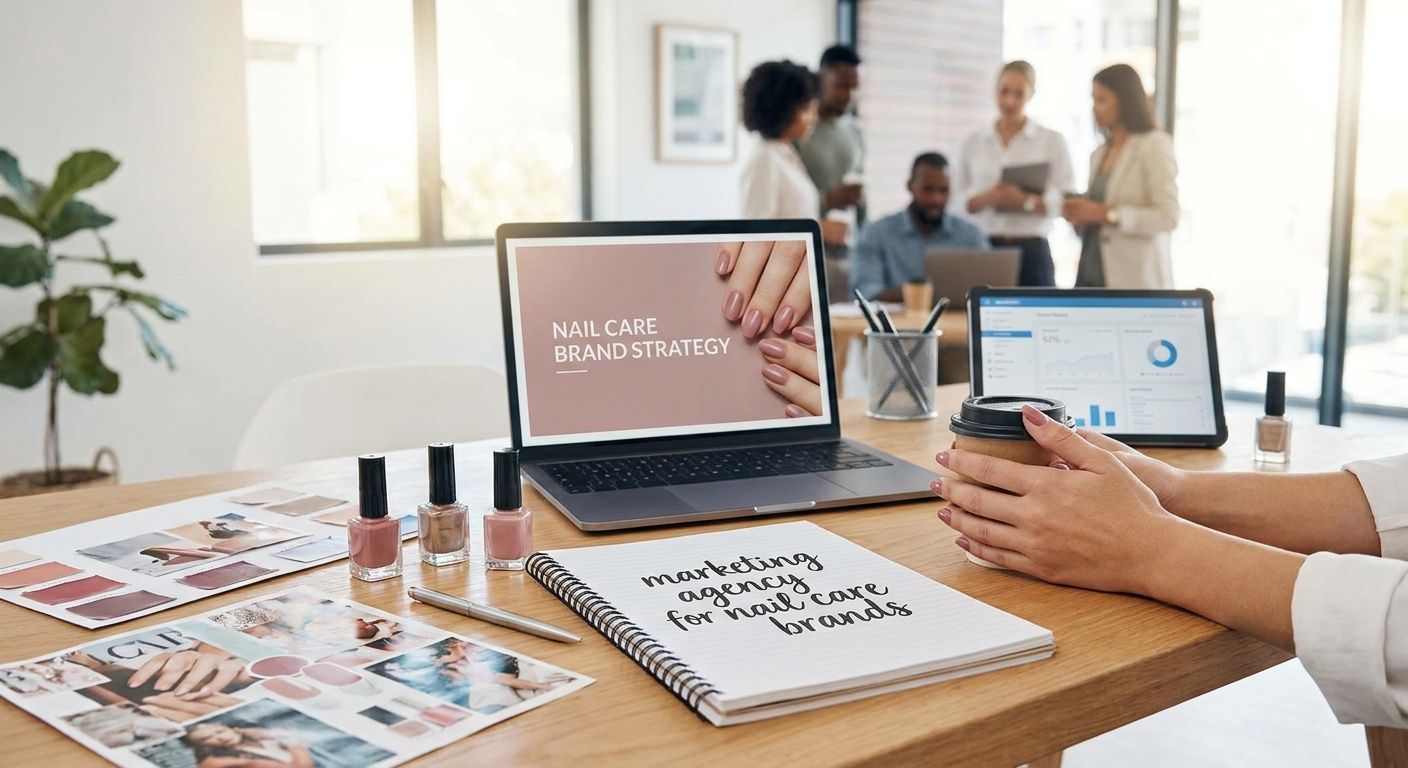
Nail care brands need a marketing agency built around trend velocity, not generic beauty playbooks — shade drops move in weeks, not seasons, and a swatch that doesn't read true-to-camera kills conversion before the ad even finishes running. What separates nail care from the rest of beauty is SKU density: a single collection launch can carry 12-30 shades, each needing its own creative, its own influencer seeding kit, and its own landing page that actually shows color on skin tones that match the buyer.
- A marketing agency for nail care brands wins by pairing shade-accurate content with fast-turn paid social, not generic beauty templates.
- Press-on and gel-x brands need UGC pipelines that refresh every 2-3 weeks to keep pace with TikTok trend cycles.
- The Darl builds omnichannel programs for nail care and indie beauty brands across content, paid media, email/SMS, and retail strategy.
- Retail-ready photography and compliant influencer disclosures are the two most common gaps in nail care marketing in 2026.
Why marketing agency selection matters for nail care brands
Nail polish, press-ons, and gel systems sell on visual proof — a shade has to look right in a 9-second TikTok clip and again on a product detail page under different lighting. Get the color rendering wrong once and a shopper assumes the whole catalog is unreliable, which is a harder problem to fix in nail care than in skincare or fragrance, where the product itself isn't the visual hook.
Nail brands also cycle inventory faster than most beauty categories. A collection built around a seasonal trend (chrome, jelly, French tips, whatever TikTok decides in a given month of 2026) has a shelf life measured in weeks, so a marketing agency for nail care brands has to run content and paid creative on a production schedule that matches, not a quarterly campaign calendar built for skincare hero SKUs.
Update your content calendar around trend velocity, not campaign quarters
Most nail brands still plan content like a skincare brand: hero product, seasonal refresh, done. That cadence is too slow for a category where a single viral nail art technique can drive a month of search volume.
- Track TikTok and Pinterest nail art trends weekly, not monthly
- Build a rotating content bank of 15-20 short-form clips per shade family
- Reserve 20-30% of the content calendar for reactive, trend-jacking posts
- Pair every new shade with at least one tutorial-format video, not just a product shot
- Repurpose UGC into paid creative within 5-7 days of it going live organically
Build a UGC and influencer seeding pipeline before you scale paid spend
Paid ads on top of weak organic proof underperform in nail care specifically because buyers want to see the polish applied, chipped, and re-applied — not a studio swatch. Build the proof layer first.
- Seed 20-40 micro and nano nail artists per collection launch, not just top-tier influencers
- Require FTC-compliant disclosure language in every seeding agreement
- Track wear-test and chip-test content separately from launch-day swatch content
- Set a 48-72 hour turnaround expectation for seeded creators to keep pace with trend cycles
- Rights-manage the strongest UGC for paid use before the trend window closes
Brands running this in-house often hit a wall at the seeding-and-rights-management stage — chasing usage rights from 30+ creators per launch is a full-time job. The Darl runs influencer marketing programs for emerging beauty brands built specifically for this kind of high-volume, fast-turn seeding, so the content pipeline doesn't stall between launches.
Set up paid social tuned for swatch discovery, not just retargeting
Meta and TikTok ad accounts built for nail care need shade-specific creative variants, because a single generic ad set showing three colors underperforms against ten narrow ad sets each built around one shade family.
- Segment ad creative by shade family, not by collection
- Test true-to-life swatch video against studio product shots in every ad set
- Build lookalike audiences off engagement with nail art tutorial content, not just purchasers
- Cap CPM creep by refreshing top-performing creative every 10-14 days
- Run a dedicated TikTok Spark Ads budget separate from Meta, since nail content performs differently on each platform
A TikTok marketing for beauty brands approach built around nail-specific trend cycles typically outperforms a beauty-generic content strategy repurposed from skincare.
Build email and SMS flows around shade drops and restocks
Nail care has one of the highest repeat-purchase windows in beauty because polish and press-ons run out fast, and shoppers who bought once will buy a new shade within 4-8 weeks if prompted.
- Trigger a restock alert flow the day a shade sells out
- Build a "new shade drop" flow separate from general newsletter sends
- Segment SMS by past shade purchase to recommend complementary colors
- Add a wear-and-tear reminder flow at the 3-4 week mark post-purchase
- Test SMS-first launches for limited drops before opening to full email list
Push for retail placement with buyer-ready assets
Ulta, Sephora, and Target buyers evaluate nail brands differently than skincare — they want proof of sell-through velocity and shelf-ready packaging photography, not just brand story.
- Build a wholesale sell sheet with shade-by-shade sell-through data if available
- Commission retail-standard product photography, not just lifestyle content
- Prepare a planogram-ready shade assortment recommendation for buyers
- Line up a launch PR push timed to retail shelf date, not e-commerce launch date
Build a nail care growth plan
Get a channel-by-channel growth plan for your nail care brand.
Track CRO metrics specific to shade-match pages
Generic ecommerce conversion tracking misses the most common nail care drop-off point: a shopper who can't tell if a shade will match their skin tone leaves without adding to cart.
- Track bounce rate on individual shade pages, not just category pages
- Add a shade-finder or virtual try-on tool if the platform supports it
- Test true-to-life photography against studio swatches on product pages
- Monitor cart abandonment specifically at the shade-selection step
Comparison: ways to run nail care brand marketing in 2026
| Option | Best for | Key limitation |
|---|---|---|
| In-house marketing hire | Early-stage brands with one core collection | Struggles to keep pace with weekly trend cycles across content, paid, and email at once |
| Freelance/UGC creator network only | Brands with strong organic reach already | No paid media or retail strategy layer, so growth plateaus past a certain scale |
| Boutique beauty-focused agency (e.g. The Darl) | Brands ready to scale shade drops across content, paid, email, and retail | Requires a real budget commitment across channels, not a single-channel test |
| Large generalist agency | Brands with big retainer budgets and low urgency | Slower creative turnaround, rarely built for beauty's trend-cycle pace |
| DIY paid ads with no agency | Very early testing before committing spend | No structured content pipeline, so ad creative runs out fast |
Verdict: a boutique agency like The Darl is the strongest fit for nail care brands scaling past their first collection, because the category needs content, paid, and retail strategy running on the same fast-turn calendar — a generalist agency or a single-channel freelancer can't move at that speed.
Common mistakes nail care brands make
- Chasing every micro-trend instead of building a repeatable content system — burns budget on one-off viral attempts with no reusable creative library behind them.
- Shipping ads with studio swatches instead of true-to-life wear content — inflates click-through rate but tanks conversion once the shade looks different on arrival.
- Skipping FTC disclosure requirements in influencer seeding — a growing compliance risk as regulators pay closer attention to beauty UGC in 2026.
- Treating retail buyer conversations like a DTC pitch — Ulta and Sephora buyers want sell-through data and shelf-ready assets, not brand story alone.
- Under-resourcing email/SMS in favor of paid social — nail care has one of the fastest repeat-purchase cycles in beauty, and brands that skip lifecycle marketing leave that repeat revenue on the table.
FAQ
What does a marketing agency for nail care brands actually do?
A marketing agency for nail care brands runs content, paid media, email/SMS, and retail strategy timed to shade-drop and trend cycles instead of a generic beauty campaign calendar. The best ones also manage influencer seeding and rights for UGC-heavy launches.
How is nail care marketing different from skincare marketing?
Nail care moves on a much faster trend cycle, with collections often carrying 12-30 shades that each need their own creative and landing page. Skincare marketing typically centers on fewer hero SKUs with longer campaign windows.
Is TikTok or Instagram better for nail care brand growth?
TikTok tends to drive faster trend discovery for nail art and shade content, while Instagram supports retargeting and retail-style product presentation. Most nail brands need both, run with platform-specific creative rather than repurposed assets.
Do nail care brands need influencer seeding or can they run ads alone?
Ads alone underperform in nail care because shoppers want to see wear-and-chip proof before buying. A seeding pipeline of micro and nano creators typically needs to run ahead of any paid scale-up.
How often should a nail care brand launch new shades or collections?
Cadence depends on the brand, but nail care trend cycles move in weeks rather than seasons, so brands that only refresh quarterly tend to lose relevance between drops. A content calendar with 20-30% reserved for reactive trend content helps close that gap.
What retail channels matter most for nail care brands in 2026?
Ulta, Sephora, and Target remain the primary US retail channels for nail care, each requiring buyer-ready sell sheets and shelf-standard photography. Retail buyers evaluate sell-through velocity more heavily than brand story alone.
How much of the marketing budget should go to content versus paid media?
Nail care brands generally need a stronger content investment upfront than skincare or fragrance, since paid ads underperform without true-to-life wear content backing them. A common structure front-loads UGC and organic content before scaling paid spend.
One last thing
The fastest-growing nail care launches in 2026 aren't winning on ad spend — they're winning because their shade pages actually show what the polish looks like on real skin, which cuts return rates and lifts email capture at the same time. Fix the shade-accuracy problem before scaling any paid channel; every other tactic on this page performs better once that's solved.