Indie beauty brands don't lose to bigger budgets in 2026 — they lose to bigger content operations. A ranked look at the content marketing strategies actually moving revenue for small beauty brands right now, with a clear buy/skip call on each.
- UGC seeding at scale is the single highest-leverage move for indie beauty brands in 2026 — Buy.
- TikTok-native series content outperforms polished brand video for early-stage skincare and haircare lines.
- SEO content clusters take 4-6 months to compound but become the cheapest acquisition channel by month 12.
- Founder-led storytelling converts better than paid creative when the founder actually shows up on camera.
- Influencer seeding alone, without a UGC or SEO layer under it, is a Wait for brands under seven figures.
Why this matters
Most indie beauty brands spend on content the way they spend on ads — chasing whatever performed last week instead of building a system that compounds. Content marketing for indie beauty brands works when it's structured as three layers stacked on top of each other: owned SEO content, earned UGC, and paid amplification of whichever pieces already prove themselves organically. Brands that treat those three as one system see content costs drop as a percentage of revenue every quarter. Brands that treat content as a single channel — just TikTok, just blog, just influencer gifting — plateau by month six.
The ranking below isn't theoretical. It's ordered by how fast each strategy produces a measurable signal (saves, add-to-carts, organic sessions) and how well it holds up once a brand scales past its first $1M in revenue.
How this list is ranked
Each strategy is scored on three factors that matter specifically for indie beauty operators in 2026: time-to-signal (how fast you know it's working), cost-to-run relative to a founder-stage budget, and durability (does it still work once a competitor copies it). Strategies that require six-figure production budgets or agency retainers before they show any signal are marked down even if they're effective at scale, because most indie brands can't survive the runway required to find out.
The ranked strategies
1. UGC seeding at scale
The compounding asset. Seeding product to 50-150 micro-creators a month, rather than gifting 5-10 big names, builds a content library that funds paid social, email, and product pages simultaneously. The economics work because a single seeded creator often produces 3-5 usable content pieces, and the brand owns usage rights on all of it. UGC seeding for beauty brands is the strategy indie brands should build first, not last, because every other content channel below gets cheaper once this library exists. Verdict: Buy.
2. TikTok-native content series
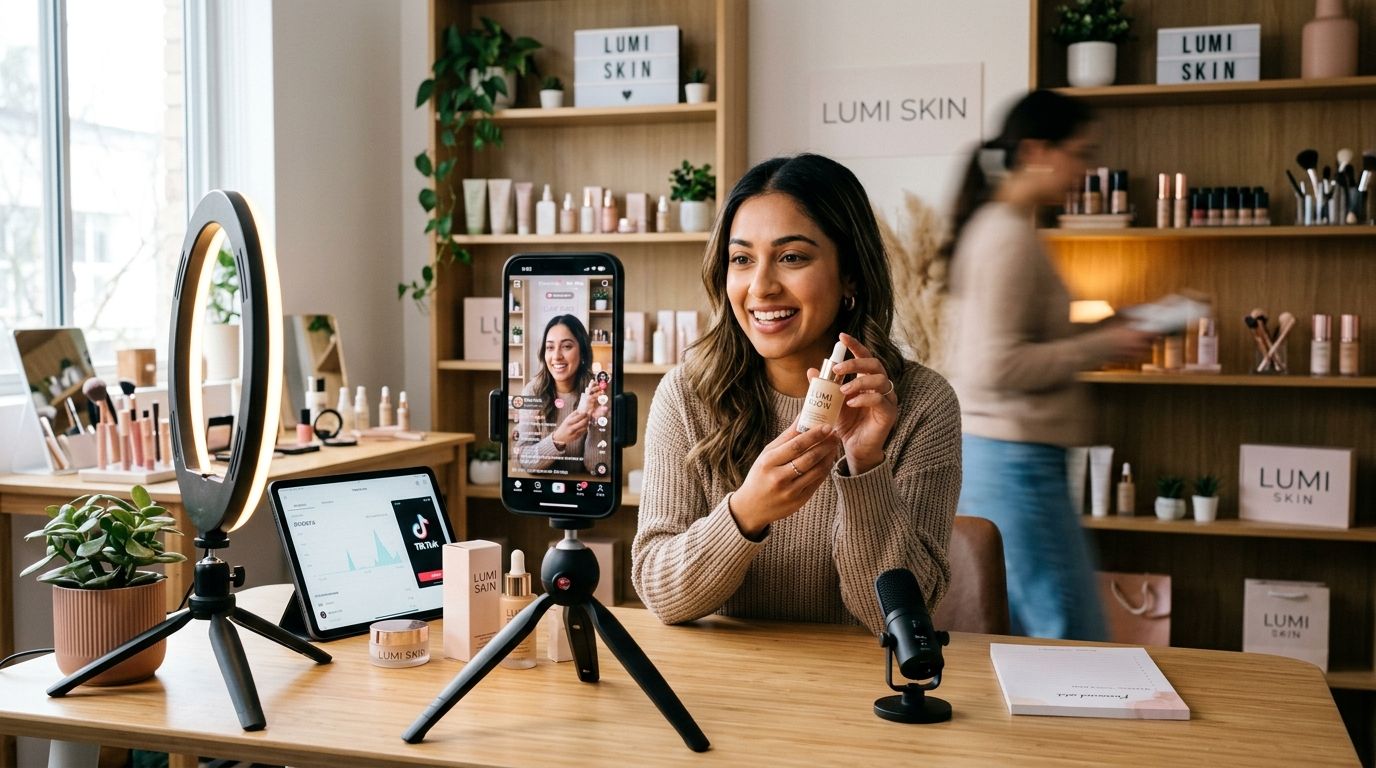
The distribution engine. A recurring format — "day in the life with the product," ingredient breakdowns, before/after routines — beats one-off viral swings because the algorithm rewards consistency more than production value in 2026. Brands running a 3x-per-week series see follower growth track directly with product page traffic within 60-90 days. TikTok marketing for beauty brands matters more for skincare and color cosmetics than for fragrance, where scent can't be demonstrated on camera. Verdict: Buy.
3. Founder-led storytelling
The trust shortcut. A founder explaining why a product exists — the problem, the failed formulas, the launch story — converts at a different rate than polished brand video because it reads as unscripted even when it's planned. This only works if the founder is actually willing to be on camera weekly, not for a single launch video. Content creation for beauty founders is the right call for brands where the founder is the face of the Instagram bio anyway — forcing it onto a founder who hates cameras produces stiff content that underperforms UGC. Verdict: Buy, if the founder commits.
4. SEO content clusters around routine and ingredient queries
The slow compounder. Content built around "how to layer retinol with vitamin C" or "best moisturizer for maskne" style queries takes 4-6 months to rank but keeps producing organic sessions with zero ongoing spend once it does. Best SEO tactics for clean beauty ecommerce brands works best paired with the UGC library above — real customer photos and quotes embedded in the content boost time-on-page, which is a ranking signal Google has weighted more heavily since 2026 algorithm updates. Verdict: Buy, but budget 12 months to judge it.
5. Lifecycle email content
The retention layer. Post-purchase education sequences — how to use the product correctly, when to expect results, what to buy next — reduce return rates and lift second-purchase rate, but they only work once there's enough UGC and founder content to populate them. Building this before the content library exists means recycling the same three product photos across twelve emails. Verdict: Hold until the UGC library has 20+ assets.
6. Influencer seeding without an owned layer underneath
The expensive shortcut. Gifting product to 10-20 mid-tier influencers and hoping for organic posts works as a discovery tactic, but without SEO or UGC underneath it, every influencer relationship has to be re-earned from zero each quarter. Brands doing this in isolation report the highest cost-per-acquisition of any strategy on this list because there's no compounding asset left behind. Verdict: Wait until the owned content layer is built.
7. Shoppable social commerce content
The conversion tool, not the discovery tool. Tagged product posts and livestream shopping formats convert an audience that already trusts the brand — they don't build that trust from scratch. Indie brands launching this before they have consistent UGC or TikTok presence see low engagement because there's no existing audience to convert. Verdict: Wait until organic reach is established.
8. AI-assisted content production at volume
The efficiency multiplier, not the strategy. Using AI tools to draft variations of proven UGC scripts, generate SEO briefs, or resize winning creative across formats cuts production time meaningfully — but AI-generated content with no human product experience behind it reads as generic and converts worse than a real customer's imperfect video. Verdict: Buy as a production tool, Skip as a replacement for real product experience.
“If your founder won't get on camera, the content plan is already broken.”
Comparison table
| Strategy | Time to signal | Cost to run | Durability | Verdict |
|---|---|---|---|---|
| UGC seeding at scale | 30-45 days | Low-moderate | High | Buy |
| TikTok-native series | 60-90 days | Low | High | Buy |
| Founder-led storytelling | 30-60 days | Low | Moderate | Buy |
| SEO content clusters | 4-6 months | Moderate | High | Buy |
| Lifecycle email content | 90 days | Low | Moderate | Hold |
| Influencer seeding alone | 60-90 days | High | Low | Wait |
| Shoppable social commerce | 90+ days | Moderate | Moderate | Wait |
| AI-assisted production | Immediate | Low | Depends on input | Buy (as tool) |
Where the content budget should actually go
- First 90 days: put the majority of the content budget into UGC seeding and a TikTok series — these are the two strategies that show a signal fast enough to correct course if something isn't working.
- Months 4-6: layer in SEO content clusters once the UGC library has enough real product photography and testimonials to embed into pages.
- After month 6: build the lifecycle email sequences and consider shoppable social content once there's an audience and an asset library large enough to support both.
Build a content system that compounds
See how The Darl structures UGC, SEO, and paid together for beauty brands.
FAQ
What's the best content marketing strategy for indie beauty brands in 2026?
UGC seeding at scale is the highest-leverage strategy for indie beauty brands in 2026 because it builds a reusable asset library that lowers the cost of every other channel. Founder-led storytelling and TikTok-native series are close seconds when the founder is willing to be on camera consistently.
How much should an indie beauty brand budget for content each month?
Budget scales with revenue stage, but the priority order matters more than the dollar amount: fund UGC seeding and a recurring TikTok series before spending on polished brand video or influencer gifting. Brands that skip the UGC layer end up spending more per asset later.
Is UGC seeding better than influencer seeding for a small budget?
Yes, for brands under seven figures in revenue. UGC seeding to 50-150 micro-creators produces more usable assets per dollar than gifting 10-20 mid-tier influencers, and the brand retains usage rights across email, paid social, and product pages.
How long does SEO content take to drive traffic for a beauty brand?
SEO content clusters typically take 4-6 months to start ranking and up to 12 months to become a meaningful traffic source. It becomes the cheapest acquisition channel once it compounds, but it's the wrong choice for a brand that needs results in the next 60 days.
Should indie beauty brands post on TikTok or Instagram first?
TikTok-native series content typically shows a faster signal for discovery in 2026, especially for skincare and color cosmetics where routines and before/afters demonstrate well on video. Instagram works better once there's an existing audience to retain and convert.
Can founder-led content replace paid ads?
No, but it lowers the cost of paid ads by giving the media buying team organic-performing creative to put budget behind. Founder-led content that already has engagement is cheaper to scale with paid spend than cold-testing new creative concepts.
How often should an indie beauty brand publish blog content?
One to two well-researched, ingredient or routine-focused articles per week is enough to build an SEO content cluster over 4-6 months. Publishing more without a clear query strategy behind each piece wastes the production budget.
Is AI-generated content safe for beauty brand SEO?
AI tools are safe and useful for drafting briefs and resizing proven creative, but fully AI-generated content with no real product experience behind it underperforms UGC and reads as generic to both readers and search engines. Use it as a production tool, not a replacement for real customer content.
One last thing
The brands winning content in 2026 aren't the ones with the biggest production budgets — they're the ones who seeded UGC before they needed it, so the library already existed when the SEO content and lifecycle emails were ready to use it. Build the asset library first. Everything else on this list gets cheaper once it exists.