Getting press for a beauty brand launch in 2026 takes more than a press release blast — editors, influencers, and algorithm-driven feeds now demand a coordinated pitch, and the strategies below rank by how fast they turn a launch into earned coverage.
- The best pr strategies for a beauty brand launch in 2026 pair a tailored media kit with direct editor pitching — Buy.
- Full PR launch timelines beat single-tactic pushes when a beauty brand has a fixed 2026 launch date — Buy.
- Press events without a digital seeding plan under-deliver on indie beauty budgets — Wait.
- Hiring a specialized beauty PR agency cuts months off onboarding versus training an in-house generalist — Consider.
Why This Matters
Beauty editors get pitched hundreds of launches a week, and by 2026 most delete a generic press release without opening the attachment. Indie beauty brands that land coverage skip the mass blast and build a narrow, well-timed campaign around one hook.
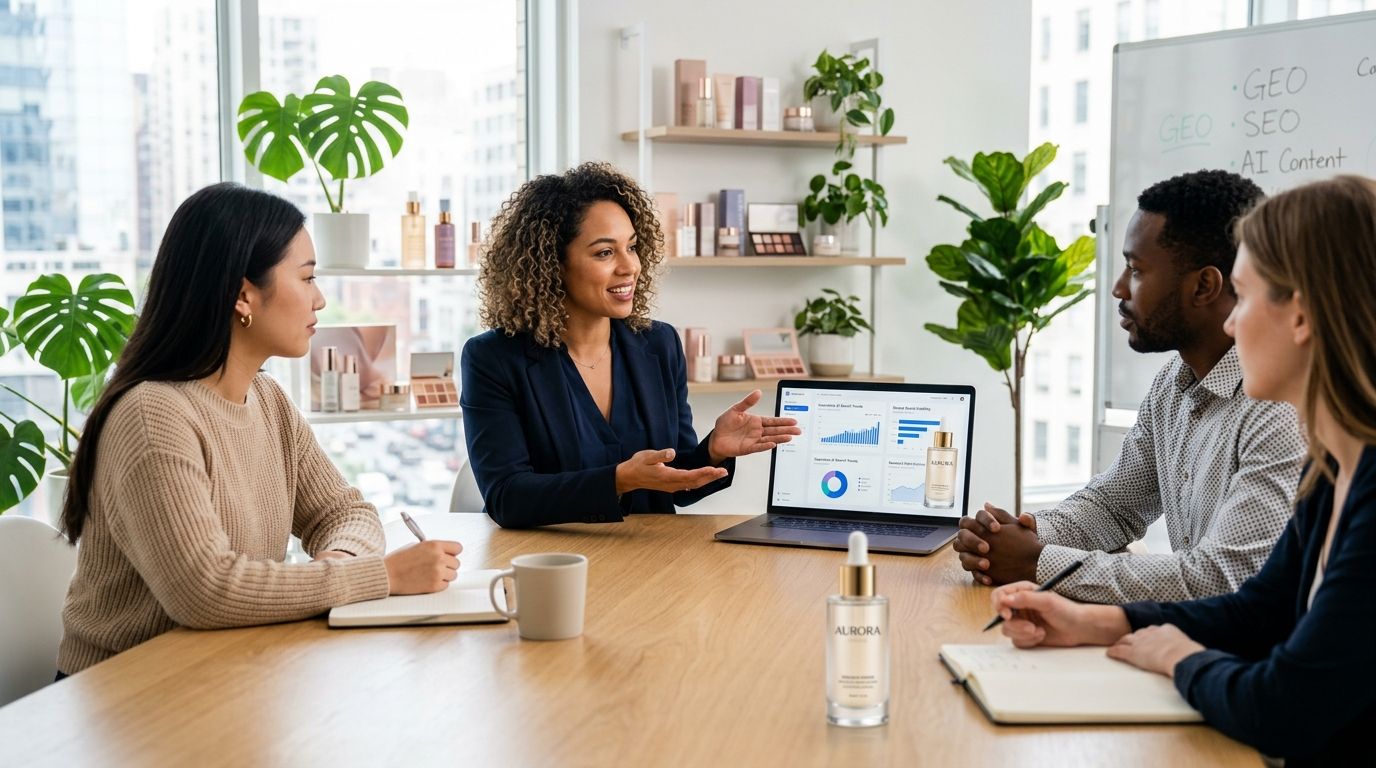
The Darl builds PR strategies for beauty brand launches alongside paid, email, and content channels, because a press mention that isn't backed by a retargeting flow or an email send burns off within 48 hours. A PR agency for beauty brands exists for exactly this gap — matching the pitch to the calendar an editor actually works from, not the calendar a founder wishes existed.
The strategies below aren't ranked by prestige. They're ranked by how fast a beauty brand launch turns into a placement, and how well that placement survives past launch week.
How These Strategies Are Ranked
Each strategy is scored on three things: how fast it produces a placement, how well it holds up past launch week, and how much it depends on a founder's personal network versus a process a team can repeat.
Strategies that only work with an existing editor relationship rank lower — they can't be handed off as a brand grows past its first hire. Strategies that plug into a paid, email, or content calendar rank higher, because a 2026 launch needs a press hit to show up across three other channels within a week to actually convert into revenue. This reflects how beauty and lifestyle brands get covered based on aggregated launch patterns through 2026, not a single case study dressed up as a rule.
The Ranked List
1. A media kit built for one editor, not every editor — Buy
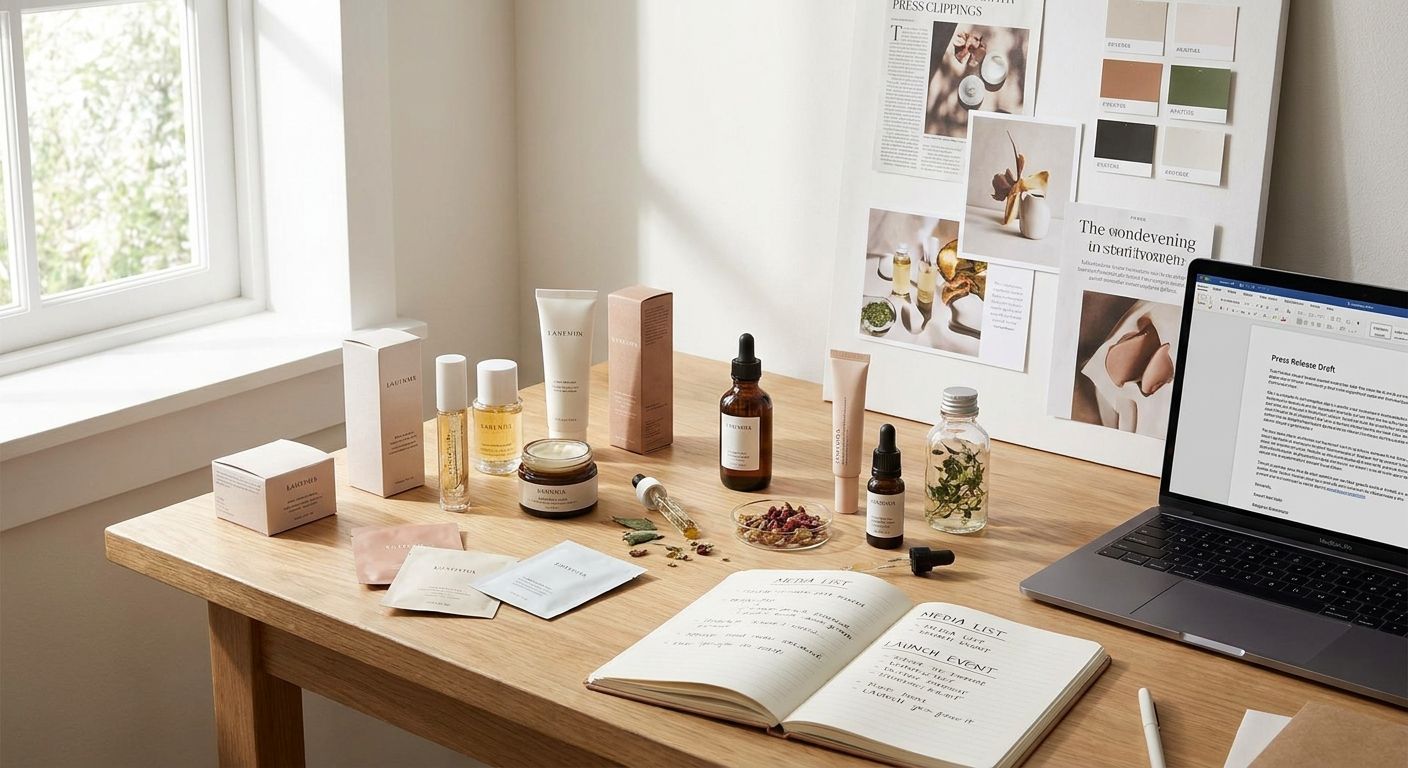
The non-negotiable. Most indie beauty pitches fail because the media kit reads like a spec sheet — ingredient list, founder bio, product shots — with no story angle up top. A media kit for a beauty brand PR pitch built for one beat and sent 3 to 4 weeks before the drop date gets read; a generic PDF blasted to forty contacts gets archived.
This works for any launch size, funded or bootstrapped, because it costs time, not ad spend. Verdict: Buy.
2. Direct editor pitching, personalized to the beat — Buy
The compounding play. One tailored pitch to a beauty editor who covers your category beats a CC list of 40 generalist contacts every time. Pitching beauty editors for press coverage means confirming the editor's current beat before you send anything — bylines shift often enough that a 2025 media list is already stale in 2026.
This strategy compounds because the same editor relationship can produce a second placement at the next launch. Verdict: Buy.
3. A full PR launch timeline built around a fixed date — Buy
The safe pick when a launch date can't move. Running a PR launch for a beauty brand on a 6-to-8-week runway gives an editor enough lead time to fit the story into a monthly beauty roundup instead of scrambling for a same-week mention.
Brands that start PR outreach the week of launch almost always miss print and long-lead digital placements entirely. Verdict: Buy.
4. Influencer seeding timed to the press cycle — Consider
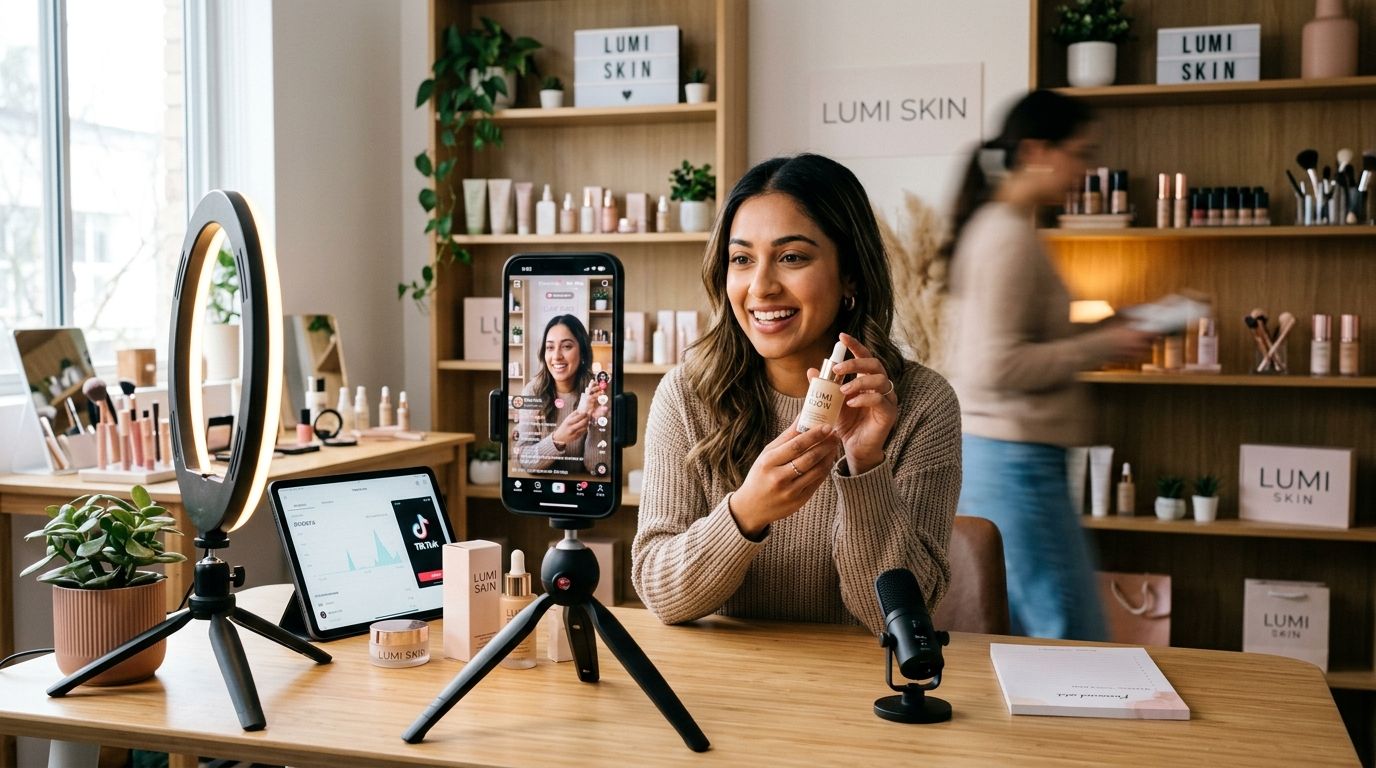
The multiplier. Seeding product to influencers in the same 2-to-4-week window as editor outreach gives a press mention something to point to online instead of a bare product page. Run this alongside outreach, not instead of it — seeding without a press hook behind it just becomes free product with no story attached.
This only earns a Consider, because on its own it doesn't produce editorial coverage, only social proof. Verdict: Consider.
5. A launch event or press preview — Wait
The expensive one. An in-person press preview needs an 8-to-10-week runway and a confirmed media list of editors who've already RSVP'd — not a hope list. Brands that book a venue before they have a dozen confirmed press attendees end up paying for a party, not for coverage.
Until a beauty brand has that confirmed list, this strategy should wait. Verdict: Wait.
6. Hiring a specialized beauty PR agency — Consider
The shortcut, if the budget supports it. A generalist agency needs weeks just to learn a beauty brand's positioning before it can pitch anything; a specialized PR agency for beauty brands already knows which editors cover clean beauty versus prestige skincare, and can start outreach inside a 2-week onboarding window.
This makes sense for teams without in-house PR bandwidth heading into a 2026 launch. Verdict: Consider.
7. UGC and organic seeding to sustain the mention — Buy (as support)
The long game. A press hit fades from an editor's feed inside 48 hours unless a brand backs it with organic content that keeps the story alive — screenshots of the coverage, founder commentary, customer reaction. On its own this isn't a PR strategy; paired with a placement, it stretches the shelf life of every mention a brand earns.
Used alone, without a press hit to amplify, Skip it. Used after coverage lands, Buy.
Plan Your Beauty Brand's Launch PR
Map the pitch calendar against your paid and email launch dates before you send anything.
Comparison Table
| Strategy | Best For | Runway Needed | Verdict |
|---|---|---|---|
| Tailored media kit | Any launch size | 3-4 weeks | Buy |
| Direct editor pitching | Brands with a clear story angle | 4-6 weeks | Buy |
| Full PR launch timeline | Fixed 2026 launch date | 6-8 weeks | Buy |
| Influencer seeding | Amplifying a placement | 2-4 weeks | Consider |
| Launch event | Funded launches, confirmed media list | 8-10 weeks | Wait |
| Specialized PR agency | Teams without in-house PR | 2-week onboarding | Consider |
| UGC/organic seeding | Sustaining coverage post-launch | Ongoing | Buy as support |
Where to Start
- Build the media list before the media kit — don't pitch a beauty editor without confirming their current beat for 2026, since bylines and sections shift.
- Time outreach 3 to 4 weeks before launch day, never the day of, so an editor has room to plan the placement into a roundup or feature.
- Pair every press hit with an owned channel push — an email flow or a paid retarget — within 48 hours so the mention converts instead of fading.
The Darl treats PR as one channel in a launch stack, not the whole stack. A placement that isn't backed by content marketing for indie beauty brands or an email send loses most of its value inside a week.
FAQ
What's the best PR strategy for a first beauty brand launch in 2026?
A tailored media kit paired with direct editor pitching, sent 3 to 4 weeks before the drop date, wins for first launches in 2026. It costs time rather than ad spend and produces the fastest placements for a brand without existing editor relationships.
Is a press release still worth sending in 2026?
A mass press release with no story angle mostly gets ignored in 2026. A personalized pitch to one editor covering your category outperforms a blast to forty generic contacts.
How much lead time do beauty editors need before a launch?
Plan on 3 to 4 weeks for a standard pitch and 6 to 8 weeks for a full PR launch timeline tied to a fixed date. Long-lead print and monthly digital roundups need the longer window.
Should an indie beauty brand hire a PR agency or pitch in-house?
Hire a specialized PR agency for beauty brands when there's no in-house PR bandwidth, since it can start outreach inside a 2-week onboarding window instead of the months a generalist needs to learn the category. In-house pitching works once a founder already has editor relationships.
How is PR different from influencer seeding for a beauty launch?
PR earns editorial coverage from a journalist or editor; influencer seeding gets product in front of creators for organic posts. Run both together, timed to the same 2-to-4-week window, so a press mention has social proof to point to.
What should go in a beauty brand's media kit?
Lead with the story angle, not the founder bio or ingredient list. A media kit built for one editor's beat, kept tight and sent ahead of the drop date, gets opened more than a generic PDF sent to a wide list.
Is a launch event necessary for a beauty brand?
No — a launch event only makes sense once a brand has a confirmed media list of editors who've already RSVP'd. Booking a venue before that list exists turns the event into a party instead of a coverage driver.
One Last Thing
The single biggest reason an indie beauty pitch gets ignored in 2026 isn't the product — it's a subject line that reads like a corporate memo. Editors scan for a story, not a spec sheet, and the brands that win coverage lead with the angle in the first sentence, not the third paragraph.