Skincare brands are burning cash on the wrong channels in 2026 because paid social got expensive and everyone's still budgeting like it's 2021. The channels that actually move product this year aren't the ones with the flashiest case studies — they're the ones that match where skincare buyers actually make decisions.
- Meta Ads and TikTok remain the two highest-ROI paid channels for skincare brands in 2026 — both earn a Buy verdict.
- Amazon Ads is now mandatory for any skincare brand selling on the platform, not optional.
- Google Search and YouTube capture high-intent demand that paid social can't close on its own.
- Pinterest is undervalued for skincare but only works with strong product photography and patience.
- Snapchat is a Skip for most skincare brands in 2026 unless the audience is under 22.
Why this matters
Skincare is one of the most competitive DTC verticals in paid media, and 2026 budgets don't stretch as far as they did two years ago. Meta's auction has gotten pricier for beauty and personal care advertisers broadly, and brands that spread spend thin across five channels usually end up with mediocre performance everywhere instead of strong performance somewhere. A paid media agency for skincare startups typically sees the same pattern: brands chase channel diversity before they've maxed out the one or two channels that actually convert their audience.
The fix isn't more channels. It's ranking the channels you have access to and putting weight behind the ones that match your price point, your creative capacity, and your customer's actual path to purchase.
How this list is ranked
Each channel below is scored against three things that matter for skincare specifically: how well it captures purchase intent for a repeat-purchase, education-heavy category; what it costs to test relative to a typical skincare AOV; and how it performs once iOS-era attribution limits are accounted for. This isn't a generic "best ad platforms" ranking — a channel that's great for apparel or supplements can rank lower here because skincare buyers behave differently. They research more, trust ingredient claims less on first exposure, and respond disproportionately to social proof before checkout.
The ranked list
1. Meta Ads (Facebook and Instagram) — the workhorse
Meta still absorbs the largest share of paid budgets for skincare DTC brands in 2026, and for most brands it should. Instagram Reels and Feed placements let skincare brands run UGC-style creative that doubles as both an ad and a trust signal, which matters in a category where buyers want proof before they trust an ingredient claim. The Advantage+ shopping campaigns have gotten meaningfully better at finding first-time buyers when fed strong creative volume — brands running fewer than 5-6 active ad variants per week tend to plateau fast. Verdict: Buy. Meta is the default starting point and the channel most paid social for clean beauty brands strategies build around first.
2. TikTok Ads and TikTok Shop — the growth engine
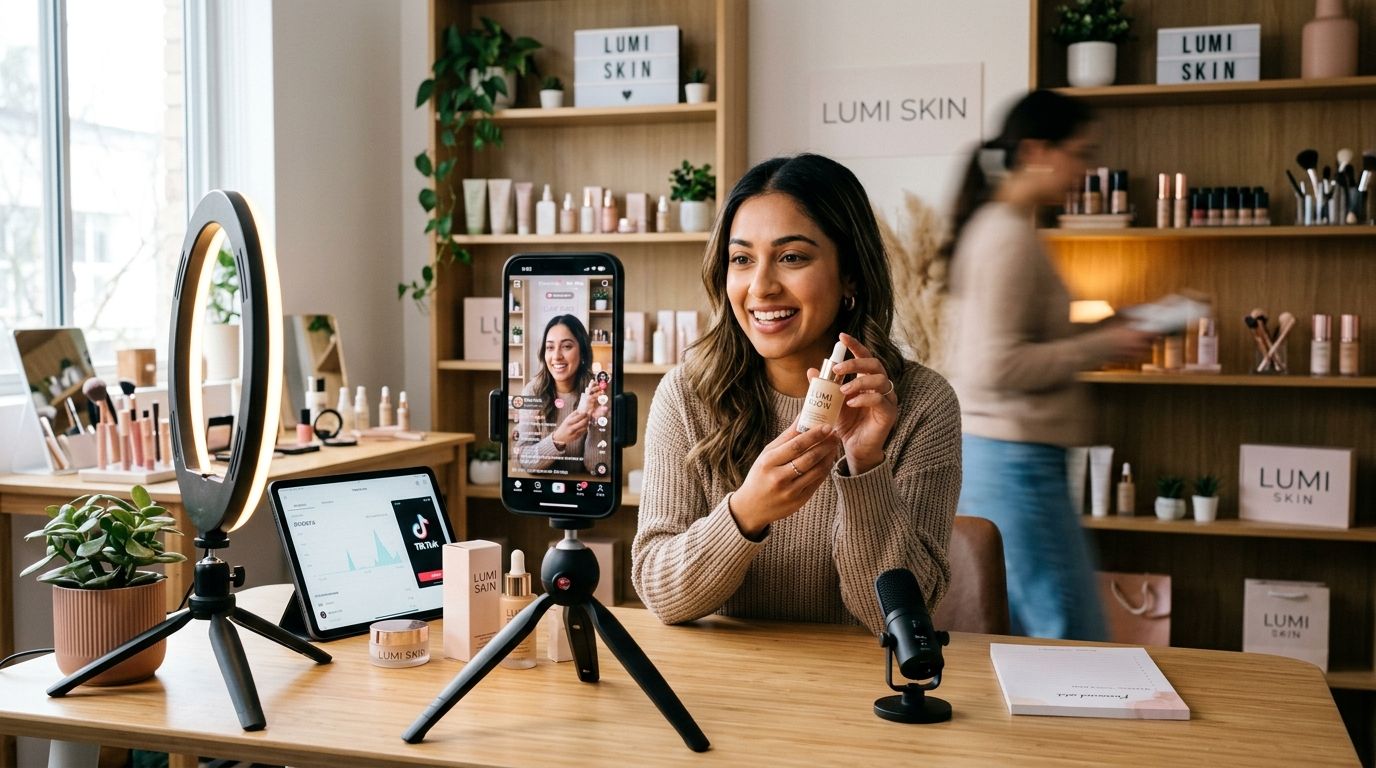
TikTok is where skincare discovery happens now, full stop. Spark Ads that boost organic creator content outperform native brand-produced ads in most skincare accounts because the format rewards authenticity over polish. TikTok Shop adds a closed-loop purchase path that shortens the distance between "I saw this ingredient explained" and "I bought it," which is a real advantage for a category built on education. Brands that treat TikTok marketing for beauty brands as a testing ground for creative hooks, then push winners to Meta, tend to get more mileage from both platforms. Verdict: Buy.
3. Google Search and YouTube — the intent capture
Skincare buyers Google ingredient names, compare "retinol vs. bakuchiol," and search branded terms before they buy — that's high-intent traffic paid social will never fully replace. Google Search campaigns targeting branded and comparison queries close a meaningful share of buyers who already saw your product on social but didn't convert on the first touch. YouTube pre-roll and in-feed placements work well for longer explainer content, especially for actives-forward products that need more than 15 seconds to build trust. Verdict: Buy, particularly once a brand has enough branded search volume to justify defending it.
4. Amazon Ads — the shelf-space play
If a skincare brand sells on Amazon, Amazon Ads stopped being optional in 2026. Sponsored Products campaigns defend branded search terms against competitors bidding on your name, and Sponsored Brands placements put your product in front of shoppers already comparing formulas in the same category. Brands that ignore Amazon Ads while selling on the platform routinely lose branded search share to a competitor's aggressive bid. Amazon marketing for skincare brands works best layered on top of a DTC strategy, not as a replacement for it. Verdict: Buy, conditional on already having Amazon distribution.
5. Pinterest Ads — the sleeper pick
Pinterest gets overlooked by skincare brands chasing TikTok trends, but it converts well for a specific type of buyer: someone actively planning a routine change, not scrolling passively. The catch is creative — Pinterest rewards clean, aspirational product photography over the raw UGC style that wins on TikTok, so brands without strong static assets underperform here. It's a slower build than TikTok or Meta and takes longer to show ROI. Verdict: Consider, mainly for brands with strong photography and patience for a longer ramp.
6. Influencer and UGC paid amplification — the trust multiplier
This isn't a platform, it's a paid tactic layered on top of Meta and TikTok — whitelisting creator content and running it as paid media instead of relying on organic reach alone. For skincare specifically, this outperforms brand-produced creative almost every time because the audience trusts a creator's face and voice more than a brand's script. Pairing this with social media marketing for skincare brands creates a pipeline where organic winners get identified before ad spend is committed. Verdict: Buy, especially for brands with limited in-house creative teams.
7. Snapchat Ads — the niche bet
Snapchat still works for skincare brands targeting a genuinely younger audience — think acne-focused or Gen Z-skewed lines — but the ad platform's reach and targeting sophistication lag well behind Meta and TikTok for most skincare demographics. Testing budget here competes directly with two channels that already outperform it for most brands. Verdict: Skip, unless your core buyer is reliably under 22.
Build a paid media stack that actually converts
Get a channel-by-channel plan built around your skincare brand's audience and budget.
Comparison table
| Channel | Best For | Entry Budget Level | 2026 Verdict |
|---|---|---|---|
| Meta Ads | Broad-funnel acquisition, retargeting | Low to moderate | Buy |
| TikTok Ads / Shop | Discovery, younger buyers, closed-loop purchase | Low to moderate | Buy |
| Google Search / YouTube | High-intent, branded, comparison queries | Moderate | Buy |
| Amazon Ads | Defending branded search, marketplace conversion | Moderate | Buy (if selling on Amazon) |
| Pinterest Ads | Planning-stage buyers, aspirational routines | Moderate | Consider |
| Influencer/UGC paid amplification | Trust-building, creative refresh | Low (tactic, not platform) | Buy |
| Snapchat Ads | Under-22 niche audiences | Low | Skip for most |
Where to start
- Put the first 60-70% of budget behind Meta and TikTok. These two channels carry the widest reach and the fastest creative testing cycles for skincare in 2026 — don't split budget evenly across seven channels before either of these is maxed out.
- Fund Amazon Ads the moment you have marketplace distribution, not after. Losing branded search share on Amazon is expensive to win back once a competitor claims it.
- Treat Pinterest and Snapchat as later-stage additions. Add them only after Meta and TikTok creative is running consistently, and only if the audience and asset library actually fit.
FAQ
What is the best paid media channel for skincare brands in 2026?
Meta Ads and TikTok are the strongest paid media channels for skincare brands in 2026, with Meta driving broad-funnel acquisition and TikTok driving discovery and closed-loop purchases through TikTok Shop.
Is TikTok better than Meta for skincare ads?
TikTok wins on discovery and creative testing speed, while Meta wins on retargeting and scale once a creative concept proves out. Most skincare brands run both rather than choosing one.
Should skincare brands run Amazon Ads if they sell direct-to-consumer?
Yes, if the brand also sells on Amazon. Skipping Amazon Ads while selling on the platform lets competitors bid on your branded search terms and steal marketplace conversions.
How much should a skincare brand spend on paid media to start testing?
Most skincare brands begin testing with a modest monthly budget split across Meta and TikTok before adding channels, scaling spend only after a creative concept shows repeatable conversion.
Is Pinterest worth it for skincare brands?
Pinterest works for skincare brands with strong product photography and patience for a slower ramp, converting planning-stage buyers rather than impulse shoppers.
Does Google Search still matter for skincare paid media in 2026?
Yes. Skincare buyers actively search ingredient comparisons and branded terms before purchasing, and Google Search campaigns capture that high-intent traffic that paid social alone misses.
Should skincare brands use influencer content as paid ads?
Whitelisting and running influencer or UGC content as paid media typically outperforms brand-produced creative for skincare, since audiences trust a creator's face and voice over a script.
Is Snapchat worth testing for skincare brands?
Only if the core audience is reliably under 22. For most skincare demographics, Snapchat's reach and targeting lag behind Meta and TikTok, making it a lower priority for 2026 budgets.
One last thing
The skincare brands winning in 2026 aren't running more channels than their competitors — they're running fewer channels with more creative volume behind each one. A brand pushing 8-10 fresh ad variants a week on just Meta and TikTok will usually beat a brand spreading the same budget across five platforms with three tired ad concepts.