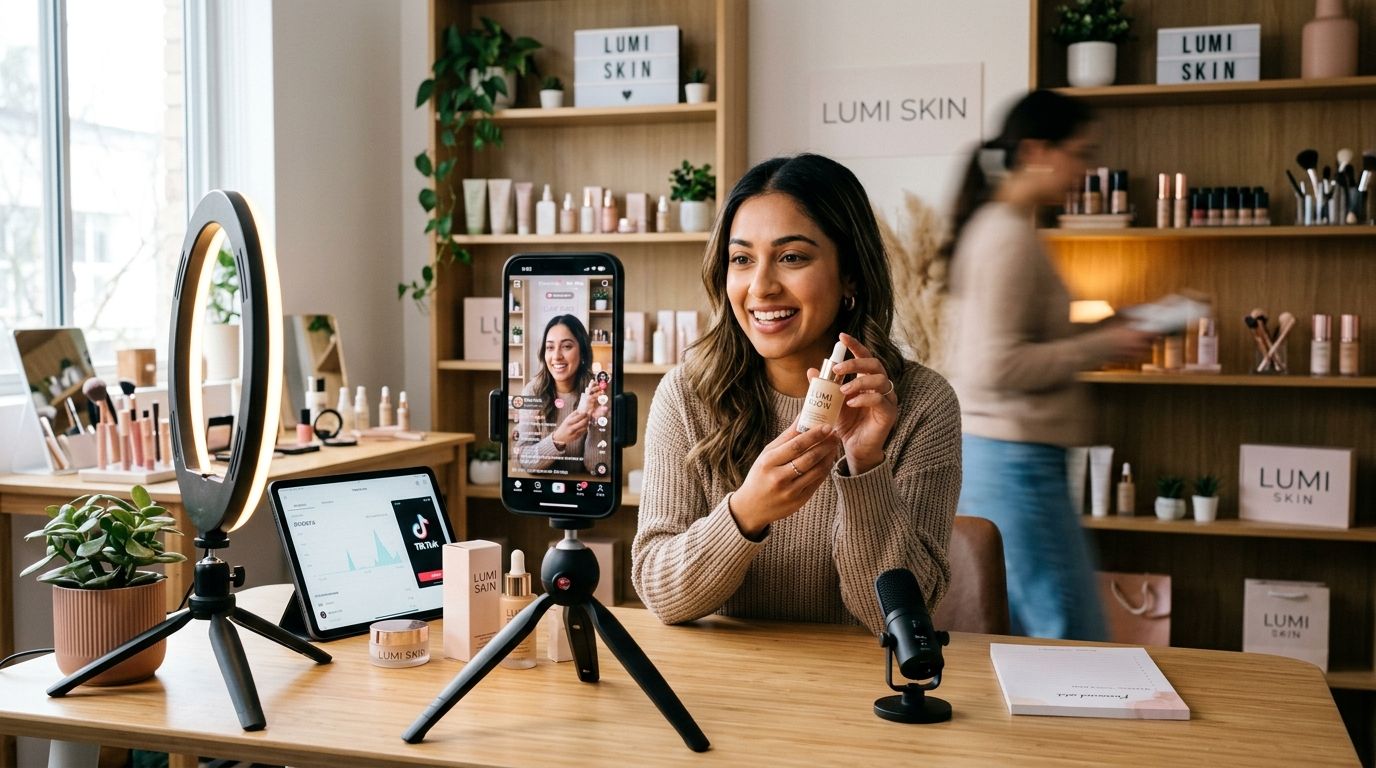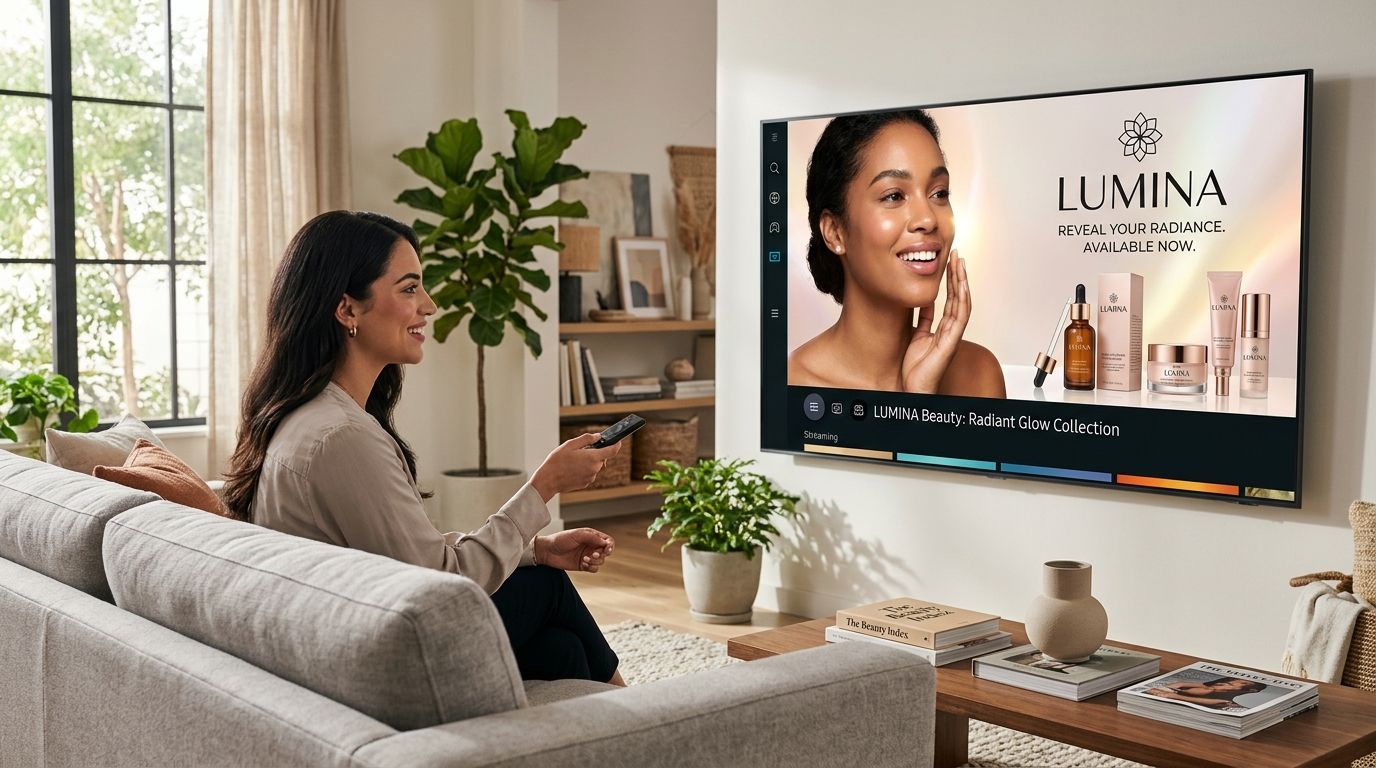
Connected TV ads put a beauty brand's launch video in front of viewers streaming Hulu, Roku, Amazon Fire TV, and YouTube TV instead of watching cable, and 2026 is the first year most DTC beauty brands can buy that inventory without a six-figure minimum. The hidden cost isn't the media buy itself, it's the creative: CTV rejects social-native vertical video, so a launch that only shot for Instagram Reels has to reshoot or reformat before a single impression airs.
- Connected TV ads for a beauty brand launch work best paired with a paid social retargeting layer that catches viewers after the impression.
- Roku, Hulu, and Amazon Fire TV all sell self-serve CTV inventory in 2026, no upfront insertion order required.
- A 15-second launch spot beats a 30-second cut on completion rate for most beauty categories.
- Frequency capping around 3 to 5 impressions per household per week keeps spend from repeating on the same viewer.
- The Darl runs Connected TV as a top-of-funnel awareness channel for beauty launches, never as a standalone direct-response buy.
Why this matters
A beauty brand launching in 2026 competes for attention against a feed that's already saturated with paid social and influencer seeding. Connected TV reaches a viewer at a moment competitors aren't buying: mid-show, full attention, no scroll to escape to.
That reach comes with a tradeoff. CTV doesn't convert like a retargeting ad — it builds the recognition that makes your paid media funnel convert faster downstream. Treat it as the top layer of a launch stack, not the whole stack.
How to run Connected TV ads for a beauty brand launch
- Cut two creative lengths — a 15-second spot for completion rate and a 30-second spot for storytelling. CTV platforms reject vertical-only social cuts, so budget for a horizontal reshoot or a proper edit.
- Pick platforms by audience and buying model. Self-serve platforms let a beauty brand launch with a modest test budget; broadcast-style inventory on Hulu or YouTube TV usually runs through a managed buy.
- Set frequency caps before launch, not after. A cap around 3 to 5 impressions per household per week is standard practice across CTV buys — beauty categories with short consideration cycles can run tighter.
- Layer paid social retargeting underneath the CTV flight. Someone who sees your launch spot on Roku and then sees a retargeting ad on Instagram converts faster than someone who only sees one or the other.
- Measure with a brand lift study or incrementality test, not last-click attribution. CTV view-through data is unreliable because most streaming apps don't pass a clickable, trackable signal the way a social feed does.
- Coordinate the launch date with earned media. A PR launch for a beauty brand that lands the same week as a CTV flight compounds recall — viewers who saw the ad and then read a press mention remember the brand twice.
Roku: self-serve access for smaller beauty launch budgets
Roku's self-serve platform is the easiest entry point for a beauty brand launching without an agency-managed IO. Best for: brands testing CTV for the first time with a limited flight. The tradeoff is reach — Roku's audience skews toward specific demographics and won't match the breadth of a broadcast-style buy.
Amazon Fire TV: shoppable overlays tied to the storefront
Fire TV inventory can carry a shoppable QR or remote-click overlay that routes a viewer straight to an Amazon storefront. Best for: beauty brands already selling on Amazon who want the ad and the purchase path in one motion. It doesn't help a brand that's DTC-only with no Amazon listing.
Hulu and YouTube TV: broad reach for a national beauty launch
Hulu and YouTube TV carry the widest reach among CTV platforms and are typically bought through a managed insertion order rather than self-serve. Best for: a national launch with a creative asset strong enough to run at scale. The managed-buy structure means longer lead times than a self-serve platform.
| Platform | Buying model | Best for |
|---|---|---|
| Roku | Self-serve | First CTV test, limited budget |
| Amazon Fire TV | Self-serve, shoppable overlay | Brands already selling on Amazon |
| Hulu / YouTube TV | Managed IO | National launch, broad reach |
Why Connected TV strategy varies by brand
- Creative length and format — a brand with only vertical social assets needs a reshoot budget before any CTV dollar gets spent.
- Platform minimums and buying model — self-serve platforms have lower barriers than managed IOs bought through Hulu or YouTube TV.
- Geographic targeting scope — a national launch buys differently than a regional retail-door launch tied to specific Sephora or Ulta markets.
- Frequency capping strategy — categories with short consideration windows can run tighter caps than considered-purchase categories like skincare devices.
- Whether shoppable overlays are in play — Amazon-sold brands get a purchase path CTV alone can't offer on other platforms.
- In-house versus agency management — managed buys require lead time and creative trafficking most in-house teams underestimate on a first launch.
Deciding which channels to prioritize on a fixed launch budget is really a sequencing question — see how to pick paid media channels before committing spend to any single platform.
“Connected TV builds the recognition that makes the retargeting ad convert — it isn't the retargeting ad itself.”
Brief an agency on your CTV launch
Get the creative and media plan mapped before your launch date locks.
Is Connected TV better than paid social for a beauty brand launch?
Connected TV isn't better than paid social — it does a different job. CTV builds broad, full-attention awareness in 2026 the way a social feed can't, while paid social handles the retargeting and direct-response conversion that CTV alone won't deliver.
How long should a beauty brand run CTV ads before judging results?
Most brand lift studies need at least 4 to 6 weeks of flight time before the data is stable enough to read. Judging a CTV campaign on week one, before frequency and reach have built, produces a false negative.
Do you need a TV commercial to run Connected TV ads?
No television commercial is required — a properly formatted 15 or 30-second horizontal video works on every major CTV platform in 2026. What's required is a horizontal cut; a vertical social clip will get rejected or cropped badly on a living-room screen.
FAQ
What's the best Connected TV platform for a beauty brand launch?
Roku is the best starting point for a first CTV test because it's self-serve with no insertion-order minimum. Hulu and YouTube TV deliver broader reach once the creative and budget can support a managed buy.
How much creative do I need before running Connected TV ads?
You need at least one horizontal cut, ideally both a 15-second and a 30-second version, before launching on any CTV platform in 2026. Vertical-only social creative gets rejected or badly cropped on streaming apps.
Is Connected TV worth it for a small beauty brand?
Connected TV is worth testing for a small beauty brand through self-serve platforms like Roku or Amazon Fire TV, which don't require the large minimums of a managed Hulu or YouTube TV buy. Start with a limited flight and measure lift before scaling spend.
Can Connected TV ads drive direct sales for a beauty brand?
Connected TV drives direct sales best when paired with a shoppable overlay, such as Amazon Fire TV's remote-click format tied to a storefront. Without an overlay, CTV works as an awareness layer that feeds a retargeting funnel rather than a direct-response channel on its own.
How do you measure Connected TV ad performance for a beauty launch?
Brand lift studies and incrementality tests measure Connected TV performance more reliably than last-click attribution, since most streaming apps don't pass a clickable tracking signal. Run the test for at least 4 to 6 weeks before reading results.
Do Connected TV ads work without a retail presence?
Connected TV ads work for a DTC-only beauty brand without a retail presence, since the goal is awareness, not a shoppable purchase path. Brands with an Amazon storefront get an added benefit through Fire TV's shoppable overlay format.
What frequency cap should a beauty brand use for Connected TV ads?
A frequency cap around 3 to 5 impressions per household per week is standard for most Connected TV buys. Categories with short consideration cycles, like mass-market beauty, can run tighter caps than considered-purchase categories.
One last thing
The brands that get Connected TV wrong in 2026 don't lose because of the media buy — they lose because they treat CTV like a second social feed and run the same 6-second vertical clip cropped into a black-bar rectangle. Reshoot horizontal, cut a real 15-second spot, and pair it with retargeting; that combination is what separates a CTV flight that builds recall from one that just burns budget with no lift to show for it.
A beauty brand launch that budgets CTV alongside every other channel, instead of bolting it on last, is the one that actually sees the lift. Map the full spend before locking a media plan by working through how to budget omnichannel marketing for a DTC beauty brand.