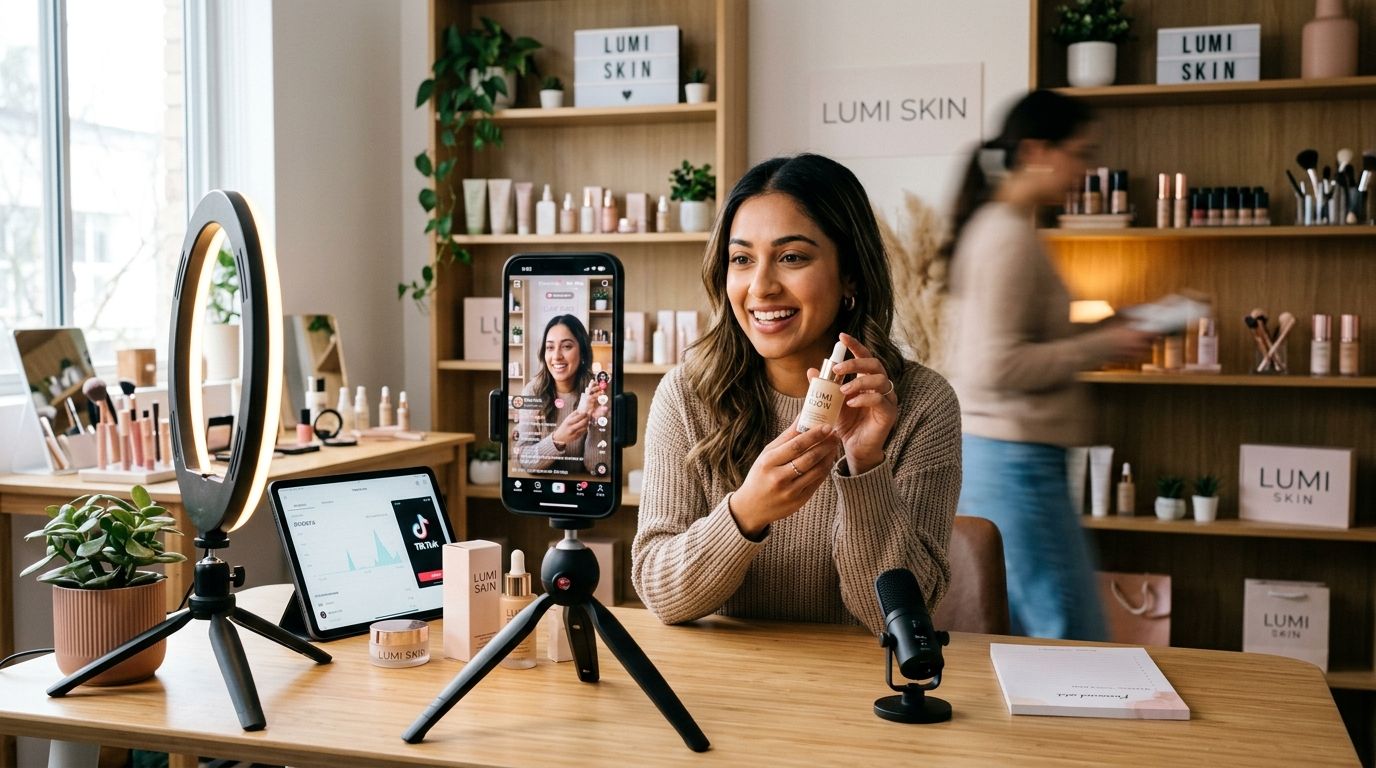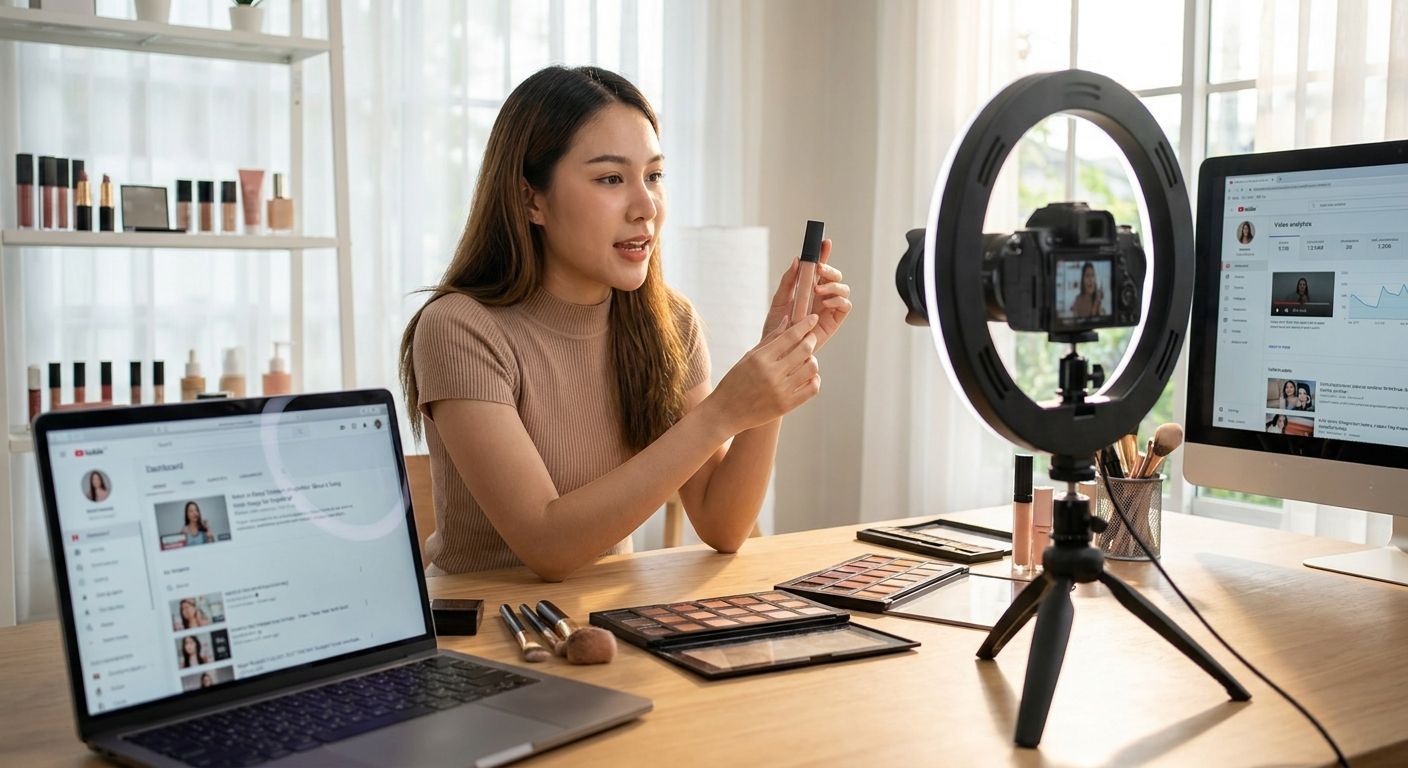
Beauty brands treat YouTube like an afterthought behind TikTok and Instagram, and that's a mistake that costs discovery. YouTube marketing for beauty brands works differently than short-form social because it's built on search intent, not just scroll momentum, and in 2026 that distinction decides whether your videos get found six months from now or disappear in six hours.
- Long-form tutorials (8-15 minutes) win on YouTube marketing for beauty brands because they carry search weight Shorts don't. Buy.
- Creator seeding with mid-tier beauty creators beats paid pre-roll on trust per dollar spent in 2026. Buy.
- Shorts alone without cornerstone long-form content is a discovery dead end. Consider only as a supplement.
- Skipping FTC disclosure on gifted or paid creator videos is a compliance risk, not a growth hack. Skip.
Why this matters
YouTube functions as a search engine first and a social platform second, and beauty queries are some of the most search-heavy in consumer video: "how to apply retinol," "best primer for oily skin," "skincare routine 30s." Those searches don't decay the way a TikTok trend does. A well-optimized tutorial published in 2026 can still be pulling impressions in 2028.
That's the strategic case for treating YouTube marketing for beauty brands as a channel with its own budget line, not a place to repost TikTok content. The Darl builds channel strategy around this exact distinction: what earns search equity long-term versus what earns a spike this week.
Who this is for
This guide is for DTC and indie beauty brands with a product line established enough to support routine-based or tutorial-based content — skincare, makeup, haircare, or fragrance brands past the pre-launch stage. If you're still validating product-market fit, put budget into paid social and influencer seeding before building a YouTube content calendar. YouTube rewards consistency over months, not weeks, so it's not the right first channel for a brand testing whether people want the product at all.
What to look for in YouTube marketing for beauty brands
Search intent over subscriber count
A channel with 4,000 subscribers ranking for "how to layer vitamin C and niacinamide" beats a channel with 40,000 subscribers that nobody finds by searching. Titles, descriptions, and thumbnails built around actual search queries outperform vanity-metric chasing every time in 2026's algorithm.
Watch time and retention beat vanity metrics
YouTube ranks videos on how long people stay, not how many click. A 10-minute tutorial that holds viewers for 6 minutes signals more to the algorithm than a 60-second clip with a high click-through rate and a 10-second drop-off.
Creator fit over follower count
A mid-tier beauty creator with 50,000 to 250,000 subscribers and a niche-specific audience (acne-prone skin, curly hair, clean beauty) converts better than a broad lifestyle creator with ten times the following. Fit drives trust, and trust drives the click to your product page.
A shoppable path from video to cart
Every tutorial needs a direct route to purchase — pinned comment, description link, or YouTube Shopping tags. A brilliant 12-minute routine video that dead-ends without a purchase path is a missed conversion, not a brand-awareness win.
Disclosure compliance before creative
FTC endorsement guidelines require clear, conspicuous disclosure on any gifted or paid creator content. Skipping this isn't a minor oversight — it's a regulatory exposure that gets creators and brands both flagged.
Build a YouTube strategy that compounds
Get a channel and content plan mapped to your product line.
Top picks for YouTube marketing for beauty brands
Long-form tutorials and routines — the safe pick. Run time: 8 to 15 minutes, structured around a single routine or ingredient story. This format carries the most search equity of any video type on the platform and doubles as evergreen content marketing that keeps generating views past its publish date. Verdict: Buy.
YouTube Shorts — the volume play. Capped at 60 seconds, Shorts reuse the same vertical crop you've already built for TikTok. They add reach and channel activity but carry far less search discovery weight than long-form video in 2026 — treat them as a supplement, not the strategy. Verdict: Consider.
Creator seeding partnerships — the credibility pick. A single well-matched creator in the 50,000-to-250,000 subscriber range, seeded with product and a clear brief, routinely outperforms a paid ad on trust per dollar. This only works when the influencer marketing approach targets niche fit over raw follower count. Verdict: Buy.
Paid pre-roll and in-stream ads — the accelerant. Paid amplification works best layered on top of organic content already crossing 10,000 views within its first 30 days — it accelerates what's proven, it doesn't fix what isn't working. Applied to a video with no organic traction, it just burns budget faster. Verdict: Consider.
YouTube Shopping and affiliate links — the monetization pick. Turning a description into a direct-to-cart path is the difference between a tutorial that builds awareness and one that closes sales same-day. This only pays off with catalog depth — a single-SKU brand won't see the same lift. Verdict: Consider.
What to avoid
- Buying subscribers or view bots. YouTube's spam detection flags artificially inflated channels, and suppressed reach after a flag costs more than the bots ever bought you.
- Publishing only Shorts with no cornerstone long-form content. Shorts don't carry the same search weight as long-form video, so a Shorts-only channel loses the discovery advantage that makes YouTube marketing for beauty brands worth the investment in the first place.
- Skipping disclosure on gifted product. FTC endorsement guidelines apply regardless of whether money changed hands — gifted product still requires disclosure, and this is one of the most common compliance gaps in beauty creator campaigns.
Verdict comparison
| Pick | Format length | Discovery value | Effort | Verdict |
|---|---|---|---|---|
| Long-form tutorials | 8-15 min | High (search-driven) | High | Buy |
| YouTube Shorts | Under 60 sec | Low-medium | Low | Consider |
| Creator seeding | Varies by creator | Medium-high (trust-driven) | Medium | Buy |
| Paid pre-roll | 15-30 sec | Medium (amplifies existing traction) | Medium | Consider |
| Shopping/affiliate links | N/A | Low (conversion, not discovery) | Low | Consider |
FAQ
What's the best video length for YouTube marketing for beauty brands?
Long-form tutorials between 8 and 15 minutes carry the most search weight on YouTube in 2026, especially for routine and ingredient-focused content. Shorts under 60 seconds add reach but don't generate the same long-term discovery.
Is YouTube better than TikTok for beauty brands?
They serve different jobs: YouTube functions as a search engine and rewards evergreen tutorials, while TikTok rewards trend velocity and short-term reach. Most beauty brands need both, weighted differently based on product type and content bandwidth.
How much does YouTube creator seeding cost for a beauty brand?
Costs vary widely by creator tier and whether the partnership is gifted product or paid placement, so there's no fixed number to quote. Mid-tier creators (50,000 to 250,000 subscribers) typically offer the best trust-per-dollar ratio for beauty categories.
Do YouTube Shorts help SEO for beauty brands?
Shorts add channel activity and reach but carry far less search discovery weight than long-form video. Use them to supplement a long-form content calendar, not replace it.
How often should a beauty brand post on YouTube?
Consistency matters more than frequency — a channel publishing one well-optimized long-form video a week outperforms one posting sporadically. YouTube's algorithm rewards channels it can predict.
Does YouTube Shopping work for beauty brands?
YouTube Shopping and affiliate links in video descriptions create a direct path from tutorial to cart, but the lift depends on catalog depth. A brand with a few SKUs sees less benefit than one with a full routine to sell across a single video.
Do beauty brands need to disclose gifted products in YouTube videos?
Yes. FTC endorsement guidelines require clear disclosure regardless of whether product was gifted or paid for, and this applies to every creator partnership, not just paid placements.
One last thing
The channels that win at YouTube marketing for beauty brands in 2026 aren't the ones posting the most — they're the ones with a handful of long-form tutorials still pulling search traffic a year after publish. That's the compounding effect Shorts and paid social can't replicate on their own. Build the cornerstone content first, then layer Shorts and paid amplification on top of what's already proven.