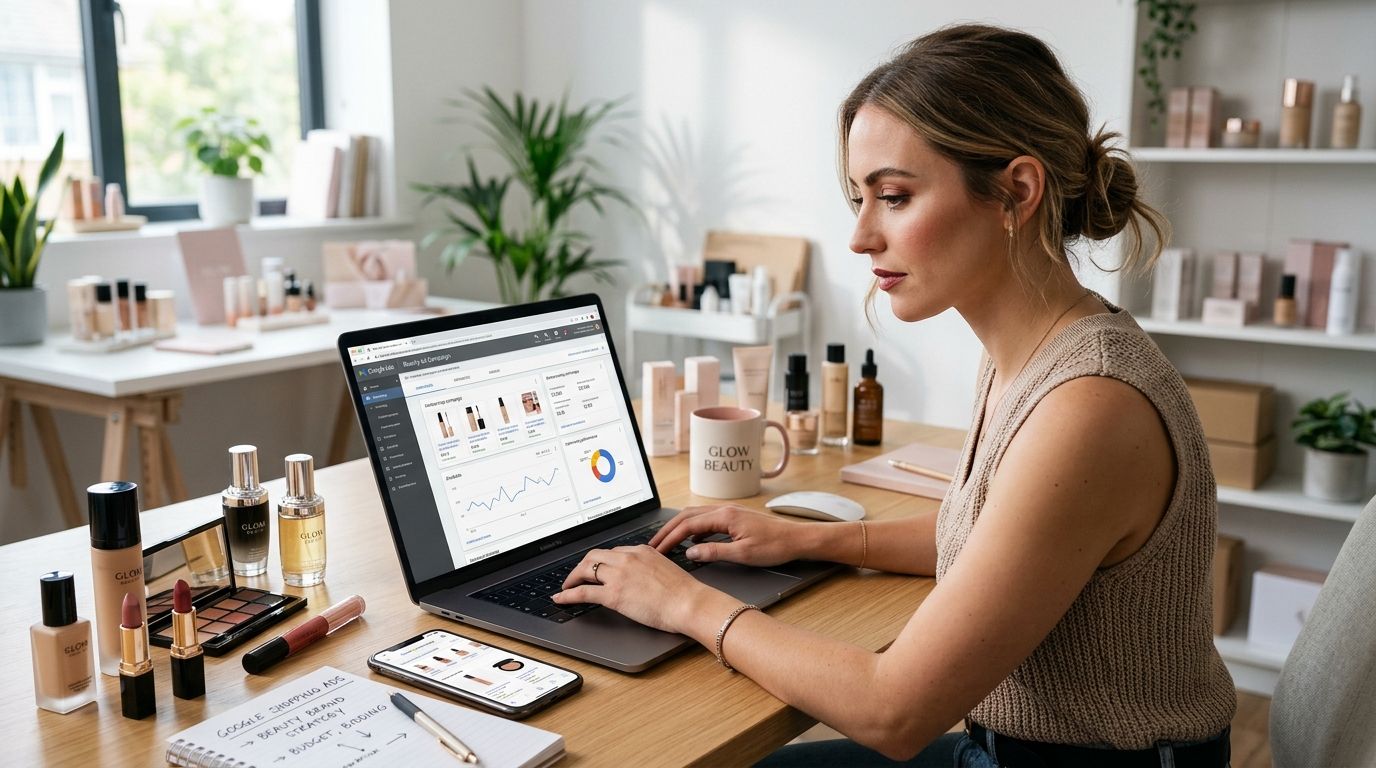
Running Google Shopping ads for a beauty ecommerce brand starts with a Google Merchant Center feed, not a keyword list. Google matches your product data to search intent automatically, so the feed is the campaign. Get it wrong on GTINs, restricted claims, or image compliance and listings get suppressed before a single click happens.
- Google Shopping ads for a beauty ecommerce brand start with a compliant Merchant Center feed, not a bid strategy.
- Standard Shopping gives SKU-level bid control; Performance Max automates bidding across Search, Display, YouTube and Discover.
- Beauty feeds fail most often on missing GTINs, restricted claims, and non-compliant product images.
- Google Customer Reviews adds star ratings to listings and moves click-through rate in 2026.
- Shopping only performs inside a full paid media funnel, not as a standalone tactic.
Why this matters
Most beauty brands treat Google Shopping as an afterthought bolted onto a Meta-first plan. That is backwards in 2026. Shopping ads show the product image, price, and merchant name directly in search results, which means a shopper searching for a vitamin C serum sees your product next to Ulta and Sephora listings before any organic result loads.
A paid media agency for wellness ecommerce brands treats the Merchant Center feed as infrastructure, because a broken feed quietly starves every other channel's remarketing pool too. The brands that win here are not the ones with the biggest budgets. They are the ones with the cleanest feeds and the fastest fix cycle when Google flags a disapproval.
How to run Google Shopping ads for a beauty ecommerce brand
The sequence matters. Skipping steps 2 and 3 is the biggest reason beauty feeds get suspended in the first week.
- Create and verify Google Merchant Center, then link it to Google Ads. Verification requires proving site ownership and confirming your shipping and return policy pages are live.
- Build the product feed with title, description, GTIN, brand, product category, and image link populated for every SKU. Google enforces a 150-character limit on product titles, so front-load the ingredient or benefit term.
- Clear beauty-specific compliance rules before submission: no unsubstantiated medical claims, no restricted ingredient language, and images meeting Google's minimum of 100 x 100 pixels for standard products or 250 x 250 pixels for apparel-classified items.
- Choose a campaign type: Standard Shopping for manual control, Performance Max for automated bidding across placements.
- Structure product groups by margin, so Google does not spend equally on a lip balm and a hero serum.
- Add Google Customer Reviews so star ratings render on the listing itself.
- Monitor at the product ID level, not the campaign level. Beauty catalogs routinely have a handful of SKUs driving most Shopping revenue.
Standard Shopping vs Performance Max for beauty catalogs
| Campaign type | Control level | Best for | Verdict |
|---|---|---|---|
| Standard Shopping | Manual bids per product group | New catalogs with no conversion history | Buy for testing new launches |
| Performance Max | Automated across Search, Display, YouTube, Discover | Catalogs with historical conversion data | Buy for scaling proven SKUs |
Standard Shopping gives you SKU-level control. You set bids per product group, exclude underperformers manually, and see which listing drove which sale. The tradeoff is time, because someone manages bids weekly. Best for brands launching SKUs with no conversion history. Verdict: Buy if you have the bandwidth, or if a paid media funnel for a beauty brand is already built around it.
Performance Max removes manual bid management and bids across every Google network using your conversion signals. The tradeoff is visibility: you lose the search-term and placement-level reporting Standard Shopping provides. Best for brands with existing Google Ads conversion history. Verdict: Buy once the feed is clean and conversion tracking is solid. Wait if the feed was just approved and disapprovals are still cycling through.
Why Shopping performance varies for beauty brands
- Feed quality — missing GTINs or mismatched identifiers get listings disapproved quietly, and private-label manufacturers frequently do not supply them by default.
- Image compliance — Google rejects images with text overlays, watermarks, or promotional badges baked into the photo.
- Category competition — beauty listings compete against Ulta, Sephora, Amazon, and Target, all carrying deep review counts and established merchant ratings.
- Restricted claims language — wording that implies medical treatment triggers manual review or outright rejection.
- Inventory sync — out-of-stock SKUs that do not update in real time keep spending budget on products nobody can buy.
- Rating density — listings that display Google Customer Reviews stars pull higher click-through than listings without them.
Do you need a Google Merchant Center account to run Shopping ads?
Yes, Merchant Center is mandatory. There is no way to run Google Shopping ads for a beauty ecommerce brand without it, because Merchant Center holds and validates the product feed that Google Ads pulls from. Verification takes longer if your shipping and returns pages are not live and crawlable.
Can Performance Max replace Standard Shopping for a beauty brand?
Performance Max can replace Standard Shopping once a catalog has enough conversion history for Google's bidding to work with, but running it on a brand-new feed with zero conversion data usually underperforms a manually managed Standard Shopping campaign. Many beauty brands run Standard Shopping first to build signal, then shift spend into Performance Max.
How long before beauty Shopping ads start converting?
Google's campaign guidance recommends letting a new Shopping or Performance Max campaign complete its learning period, typically two to four weeks, before making major bid or budget changes. Judging a campaign on day five leads to premature edits that reset learning and waste committed spend.
A feed that passes Merchant Center review is only half the job. The landing page has to convert once the click lands, which is where conversion work on beauty ecommerce sites closes the loop between ad spend and revenue.
Build a Shopping feed that converts
Get a paid media plan built around your beauty catalog, not a generic template.
Where Shopping fits in the wider 2026 mix
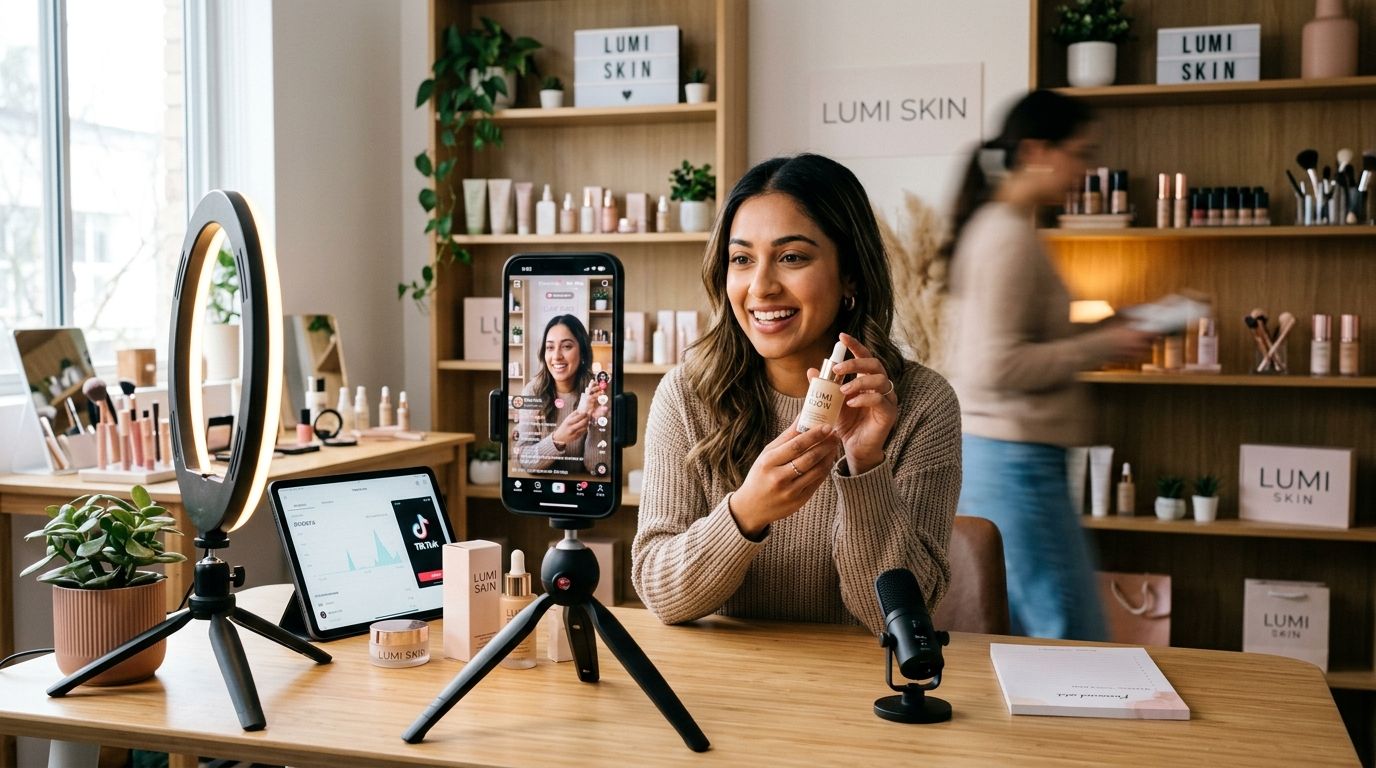
Shopping captures demand that already exists. It does not create it. The Darl builds beauty growth programs where paid search, paid social, email, and organic feed each other: Shopping converts the searcher who saw your product on TikTok two days earlier, and email retains the customer Shopping acquired. Run Shopping in isolation in 2026 and it caps out at whatever branded search volume you already have.
That is why the feed audit and the funnel audit happen together, never separately.
“A beauty brand's Merchant Center feed is not a technical chore. It is the campaign.”
FAQ
What is the best campaign type for a new beauty brand's Shopping ads?
Standard Shopping is the best starting point because it gives manual bid control while Google Ads builds conversion history. Move product groups into Performance Max once each SKU has data behind it.
Is Performance Max better than Standard Shopping for beauty brands?
Performance Max is better once a catalog has established conversion history, since it automates bidding across Search, Display, YouTube and Discover using that data. Without conversion history it tends to underperform a manually managed Standard Shopping campaign.
How much does it cost to run Google Shopping ads for a beauty brand?
Shopping ads run on the same auction-based cost-per-click model as Google Search ads, so spend scales with catalog size and category competition rather than a flat fee. Beauty categories compete against large retailers with established merchant ratings, which raises auction pressure.
Why did my beauty product get disapproved in Google Merchant Center?
The most common causes are missing GTINs, images with text overlays or promotional badges, and unsubstantiated medical claims in the title or description. Fix the flagged field and resubmit the item for review.
Do Shopping ads work for indie beauty brands with small catalogs?
Yes, Shopping ads work for small-catalog beauty brands as long as the feed is clean and GTINs exist for every SKU. Smaller catalogs simplify product group structuring because there is less inventory to segment by margin.
Can I run Google Shopping ads without Google Customer Reviews?
Yes, Google Customer Reviews is optional. Listings without visible star ratings typically see lower click-through than competing listings that display them, so enable it once you have completed orders.
What image requirements does Google enforce for beauty listings?
Google requires product images of at least 100 x 100 pixels for most beauty categories, with no watermarks, text overlays, or promotional badges in the image. Packaging shots with added text get rejected in feed review.
Should a beauty brand run Shopping ads and Meta ads at the same time?
Yes, and they work best together in 2026 because Meta creates the demand Shopping captures at the moment of search. Running Shopping alone limits reach to existing branded and category search volume.
One last thing
The fastest way a beauty brand burns Shopping spend in 2026 is not a bad bid strategy. It is a private-label manufacturer that never assigned GTINs to the SKUs. Check that field before touching bids or campaign structure. It is the most common silent suspension cause in beauty feeds, and it costs nothing to fix once you know to look.